One Rep Max Calculator Deadlift: Estimate, Test, and Improve Your 1RM Safely

Finding your true deadlift potential starts with a reliable estimate and a safe testing protocol. Whether you want a quick number to program percentages or you're preparing to test an official 1RM, this guide covers how to calculate your deadlift one-rep max, which formulas to trust, deadlift-specific standards, warm-up and plate-loading steps, common technique errors, and an 8-week progression to raise your max.
What is a one-rep max (1RM) and why it matters for the deadlift
Your one-rep max (1RM) is the most weight you can lift for exactly one clean, technically correct repetition. For the deadlift, 1RM is both a performance benchmark and a practical tool: it helps you program percentages for strength phases, set sensible training loads, measure progress, and compare strength across bodyweights and experience levels.
How to use a one rep max calculator deadlift (formulas explained)
A "one rep max calculator deadlift" typically takes a weight you lifted for multiple reps and estimates your 1RM. There isn't a single universally perfect formula; each has strengths and small biases depending on rep ranges and exercise. Common formulas:
Epley: 1RM = weight × (1 + reps / 30)
Brzycki: 1RM = weight × (36 / (37 - reps))
Lombardi: 1RM = weight × reps^0.10
All provide an estimate. For deadlifts, lower-rep inputs (1–5) yield more accurate estimates than high-rep sets.
Example calculations
If you deadlift 365 lb for 5 reps:
Epley: 365 × (1 + 5/30) = 365 × 1.1667 ≈ 426 lb
Brzycki: 365 × (36 / (37 - 5)) = 365 × 1.1429 ≈ 417 lb
You can use a simple "one rep max calculator deadlift" input (weight and reps) and compare multiple formula outputs, then choose a conservative estimate (often slightly lower) for programming.
Percentage table for programming (quick reference)
Use the percentage table below to pick training loads after you estimate your 1RM. These percentages are widely used in strength programming and practical for deadlift training.
Reps | % of 1RM |
|---|---|
1 | 100% |
2 | 97% |
3 | 94% |
4 | 92% |
5 | 89% |
6 | 86% |
7 | 83% |
8 | 80% |
9 | 77% |
10 | 75% |
12 | 71% |
15 | 67% |
20 | 60% |
Use these values as a starting point; individual differences and grip strength can shift where your true percentages fall.
Deadlift-specific considerations for accurate 1RM estimates
A general-purpose 1RM calculator doesn't account for deadlift nuances. For better deadlift estimates, consider:
Grip limitations: Many lifters fail a true 1RM because their grip gives out; using straps or mixed grip in testing changes the number.
Bar and surface: A stiff bar, platform, or bumper plates affect how the bar leaves the floor and may change your 1RM.
Variation type: Conventional, sumo, and Romanian deadlifts produce different 1RMs — treat each variation separately.
Fatigue and recovery: Recent hard sessions, sleep, and nutrition can alter your true 1RM by 5–10%.
How to perform a safe 1RM deadlift test
Testing a real 1RM requires planning and conservative increments. Follow this protocol:
Choose a test day when you're fresh — not after heavy back or leg work.
Warm up thoroughly (see warm-up section below).
Start with submaximal singles (50–70% for a few reps) then work up with singles or doubles.
Add weight in small increments (5–10 lb / 2.5–5 kg) as you approach a heavy single.
Rest 3–5 minutes between maximal attempts to ensure near-full recovery.
Use proper form every attempt; stop if technique breaks down.
Record the heaviest successful, technically sound lift.

Warm-up sets example (built from your estimated 1RM)
If your estimated 1RM is 405 lb, a practical warm-up progression could be:
Empty bar movement and mobility (5–10 minutes)
135 × 5 (or light single) — feel the groove
185 × 3
255 × 2
315 × 1 (50–70% of 405)
365 × 1 (90% of 405)
Rest 4–6 minutes
Attempt max (405+) — increase only if form and energy are optimal
Rest and mental focus are as important as the physical warm-up.
Plate calculator and loading the bar for a target 1RM
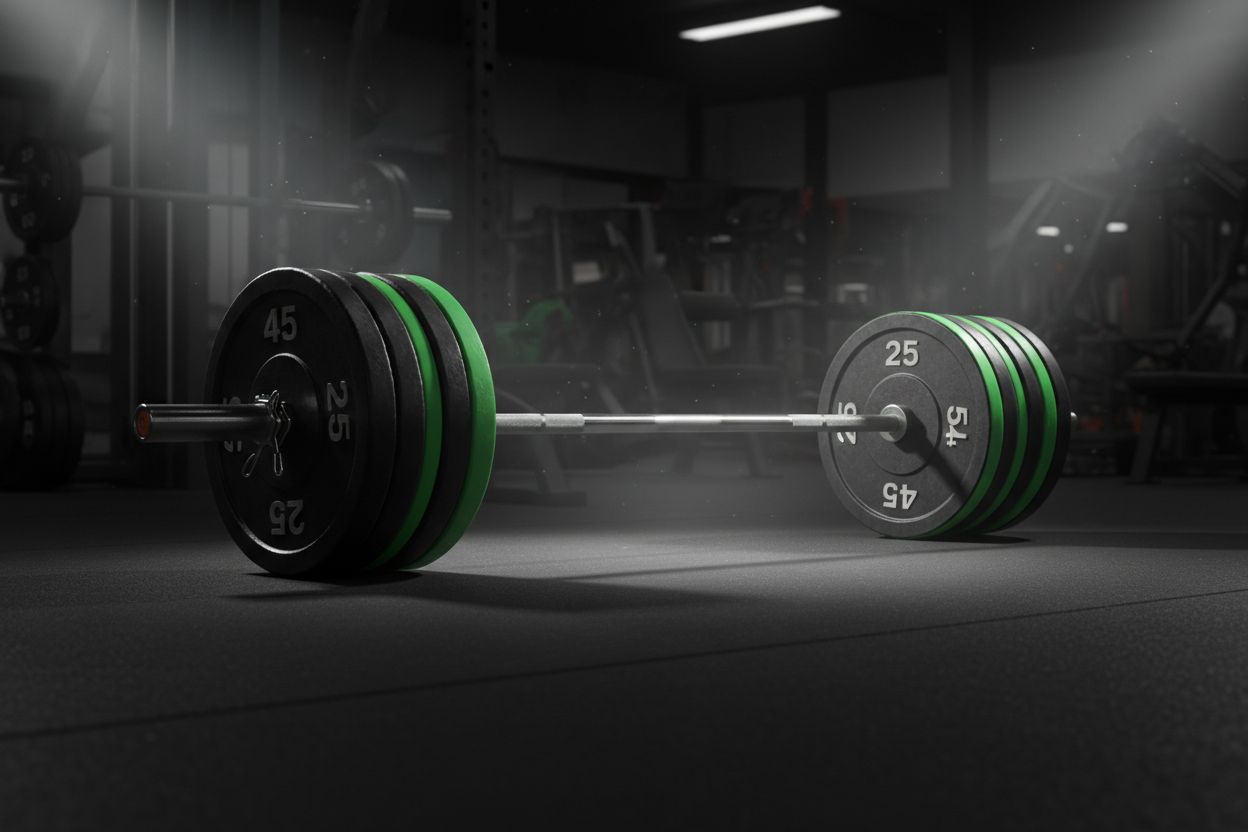
When your calculator tells you a target (for example, 425 lb) you need to know how to load the bar. Standard procedure for a 45-lb bar:
Subtract the bar weight (usually 45 lb): 425 − 45 = 380 lb to load as plates.
Divide by 2 for each side: 380 / 2 = 190 lb per side.
Choose plate combinations that add to 190 (e.g., 45 + 45 + 45 + 10 + 2.5 + 2.5 = 190).
If you train in kilograms, use the same method with the bar weight (20 kg) and available plates.
Technique tips to maximize a deadlift 1RM
Small technical improvements frequently yield bigger increases in 1RM than marginal strength gains. Key cues:
Foot placement: Mid-foot under the bar; hips positioned so your shin is vertical at the start.
Grip: Thumb over (hooks), mixed grip, or straps for maximal attempts; keep shoulders slightly in front of the bar at setup.
Tight brace: Take a big breath, brace the core, and maintain that intra-abdominal pressure throughout the pull.
Hip drive: Drive hips forward while keeping the bar close; avoid excessive lumbar flexion or rounding.
Lockout: Finish by contracting glutes and fully extending the hips; don’t hyperextend the lower back.
Common mistakes that reduce 1RM performance:
Letting the bar drift away from the body
Rising hips too fast (turning it into a stiff-leg movement)
Poor breathing/bracing
Using too much back rounding under maximal load
Deadlift variations and how they affect 1RM
Conventional deadlift: Often produces the highest raw 1RM for athletes with long arms and strong posterior chains.
Sumo deadlift: Shorter range of motion for many lifters; some lifters can pull more sumo than conventional depending on anthropometry.
Romanian deadlift (RDL): Not typically used for 1RM testing — it's an accessory movement for posterior chain development.
Treat each variation as its own 1RM. If you used a "one rep max calculator deadlift" based on conventional reps, it won't accurately predict sumo numbers.
Programming to increase your deadlift 1RM (8-week plan)
This simple 8-week block focuses on progressive overload, frequency, and accessory work to improve the deadlift 1RM. Tailor loads with your estimated 1RM using the earlier percentage table.
Weeks 1–4: Volume and technique
Day A (Heavy): Deadlift 4 sets × 4–6 reps @ 75–85% 1RM
Day B (Speed/Technique): Deadlift (light) 6–8 sets × 2 reps @ 60–65% focusing on bar speed
Accessories: Romanian deadlifts, barbell rows, glute-ham raises, core work
Progression: Add 5–10 lb to the heavy day each week if all reps are completed with good form
Weeks 5–8: Intensity and peaking
Day A (Heavy): Deadlift singles/doubles 4–6 sets @ 85–95% 1RM
Day B (Volume): 3–4 sets × 5–8 reps @ 70–75% focusing on back and posterior chain volume
Accessories: Deficit pulls, paused deadlifts, heavy rows
Week 8: Test week — deload early in the week and perform a fresh 1RM test on day 4 or 5
Track every session to spot stalls; if progress stalls for 2–3 weeks, shift to a lighter microcycle or increase recovery.
For logging and tracking progress across cycles, consider using a simple tracker app to record sets, weights, and 1RM trends: Setgraph - Workout Tracker Gym Log App.
Recovery, fatigue management, and when to retest
Your 1RM reflects your current recovery state. Factors that reduce 1RM include:
Poor sleep
High training volume without adequate recovery
Illness or caloric deficit
High accumulated fatigue from other lifts
Retest every 8–12 weeks or after a planned peaking phase. Use submaximal testing (e.g., 3–5 rep tests) in between to estimate 1RM without the same neural and structural stress.
If you want automated tips for optimizing training blocks and tracking sets and reps, check guides and tips available at Optimize Your Training | Expert Tips and Workout Guides.
Equipment choices and how they affect 1RM attempts
Belt: Increases intra-abdominal pressure and can improve max attempts for experienced lifters.
Straps: Prevent grip failure; use consciously — if you want grip strength to improve, use straps sparingly.
Shoes: Flat soled or deadlift slippers help you stay close to the bar and reduce range of motion.
Chalk: Improves grip and reduces slip on heavy attempts.
For technique fundamentals that transfer to safer maximal efforts, see Core Principles & Techniques for Every Lifter - Setgraph.
Strength standards and how to interpret your deadlift 1RM
Strength standards vary by bodyweight and age, but a simple way to benchmark is:
Beginner: bodyweight × 0.75–1.25
Intermediate: bodyweight × 1.25–1.75
Advanced: bodyweight × 1.75–2.25
Elite: bodyweight × 2.25+
These are rough guidelines; powerlifters and athletes with specific training histories may sit above these ranges. For context and reviews of apps that help lifters track improvements, see Setgraph App Reviews (2025): User Ratings for Tracking Sets, Reps & Workouts.
Common FAQs about one rep max calculator deadlift
Q: Are estimated 1RMs accurate?
A: Estimates are useful but approximate. They become more accurate when based on low-rep inputs (1–5). Use them for programming, not as absolute truth.
Q: Which formula should I use?
A: Compare a couple (Epley and Brzycki are common). For deadlifts, favor conservative estimates when programming heavy cycles.
Q: How do I know if my 1RM came from a strength limit or a technical/griпp issue?
A: If the bar moves well but you fail to lock out or your back rounds badly, it's technical. If the bar slows early and grip fails, address grip or try alternate grip methods.
Tools to make the process easier
Warm-up calculator: Build warm-up sets from your estimated 1RM using percentages shown earlier.
Plate calculator: Use the subtraction method (target − bar) and split per side.
Workout log and progress tracker: Log attempts and accessory work to spot trends.
Explore practical training guides and tracking resources at the Setgraph training hub: Setgraph Training Guide | Maximize Your Workout and browse broader articles and tips at Fitness & Workout Tips | Setgraph.

Final checklist before you use a one rep max calculator deadlift
Use a recent, low-rep set (1–5 reps) as input for the best estimate
Compare at least two formula outputs and choose a conservative number for programming
Warm up thoroughly and use proper increments during testing
Consider grip, variation, and equipment when interpreting your number
Retest strategically after planned peaking and recovery phases
A deadlift-specific one rep max calculator deadlift is a powerful tool when combined with proper technique, sensible testing protocols, and consistent tracking. Use the percentages and programming templates here as a starting point, log results, and refine your approach over time. For more tips on improving lifts, programming, and tracking performance across workouts, visit the Setgraph insights and guides: Setgraph App: Insights, Tips & Training Guides.
If you'd like, I can generate a quick worksheet for your warm-up sets, plate-loading plan, or an 8-week template tailored to your current 5-rep or 3-rep numbers—tell me your current best set and preferred units (lb/kg) and I'll build it.
Article created using Lovarank