Standard Barbell Weight: 1-Inch Bars vs Olympic Bars
“Standard barbell” can mean a typical gym bar in everyday speech or a nominal 1-inch plate-fitting bar in an equipment catalog. Neither use establishes the exact weight. Check the model before adding it to your plates.
That difference matters more than it sounds. If you count the bar as 45 pounds when it actually weighs 30, every single total you log is wrong by the same amount. The absolute totals and one-rep-max inputs will be wrong, even if trends on the same bar remain useful. This guide explains plate-fitting categories, model-specific weight checks, and how to include the bar correctly.
What "Standard Barbell" Actually Means
In equipment catalogs, “standard” often means a bar that accepts nominal 1-inch plates, while people also use the word casually to mean a typical gym bar. The label describes a fitting category, not one universal weight. York’s standard-bar range, for example, includes several lengths.
Olympic-style bars generally use nominal 50 mm sleeves, commonly called 2-inch sleeves. Many gym bars use this fitting, but sleeve diameter alone does not tell you whether the unloaded bar weighs 20 kg, 45 lb, or another amount.
A 1-inch bar’s mass depends on length and construction. Do not assign every standard bar a 15–25 lb weight: use the end marking, manufacturer specification, or a suitable measurement for that model.
How Much a Standard Barbell Weighs (By Type)
Here is the practical breakdown of the bars you are most likely to encounter, so you can identify which one is in your hands.
Standard 1-inch straight bar: model-specific; check length, mass, and capacity.
Standard 1-inch EZ bar: model-specific; a shorter or hollow bar can weigh differently from a solid model.
IWF men’s Olympic bar: 20 kg (44.1 lb). Some gym power bars are manufactured at 45 lb (20.4 kg), a separate specification.
IWF women’s Olympic bar: 15 kg (33.1 lb), with a thinner shaft and the same 50 mm sleeve category.
Olympic EZ bar: model-specific; Rogue’s example weighs 30 lb (13.6 kg).
Trap or hex bar: model-specific; identify the model rather than assigning a generic weight.
Check sleeve size for compatible plates, then verify mass separately. The IWF equipment specifications define competition weights; Rogue’s 45 lb power-bar specifications demonstrate that a genuine 45 lb bar is not merely a rounded 20 kg bar.
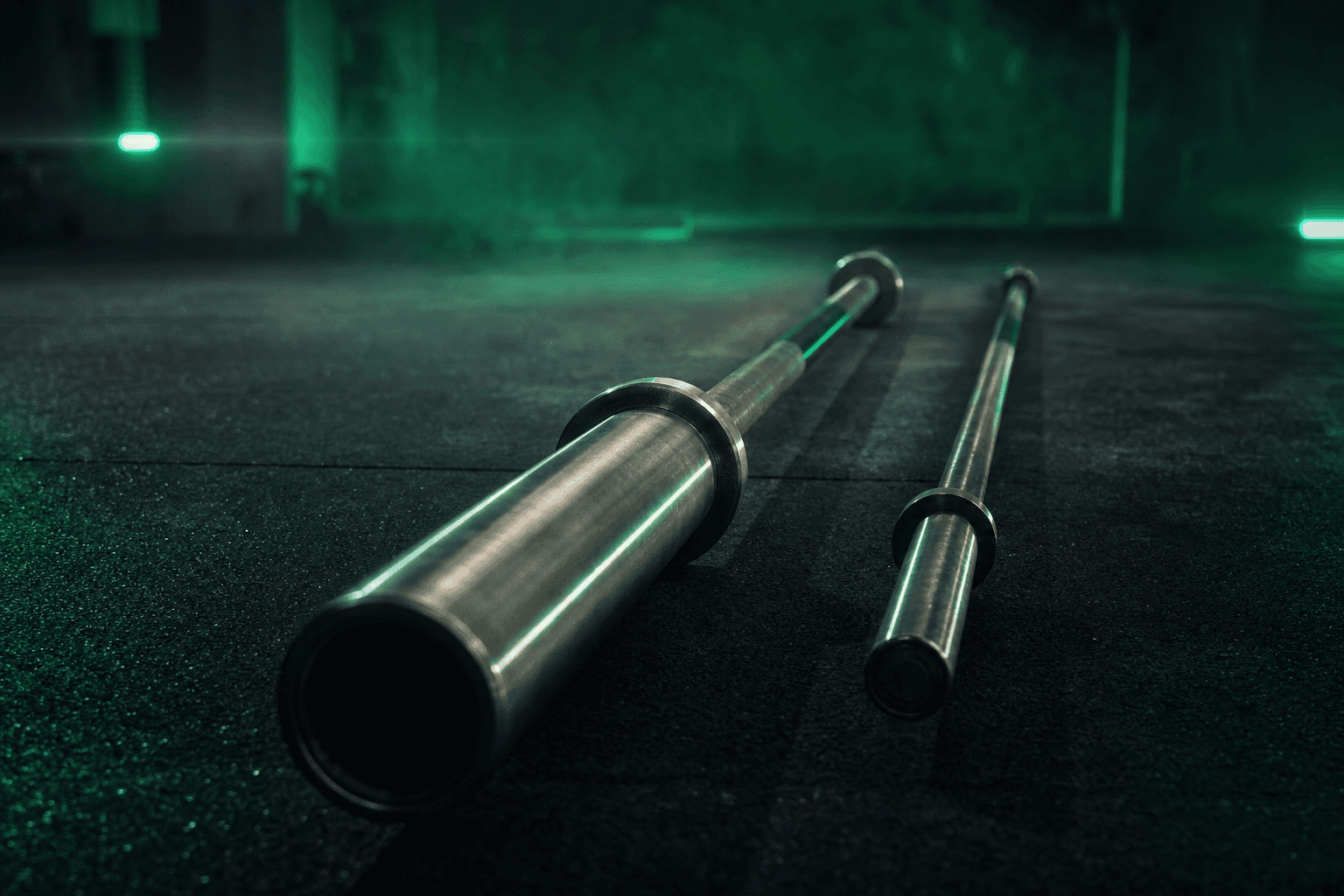
Standard Bar vs Olympic Bar: The Differences That Matter
Beyond raw weight, the two bar types behave differently in ways that affect your training, not just your math.
Plate fit: A 1-inch-hole plate will not fit a 50 mm Olympic sleeve. An Olympic plate has an oversized hole on a 1-inch bar and must not be assumed securely compatible. Follow the bar, plate, collar, and any adapter manufacturer’s instructions.
Rotation. Olympic bars have sleeves that spin on bushings or bearings. That rotation reduces torque on your wrists and elbows during fast lifts like cleans and snatches. Standard bars usually have little or no sleeve rotation, which is fine for slow grinds like curls and presses but less ideal for explosive work.
Load capacity and intended use: Check the exact model’s capacity, construction, and instructions. Sleeve diameter, price, or the “Olympic” label alone does not establish a safe load, dropping allowance, or resistance to bending.
Knurling and grip: Shaft diameter, knurl pattern, and markings vary between models. A power bar and a weightlifting bar can feel different even when they use the same plate fitting and nominal mass.
None of this makes a standard bar useless. For beginners, higher-rep accessory work, and home setups where loads stay moderate, a standard bar is perfectly serviceable. You just have to know its real weight and its limits.
Why Counting the Bar Correctly Changes Your Numbers
This is where bar weight stops being trivia and starts affecting your results. Every serious progress metric you track depends on knowing your true total load.
Example: two 25 lb plates per side add 100 lb. With a 20 lb bar, the total is 120 lb. Logging it as 145 lb by assuming a 45 lb bar overstates the actual total by 25 lb, or about 20.8% of 120 lb. Keep the bar identity in your notes when comparing gyms.
Accurate totals are useful for percentage-based training and comparing equipment. They do not directly measure muscle growth, and a fixed error does not erase plate or rep progression on the same bar. Strength also depends on practice, technique, and fatigue.
For reliable progression tracking, use the same measurement convention and note any equipment change. Correct the baseline without pretending the logging correction itself is a strength gain.
How Precise Does the Log Need to Be?
A misidentified bar creates a systematic error. This is especially confusing when you alternate between a home bar and a gym bar, because equal plate totals may represent different overall loads.
If the same bar and convention are used every session, trends can still show real progress. Correctly including the bar makes the absolute numbers useful too. Once the baseline is correct, focus on repeatable training rather than unnecessary decimal precision.
The reasonable middle ground: get the bar right so your absolute numbers and 1RM estimates are trustworthy, then stop fussing and focus your energy on adding reps and weight consistently. Precision on the bar is cheap. Do it once, set it correctly, and move on.
How to Confirm Your Bar's Real Weight
If you are not sure what your bar weighs, here is how to nail it down in a few minutes.
Check the sleeve category for plate compatibility, but verify unloaded mass separately.
Check the plate-fitting specification. Nominal 1-inch plates and Olympic-style plates use different bores; matching the fitting does not establish the bar’s mass or load capacity.
If no specification is available, ask staff or the manufacturer. A suitable scale may help, but only if the bar can be supported securely and within the scale’s capacity; do not balance precariously while holding a long bar.
Look for markings. Many quality bars stamp their weight near the sleeve. Women's Olympic bars and specialty bars often note their spec.
Do not assume 45. The most expensive mistake is defaulting every bar to 45 pounds. Confirm before you log.
Once you know the number, the goal is to make sure it is counted automatically every time so you never have to redo the math mid-set. For a deeper breakdown of whether to include the bar in your working total, our guide on whether you should count the bar when lifting covers the reasoning in full, and our bench press bar weight guide and Olympic bar weight reference cover the other common bars you will meet.
How to Apply This in Setgraph
Use a clear load convention and record the bar identity alongside your working sets.
The iOS listing describes Smart Plates and exercise notes. Use verified equipment information when calculating totals; do not assume a saved default matches a different gym’s bar.
Example: “Home bench, 20 lb bar + 50 lb per side = 120 lb.” If using a 1RM calculator, enter that complete load and remember the result is an estimate, not a guaranteed maximum.
Keep separate entries or notes for materially different bars and machine variations. Compare sessions with the same setup before interpreting changes in reps or load.
FAQ
Q: How much does a standard barbell weigh?
A 1-inch standard bar has no single specified mass. Its weight depends on the model. IWF Olympic bars are 20 kg (44.1 lb) or 15 kg (33.1 lb), while genuine 45 lb power bars also exist. Confirm the particular bar before logging it.
Q: How do I tell a standard bar from an Olympic bar?
Check the sleeve where plates load: nominal 1-inch standard sleeves and 50 mm Olympic-style sleeves use different plate fittings. Rotation and shaft thickness provide clues, but do not establish weight or safe capacity.
Q: Do I need to count the bar in my total?
Yes for an accurate free-weight total. Add the known bar mass to all plates and any collars you count. A consistent bar omission may preserve trends on the same equipment, but gives an incorrect absolute load and 1RM input.
Q: Can I lift heavy on a standard barbell?
Only within the exact bar’s rated capacity and intended use, with compatible equipment. There is no safe universal 200–250 lb limit for all standard bars or 700 lb limit for all Olympic-style bars. Check the manufacturer rather than relying on the category name.
Q: Why does the same bar feel different at different gyms?
Bars differ in shaft diameter, knurling, stiffness, sleeve rotation, and mass. Power bars are typically designed to be stiffer than weightlifting bars. Record which model or variation you used when the difference affects the movement.
Stop guessing what your bar weighs and let your numbers reflect what you actually lifted. Track every set with the real total in Setgraph and build progress on data you can trust.