Bench Press Bar Weight: Identify Your Bar and Calculate the Total
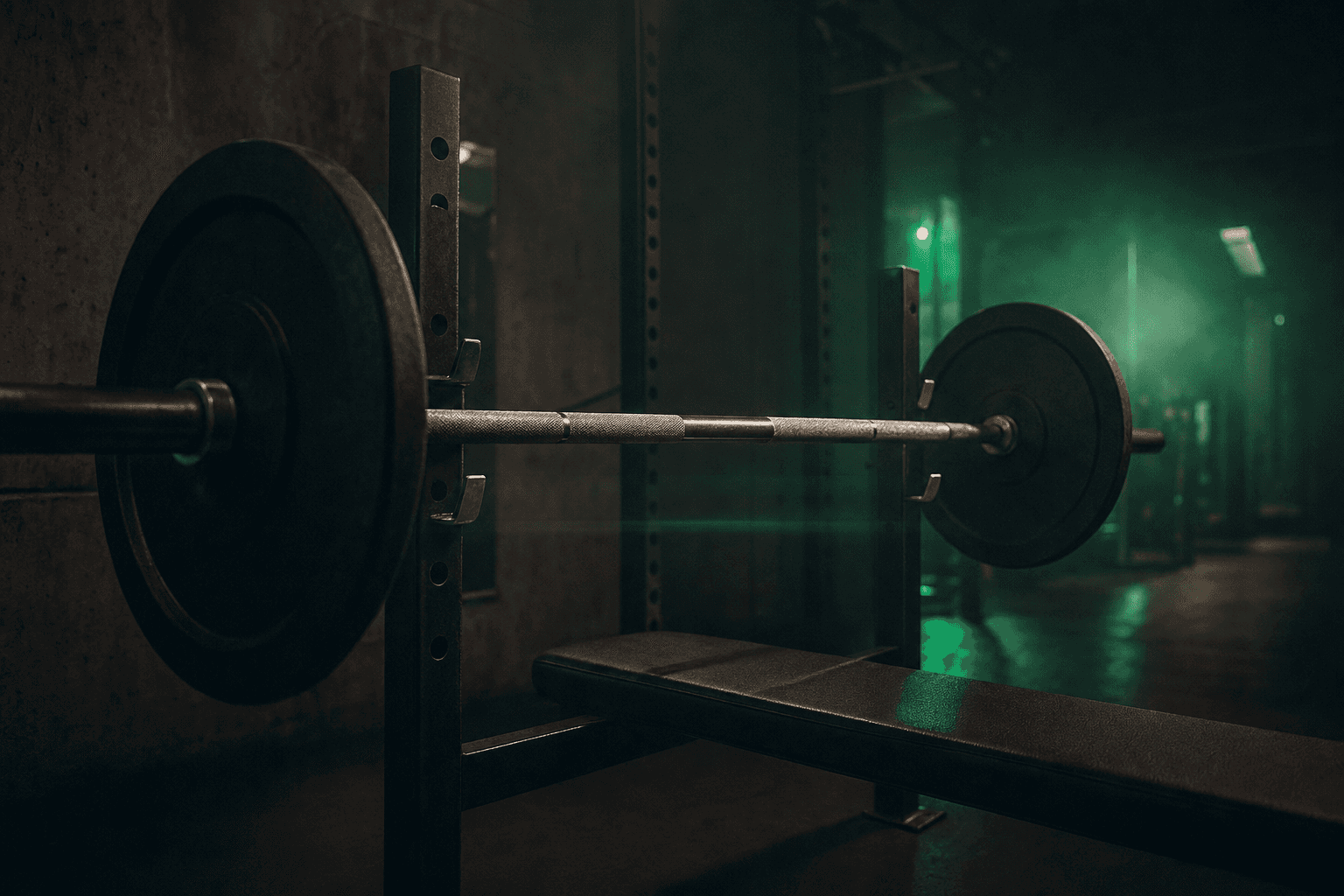
A 45 lb bar with a 45 lb plate on each side totals 135 lb. A 20 kg bar with the same pound plates totals about 134.1 lb. Count the bar, but first identify which bar you are using.
Knowing your bench press bar weight is one of those small details that quietly shapes everything downstream: your true working load, your estimated one-rep max, and whether your progressive overload numbers are honest from week to week. This guide explains common bench-bar specifications, how to identify your equipment, and how to calculate a useful total.
The Short Answer: How Much a Bench Press Bar Weighs
Common bench bars are either 20 kg (44.1 lb) or true 45 lb (20.4 kg) models. Check the end-cap label or manufacturer; the two values are close, but they are not interchangeable exact conversions.
Technique bars, 15 kg bars, specialty pressing bars, and Smith machines can have different starting loads. If you train in multiple gyms, record the implement and its verified weight alongside your plates.
Here is the full picture.
Bench Press Bar Weight by Type
Not every barbell is built the same. The bar you grab for bench press depends on the gym, the equipment manufacturer, and sometimes the specific rack. These are the common ones.
Olympic-style or power bar: commonly 20 kg or 45 lb, depending on the model. IWF equipment specifications define the 20 kg men’s weightlifting bar; Rogue’s 45 lb power-bar specifications identify a genuine 45 lb power bar.
IWF women’s Olympic bar: 15 kg (33.1 lb), with a 25 mm shaft and 2.01 m length. This is a weightlifting specification, not the standard women’s powerlifting bar. Use the label to identify it rather than grip feel alone.
Technique or training bar: Lighter practice bars have model-specific weights and loading limits. Read the label rather than estimating by feel, and check whether the bar is designed for your intended exercise.
EZ curl bar: model-specific; for example, Rogue’s version is 30 lb. Many curl bars are too short to rack for bench press, so use equipment designed for the intended movement.
Swiss or multi-grip pressing bar: model-specific. Check its unloaded mass, rack compatibility, and manufacturer instructions before using it for bench press.
Smith machine: use its stated starting resistance, which may differ from the physical bar mass. Keep it separate from your free-weight bench history.
For competition-bar specifications and specialty-bar checks, our companion guide on how much every barbell actually weighs goes type by type.
Why the Bar Counts Toward Your Total Load
The bar is load. Your chest, shoulders, and triceps do not distinguish between force coming from a steel bar and force coming from a cast-iron plate. If you press a 45 lb bar with a 45 on each side, you pressed 135 pounds, not 90.
This matters for three concrete reasons:
Your total is incomplete without it. State the plate size and bar mass rather than relying on “two plates.” Omitting a 45 lb bar undercounts by 45 lb; omitting a 20 kg bar undercounts by 20 kg.
Your one-rep max estimate breaks. 1RM formulas take your weight and reps and project a max. Feed in plate-only numbers and your estimate is artificially low, which then warps your percentage-based training. If you program your bench at 80 percent of a 1RM that was calculated from an incomplete load, your "80 percent" is not 80 percent.
Progressive overload depends on consistency, not absolute precision. This is the subtle one. The single most important thing is that you count the bar the same way every single time. If you count it some weeks and forget it others, your training log lies to you about whether you actually progressed. We cover the broader question of whether to include the bar in your numbers in this dedicated article on counting the bar.
How to Tell Which Bench Press Bar You Are Using
You usually do not need a scale. A few quick checks settle it:
Look for a stamp or label. Most quality bars have the weight engraved on the end of the sleeve or printed on the shaft. Specialty bars almost always do.
Check dimensions as a clue. An IWF men’s bar is 2.2 m long with a 28 mm shaft; a women’s bar is 2.01 m with a 25 mm shaft. Gym power bars and other models differ.
Do not identify a bar by how heavy it feels. Read its label or ask staff to identify the model.
Ask staff once. If your gym uses an unusual bar, a single question settles your math for good.
If the bar cannot be identified, mark the starting weight as unverified. Do not describe a 45 lb guess as the safest default.
Does Bar Weight Actually Matter for Building Muscle?
Here is where it gets interesting, because there is a popular take that "the exact load does not matter, just train hard." That take is half right, and the nuance is the whole point.
A meta-analysis of low- versus high-load resistance training found similar average hypertrophy across loads in studies using sets to failure, with greater maximal-strength gains from heavier loading. It did not test bar-weight logging, and it does not make every load or level of effort equivalent.
So if growth happens across many loads, why care about a 45 lb bar?
Accurate totals help you follow percentage-based plans and compare equipment. A fixed logging error does not erase real rep or plate progress on the same bar, but it makes the absolute numbers wrong. Strength performance also reflects skill, technique, and fatigue, so a bench PR is not a direct measurement of muscle growth.
The practical goal is a comparable log: same movement, bar, units, range, and effort context. Once the total is correct, use trends to decide whether to add reps, try a small load increase, or repeat the session. See the progression guide for examples.
The Smith Machine Bench Press Problem
A Smith machine’s unloaded starting resistance is not a universal 45 lb. Use the machine’s specification.
Counterbalance, rail angle, friction, and machine design affect the resistance. For example, the Life Fitness Signature Smith manual lists a 20 lb starting resistance for that model. This is an example, not a specification for other Smith machines.
Log the Smith bench as its own exercise. Add the model’s stated starting resistance to the plates if using a total-load convention. If the starting resistance is unknown, label the entry plates-only and compare only sessions on the same machine with the same setup. There is no reliable universal conversion to free-weight bench performance.
How to Apply This in Setgraph
A useful bench log records the actual load and the equipment used. Keep straight-bar, multi-grip-bar, and Smith-machine entries distinct.
The iOS listing describes Smart Plates for totals. Verify its inputs and bar assumption before logging; a calculator cannot identify an unknown bar for you.
A 1RM estimate needs the complete free-weight load, but it remains an estimate. Do not treat it as a guaranteed safe maximum or convert a Smith-machine result directly to barbell bench.
Example: “Barbell bench, 20 kg bar + 10 kg per side = 40 kg, 3 × 8.” Compare your next session with that same setup. If you change the bar, grip, or range, note the change before interpreting the result.
Check that your recorded number includes the bar exactly once. If you use a calculator that already includes it, do not add the bar a second time.
FAQ
Q: How much does a standard bench press bar weigh?
Common bench bars are 20 kg (44.1 lb) or genuine 45 lb (20.4 kg) models. Read the bar’s label or ask staff; a bench station does not guarantee one weight.
Q: Should I count the bar weight when I log my bench press?
Yes. A free-weight total includes the bar and all plates. Use the same units and collar convention each time. Accurate totals support comparisons and percentage-based plans, although a logging correction itself does not change the training stimulus.
Q: How much does a women's barbell weigh?
An IWF women’s weightlifting bar weighs 15 kg (33.1 lb), with a 25 mm shaft and 2.01 m length. Compared with a 20 kg bar, the difference is 5 kg (11.0 lb); compared with a 45 lb bar, it is about 11.9 lb.
Q: How much does a Smith machine bar weigh for bench press?
The starting resistance is specific to the machine. Check its label or manual, and keep its history separate from free-weight bench press. If the value is unknown, use an explicitly labeled plates-only convention on that same machine until it is verified.
Q: Does using a lighter bar mean I will build less muscle?
Not necessarily. The total load, effort, technique, and repeatable workload matter more than the empty bar’s mass. Research supports growth across a range of loads under the studied conditions; you can add suitable plates to a lighter bar within its rated capacity.
Q: Why does my estimated 1RM seem too low?
One possible cause is leaving the bar out of the input. For example, one 45 lb plate per side is 90 lb in plates, or 135 lb with a 45 lb bar. Other causes include the formula, rep count, effort, and technique. An estimate is not a measured maximum.
Identify the bar, calculate the full load, and compare consistent sessions. You can record that history in Setgraph without treating every change in the chart as proof of a training effect.