Olympic Bar Weight: 20 kg, 15 kg, and Specialty-Bar Differences
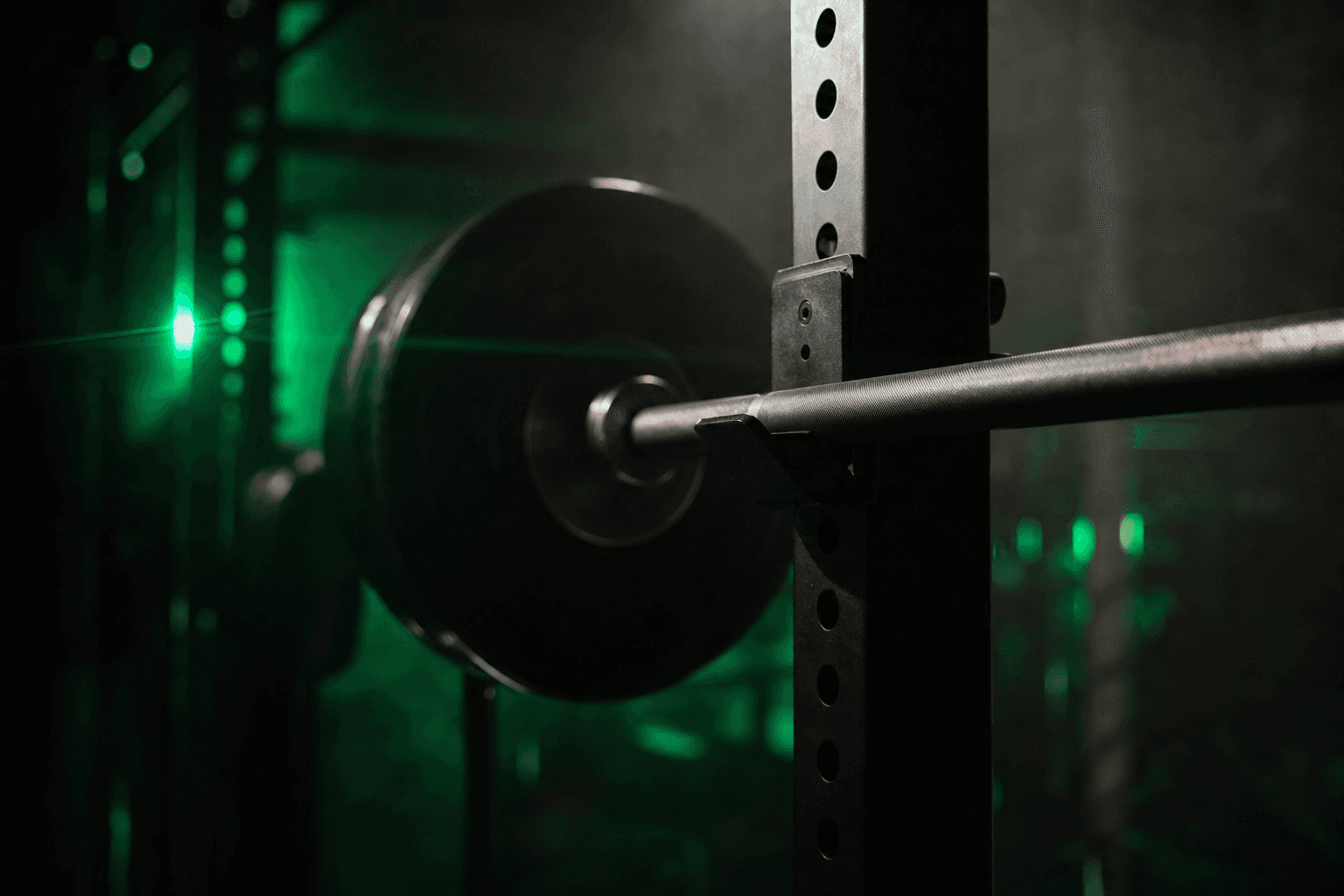
An IWF men’s Olympic bar weighs 20 kg (44.1 lb) and the women’s bar 15 kg (33.1 lb). A bar sold as 45 lb is a different specification, about 20.4 kg. Specialty bars vary by model, so check the label before adding the bar to your plates.
This guide explains the competition specifications, useful identification clues, and how to calculate totals without treating rounded gym shorthand as an exact conversion.
The IWF Men’s Olympic Bar: 20 kg (44.1 lb)
The IWF equipment specifications specify a 20 kg men’s bar and a 15 kg women’s bar. The men’s competition-bar dimensions are:
Weight: 20 kg (about 44.1 lb)
Length: 2.2 m (7.2 ft)
Shaft diameter: 28 mm
Sleeve diameter: 50 mm; use compatible Olympic plates
Rotating sleeves: Yes, mounted on bushings or bearings so the bar can spin during cleans and snatches
Many gyms use 20 kg Olympic or power bars, but 45 lb and specialty models also exist. With a 20 kg bar and one 20 kg plate per side, the total is 60 kg.
IWF Women’s Olympic Bar: 15 kg (33.1 lb)
The IWF women's bar looks similar at a glance but differs in three ways:
Weight: 15 kg (about 33.1 lb), not 35 lb
Length: 2.01 m, slightly shorter
Shaft diameter: 25 mm, noticeably thinner in the hand
The thinner shaft can suit smaller hands. Shaft diameter, length, and the absence of center knurling are useful clues to an IWF-style 15 kg bar, but the end label or manufacturer is the best confirmation. Replacing a 20 kg bar with a 15 kg bar changes the total by 5 kg (about 11.0 lb). These bars may be used by any lifter according to the task; the names refer to competition specifications.
Bench Press Bar Weight: Check the Model
A bench station may use a 20 kg bar or a true 45 lb power bar. One 45 lb plate per side totals 135 lb only with a 45 lb bar. The metric example of a 20 kg bar plus 20 kg per side is 60 kg, about 132.3 lb.
Two exceptions matter:
Power bars often use a thicker, stiffer shaft than weightlifting bars. Check whether yours is a 20 kg or 45 lb model; Rogue’s 45 lb power-bar specifications show that genuine 45 lb models exist.
A Smith machine has model-specific starting resistance affected by counterbalance and rail design. Use the machine label or manual, and keep its history separate from free-weight bench press.
If your gym posts the Smith machine's bar weight, use that. If not, treat the Smith bar as its own baseline and focus on progressing relative to your own history rather than comparing it to your barbell bench.
Specialty Bar Weights: EZ Curl, Trap Bar, Squat Bars and More
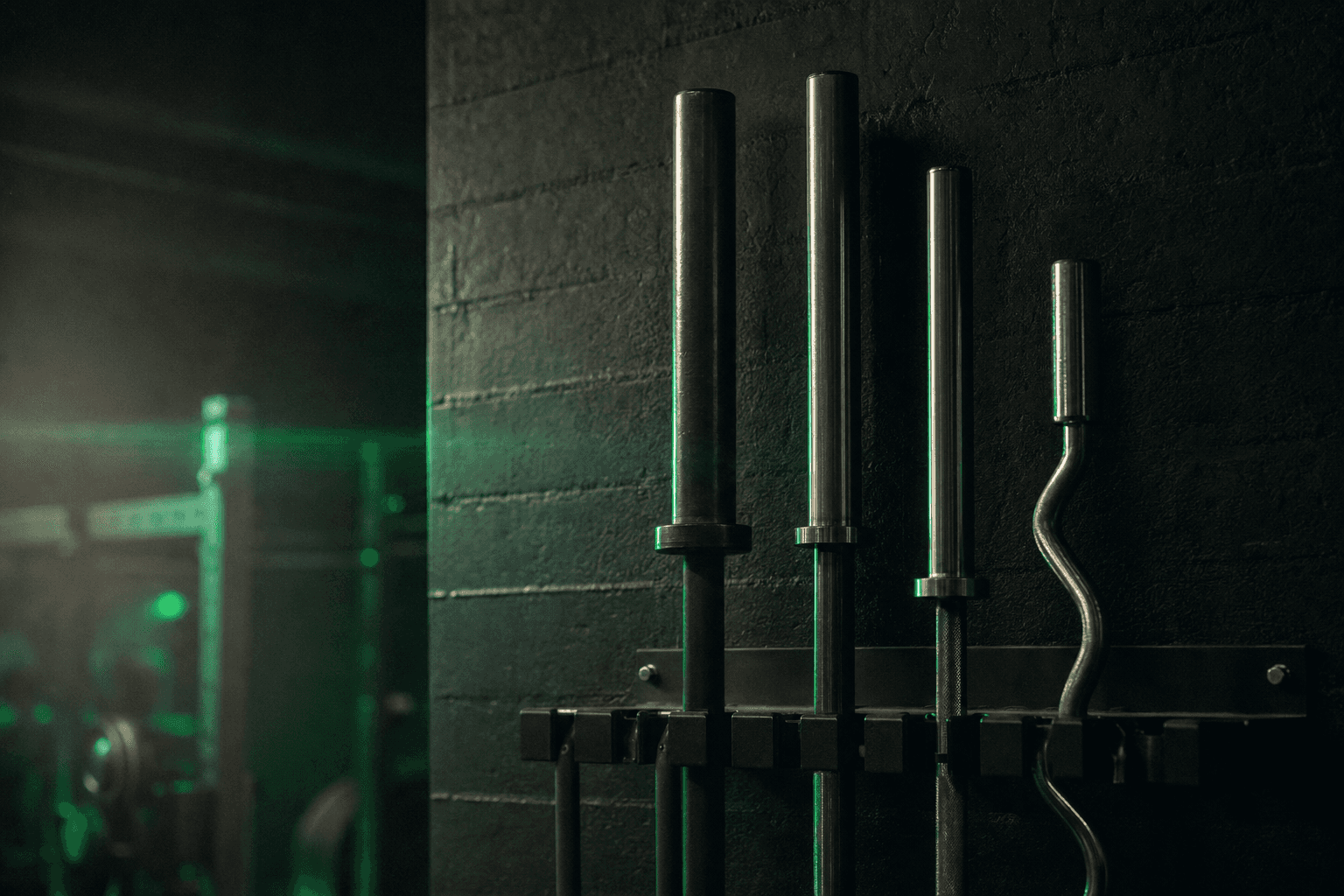
These are identification categories, not exact weight standards. Examples and checks:
Bar type | Weight / verification | Notes |
|---|---|---|
EZ curl bar | Varies; Rogue example: 30 lb (13.6 kg) | Manufacturer example; do not assume 15–25 lb |
Trap bar (hex bar) | Model-specific | Open and closed frames can have different masses |
Safety squat bar | Model-specific | Camber and pad add weight |
Swiss bar (football bar) | Model-specific | Neutral-grip pressing bar |
Standard (non-Olympic) bar | Model-specific | 25 mm sleeves, home gym sets |
Technique bar | Lighter training models vary | Aluminum, for learning lifts |
Fixed barbells | Labeled on the bar | Weight printed on the ends |
Because specialty bars vary so much between manufacturers, the only reliable method is to check your own gym's equipment once. Ask staff, look for a stamp on the sleeve, or weigh the bar on a scale. Do it one time, write it down, and every future log entry becomes accurate.
Should You Count the Bar in Your Lifts?
Yes. For free-weight barbell totals, add the bar, plates on both sides, and any counted collars. Percentage programs and 1RM estimates should use that total. Machine or assisted exercises may follow different conventions, so state yours clearly.
Consistent measurement helps you distinguish an added plate or rep from an equipment change. It does not create the training adaptation itself. Progress can still be tracked with a fixed offset on the same bar, but the absolute total and cross-equipment comparisons will be inaccurate.
Counting the bar also keeps your estimated one-rep max honest. If you plug "80 kg x 5" into a 1RM Calculator but you actually lifted 95 kg because you forgot the bar, every percentage-based session you plan from that estimate will be wrong.
Why Bar Weight Matters Most on Your First Lifts
Exercise identity matters alongside weight. Nunes and colleagues’ exercise-order meta-analysis, published online in 2020 found greater strength gains in movements placed first. That is a reason to prioritize a target lift, not evidence that the weight printed in your log changes muscle growth.
Compare the same bar and movement setup when evaluating progress. A safety-bar squat and straight-bar squat are different variations, even at the same total mass. Give them separate labels in your log. For sequencing, see the exercise-order guide.
Quick Reference: Common Loaded Totals
Keep these two examples separate: a 20 kg bar with 20 kg plates, and a true 45 lb bar with 45 lb plates. Collars are excluded from both lists:
1 plate per side: 60 kg in the metric example; 135 lb in the pound example
2 plates per side: 100 kg; 225 lb respectively
3 plates per side: 140 kg; 315 lb respectively
4 plates per side: 180 kg; 405 lb respectively
Using a 15 kg bar instead of the 20 kg bar reduces each metric example by 5 kg. If using pound plates on a 15 kg bar, calculate with 33.1 lb for the bar. For any specialty bar, substitute its actual mass. IWF collars add another 5 kg per pair when used.
How to Apply This in Setgraph
Use a repeatable naming and logging convention so changing equipment does not look like a strength gain.
Setgraph’s iOS listing describes Smart Plates for calculating totals. Check the selected units and bar assumption against your actual equipment before recording the result.
Keep “Squat, straight bar” and “Squat, safety bar” as distinct entries. Review load and reps for the same variation before choosing a next-session target; a different implement is not a like-for-like personal record.
Example note: “Safety bar verified at 27 kg; displayed total includes bar and all plates.” If the bar weight is still unknown, label the uncertainty rather than silently using 20 kg.
For more training guides like this one, browse the Setgraph guides hub.
FAQ
Q: How much does an Olympic bar weigh?
The IWF men’s bar is 20 kg (44.1 lb), and the women’s bar is 15 kg (33.1 lb). Gym bars sold at 45 lb or 35 lb are not exact conversions of those specifications.
Q: How much does the bench press bar weigh?
Common options include a 20 kg bar or a true 45 lb power bar. Check the label. Smith machines use a model-specific starting resistance and should be logged separately.
Q: Is every 45 lb bar exactly 45 lb?
Manufacturers sell genuine 45 lb bars as well as 20 kg bars. Twenty kilograms equals about 44.1 lb, so do not assume every “45” bar is simply rounded metric equipment. Use the stated specification and be consistent about units.
Q: How can I tell a 20 kg bar from a 15 kg bar?
For IWF-style weightlifting bars, the 20 kg model has a 28 mm shaft and center knurling, while the 15 kg model has a 25 mm shaft, is shorter, and has no center knurling. These are clues, not proof for every gym bar; confirm the end label or manufacturer.
Q: How much does an EZ curl bar weigh?
There is no universal EZ-bar weight. Some are light, while the cited Rogue Curl Bar is 30 lb (13.6 kg). Check the particular model or ask staff rather than relying on a generic range.
Q: Do I count the bar when I say how much I lift?
Yes for a free-weight barbell total: bar plus all plates, with collars included if your convention or competition requires them. For example, 20 kg bar + 20 kg each side = 60 kg before collars.
Stop guessing what is on the bar. Log every set with the real total, watch your trend lines, and let the numbers drive your next session. Start tracking with Setgraph.