What Is a Total Body Workout: The Complete Guide to Full-Body Training

A total body workout trains all your major muscle groups in a single session to build strength, improve conditioning, and save time. Whether you are short on hours or trying to balance strength and fat loss, a well-structured full-body plan can be the most efficient way to get results. This guide explains what a total body workout is, why it works, how to program it for different goals, and how to avoid common mistakes.
What is a total body workout?
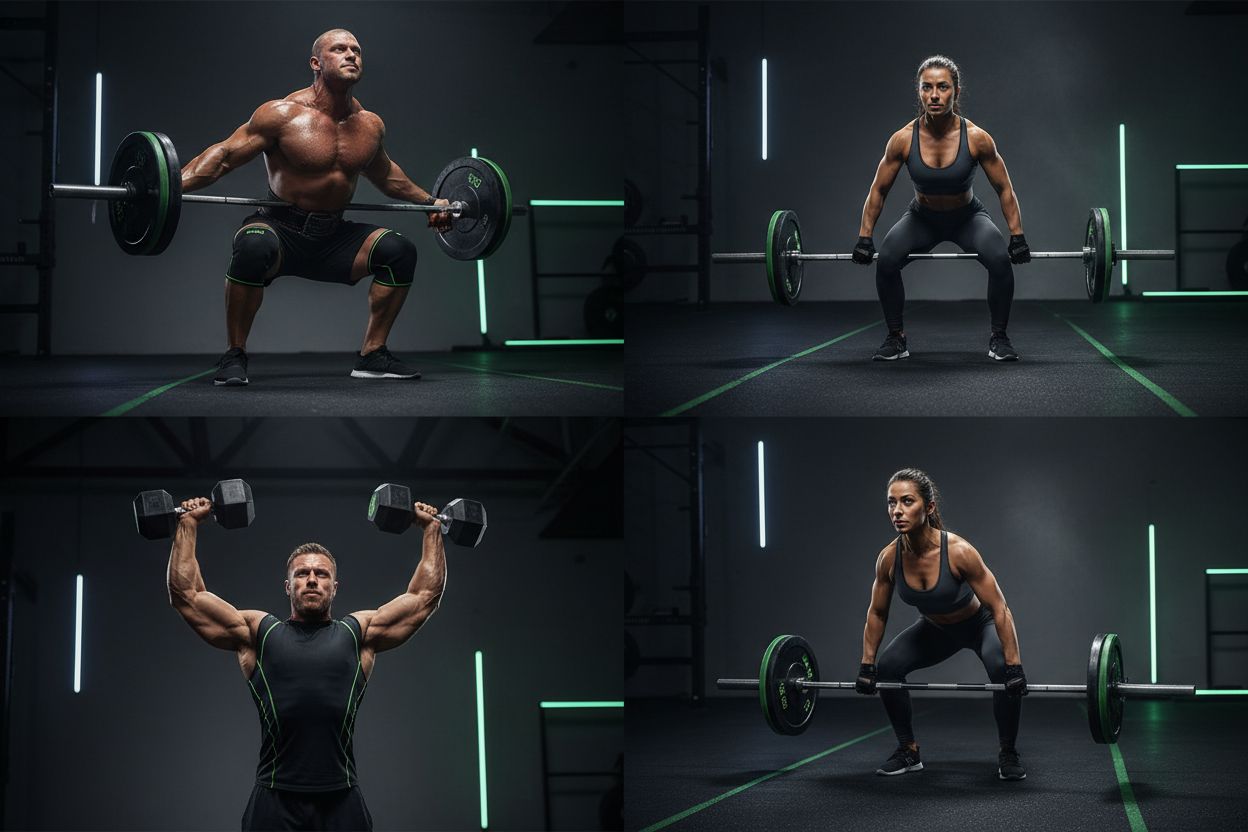
A total body workout, sometimes called a full-body workout, deliberately targets all major muscle groups—legs, back, chest, shoulders, core, and arms—within the same training session. Instead of isolating one or two areas like in split routines, total body training emphasizes multi-joint compound movements such as squats, deadlifts, presses, and rows.
Key differences from split routines
Frequency: With total body workouts you typically train each muscle group multiple times per week. Split routines often hit each muscle once per week.
Volume per session: Full-body sessions spread volume across muscles while splits concentrate more volume on a specific region per workout.
Time efficiency: Full-body training gives broad stimulus in fewer sessions, which suits busy schedules and general fitness goals.
Why the approach matters
Total body programming leverages compound lifts to stimulate more muscle mass in less time. That leads to efficient calorie burn, strong hormonal responses, and frequent practice of larger movements that improve skill and strength.
Benefits of full-body training
Time efficiency: You can get a comprehensive workout in 45 to 75 minutes, two to three times per week.
Balanced development: Hitting all muscle groups each session helps prevent imbalances and supports posture and functional strength.
Higher weekly frequency: Training muscles more often can foster faster strength and hypertrophy gains, especially for beginners.
Calorie burn and EPOC: Compound movements and larger muscle recruitment increase metabolic demand and can elevate post-exercise oxygen consumption, supporting fat loss.
Beginner-friendly progression: Simple compound lifts are easier to learn and scale compared with complex high-volume splits.
Physiological effects worth knowing
Muscle protein synthesis: Each effective session stimulates MPS. Repeated stimulation across days can maintain growth signals more consistently than once-weekly splits.
Hormonal response: Full-body sessions with moderate to high intensity raise acute levels of growth hormone and testosterone. These hormonal spikes are transient but part of a beneficial anabolic environment when paired with adequate nutrition and rest.
Neuromuscular adaptation: Frequent practice of compound lifts improves motor unit recruitment and neural coordination, which accelerates strength gains.
Full body vs split workouts: which should you choose?
When to prefer a total body approach
You have limited training days per week. Full-body is ideal for 2 to 4 sessions weekly.
You want consistent progress on strength and fat loss simultaneously.
You are a beginner or returning from a break and need frequent practice of primary lifts.
When a split may be better
You can train 4 to 6 times per week and want to focus heavily on specific muscle groups.
You are an advanced lifter who needs high weekly volume per muscle to stimulate further hypertrophy.
Research summary
Studies consistently show that higher weekly frequency per muscle group—achievable with full-body programming—tends to support faster strength and hypertrophy gains for most lifters, especially when overall volume is equated. Advanced trainees can still use full-body templates effectively but often require careful volume and intensity management.
Sample total body workout routines
Below are practical templates for different experience levels. Warm up 5 to 10 minutes before each session and include movement-specific warm-up sets.
Beginner: 2–3 sessions per week
Squat (or goblet squat): 3 sets x 8–12 reps
Push (push-up or dumbbell bench press): 3 sets x 8–12 reps
Row (seated row or dumbbell row): 3 sets x 8–12 reps
Romanian deadlift (light): 2 sets x 8–12 reps
Plank: 3 x 30–60 seconds
Notes: Use weights that allow good technique for all reps. Rest 60–90 seconds between sets. Progress by adding 2.5 to 5 pounds or 1 rep when you can complete the top end of the rep range for all sets.
Intermediate: 3 sessions per week
A: Squat 4 x 6–8, Bench press 3 x 6–8, Bent-over row 3 x 6–8, Romanian deadlift 2 x 8, Hanging leg raises 3 x 10–15
B: Deadlift 3 x 4–6, Overhead press 3 x 6–8, Chin-up 3 x 6–10, Bulgarian split squat 3 x 8 per leg, Farmer carry 3 x 30 seconds
Rotate A/B across three weekly sessions (A, B, A one week; B, A, B the next) and increase load gradually.
Advanced: 3–4 sessions with emphasis on strength and hypertrophy
Session example: Power variant (explosive work) plus hypertrophy
Power: Trap bar or hex bar deadlift 3 x 3 (explosive)
Strength: Squat 5 x 5
Hypertrophy: Incline dumbbell press 3 x 8–12
Accessory: Chest-supported row 3 x 8–12
Finish: Single-leg RDL 3 x 8 per leg, Core circuit 3 rounds
Volume management: For advanced lifters, keep weekly sets per major muscle around 10 to 20 depending on recovery and use autoregulation.
How to program full-body training effectively
Frequency and volume
Beginners: 2–3 sessions per week, 12–15 weekly sets per major muscle is a good start.
Intermediate: 3 sessions per week, 12–20 weekly sets per muscle depending on intensity.
Advanced: 3–4 sessions with careful periodization to avoid excessive cumulative fatigue.
Exercise order: large to small
Start with compound, multi-joint lifts that require high neural input such as squats and deadlifts. Follow with pressing and rowing movements and finish with single-joint accessory work. This preserves strength for heavy lifts and reduces injury risk.
Rest periods for goals
Strength: 2 to 5 minutes between heavy sets
Hypertrophy: 60 to 90 seconds
Endurance/conditioning: 30 to 60 seconds or circuit format
Progressive overload and autoregulation
Progressive overload remains essential. Track load, reps, and RPE. Use RIR (reps in reserve) or RPE to adjust daily intensity. If one session feels unusually heavy, reduce load by 5 to 10 percent or drop a set to maintain long-term consistency.
Periodization and deloads
Linear periodization works for newcomers: gradually increase load or volume across 6 to 12 weeks then take a deload week.
Undulating periodization cycles intensity and volume across the week, for example heavy, medium, light sessions.
Deload: every 4 to 8 weeks reduce volume and intensity by 40 to 60 percent or take a recovery week when motivation, strength, or sleep declines.
For detailed exercise principles and technique cues, see Core Principles & Techniques for Every Lifter - Setgraph.
Minimal equipment and at-home variations
You can build an effective total body program with limited gear.
Bodyweight progressions: Pistols or assisted pistols, push-up variations, inverted rows, single-leg Romanian deadlift from a standing balance.
Bands: Use resistance bands for rows, presses, squats, and RDLs. Bands provide variable resistance and are great for hypertrophy and joint-friendly loading.
Kettlebell-focused session: Kettlebell swings, goblet squats, Turkish get-ups, single-arm press, renegade rows. These create full-body stimulus and conditioning.
If you track workouts, a simple logging app helps you maintain progressive overload. Consider tools like Setgraph - Workout Tracker Gym Log App to record sets, reps, and weights.
Nutrition and recovery for full-body training
Pre-workout
Eat a small meal with carbohydrates and protein 60 to 90 minutes before training, for example oatmeal with a scoop of protein or rice and chicken.
If training fasted, keep intensity moderate and prioritize post-workout nutrition.
Post-workout
Aim for 20 to 40 grams of high-quality protein within 1 to 2 hours and include carbohydrates to replenish glycogen for frequent sessions.
Creatine monohydrate is a well-researched supplement that supports strength and muscle mass across training styles.
Calories and macronutrients
For muscle gain, target a modest calorie surplus of 250 to 500 calories above maintenance.
For fat loss, a 300 to 500 calorie deficit combined with resistance training helps retain lean mass.
Full-body workouts burn substantial energy. Adjust total daily energy expenditure (TDEE) calculations to reflect training frequency and intensity.
For more training optimization and guides, see Optimize Your Training | Expert Tips and Workout Guides.
Special populations and goal-specific tweaks
Older adults
Prioritize muscle maintenance with 2–3 weekly full-body sessions using lighter loads, slower tempos, and a focus on balance and mobility.
Emphasize protein distribution across meals and allow longer recovery when needed.
Athletes
Integrate power and sport-specific movements. Use lower-volume full-body phases for strength maintenance and higher-volume blocks when focusing on hypertrophy in the offseason.
Postpartum and rehabilitation
Start with pelvic floor-friendly progressions, low-impact movements, and gradual reintroduction of intensity. Work with a clinician when necessary.
Endurance athletes
Use full-body sessions on non-key cardio days to preserve muscle and develop strength without compromising aerobic work. Reduce lower-body volume during heavy aerobic training blocks.
Troubleshooting common problems
Overtraining signs
Persistent fatigue, poor sleep, declining performance, and mood changes. If you see these, reduce volume, add a deload week, improve sleep, and check nutrition.
Plateaus
Break plateaus with planned variation: change rep ranges, swap exercises, introduce tempo work, or transition to a block of heavier strength-focused sessions.
Injury prevention and form checks
Prioritize technique over load. Record lifts and review form or work with a coach. Small mobility and warm-up routines reduce injury risk.
If you want structured week-by-week programs and progress tracking templates, check the Setgraph Training Guide | Maximize Your Workout and the general Fitness & Workout Tips | Setgraph hub.
Frequently asked questions
Can you do a total body workout every day?
Daily full-body sessions are not recommended for most people because muscles and the nervous system need recovery. Novices can handle higher frequency but still benefit from at least one full rest or active recovery day per week.
How long should a total body workout be?
Aim for 45 to 75 minutes depending on goals. Strength-focused sessions with long rests can push to 90 minutes but most effective full-body sessions fit inside an hour.
Is full-body training good for weight loss?
Yes. Full-body workouts recruit large muscle groups and elevate energy expenditure, which supports fat loss when paired with appropriate nutrition.
How many times per week should I train full body?
2–3 times per week is ideal for most. More advanced lifters can use 3–4 sessions with careful volume control.
Is total body the same as full body?
Yes. Both terms are used interchangeably to describe training that targets all major muscle groups in a single session.
How to get started today
Choose a template above that matches your experience level. 2. Block 2 to 3 training days in your week and protect them. 3. Track loads, reps, and RPE. 4. Prioritize sleep, protein, and progressive overload. 5. Schedule a deload every 4 to 8 weeks.
If you want a place to log workouts, review progress, and keep consistent, try the Setgraph App: Insights, Tips & Training Guides to find tracking tips and program ideas.
A total body workout is a flexible and powerful way to build strength, improve conditioning, and stay consistent. With clear programming, proper recovery, and steady progression, it can serve beginners and experienced lifters alike. Pick a routine, track your progress, and adjust volume and intensity as you improve.
If you need quick templates or want to experiment with minimal-equipment options, the Setgraph articles and guides linked above provide practical examples and tracking approaches to help you stay on track.
Article created using Lovarank