Strength Training for Beginners: A Step-by-Step Guide to Start Safely

Strength training does not have to start with a heavy barbell or a complicated split. At its core, it is any movement that challenges your muscles against resistance, including bodyweight exercises, bands, dumbbells, machines, and free weights. For adults, the CDC recommends muscle-strengthening activity at least two days a week, and Mayo Clinic notes that short, consistent sessions can still build meaningful strength. (cdc.gov)
If you are new, the best plan is usually the simplest one. Start with a few basic movements, focus on control, and add a little more only when the current work feels solid. That approach lines up with guidance to start slowly, warm up first, and progress gradually instead of rushing into too much volume or too much weight. (odphp.health.gov)
What strength training actually does for your body
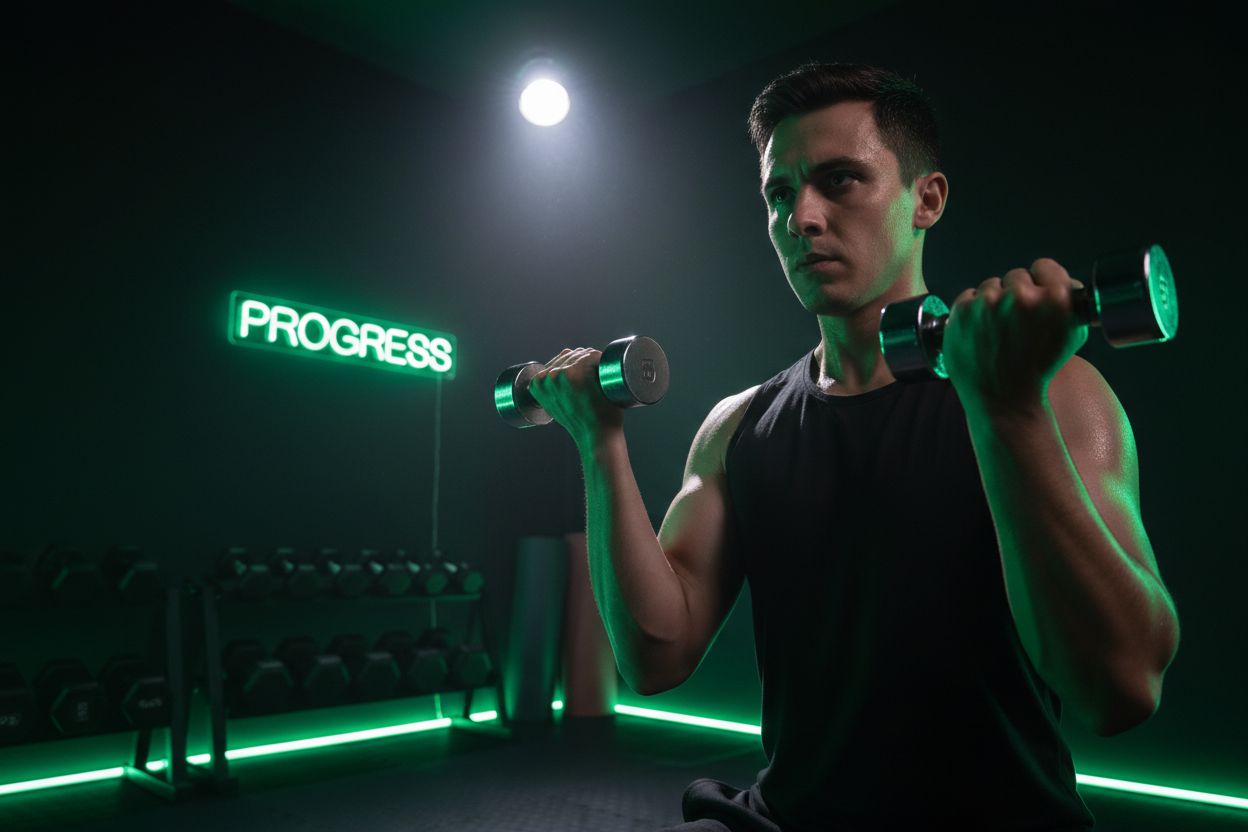
Strength training is not just about bigger muscles. Public health guidance says it can help strengthen bones, support balance and coordination, and improve the ability to handle everyday tasks. Mayo Clinic also notes that strength training can be done at home or in the gym and can support weight management, bone health, and quality of life. (cdc.gov)
For a beginner, that matters because early progress is often practical before it is visual. You may notice stairs feel easier, carrying groceries feels less awkward, or your posture feels more stable before you see dramatic muscle changes. That is a normal sign that the routine is working. (cdc.gov)
A good beginner routine usually tries to do three things at once: train the major muscle groups, teach you how to move well, and build a habit you can repeat next week. If you can do those three things consistently, you are already ahead of most people who start and stop. (cdc.gov)
How to start safely in your first month

If you have a chronic condition or have been inactive for a while, check with a clinician before starting. Before lifting, warm up with 5 to 10 minutes of brisk walking or another easy aerobic activity. Then choose a weight or resistance that makes the set challenging by about 12 to 15 reps while still letting you keep good form. Mayo Clinic also recommends breathing throughout the lift and resting one full day between working the same muscle group. (mayoclinic.org)
For beginners, that usually means full-body workouts two times per week, not a seven-day marathon. The CDC says adults need muscle-strengthening activity at least two days a week, and Mayo Clinic says you can make progress with just two or three 20- or 30-minute sessions a week. (cdc.gov)
A simple first-month plan
Here is one practical way to apply that advice:
Week 1: Do two short full-body sessions. Pick 4 or 5 movements and use a light load that lets you finish each set with control.
Week 2: Repeat the same exercises. Keep the same weight if you are still learning the movement.
Week 3: If you can easily do more than 15 clean reps, add a small amount of resistance.
Week 4: Keep the schedule steady, or add one extra set to one or two exercises if recovery still feels good.
This is not the only way to train, but it keeps the workload manageable while you learn technique and build consistency. A useful companion as you learn movement patterns is Core Principles & Techniques for Every Lifter. (odphp.health.gov)
The best beginner exercises to learn first
A beginner does not need a huge exercise menu. Mayo Clinic specifically points to bodyweight exercises such as push-ups, planks, lunges, and squats, and it also highlights resistance tubing, free weights, and weight machines as practical options. That gives you enough variety to cover the major muscle groups without making the routine complicated. (mayoclinic.org)
A simple starter list can look like this:
Squat pattern: bodyweight squats, sit-to-stands, or goblet squats
Push pattern: wall push-ups, incline push-ups, or dumbbell presses
Pull pattern: resistance-band rows or one-arm dumbbell rows
Glute and hinge pattern: glute bridges or hip hinges
Core pattern: planks
The goal is not to find the hardest variation. The goal is to pick a version you can repeat with good control and steady breathing. Mayo Clinic also reminds lifters to breathe freely instead of holding their breath during repetitions. (mayoclinic.org)
Home workouts, gym workouts, and no-equipment options
Strength training can work in almost any setting. If you are training at home, bodyweight exercises and resistance tubing are enough to get started. If you are in a gym, dumbbells and weight machines add more loading options. Mayo Clinic notes that all of these can be valid ways to train, as long as technique stays solid. (mayoclinic.org)
A simple setup guide looks like this:
No equipment: squats, wall push-ups, planks
Minimal equipment: band rows, dumbbell rows, glute bridges with a dumbbell or band
Gym setup: dumbbells, cable stations, and weight machines
If you like seeing your progress in writing, a workout tracker can help you record exercises, sets, reps, and resistance. If you are comparing ways to log training, user reviews for tracking sets, reps, and workouts can be a useful place to start.
How to progress without getting hurt

Progress comes from small increases, not huge jumps. Mayo Clinic says to use a weight or resistance level heavy enough to fatigue the muscles in about 12 to 15 reps, then increase the load gradually when you can do more with good form. It also says to stop if an exercise causes pain and to lower the weight or reps if you cannot keep proper technique. (mayoclinic.org)
A single set can be enough when you are starting out, and Mayo Clinic notes that two or three 20- or 30-minute sessions a week can still produce significant improvement. That means you do not need to chase exhaustion every workout to make progress. (mayoclinic.org)
It also helps to know the difference between normal soreness and a warning sign. Mild soreness or stiffness after unfamiliar exercise is common, but sharp pain during the session, worsening pain, numbness, tingling, or muscle pain that does not improve should not be ignored. (nhsinform.scot)
Tracking your workouts makes this easier to manage. Write down the exercise, resistance, and reps, then try to improve one small variable at a time. When you want a more structured way to organize that process, Setgraph Training Guide | Maximize Your Workout is a practical next read.
Common beginner mistakes to avoid
Most beginner mistakes come from doing too much too soon, skipping the warm-up, or letting form break down the moment the weight feels challenging. Mayo Clinic and public health guidance both emphasize starting slowly, using proper technique, and allowing time for recovery. (odphp.health.gov)
Watch out for these habits:
Adding weight before the movement feels stable
Training the same muscle group hard every day
Holding your breath during reps
Skipping warm-ups because the workout feels short
Pushing through sharp pain instead of stopping
A little soreness is fine. A movement that feels sloppy, painful, or rushed is not. If your form falls apart, the weight is too heavy for that version of the exercise. (mayoclinic.org)
Staying consistent matters more than getting every session perfect. One of the easiest ways to stay consistent is to make the routine easy to repeat, then keep a simple record of what you did. If you want more ideas for building that habit, Fitness & Workout Tips can be a helpful follow-up once the basics feel familiar.
FAQ about strength training for beginners
How many days a week should a beginner strength train?
A good starting point is two days a week, with at least one day between training the same muscle group. That lines up with CDC guidance for muscle-strengthening activity and Mayo Clinic's advice to rest between sessions for the same muscles. (cdc.gov)
Should I do cardio too?
Yes. Adults still need aerobic activity as part of the bigger picture. The CDC says adults should aim for at least 150 minutes of moderate-intensity aerobic activity a week, and if you have been inactive, the guidance is to start slowly and build up. (cdc.gov)
Are machines or free weights better for beginners?
Either can work. Mayo Clinic lists bodyweight exercises, resistance tubing, free weights, and weight machines as valid ways to train. The better choice is the one that lets you keep good form and repeat the workout consistently. (mayoclinic.org)
How long before I see results?
Many beginners notice that daily tasks feel easier after a few weeks of steady training. Mayo Clinic says significant strength improvement can come from just two or three 20- or 30-minute strength sessions each week. (mayoclinic.org)
Is strength training safe for beginners?
Usually yes, as long as you start gradually, warm up, use proper form, and stop if an exercise causes pain. If you have a health problem or are unsure about a movement, talk with a healthcare professional first. (mayoclinic.org)
Strength training for beginners works best when it feels simple enough to repeat. Start with a few movements, use a manageable resistance, warm up before each session, and make small progress only when your form stays clean. That approach is boring in the best possible way, because boring is what makes a routine sustainable. (mayoclinic.org)
Article created using Lovarank