Push Workout for Beginners: A Practical, Safe Plan to Build Strength and Size

If you are new to lifting or returning after a break, a focused push workout for beginners is one of the fastest ways to build visible strength and confidence. Push workouts concentrate on movements that push weight away from your body, primarily working the chest, shoulders, and triceps. This guide gives you everything you need: warm-ups, form cues, scaled options, a full beginner routine, and a clear progression plan for the first eight weeks.
What is a push workout and which muscles does it target?
A push workout groups exercises that require you to push resistance away from your body. The main movers are the chest, anterior and medial shoulders, and triceps. Compound pressing exercises recruit multiple muscles and joints while isolation moves target a single muscle for detail work.

Benefits of doing regular push days include improved pressing strength, better shoulder stability, and more balanced upper-body development when paired with pull and leg days. Most beginner plans place compound lifts first so you tackle them when fresh and finish with isolated triceps or shoulder work.
How often should beginners do push workouts?
For most beginners, one to two push workouts per week is optimal. If you are following a push-pull-legs split, one push day gives steady progress while two push days can accelerate gains if recovery, sleep, and nutrition are adequate. Key recovery signals are consistent energy in workouts and steady progression in reps or load.
Warm-up and mobility: prepare to push safely
A short, purposeful warm-up prevents injury and improves performance. Spend 8 to 12 minutes on this sequence before heavy pressing:
3 to 5 minutes of light cardio to raise core temperature (walking, bike)
Shoulder circles and arm swings for 30 to 60 seconds
Band pull-aparts 2 sets of 12 to activate rear delts and scapular stabilizers
Scap push-ups or wall slides 2 sets of 8 to prime shoulder movement
A few light warm-up sets for your first compound lift (e.g., empty bar or light dumbbells, 2 to 3 sets)
Warm-up tips:
Increase load gradually. If bench pressing, do 2 to 3 ramp sets before your working sets.
If shoulders feel tight, spend extra time on mobility and avoid heavy overhead work that day.
For more foundational technique and mobility principles, see Core Principles & Techniques for Every Lifter - Setgraph.
How to pick the right weight and rep ranges
Beginners should favor learning quality movement over lifting maximal loads. Use these simple rules:
If you can complete the upper end of the rep range with perfect form, slightly increase the weight next session.
If the last 1 to 2 reps are challenging but controlled, the weight is appropriate.
For strength and skill building, aim for 3 to 5 sets of 6 to 10 reps on compound lifts.
For isolation and shoulder accessory work, choose 2 to 3 sets of 10 to 15 reps.
Rest 60 to 90 seconds between accessory sets and 90 to 120 seconds for compound sets when learning technique.
Common beginner mistakes and how to avoid them
Pushing too heavy too soon. Progress in 2.5 to 5 pound increments when possible. Small, consistent increases add up.
Skipping warm-ups. Always ramp into heavy lifts with lighter sets.
Poor scapular position. Keep your shoulder blades slightly retracted and stable during pressing.
Letting the elbows flare wide on bench press. Tuck elbows to 30 to 45 degrees to protect the shoulder joint.
Neglecting triceps and rear deltoid work. Balanced development reduces injury risk and improves pressing strength.
If any exercise causes sharp pain, stop and reassess form or choose a scaled alternative.
Best push exercises for beginners (with form cues)
Start every session with a compound press then move to secondary compound and finish with isolation work. Below are reliable choices and cues.
Barbell or dumbbell bench press
Lie flat with feet on the floor and a neutral lower back.
Squeeze shoulder blades together and maintain that tension.
Lower the bar to mid-chest and press up, breathing out on the concentric push.
Keep the elbows at a 30 to 45 degree angle to your torso.
Scaling: use dumbbells if you lack a spot or try push-ups if you have no equipment.
Overhead press (standing or seated)
Stand with feet hip-width and brace core.
Press the bar or dumbbells overhead in a straight path while exhaling.
Keep ribcage down and avoid excessive arching in the lower back.
Scaling: do seated dumbbell presses or use lighter weight bands.
Incline dumbbell press
Set bench to 20 to 30 degrees.
Drive the weights up and slightly back toward the face, targeting upper chest.
Push-ups (standard, incline, knee)
Maintain a straight line from head to heels or knees.
Lower chest to roughly 1 to 2 fists from the floor and push up.
Breathe naturally and keep elbows at a moderate angle.
Scaling: incline push-ups reduce load; decline pushes more weight to the chest. Knee push-ups are useful for absolute beginners.
Dumbbell lateral raise (shoulder isolation)
Slight bend in the elbows, raise to shoulder height with control.
Use light weight and avoid swinging.
Triceps extension or rope pushdown
Keep elbows fixed and extend through the elbow joint.
Use controlled tempo to avoid momentum.
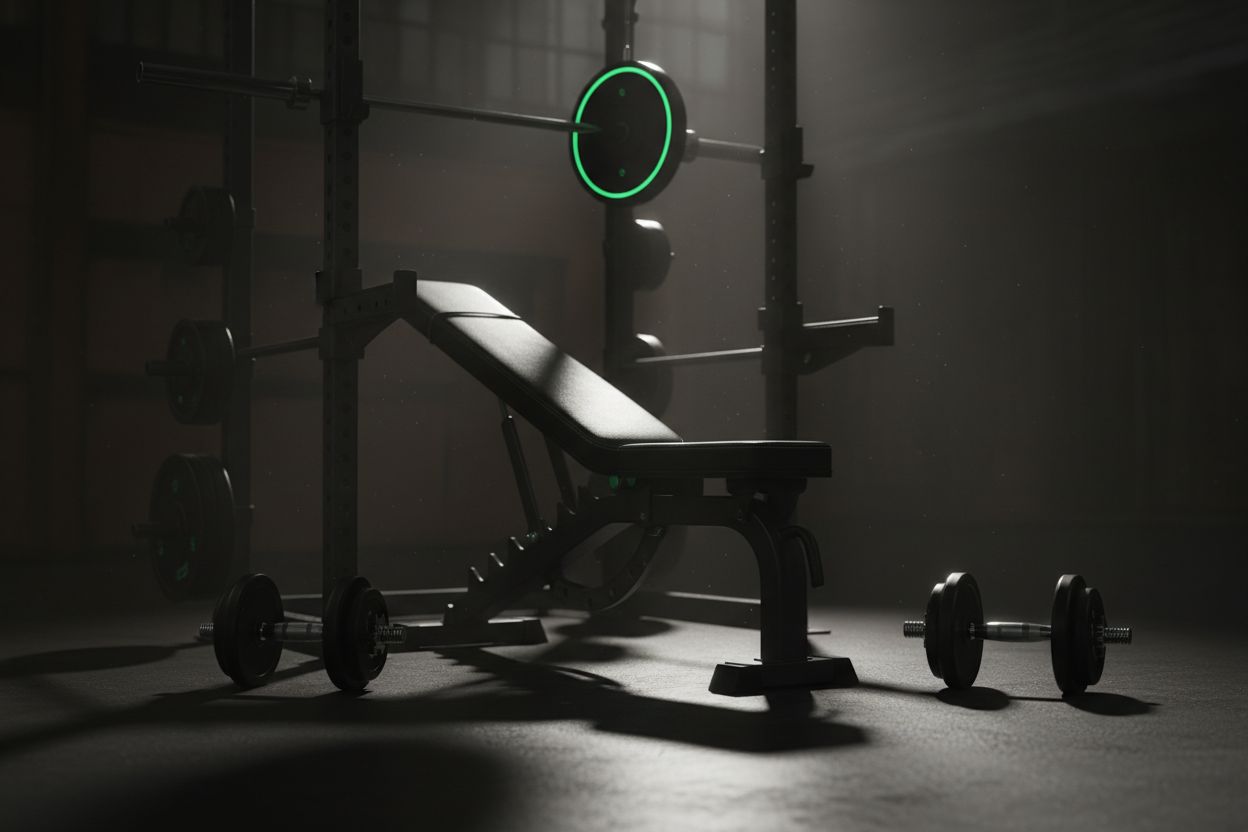
Sample push workout for beginners (gym and home versions)
Pick one of the two routines below based on equipment access. Aim to train twice per week if you recover well; otherwise once per week is fine for the first month.
Gym version (Beginner):
Warm-up: 8 to 12 minutes (see warm-up section)
Barbell bench press: 3 sets x 6 to 8 reps
Overhead dumbbell press: 3 sets x 8 to 10 reps
Incline dumbbell press: 2 sets x 10 to 12 reps
Dumbbell lateral raises: 3 sets x 12 to 15 reps
Triceps rope pushdown or overhead triceps extension: 3 sets x 10 to 12 reps
Optional: 2 sets of push-ups to near-failure as a finisher
Home version (Minimal equipment):
Warm-up: 8 to 12 minutes
Push-ups: 3 sets x 8 to 15 reps (adjust incline/decline or knees)
Pike push-ups or standing dumbbell/handstand progression: 3 sets x 6 to 10 reps
Incline push-ups or single-arm dumbbell press: 2 sets x 8 to 12 reps
Dumbbell lateral raises or band lateral raises: 3 sets x 12 to 15 reps
Triceps dips (bench or chair) or band triceps extensions: 3 sets x 10 to 15 reps
Sets and rest:
Compound lifts: 3 sets is a good starting point. Rest 90 to 120 seconds.
Accessory lifts: 2 to 3 sets. Rest 60 to 90 seconds.
Tracking progress and small wins
Track the weight, sets, and reps for every session. Small, consistent increases in reps or load every 1 to 2 weeks are the sign of progress. If you prefer digital tracking, a workout app makes logging easier and shows trends over time. Consider using Setgraph - Workout Tracker Gym Log App to log sets and monitor progress.
If you miss reps two sessions in a row, reduce load slightly and rebuild your base. Writing quick notes about what felt hard helps you tweak programming intelligently.
4-week and 8-week beginner progression plan
Progression gives structure to early gains. Use the plan below as a template and adjust based on recovery.
Weeks 1 to 4 (Foundations):
Frequency: 1 to 2 push days per week
Focus: learn form, build work capacity
Load strategy: choose a weight that allows the top of rep range with good form
Week-to-week goal: add 1 to 3 reps per set or 2.5 to 5 pounds when all reps are completed easily
Weeks 5 to 8 (Strength and volume increase):
Frequency: 2 push days per week if recovering well
Mix: Day A focuses on heavier compounds (4 sets x 5 to 8 reps), Day B emphasizes volume and accessory work (3 sets x 8 to 12 reps)
Introduce small variations like incline barbell press or paused push-ups to build control
Deload: After 6 to 8 weeks of steady work, schedule a lighter week where you reduce volume by 40 to 60 percent and avoid pushing to failure. Deloads aid long-term progress.

Troubleshooting: pain, plateaus, and equipment limits
If you feel joint pain rather than muscle fatigue, stop the exercise and identify the source. Common fixes:
Swap a problematic lift for a similar movement that does not hurt. For example, replace bench press with dumbbell press or push-ups.
Check setup and posture. Small changes to scapular position and elbow angle often remove pain.
Use lighter load and higher reps temporarily while you reinforce movement patterns.
Plateaus are normal. To break them:
Change rep ranges for 2 to 4 weeks
Add a small weekly weight increase or an extra set
Improve sleep and nutrition
If you lack gym equipment, bands and bodyweight progressions offer meaningful strength gains. Push-ups, banded presses, and overhead variations should be the backbone of a home push workout.
Breathing, tempo, and safety on big lifts
Breathe in on the lowering phase and exhale on the press. For heavy singles, learn a safe breath and brace technique but avoid Valsalva unless you have coaching.
Control the eccentric (lowering) phase for 2 seconds on accessory work to build stability and strength.
On big lifts like bench press, use a spotter when attempting near-max loads or train with a power rack with safety pins.
Nutrition, recovery, and what to expect in 4 to 8 weeks
Protein: aim for 0.7 to 1 gram of protein per pound of body weight to support muscle growth.
Sleep: 7 to 9 hours per night helps recovery and strength gains.
Timeline: beginners often see noticeable strength increases in the first 4 weeks and visible muscular changes by 8 to 12 weeks with consistent training and nutrition.
Small plateaus after early progress are normal. Keep training consistent and measure performance, not just mirror changes.
For extra guidance on optimizing training and long term plans, see Optimize Your Training | Expert Tips and Workout Guides and the Setgraph Training Guide | Maximize Your Workout.
When to move from beginner to intermediate programming
You are ready to upgrade your program when:
You consistently hit your target reps and are adding load every 2 to 3 weeks for several months.
You can complete 3 to 4 compound sets with controlled technique and still recover between sessions.
Signs you are not ready include chronic joint pain, stalled progress due to poor recovery, or inability to complete planned volume. In that case, revisit volume, sleep, and nutrition.
FAQs
Q: How long should a beginner push workout take?
A: Count on 45 to 75 minutes including warm-up. Compound focus with 3 to 5 accessory movements fits well in that window.
Q: Can I do push workouts on consecutive days?
A: Avoid consecutive heavy push days. Muscle recovery needs at least 48 hours for most beginners. If you want daily training, alternate push with mobility or light technique work.
Q: Are push workouts enough for overall fitness?
A: Push days are one component. Combine push with pull and leg days, and include conditioning for balanced fitness. A push-pull-legs split is effective for many beginners.
Q: What if I have limited equipment at home?
A: Use bodyweight variations, resistance bands, and single dumbbell work. Focus on progressive overload by increasing reps, improving tempo, or reducing rest.
Q: How should I track my workouts?
A: Track weight, sets, reps, and a short note on form or difficulties. Digital trackers help visualize progress; for a simple logging solution try Setgraph - Workout Tracker Gym Log App or browse general tips at Fitness & Workout Tips | Setgraph.
Final notes
A push workout for beginners should be simple, repeatable, and focused on technique. Start with conservative loads, prioritize form, and track your progress. Over the first 8 weeks you will build strength, learn movement patterns, and find what recovery looks like for your body.
If you want structured templates and tracking tools to stay consistent, check practical programming resources like Core Principles & Techniques for Every Lifter - Setgraph and the Setgraph training guides linked above. Keep the plan simple, be patient, and celebrate steady progress.
Article created using Lovarank