One Rep Max Deadlift Calculator: How to Estimate, Test, and Improve Your 1RM
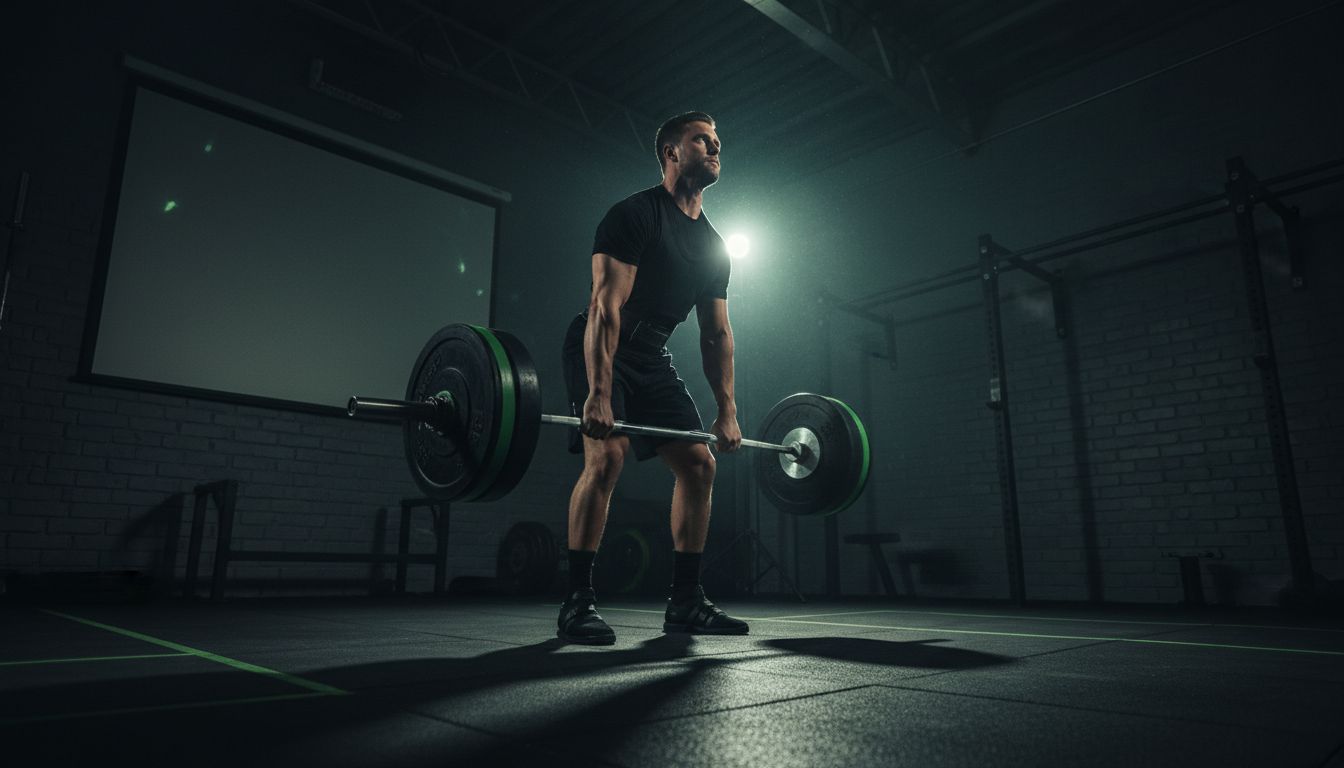
Testing your one rep max deadlift is one of the fastest ways to measure raw strength and set clear goals, but raw numbers are only useful when they are accurate and contextualized. This guide explains how a one rep max deadlift calculator works, how to test your true 1RM safely, how to interpret percentage tables for programming, and how to structure training to raise your deadlift over weeks and months.
How to use the one rep max deadlift calculator

A one rep max deadlift calculator converts a submaximal set into an estimated maximum using validated formulas. Most calculators ask for three inputs: the weight you lifted, the number of reps performed, and whether you used kilograms or pounds. The tool then returns an estimated 1RM plus a percentage breakdown you can use for programming.
Step-by-step use
Record a recent set where you reached near failure, typically between 2 and 10 reps. Avoid using very high rep sets like 20 to estimate 1RM, they are less accurate.
Enter the weight and reps into the calculator and choose the unit (kg or lb). The calculator gives an estimated 1RM using one or multiple formulas.
Review the percentage table the calculator provides. This shows training loads for different intensities, from heavy singles to high-rep work.
Use the estimate for program planning or attempt selection, but treat it as an estimate. If you plan a true 1RM test, follow the warm up and safety steps later in this article.
Common formulas behind the calculator
Epley: 1RM = Weight × (1 + Reps/30)
Brzycki: 1RM = Weight × (36 / (37 - Reps))
Lombardi: 1RM = Weight × Reps^0.10
Mayhew et al: 1RM = (100 × Weight) / (52.2 + 41.9 × e^{-0.055 × Reps})
Many calculators output an average of two or three formulas to reduce variance. Epley is common because it is simple and accurate for moderate rep ranges.
Quick example
You deadlift 315 lb for 5 reps. Using Epley: 315 × (1 + 5/30) = 315 × 1.1667 = 367.5 lb estimated 1RM.
Unit conversion
If you track in kilograms but test in pounds, or vice versa, convert using 1 kg = 2.20462 lb. Most calculators include a unit toggle so you do not need to convert manually.
Deadlift-specific considerations and calculator adjustments
A deadlift-specific calculator recognizes that deadlift technique, variation, and equipment can affect 1RM more than other lifts.
Variation matters. Conventional, sumo, trap bar, and Romanian deadlifts produce different outputs. A conventional deadlift 1RM may not directly translate to a trap bar 1RM.
Equipment changes results. Lifting straps, a belt, and calibrated plates change the practical 1RM. Straps can eliminate grip as a limiting factor and usually increase the load you can move.
Grip failures bias the estimate downward. If grip fails before the hips and posterior chain are taxed, the calculator underestimates the true pulling capacity of the posterior chain.
When using a calculator, annotate whether the input set used straps, a belt, or a different stance. If your calculator does not support annotations, mentally account for a 2 to 5 percent adjustment when conditions differ from your planned max attempt.
Warm-up and testing protocol for an accurate 1RM
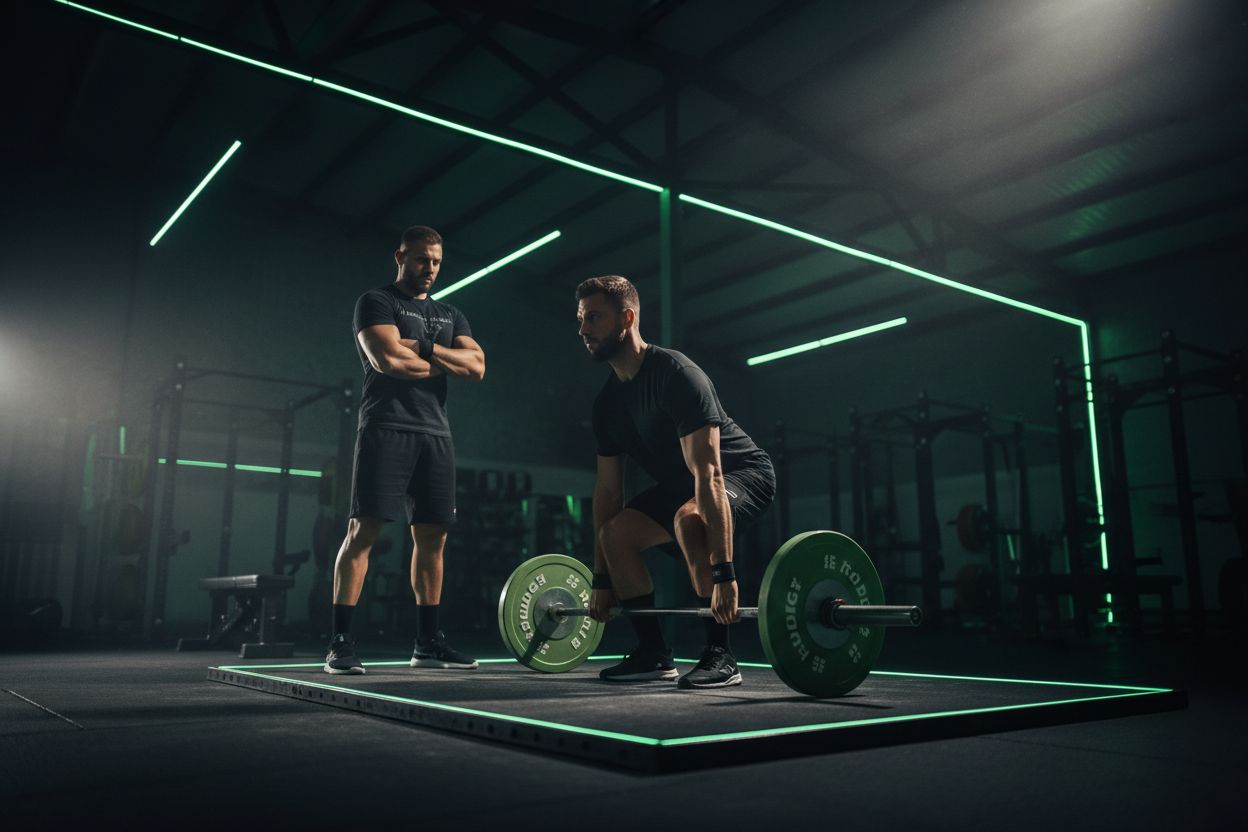
Testing a one rep max deadlift requires a structured warm-up to reach peak performance without unnecessary fatigue.
General warm-up (10 to 15 minutes)
Light cardio: 5 minutes of easy bike or row to raise core temperature.
Mobility: 5 minutes of thoracic mobility, hip hinge drills, and ankle mobility work.
Specific warm-up sets
Empty bar or light kettlebell swings: 8 to 10 reps to groove the hinge pattern.
40 to 50 percent of your estimated 1RM: 5 reps.
60 to 70 percent: 3 reps.
75 to 85 percent: 2 reps.
90 to 95 percent: single, focusing on speed and setup.
Attempt 1RM once you feel tight and fully recovered between heavy singles. Rest 3 to 5 minutes between maximal attempts.
Rules for safe testing
Do not attempt a 1RM if you are ill, extremely fatigued, or have unresolved pain.
Have a training partner or coach present when possible. They can help with spotting cues and safety. While a deadlift does not require a spotter to catch the bar, supervision reduces risk and helps load choice.
Use a lifting belt and chalk if they are part of your normal setup. Do not introduce new equipment on a testing day.
Increase attempts by conservative increments. For heavy singles, 5 to 15 lb or 2.5 to 5 kg jumps are common for advanced lifters and 10 to 20 lb for beginners depending on the current max.
When to test versus estimate
Estimate 1RM when you want a reasonably accurate number for programming without the fatigue cost. Use a heavy set of 3 to 8 reps and feed it into the calculator.
Test a true 1RM when you need an accurate competition-like attempt or to validate progress every 8 to 12 weeks for intermediate lifters. Powerlifters test more specifically during peak phases.
Interpreting results and the rep-percentage table
A one rep max deadlift calculator typically shows percentages of your estimated 1RM. These guide day-to-day loads for different training goals.
Typical percentage chart (rounded)
Reps | % of 1RM |
|---|---|
1 | 100% |
2 | 97% |
3 | 94% |
4 | 92% |
5 | 89% |
6 | 86% |
7 | 83% |
8 | 80% |
9 | 77% |
10 | 75% |
12 | 70% |
15 | 65% |
20 | 60% |
These percentages are a starting point. Individual differences in muscle fiber type, technique, and endurance mean you should adjust based on how prescribed loads feel.
RPE and RIR adjustments
Incorporate rate of perceived exertion or reps in reserve into your programming. A set at 85 percent of your estimated 1RM could feel very different on a heavy day versus a fresh day. If using RPE, a 2 RIR set at 85 percent provides a safer, productive stimulus than grinding to failure.
How to increase your deadlift 1RM: a practical plan
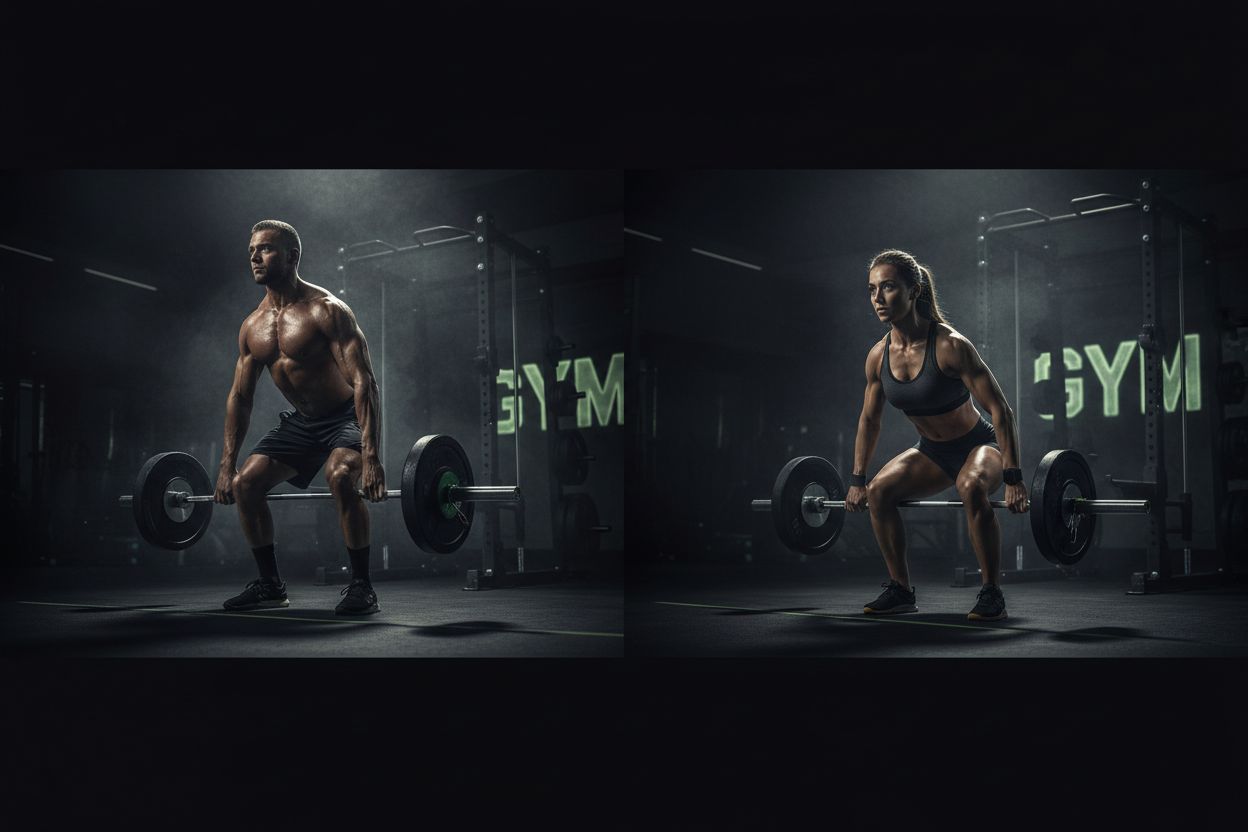
Increasing a one rep max deadlift is not just about pulled singles. It requires targeted programming, accessory work, technique refinement, and recovery.
Core principles
Progressive overload: Gradually increase volume or intensity over weeks.
Specificity: Train the deadlift and its weak points. If lockout is weak, use rack pulls. If off the floor is weak, use deficit deadlifts.
Recovery: Strength gains require adequate sleep, nutrition, and deload weeks.
Training structure example: 8-week intermediate block
Weeks 1 to 3 - Volume accumulation
Day A: Heavy work sets 4 x 6 at 70 to 75 percent of 1RM
Day B: Technique and speed 6 x 3 at 60 to 70 percent focusing on bar speed
Accessories: Romanian deadlifts 3 x 8, barbell rows 3 x 6, hamstring curls 3 x 10
Weeks 4 to 6 - Intensification
Day A: 5 x 5 at 75 to 80 percent
Day B: Heavy singles 5 x 1 building to 90 to 95 percent with long rest
Accessories: Deficit deadlifts 3 x 5, glute-ham raises 3 x 8
Week 7 - Peaking
Day A: Singles at 92 to 98 percent with full recovery between attempts
Day B: Light speed pulls 4 x 2 at 60 to 70 percent
Week 8 - Deload and test
Light sessions early in the week, full rest before a 1RM test at the end of the week
Accessory work to prioritize
Posterior chain: Romanian deadlifts, good mornings, glute-ham raises
Lockout strength: Rack pulls and block pulls
Core: Heavy carries and ab wheel for intra-abdominal pressure
Grip: Farmer carries, heavy holds, and thick bar work if grip limits you
Nutrition and recovery
Calories: A mild calorie surplus supports strength gains for most lifters.
Protein: Aim for 1.6 to 2.2 g per kg of bodyweight per day.
Sleep: Prioritize 7 to 9 hours of quality sleep.
Programming tools and tracking
Use a workout tracker to log sets, reps, and how each set felt. Tracking helps you adjust loads and notice plateaus early. For more structured guidance and tracking, check a training guide like Setgraph Training Guide | Maximize Your Workout or browse broader tips at Fitness & Workout Tips | Setgraph.
Competition attempt selection and advanced tips
Powerlifters and competitive lifters should use calculators to help choose second and third attempts. A good approach:
Open with a conservative lift you can complete confidently for a 2.5 to 5 kg increase over your recent best single.
Second attempt: a weight you expect to make but that is challenging - typically 95 to 99 percent of your estimated 1RM depending on freshness.
Third attempt: choose based on how the second felt; this could be a small PR or a planned peak.
Use a calculator and recent training singles to fine tune attempts. If you track attempt outcomes over time, you can refine your openers to improve success across competitions.
Safety, frequency, and recovery recommendations
How often should you test a 1RM? For most lifters, test every 8 to 12 weeks at most. Testing too often increases injury risk and limits productive training. Use estimated 1RM from heavy training sets between tests.
Deloading
After a test or heavy block, plan a deload week with reduced volume or intensity to allow supercompensation.
Active recovery like light mobility sessions and short walks helps circulation without adding stress.
Injury prevention
Respect sharp pain. Stop if you feel an acute joint pain and consult a professional.
Address imbalances with unilateral work such as single-leg Romanian deadlifts and Bulgarian split squats.
Common deadlift mistakes that lower your 1RM
Rushing the setup: Improper hip position causes early rounding and power loss.
Weak bracing: Poor intra-abdominal pressure reduces force transfer.
Grip negligence: Not training grip leads to missed reps.
Skipping accessory work: Weak hamstrings, glutes, or upper back limit the deadlift.
Fixes
Practice consistent setup cues: flat back, braced core, chest up, tension in the lats.
Train grip and accessory lifts regularly.
Use video or a coach to critique form; small adjustments often add tens of pounds to your 1RM.
Frequently asked questions
Q: How accurate is an estimated one rep max deadlift calculator?
A: Accuracy depends on the reps used for the estimate and individual differences. Estimates from sets of 2 to 8 reps are usually within 2 to 5 percent of your actual 1RM. Very high rep inputs are less reliable.
Q: Can I use a calculator if I wear a deadlift suit or use straps?
A: Yes, but annotate the conditions. Strength-assisted equipment like suits can increase 1RM substantially. Straps mainly reduce grip limitations and may increase lifts by a small margin.
Q: How should beginners pick weights based on the calculator?
A: Treat the output as a guideline. For programming, round conservatively and prioritize technique. Beginners often progress rapidly and should increase loads based on consistent weekly improvements rather than chasing exact percentages.
If you want structured tracking and logging for deadlift progression, consider a dedicated tracker such as Setgraph - Workout Tracker Gym Log App which helps record sets, variations, and notes. You can also read user feedback at Setgraph App Reviews (2025): User Ratings for Tracking Sets, Reps & Workouts and explore optimization tips at Optimize Your Training | Expert Tips and Workout Guides.
Final takeaways
A one rep max deadlift calculator is a useful tool for estimating and planning, but it is not a replacement for smart testing and consistent programming. Use the calculator to guide intensity, follow a structured warm-up and testing protocol for accurate max attempts, and prioritize accessory work and recovery. Over time consistent programming guided by reliable tracking will produce the largest gains in your deadlift.
If you are looking for deeper how-to content on lift mechanics and programming details, the Setgraph knowledge hub includes practical guides at Setgraph App: Insights, Tips & Training Guides that expand on many topics covered here.
Article created using Lovarank