How to Use Gym Weights: A Complete Beginner’s Guide
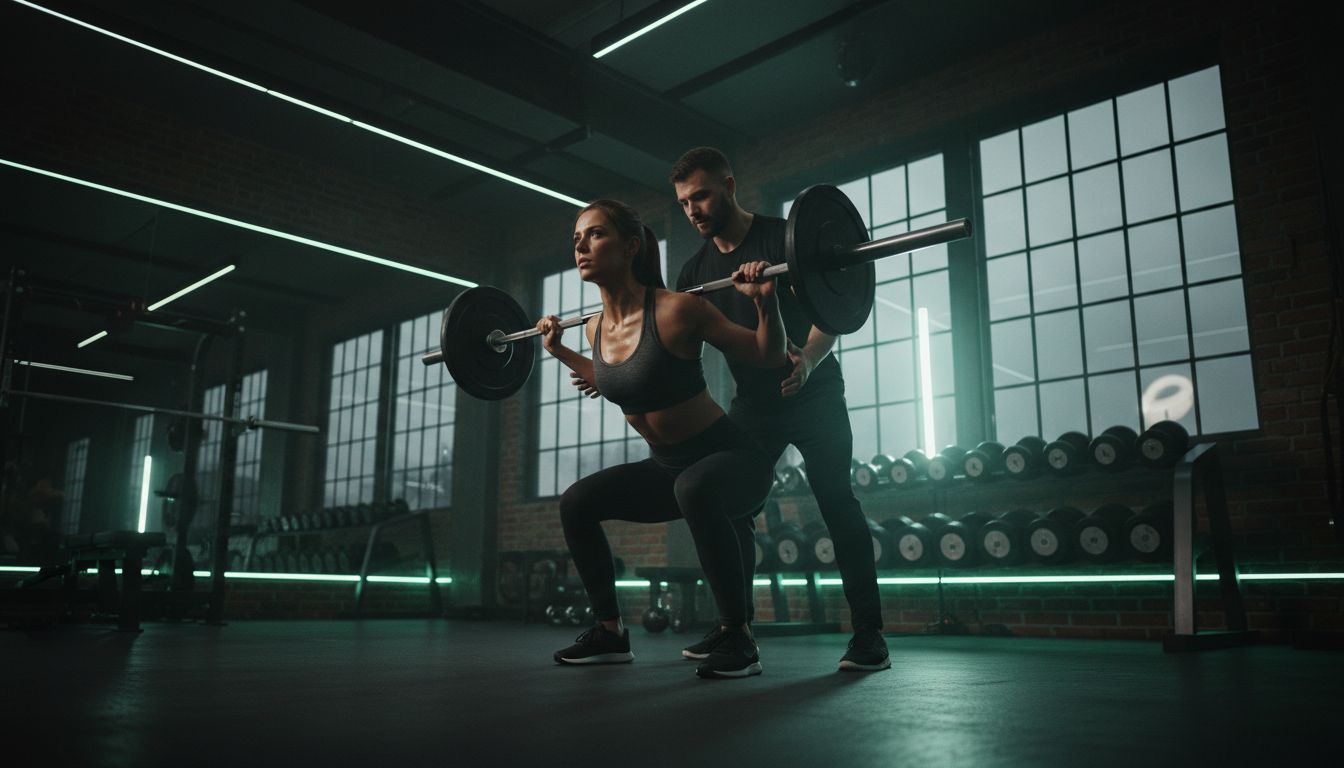
Walking into a gym for the first time can feel overwhelming, but learning how to use gym weights is a skill you can master in a few guided sessions. This guide gives clear, practical steps for machines and free weights, safety rules you can use immediately, a beginner workout plan, and scripts for asking for help when you need it.
Before You Start: Gym Preparation Essentials
A quick checklist and a plan will reduce anxiety and make your first sessions productive.
What to Bring to the Gym
Comfortable shoes with a stable sole, not sandals. Running shoes are fine for most beginners.
Water bottle and small towel.
Lock for a locker if your gym requires one.
Phone with a workout tracking app or notebook. Consider a tracker like Setgraph - Workout Tracker Gym Log App to log sets and weights.
Basic hygiene items, such as deodorant and wipes for equipment.
What to Wear for Weight Training
Choose breathable, nonrestrictive clothing that allows full joint movement. Avoid overly loose clothing that can catch on equipment. For squats and deadlifts, shoes with a firm, flat sole help with stability.
Understanding Gym Layout and Zones
Gyms are usually arranged into zones: free weights and racks, plate-loaded and selectorized machines, cable area, and cardio. If you are unsure where an item is, ask the front desk for a quick tour when you sign up.
Gym Weight Equipment 101: Understanding the Basics
Knowing basic terms and components helps you approach machines and barbells with confidence.
Machines vs Free Weights: Which Should You Use?
Machines: Good for beginners because they guide movement, reduce balance demands, and lower injury risk while you learn. Use them to build movement familiarity and initial strength.
Free weights: Include dumbbells, barbells, and kettlebells. They require more stabilization and train accessory muscles. Move to free weights when your form and confidence are solid.
Aim for a mix as you progress, starting with machines and simple dumbbell exercises.
How to Read Equipment Instruction Placards
Most machines have a sticker that shows the starting position, motion path, and muscles targeted. Read them like this:
Identify the starting position and which body parts are supported.
Note seat height and pin placement recommendations.
Look for an image that shows where to place feet or hands.
Check the recommended range of motion. If in doubt, ask staff to demonstrate.
Universal Adjustment Mechanisms Explained
Seat height: Align joint hinge with machine pivot, for example knee with leg press axis or shoulder with shoulder press pivot.
Back support: Keep a small gap between your lower back and the pad if the movement requires lumbar flexion, otherwise maintain neutral spine.
Pin selectors and weight stacks: Ensure the pin is fully inserted and the stack is engaged before starting.
Safety catches: On plate-loaded equipment and squat racks, set safety pins at a height that will catch the bar without interfering with the lift.
Weight Selection Systems
Selectorized stacks: Move the metal pin to the desired weight. Start light and test a slow rep.
Plate-loaded: Load plates evenly and secure collars if available. If plates are in 10 pound or 5 kilogram jumps, consider using dumbbells for smaller progressions.
For step-by-step tracking and logging of selected weights, see an app review such as Setgraph App Reviews (2025): User Ratings for Tracking Sets, Reps & Workouts.
Essential Safety Rules for Using Gym Weights
Correct habits prevent injury and accelerate progress.
Proper Form Fundamentals
Move through controlled motion, not momentum.
Keep a neutral spine and engage your core on nearly every lift.
Keep shoulders down and back during pressing and pulling movements.
Drive through the heels on lower body pressing movements unless the machine instructs otherwise.
When to Use a Spotter
Use a spotter for heavy barbell lifts like bench press and for any near-failure sets on machines where you could be pinned. For machines equipped with safety stops, set them appropriately.
How to Fail Safely on Machines
Know where the emergency release or safety pin is. On plate-loaded machines, step off the platform carefully if a rep fails and the path is clear. For single-arm machines, lower the handle to the resting position instead of letting it swing uncontrolled.
Pain vs Discomfort: Knowing the Difference
Discomfort: Muscle burn, temporary fatigue, mild joint tightness that resolves with rest.
Pain: Sharp, sudden, or persistent sensation, especially in joints or lower back. Stop immediately, reassess position, and seek professional advice.
If pain persists beyond 24 hours after modifying technique and load, consult a medical professional.
Lower Body Weight Machines
This section covers common leg machines, adjustments, and common mistakes.
Leg Press Machine
Adjust seat so knees form about a 90 degree angle at the start.
Foot placement: mid-foot centered, heels slightly wider than shoulder-width for balanced activation.
Range of motion: Avoid locking out knees at the top and avoid letting knees collapse inward.
Common mistakes: Feet too high on platform shifts load to glutes excessively, too low causes deep hip flexion and lower back rounding.
Leg Extension Machine
Align the pad with the front of your ankle, not up on your shins.
Use moderate weight, perform controlled rep to avoid hyperextension at the knee.
Common mistakes: Using momentum to swing weight, which stresses the knee.
Seated/Prone Leg Curl Machine
Position your knees at the hinge point and adjust pads so the pad rests on the lower part of the calf.
Focus on controlled eccentric lowering rather than rapid swings.
Hip Abductor/Adductor Machines
Keep torso upright and move through a full but comfortable range.
Avoid overstretching if you have limited hip mobility.
Upper Body Weight Machines
Key machines and precise setup create safe, effective training.
Chest Press Machine
Adjust seat so handles are roughly at mid-chest height.
Set back against pad, press in a controlled line, do not over-arch back.
Common variation: Single-arm press for unilateral strength balance.
Lat Pulldown Machine
Choose a grip slightly wider than shoulder width for general back development.
Pull the bar to your upper chest while keeping chest lifted and shoulders down.
Avoid pulling behind the neck, which stresses shoulders.
Seated Row Machine
Sit tall, retract shoulder blades before pulling, and lead with the elbows.
Avoid rounding the upper back by keeping a braced torso.
Shoulder Press Machine
Align handles at shoulder height and press overhead without shrugging.
If you feel pain in the front shoulder, decrease range or load and reassess position.
Pec Deck/Fly Machine
Adjust seat so your elbows are at roughly shoulder height.
Keep a slight bend in the elbows to protect the joint during the fly motion.
Cable Machine Mastery
Cable machines are versatile and useful any time the gym is crowded.
Cable Machine Anatomy
Adjustable pulley height, weight stack, and various attachments such as handles, ropes, and bars.
The cable provides constant tension throughout the movement.
Attachment Types and Uses
Single handles for unilateral presses and rows.
Rope for triceps extensions and face pulls.
Straight bar for curls and rows.
Five Beginner Cable Exercises
Cable chest press, 2. Standing cable row, 3. Cable lateral raise, 4. Rope face pull, 5. Cable triceps pushdown.
Perform each for 8 to 12 controlled reps for 2 to 3 sets.
Free Weights for Beginners
When you are comfortable with machines, start adding basic free weight moves.
Dumbbell Basics
Start with lighter dumbbells and practice tempo: 2 seconds concentric, 1 second pause, 3 seconds eccentric.
Dumbbells allow unilateral work that helps fix strength imbalances.
Barbell and Squat Rack Setup
Learn safe bar path and foot placement for squats and bench press from a coach or experienced lifter.
Set safety pins at a height that allows you to fail safely without being trapped.
When to Progress from Machines to Free Weights
Progress when you can control form for 3 sets of 8 to 12 reps on a machine and you want more challenge for stability and coordination.
Creating Your First Gym Workout
Use this simple, three-day full-body routine for the first 8 to 12 weeks. Rest at least one day between sessions.
Beginner Full-Body Routine (3 Days/Week)
Perform 2 to 3 sets per exercise. Rest 60 to 90 seconds between sets.
Day A
Leg press, 8 to 12 reps
Seated row, 8 to 12 reps
Chest press machine, 8 to 12 reps
Dumbbell Romanian deadlift, 8 to 12 reps
Plank, 2 x 30 seconds
Day B
Lat pulldown, 8 to 12 reps
Leg curl machine, 10 to 15 reps
Dumbbell shoulder press, 8 to 12 reps
Cable face pulls, 12 to 15 reps
Side plank, 2 x 20 seconds per side
Rotate Day A and Day B with an off day between sessions, or do A, rest, B, rest, A each week.
How to Track Your Progress
Record weight, sets, and reps after each set. Small, consistent increases matter. For easy logging, check Fitness & Workout Tips | Setgraph for ideas on tracking workouts.
Progressive Overload for Beginners
Aim to add 2.5 to 5 pounds to upper body lifts and 5 to 10 pounds to lower body lifts every 1 to 2 weeks, depending on comfort.
If you cannot add weight, add an extra rep or a slow eccentric to increase difficulty.
Gym Etiquette and Social Navigation
Following common rules keeps the floor friendly and efficient.
Sharing Equipment Properly
Re-rack weights immediately after use.
Limit time on machines if others are waiting, especially during peak hours.
When someone is using multiple pieces of equipment for a circuit, ask how many rounds they have left before assuming you can use the machine.
How to Ask for Help: Scripts Included
"Excuse me, could you show me how to adjust this seat? I'm new to this machine."
"Hi, would you mind spotting me on this set? I plan to do three reps and I might need help for the last one."
"When you're finished, can I work in for a set between your sets?"
These phrases are direct, polite, and make it easy for others to respond.
Best Times to Visit for Beginners
Off-peak hours are usually mid-afternoon and early evening on weekdays. Ask staff for the least busy times.
Common Beginner Mistakes and How to Avoid Them
Ego lifting: Choose a weight you can control for the entire set.
Skipping warm-ups: Do 5 to 10 minutes of light cardio and dynamic mobility.
Holding breath: Learn the breathing rhythm for lifts, inhale during the eccentric and exhale on effort.
Ignoring small progress: Track even small jumps in weight or reps.
FAQs: Using Gym Weights for the First Time
Q: How much weight should I start with?
A: Choose a weight that allows 8 to 12 controlled reps where the last two reps feel challenging but doable.
Q: How often should I change my routine?
A: Every 6 to 8 weeks, adjust exercises, rep ranges, or increase load to keep adapting.
Q: When should I see progress?
A: Most beginners see strength gains in 4 to 8 weeks, with visible changes in a few months depending on nutrition and consistency.
Troubleshooting and Next Steps
What if a machine does not fit my body? Ask staff for an adjustment or choose an alternative exercise that targets the same muscle group.
What if the gym is crowded? Use cable machines, unilateral dumbbell exercises, or build a short circuit combining bodyweight moves and machines that free up equipment quickly.
Plateau troubleshooting: swap in compound free-weight movements, adjust volume or rep ranges, and ensure your nutrition and sleep support recovery.
For more detailed technique and principles, see Core Principles & Techniques for Every Lifter - Setgraph and Setgraph Training Guide | Maximize Your Workout.
Final Notes on Confidence and Consistency
Learning how to use gym weights is a step-by-step process. Start with machines, prioritize form, and use simple progression rules. Keep a log of each session and celebrate consistent habits more than single heavy lifts. If you want a dedicated place to record workouts and track progress, explore tracking tools like Setgraph - Workout Tracker Gym Log App and read user experiences at Setgraph App Reviews (2025): User Ratings for Tracking Sets, Reps & Workouts.
You do not need to know everything before your first visit. Bring a plan, ask one or two simple questions, and focus on consistent practice. Over time, using gym weights will feel natural and empowering.
Article created using Lovarank