How to Log Workouts: A Simple Step-by-Step Guide for Better Progress

If your workouts feel random, the fix is usually not a new program. It is a better log. ACSM says progression comes from adjusting load, volume, rest, and frequency over time, and the CDC's activity-log template shows that a useful record can be simple at first and still capture more detail when you need it. (myjourney.exerciseismedicine.org)
A good workout log should be fast enough that you actually use it in the gym and detailed enough that next week's session is obvious. That usually means tracking the numbers that change your next decision, not every possible metric. (myjourney.exerciseismedicine.org)
What to record in a workout log
For most lifters, a strong log starts with the basics: date, exercise, sets, reps, and load. ACSM describes load, volume, rest period, and frequency as the core variables that drive progression, while CDC log templates show that you can add extra detail when it helps you interpret the session. (myjourney.exerciseismedicine.org)
Use this checklist as your default:
Date and time: makes it easy to compare sessions and see how often you train. (cdc.gov)
Exercise name: write the exact movement, such as barbell back squat instead of just leg day. That keeps your history searchable and useful. (myjourney.exerciseismedicine.org)
Sets, reps, and load: these are the most important performance numbers for resistance training because they define volume and progression. (myjourney.exerciseismedicine.org)
Rest time: helpful when you want to reproduce a workout or manage fatigue in strength, hypertrophy, circuits, or HIIT sessions. (myjourney.exerciseismedicine.org)
RPE or effort level: optional, but research shows RPE is a practical and valid way to monitor resistance-training intensity. (pubmed.ncbi.nlm.nih.gov)
Notes: form cues, pain, energy, sleep, and small wins all help explain why a session went well or poorly. (setgraph.app)
If you want a deeper foundation on exercise selection and technique, the core principles and techniques for every lifter guide is a useful companion.
Step-by-step: how to log workouts for your first session
Logging workouts gets easier when you use the same order every time. A repeatable process keeps you from forgetting working sets and makes your entries faster as the habit sticks. (setgraph.app)
1. Choose your format before you train
Pick one place for your log and stick with it for at least a month. A notebook is fast and flexible, a spreadsheet is better for sorting and totals, and an app can make in-the-moment entry easier. Setgraph presents itself as a workout tracker and gym log app, and its official site says you can record sets your way, pull straight from history, add notes, and see how weight and reps evolve over time. (setgraph.app)
2. Write the plan before the first working set
Before you start, list the exercises in order, your target sets and reps, and the load or rep range you want to use. ACSM's progression guidance makes it clear that the point of training is to change load and volume on purpose, not guess on the fly. (myjourney.exerciseismedicine.org)
3. Record each working set as soon as you finish it
Do not wait until the end of the workout if you can avoid it. A set forgotten in the middle of a long session is usually the first number that gets lost, and that is the number that matters most when you review progress later. CDC's template and the Setgraph workflow both reflect this simple, in-session style of logging. (cdc.gov)
4. Add one short note after the exercise
Use one line for anything that changes the next session, such as poor sleep, a grip issue, a knee tweak, a rep PR, or a set that felt easier than expected. If you use RPE, note it on the hardest set rather than every single warm-up. Research supports RPE as a usable measure of resistance-exercise intensity and exertion. (pubmed.ncbi.nlm.nih.gov)
5. Review your last workout before the next one
The most useful workout logs are not just records, they are references. A quick look at the previous session tells you whether to add weight, add reps, hold steady, or back off. ACSM ties progression to load, volume, rest, and frequency, so reviewing the last session is what turns a log into an actual training tool. (myjourney.exerciseismedicine.org)
If you want a structured place to build your routines around those steps, the Setgraph Training Guide can help you organize the bigger picture.
Workout log templates by goal
The best way to log workouts depends on what you are trying to improve. ACSM's 2026 guidance says load and volume should be tailored to the goal, with heavier loads and lower sets for strength, more weekly volume for hypertrophy, and moderate loads for power. (acsm.org)
Here are practical templates you can copy and adapt.
Goal | What to prioritize | Example log fields |
|---|---|---|
Strength | Heavier load, lower reps, consistent rest | Date, lift, warm-ups, top set, back-off sets, load, reps, rest, RPE |
Muscle gain | Weekly volume, good form, steady progression | Date, exercise, sets x reps x load, total sets per muscle group, notes |
Bodyweight training | Exercise variation and rep quality | Date, movement variation, sets, reps, tempo, assistance, hold time |
Cardio or HIIT | Time, pace, interval structure, recovery | Date, duration, distance, interval rounds, pace, effort, heart rate if you track it |
A few examples of how that looks in practice:
Strength: Back squat, 3 x 5 at 225 lb, 3 min rest, last set RPE 8.
Hypertrophy: Dumbbell bench press, 4 x 10 at 60 lb, controlled tempo, chest felt strongest on set 3.
Bodyweight: Pull-ups, 5 sets of 6, last set with one assisted rep, slow eccentric on every rep.
Cardio: Treadmill intervals, 8 rounds of 1 minute hard and 1 minute easy, total 16 minutes, pace improved on rounds 6 to 8.
If you want more ideas for building goal-based routines, the Optimize Your Training section is worth saving.
Sample workout log entries
One of the easiest ways to learn how to log workouts is to see finished examples. Notice how each entry is short, specific, and focused on what matters next.
Example 1, lower-body strength day
Date: April 16, 2026
Exercise: Back squat
Warm-ups: 95 x 5, 135 x 3, 165 x 2
Working sets: 185 x 5, 185 x 5, 185 x 4
Rest: 3 minutes
Notes: Brace felt solid, last rep was slow, increase one rep next time if bar speed stays good
Example 2, upper-body hypertrophy day
Date: April 16, 2026
Exercise: Incline dumbbell press
Sets: 3 x 10
Load: 50 lb dumbbells
RPE: 7, 8, 8
Notes: Shoulder felt fine, stop turning elbows in on the last set
Example 3, bodyweight session
Date: April 16, 2026
Exercise: Push-ups
Sets: 4
Reps: 15, 14, 13, 12
Notes: Could add a pause at the bottom or elevate feet next session
The goal is not to write a novel. The goal is to leave yourself enough information to make the next workout better than the last one. (myjourney.exerciseismedicine.org)
Notebook vs spreadsheet vs app
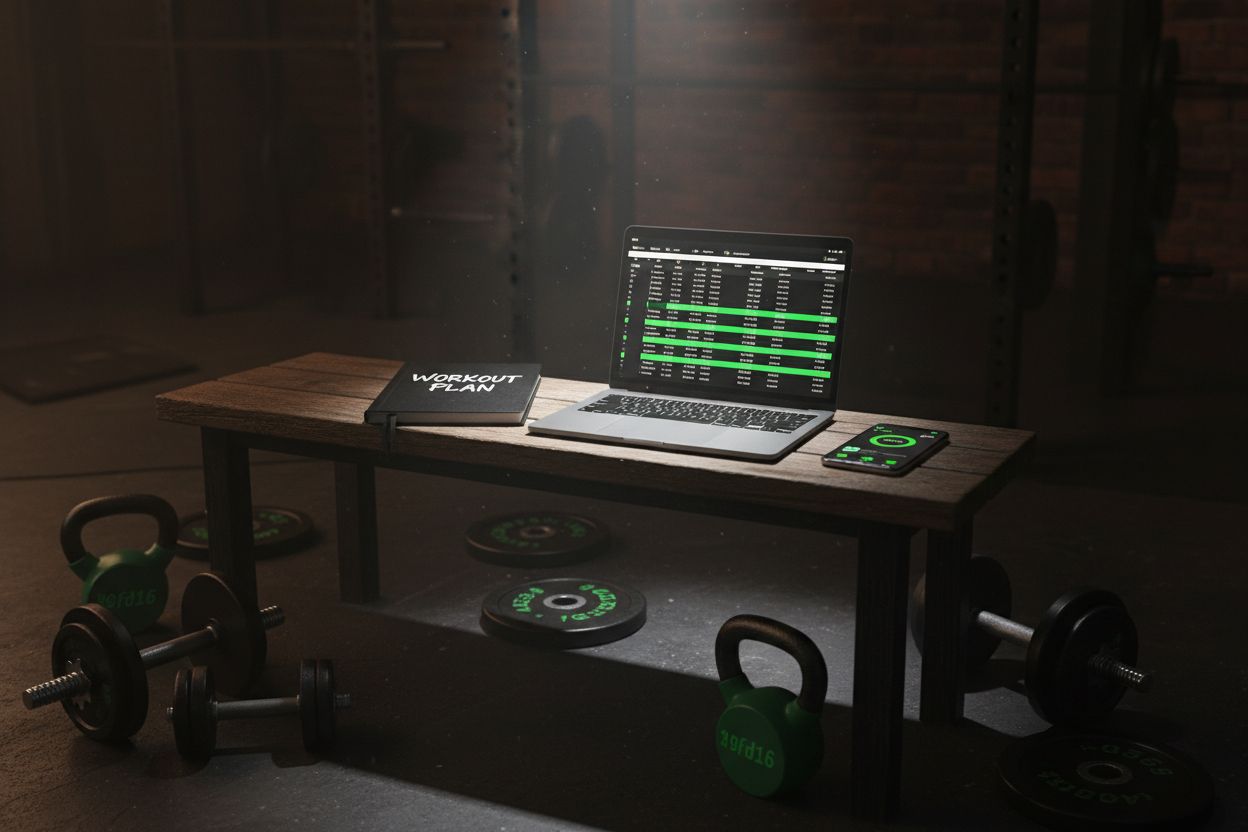
The right format is the one you will actually keep using. Setgraph's own article on tracking workouts describes three practical systems, a paper notebook, a spreadsheet, and an app, each with tradeoffs in speed, flexibility, and analysis. (setgraph.app)
Notebook
A notebook is the simplest option if you want the fastest possible setup. It is low friction, works without a battery, and lets you scribble notes between sets. If you keep it dedicated to training, it can stay surprisingly effective. CDC log templates show that even simple records can be useful when they are consistent. (cdc.gov)
Spreadsheet
A spreadsheet is a strong choice if you like totals, filters, and charts. It takes a little more effort in the gym, but it can make weekly volume, rep trends, and personal records easier to review later. That is especially useful if you track multiple lifts or phases at once. (myjourney.exerciseismedicine.org)
App
An app works best when you want quick entry and easy history. Setgraph's official site presents it as a workout tracker and gym log app, says you can log sets your way, and highlights comparisons that show how reps, weight, sets, and volume change over time. User reviews on its site also mention quick logging and progress tracking. (setgraph.app)
If you are comparing options, the Setgraph App Reviews page is a practical place to see how lifters describe the experience before you commit.
Common mistakes when logging workouts
A workout log only helps if it stays usable. The biggest problems are usually not technical, they are consistency problems. (myjourney.exerciseismedicine.org)
Logging too much: if every session becomes a data dump, you will stop using the log. Keep the core fields first and add extras only when they help. (cdc.gov)
Logging too little: if you only write the exercise name, you cannot tell whether you are progressing. Load, sets, and reps are the minimum for most resistance sessions. (myjourney.exerciseismedicine.org)
Changing formats every week: a new template every session makes comparison difficult. Pick one format and let it run long enough to show a trend. (setgraph.app)
Ignoring old entries: the point of the log is to guide the next workout, not just archive the last one. Review your history before you train. (myjourney.exerciseismedicine.org)
Forgetting context: a bad night of sleep, a painful elbow, or a long break between sets can explain a lot. Notes are small, but they make the record more useful. (cdc.gov)
For more practical ideas on staying consistent, browse Setgraph App: Insights, Tips & Training Guides.
FAQs
Do I need to log every set?
For most people, it is enough to log the working sets that determine progression. Warm-ups matter if they affect your performance or technique, but the core record should capture the sets, reps, and load that define the session. (myjourney.exerciseismedicine.org)
Should I log rest times?
Yes, if rest time changes the quality of the workout or the goal of the session. ACSM includes rest period as one of the main variables that affects progression, so it is worth noting whenever timing matters. (myjourney.exerciseismedicine.org)
Should I track RPE?
You do not have to, but it is a useful extra if you want a better read on how hard a set felt. A systematic review found RPE to be a valid way to monitor resistance exercise intensity and exertion. (pubmed.ncbi.nlm.nih.gov)
What if my workouts change every session?
Log the pattern, not just the label. Write the movement, the variation, the load or difficulty, and the outcome. Even when the exercise changes, those details still let you compare how your training is moving. (myjourney.exerciseismedicine.org)
Is a notebook enough?
Absolutely, if you use it consistently. CDC and Setgraph both show that simple records can work well, and the best system is the one you will actually bring to the gym and review afterward. (cdc.gov)
Logging workouts does not need to be complicated. Start with the basics, date, exercise, sets, reps, and load, then add rest, RPE, or notes only if they help you make better decisions. That simple habit gives you a record you can actually use, which is the real point. If you want a digital system, Setgraph presents itself as a workout tracker and gym log app that lets you record sets, pull from history, and follow progress over time. (myjourney.exerciseismedicine.org)
Article created using Lovarank