5 Day Gym Workout Schedule: A Practical, Day-by-Day Guide for Muscle and Strength

Committing to a 5 day gym workout schedule can be the most efficient way to build muscle, improve strength, and keep training varied without feeling rushed. This guide breaks down why a five-day split works, three ready-to-run 5 day templates for different goals, progression and recovery rules, nutrition basics, and a lot of practical troubleshooting so you can stick with it for months.
What is a 5 day gym workout schedule?

A 5 day gym workout schedule divides weekly training into five focused sessions, usually targeting muscle groups or movement patterns on separate days. Compared with full-body or three-day splits, five-day plans let you increase volume per muscle group and apply more targeted intensity while still allowing recovery between sessions. They are popular for intermediate lifters who can train consistently and want faster progress in hypertrophy or skill work.
Who it suits
People with 4.5 to 8+ hours per week to train
Intermediates who have built a base of strength and movement patterns
Trainees prioritizing hypertrophy, balanced strength, or aesthetic goals
Who should avoid it
Absolute beginners who benefit more from full-body training
Those with highly constrained schedules or poor recovery
Benefits of a 5 day training split
Higher weekly volume per muscle group for growth
Better exercise variety and focused accessory work
Easier scheduling of technique, tempo, and conditioning
Greater flexibility to prioritize weak points without overloading other areas
Key principles: intensity, volume, and recovery
Getting the most from a 5 day gym workout schedule means balancing three variables: intensity, volume, and recovery.
Progressive overload: add weight, reps, or extra sets over weeks. Track every session.
Weekly volume landmarks: for hypertrophy aim 10 to 20 working sets per major muscle per week depending on experience and recovery. Adjust toward the lower end if recovery is limited.
RIR and effort: use 1 to 3 reps in reserve for accessory work and 0 to 2 for compound strength sets when appropriate.
Warm-up protocol: 5 to 10 minutes of light cardio plus 2 to 3 warm-up sets for main compounds.
Deloading: schedule a lighter week every 4 to 8 weeks depending on intensity and fatigue; reduce volume by 40 to 60 percent or intensity by 10 to 20 percent.
If you want a deeper primer on technique and fundamentals, this Core Principles & Techniques guide is a helpful companion.
How to pick a split: options and rationale
Three common 5 day structures work well depending on goals.
Body-part split: Chest / Back / Legs / Shoulders / Arms
Best for focused hypertrophy and variety.
Allows maximum isolation work but requires careful weekly volume planning.
Upper/Lower + specialized days: Upper / Lower / Push / Pull / Legs or Upper / Lower / Upper / Lower / Full
Good balance between strength and hypertrophy.
Retains compound frequency while adding targeted accessory sessions.
PPL variant: Push / Pull / Legs / Push / Pull
Hits push and pull movements twice for higher frequency.
Schedule leg day midweek to allow recovery before repeat push/pull work.
Choose a template that matches your recovery, equipment access, and weekly time budget.
The 5-Day Workout Plan — three ready-to-use templates
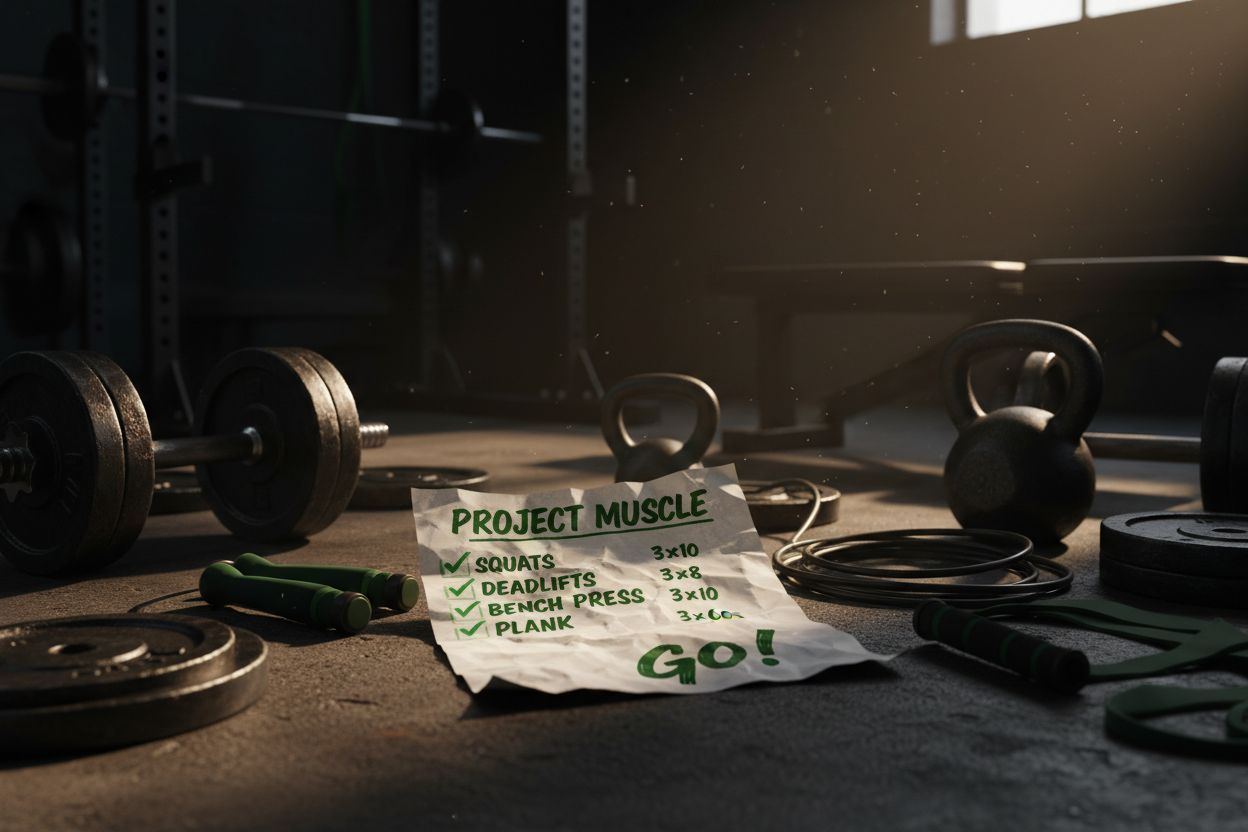
Below are three complete weekly templates: Hypertrophy Body-part, Upper/Lower Hybrid, and PPL Frequency. Each day lists primary exercises, sets, reps, approximate rest, and simple variations if equipment is limited.
Template A — Hypertrophy Body-part (60 to 90 minutes per session)
Day 1 — Chest
Barbell bench press 4 x 6 to 8, 2 to 3 minutes rest
Incline dumbbell press 3 x 8 to 12, 90 seconds
Flat dumbbell flyes or cable flyes 3 x 12 to 15, 60 to 90 seconds
Chest dips or machine press 3 x 8 to 12, 90 seconds
Light core: hanging leg raises 3 x 10 to 15
Day 2 — Back
Deadlift (conventional or trap bar) 3 x 4 to 6, 2 to 3 minutes
Bent-over barbell row or T-bar row 4 x 6 to 10, 90 to 120 seconds
Lat pulldown or chin-ups 3 x 8 to 12, 90 seconds
Single-arm dumbbell row 3 x 10 to 12 each side, 60 to 90 seconds
Face pulls 3 x 12 to 15, 60 seconds
Day 3 — Legs
Back squat or front squat 4 x 6 to 10, 2 to 3 minutes
Romanian deadlift 3 x 8 to 10, 90 seconds
Leg press or Bulgarian split squat 3 x 10 to 12, 90 seconds
Leg curl 3 x 12 to 15, 60 seconds
Calf raises 4 x 12 to 15, 60 seconds
Day 4 — Shoulders
Overhead press (barbell or dumbbell) 4 x 6 to 8, 90 to 120 seconds
Lateral raises 4 x 12 to 15, 60 seconds
Rear delt flyes 3 x 12 to 15, 60 seconds
Upright row or face-pull variation 3 x 10 to 12, 60 seconds
Farmer carry or plank 3 x 30 to 60 seconds
Day 5 — Arms & Conditioning
Close-grip bench press 3 x 6 to 8, 90 seconds
Barbell curls 3 x 8 to 10, 90 seconds
Triceps rope pushdowns 3 x 10 to 12, 60 seconds
Hammer curls 3 x 10 to 12, 60 seconds
12 to 15 minutes low to moderate intensity cardio or HIIT 10 x 30s/60s
Template B — Upper/Lower Hybrid (45 to 75 minutes)
Day 1 — Upper Strength
Bench press 5 x 5
Bent-over row 5 x 5
Overhead press 3 x 6 to 8
Accessory: face pulls 3 x 12
Day 2 — Lower Hypertrophy
Squat 4 x 6 to 10
Romanian deadlift 3 x 8 to 12
Lunges 3 x 10 each leg
Calf work 4 x 12
Day 3 — Push Hypertrophy
Incline dumbbell press 4 x 8 to 12
Dips or machine press 3 x 8 to 12
Lateral raises 4 x 12 to 15
Triceps extensions 3 x 12
Day 4 — Pull Hypertrophy
Pull-ups or lat pulldown 4 x 6 to 10
One-arm dumbbell row 4 x 8 to 10
Rear delt work 3 x 12 to 15
Biceps curls 3 x 10
Day 5 — Lower Strength & Conditioning
Deadlift 4 x 3 to 6
Front squat or heavy lunges 3 x 6 to 8
Single-leg work 3 x 8
Short metabolic finisher 8 to 12 minutes
Template C — PPL Frequency (45 to 75 minutes)
Day 1 — Push Heavy
Barbell bench 4 x 5
Overhead press 4 x 6
Weighted dips 3 x 6 to 8
Triceps 3 x 8 to 12
Day 2 — Pull Heavy
Deadlift variant 3 x 4 to 6
Barbell row 4 x 6
Chin-ups 3 x AMRAP
Biceps 3 x 8 to 12
Day 3 — Legs
Squat 4 x 6 to 8
Romanian deadlift 3 x 8 to 10
Hamstring isolation 3 x 10 to 12
Calves 4 x 12 to 15
Day 4 — Push Volume
Incline press 4 x 8 to 12
Dumbbell shoulder work 4 x 10 to 15
Cable flyes 3 x 12 to 15
Day 5 — Pull Volume
Lat pulldown or rows 4 x 8 to 12
Single-arm rows 3 x 10 each side
Face pulls and rear delt 4 x 12 to 15
Time-based variations
45-minute sessions: keep to 3 main exercises, 3 sets each, short rests, focus on intensity.
60 to 90 minutes: include 4 to 6 exercises, extra accessory work, or additional technique sets.
Equipment alternatives
No barbell? Use dumbbells, kettlebells, or trap bar for primary lifts.
Limited machines? Prioritize compound movement alternatives and increase sets to match weekly volume.
If you want a tool to log sets, reps, and progression, the Setgraph workout tracker helps record sessions and trends over time.
Nutrition and recovery for a 5 day schedule

Training hard five days a week increases nutritional needs. Focus on these basics:
Protein: 0.7 to 1.0 grams per pound of body weight per day to support muscle repair depending on training intensity.
Calories: maintenance plus a 250 to 500 kcal surplus for muscle gain. For fat loss, a 300 to 500 kcal deficit paired with preserved protein and strength training works best.
Pre-workout: a small meal with 20 to 30 grams of protein and some carbs 60 to 90 minutes before training helps performance.
Post-workout: 20 to 40 grams of protein and carbs within 1 to 2 hours aids recovery.
Hydration and sleep: aim for 7 to 9 hours of sleep and 2.5 to 4 liters of water daily depending on sweat rate.
Supplements to consider
Creatine monohydrate for strength and lean mass when combined with resistance training
A basic whey protein to help meet daily protein targets
Caffeine can aid performance when timed correctly
For deeper guidance on optimizing training and nutrition together, check this Optimize Your Training guide.
Periodization, deloads, and breaking plateaus
Working the same rep ranges and loads week after week invites plateaus. Use these approaches:
Linear progression: add small loads weekly for several weeks, then deload.
Undulating periodization: vary intensity and rep ranges across the week (heavy, moderate, light) or across microcycles.
Block periodization: focus 4 to 8 weeks on hypertrophy, then 4 to 6 weeks on strength.
Deload protocols
Frequency: every 4 to 8 weeks depending on fatigue and training stress
Method: reduce volume by 40 to 60 percent or reduce intensity by 10 to 20 percent, keep technique work
Plateau-breaking strategies
Increase weekly volume by 10 to 20 percent for 2 to 4 weeks
Add targeted accessory work for weak links
Change exercise selection or tempo for 3 to 6 weeks
Troubleshooting and real-world adaptations
What if I miss a day?
Skip without panic. If consistency is weekly, missing one session every few weeks is fine. If you miss a leg day, you can either shift the week or merge accessory work into other days but avoid doubling heavy compound lifts in one session.
Injury or joint pain
Reduce range of motion, swap exercises (belt squat for back squat), and prioritize single-leg or single-arm variants. Consult a medical professional for persistent pain.
Travel or limited equipment
Use bodyweight or dumbbell versions. Focus on tempo and higher reps to maintain stimulus. A short program with supersets keeps the training effect.
Age-specific modifications
Older lifters should prioritize recovery, reduce frequency or volume slightly, and emphasize mobility, joint health, and protein intake.
Minimalist 5 day version
Keep to 3 exercises per session: one main compound, one secondary compound, one accessory. Maintain consistent progression and weekly volume.
Gym etiquette for a 5 day schedule
Avoid monopolizing a bench or rack during peak hours; use supersets and stations to keep moving
Wipe equipment, return plates promptly, and communicate when sharing heavier compound sets
Tracking progress and metrics
Logging key metrics helps long-term progress. Track these weekly or per session:
Main lifts: weight, sets, reps, RPE/RIR
Body measurements: weight, waist, chest, arms, thighs every 2 to 4 weeks
Photos: monthly progress photos in consistent lighting
Work capacity markers: total volume per session and per muscle group
A digital tracker removes guesswork. For tracking tips, templates, and reviews of tracking tools, see Setgraph App Reviews and the general Setgraph training guides.
Tips for long-term adherence and motivation
Habit stacking: attach gym time to an existing habit such as morning coffee or commuting
Accountability: train with a partner or share progress in a community
Micro-goals: set short 4-week targets like adding 5 pounds to a compound or increasing weekly protein
Variety: rotate accessory exercises every 6 weeks to stay engaged and target muscles differently
If you want more articles and tips about training consistency and tracking, browse Fitness & Workout Tips | Setgraph.
Common mistakes to avoid
Doing too many different exercises for the same muscle in one week which inflates time and reduces recovery
Skipping progressive overload and only changing exercises
Ignoring sleep and nutrition
Overusing maximal efforts without planned deloads
Frequently asked questions
Q: Is a 5 day gym workout schedule better than 3 days?
A: Not inherently. Five days offers more volume and specificity, but three well-structured full-body sessions can be better for beginners or people with limited recovery.
Q: How long should each session take?
A: Aim 45 minutes for efficient sessions and 60 to 90 minutes for detailed hypertrophy days. Keep intensity high and rest purposeful.
Q: What if I can only train 4 days that week?
A: Prioritize compound lifts and merge accessory work across the four sessions. Alternatively, shift the weekly schedule so the missed day is made up the next week.
Q: How quickly will I see results?
A: Visible changes depend on nutrition, sleep, and starting point. Strength improvements can show in weeks. Noticeable hypertrophy typically takes 8 to 12 weeks with consistent training and adequate calories.
Q: Should I do cardio on a 5 day plan?
A: Yes. Include 2 to 3 short cardio sessions or 1 longer session per week depending on goals. Do cardio after strength work or on separate days to avoid performance drops.
Q: Can I use this schedule for strength and size simultaneously?
A: Yes. Use heavier compound days for strength and higher-rep accessory work for hypertrophy within the same week.
Conclusion
A well-constructed 5 day gym workout schedule gives you flexibility to prioritize strength, hypertrophy, technique, and conditioning without burning out quickly. Choose a template that matches your goals, track volume and intensity, prioritize recovery, and plan regular deloads. Use a consistent logging system to measure progress and adapt as needed. If you want an easy way to record sessions and spot trends, consider trying the Setgraph workout tracker. Commit to the plan for several months, adjust based on feedback, and the results will follow.
Article created using Lovarank