4 Day Workout Split: The Complete Guide to Structure, Progression, and Results

A four day workout split hits the sweet spot between frequency and recovery: it lets you train each muscle more than once per week while keeping sessions manageable. Whether your goal is muscle growth, strength, or fat loss, a 4 day workout split can be tailored to fit your schedule, equipment, and experience level. This guide explains what a 4 day workout split is, gives proven sample routines for beginners and advanced lifters, covers warm-ups, progression, deloading, nutrition timing, and practical tracking tips so you actually measure progress.
What is a 4-Day Split and why it works

A 4 day workout split divides your weekly training into four distinct sessions. Instead of trying to train every muscle in one session or training six days per week, you focus on specific body regions or movement patterns across four workouts. The structure balances training stimulus with recovery, allowing higher volume per muscle group while limiting fatigue.
Key principles:
Train each major muscle group roughly 2 times per week for optimal hypertrophy and recovery.
Prioritize compound lifts (squat, deadlift, bench, row, overhead press) early in sessions.
Use accessory lifts to target weaknesses and shape muscle balance.
Who it suits:
Busy professionals who can commit 4 sessions of 45 to 75 minutes.
Intermediate lifters moving beyond full-body routines but not ready for 5–6 day splits.
Anyone seeking flexible programming for strength, size, or fat loss.
Benefits of a 4 day workout split
Better recovery than high-frequency daily splits
More volume per session for targeted muscle work
Time-efficient: most sessions last 45 to 75 minutes
Easy to customize for different goals (strength, hypertrophy, fat loss)
Works well with progressive overload and structured deloads
How to choose the right 4 day split for you
Pick based on goals, experience, and equipment:
Goal: Strength-focused lifters prefer Upper/Lower with low reps on compounds. Hypertrophy-focused lifters may choose Push/Pull/Legs variants or Upper/Lower with extra accessory work. For fat loss, prioritize full-body intensity and conditioning elements.
Experience: Beginners benefit from simplified Upper/Lower. Advanced lifters can use more volume, intensity techniques, or specialized bro-style splits.
Equipment: If you have limited equipment, choose routines with dumbbell and bodyweight substitutions.
Sample 4-Day Split: Upper/Lower (Beginner & Advanced)

This is the most versatile split. It rotates through upper and lower body twice per week. Below are two versions: beginner and advanced.
Weekly layout (common):
Monday: Upper A
Tuesday: Lower A
Wednesday: Rest or light activity
Thursday: Upper B
Friday: Lower B
Weekend: Rest or optional active recovery
Beginner Upper A (45–60 min)
Warm-up: 5–10 min light cardio + dynamic shoulder and thoracic mobility
Barbell bench press — 3 sets x 6–10 reps
Bent-over dumbbell row — 3 sets x 8–12 reps
Seated dumbbell overhead press — 3 sets x 8–12 reps
Lat pulldown or pull-up (assisted) — 3 sets x 8–12 reps
Plank — 3 x 30–60 sec
Beginner Lower A (45–65 min)
Warm-up: 5–10 min bike + hip mobility
Goblet squat or back squat — 3 sets x 8–12 reps
Romanian deadlift (dumbbell) — 3 sets x 8–12 reps
Walking lunges — 2 sets x 10–12 steps each leg
Leg curl (machine or band) — 3 sets x 10–15 reps
Farmer carry — 2 x 30–60 seconds
Advanced Upper B (60–75 min)
Barbell bench press (heavy) — 4 sets x 3–6 reps
Weighted pull-up or heavy row — 4 sets x 4–6 reps
Incline dumbbell press — 3 sets x 6–10 reps
Seated dumbbell shoulder press — 3 sets x 6–10 reps
Face pulls — 3 sets x 12–15 reps
Biceps and triceps supersets — 3 rounds
Advanced Lower B (60–75 min)
Back squat or front squat (heavy) — 4 sets x 3–6 reps
Deadlift variation (Romanian or conventional) — 3 sets x 3–6 reps
Bulgarian split squat — 3 sets x 6–10 reps per leg
Hamstring curl — 3 sets x 10–12 reps
Calf work — 4 sets x 10–15 reps
Time expectations: most beginner sessions take 45–60 minutes; advanced sessions are 60–75 minutes. Keep rest 60–120 seconds for compound lifts and 30–90 seconds for accessories.
Alternative 4-Day Splits: Push/Pull/Legs Variant, Bro Split, Full-Body Hybrid
Push/Pull/Legs (4-day tweak)
Layout option A: Push / Pull / Legs / Upper or Push
Layout option B: Upper Push / Lower Pull / Upper Pull / Lower Push — useful to balance volume
Benefits: Excellent movement pattern focus, easy to add intensity for pressing/pulling muscles.
Bro-style 4-Day Split
Example: Chest & Triceps / Back & Biceps / Legs / Shoulders
Best if you want focused pump sessions and isolation work. Less frequent training per muscle can be offset with higher volume per session.
Full-Body Hybrid
Mix full-body heavy days with two focused upper or lower days. Good for fat loss and maintaining frequency while including heavy compound work.
Warm-up and mobility: essential 5–10 minute routines
Always begin with an activation and movement-specific warm-up. Examples:
General: 5–8 minutes low-intensity cardio (bike, row) to raise core temperature
Upper day: band pull-aparts, internal/external rotation, scapular push-ups, light sets of pressing and rowing
Lower day: hip circles, leg swings, glute bridges, bodyweight squats, light deadlift or squat warm-up sets
Mobility mini-protocol (do 2–3 times/week): foam roll quads/IT band for 2–3 minutes, thoracic extensions, hip flexor stretches 30–60 seconds per side.
Progression, Deload and Tracking
Progression strategy
Linear progression: increase weight or reps weekly for compound lifts while keeping form strict.
Volume progression: add a set or increase accessory reps over 2–4 week blocks.
Intensity cycling: alternate heavier weeks (lower reps) with lighter hypertrophy weeks.
Deloads
When: every 4–8 weeks depending on intensity, soreness, and performance decline.
How: reduce volume by 40–60% or intensity by 10–20% for a week; keep movement quality high.
Signs you need a deload: persistent fatigue, stalled lifts, poor sleep, irritability.
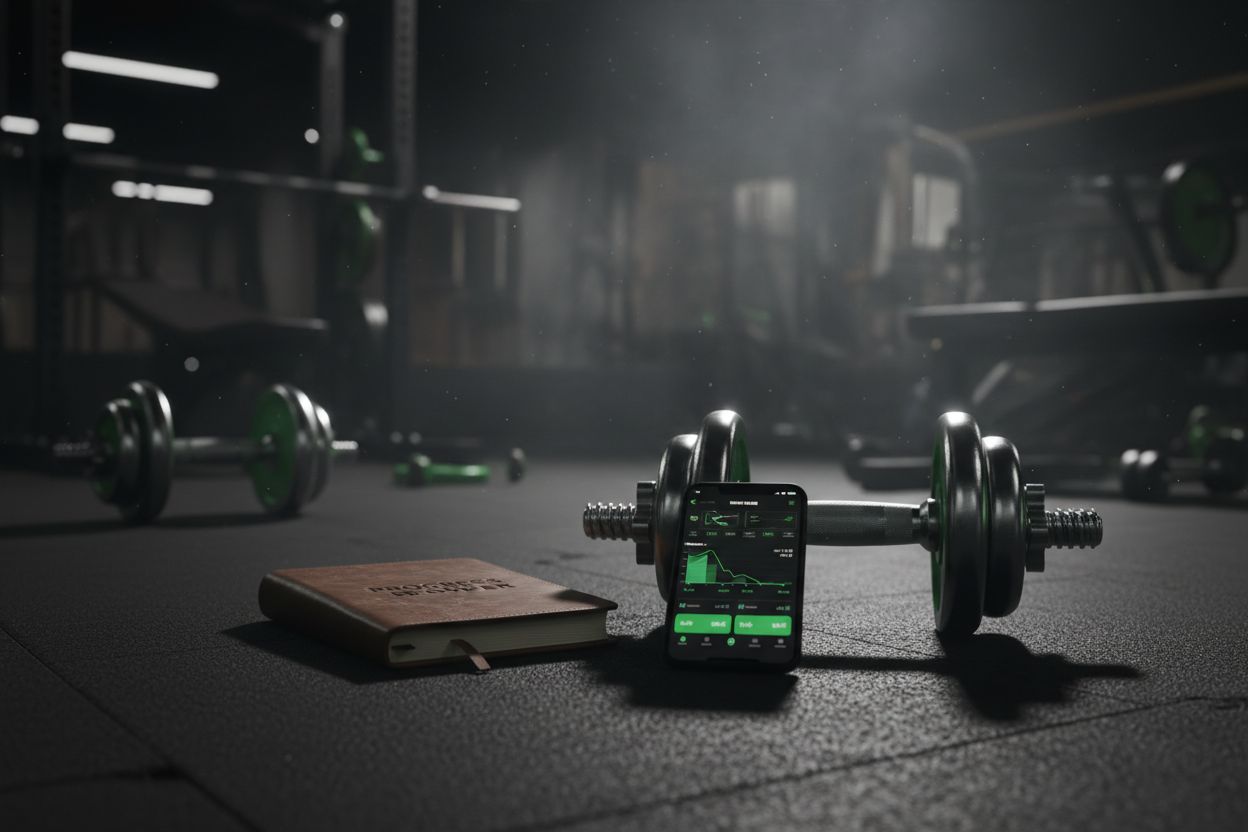
How to track progress (simple template)
Track these metrics weekly: main lifts (weight, sets, reps), bodyweight, training RPE, and a short note on sleep/energy.
Example log row: Date | Exercise | Weight | Sets x Reps | RPE | Notes
If you want a digital tracker, consider a workout logging app to store sets, track PRs, and analyze trends. For an app option, see Setgraph - Workout Tracker Gym Log App and read user impressions at Setgraph App Reviews (2025).
For programming principles and technique cues, check this practical guide: Core Principles & Techniques for Every Lifter - Setgraph. For tips on optimizing exercise selection and progression, this resource is useful: Optimize Your Training | Expert Tips and Workout Guides. You can also download structured guides at Setgraph Training Guide | Maximize Your Workout.
Goal-specific tweaks: Strength, Hypertrophy, and Fat Loss
For strength
Focus: 3–6 reps on main compounds, longer rest (2–4 minutes), 3–5 heavy sets.
Volume: lower overall accessory volume to prioritize recovery.
For hypertrophy
Focus: 6–12 rep ranges, 3–4 sets per exercise, include drop sets or tempo work occasionally.
Frequency: hitting muscles twice weekly works well when volume is split across sessions.
For fat loss
Focus: maintain strength with compounds, add conditioning (10–20 min HIIT or steady-state post-workout) and keep protein high.
Calorie deficit: prioritize performance-preserving nutrition (see next section).
Pre- and Post-workout Nutrition Timing
Pre-workout (30–90 minutes before)
Aim for a balanced meal with carbohydrates and protein. Example: oatmeal with fruit and a scoop of protein or a chicken sandwich with fruit.
If training early, a small carb-protein snack 30 minutes before (banana + yogurt) can help.
Post-workout (within 1–2 hours)
Consume 20–40 g protein and 30–60 g carbs to support recovery and glycogen replenishment. Whole food or a shake are both acceptable.
Hydration and electrolytes matter if you sweat heavily.
Supplements timing (optional)
Creatine daily at any consistent time; pre-workout caffeine 20–45 minutes before sessions for focus.
5 Mistakes That Kill Your 4-Day Split Results
Doing too much volume too soon. Increase sets gradually over weeks.
Neglecting recovery and sleep. Muscles grow outside the gym.
Skipping warm-ups and mobility, which increases injury risk.
Failing to track progress. If you cannot quantify overload, you cannot adjust.
Copying advanced routines as a beginner. Use the beginner templates first.
Home gym and injury-friendly substitutions
Limited equipment substitutions:
Barbell squat -> goblet squat, split squat, or belt squat
Deadlift -> Romanian deadlift with dumbbells or kettlebell swings for posterior chain
Bench press -> floor press, dumbbell press, or push-up progressions
Pull-up -> weighted row, inverted row, or resistance band assisted pull-up
Injury-friendly options:
Shoulder pain: reduce overhead pressing volume, favor landmine presses, and increase horizontal pressing and scapular stability work.
Knee pain: reduce squat depth, increase hinge work and unilateral leg work.
How to handle missed workouts and plateaus
Missed day: don’t try to cram two long sessions in one day. If you miss one session, swap the week layout so you maintain frequency (e.g., shift workouts forward). If missed often, accept a temporary reduction in frequency and reset expectations.
Plateau: check progression log. First adjust volume or intensity. Consider a planned deload or change exercise variation for 2–4 weeks.
Quick Weekly Example Plans for Common Goals
4-Day Split for Muscle Gain (Upper/Lower - hypertrophy emphasis)
Monday: Upper (hypertrophy) — 4 compounds/accessories, 6–12 rep ranges
Tuesday: Lower (hypertrophy)
Thursday: Upper (volume focus)
Friday: Lower (heavy compound + accessories)
4-Day Split for Strength (Upper/Lower - strength emphasis)
Monday: Heavy Upper (3–6 reps)
Tuesday: Heavy Lower (3–6 reps)
Thursday: Dynamic/Speed Upper or Volume Upper
Friday: Assistance Lower + posterior chain work
4-Day Split for Fat Loss (Full-body hybrid)
Monday: Full-body heavy compounds + short conditioning
Tuesday: Upper hypertrophy + conditioning
Thursday: Lower heavy + metabolic finisher
Friday: Full upper/lower mix with circuit style accessories
Tracking templates and measurement tips
Primary metrics: 1) main lift numbers, 2) bodyweight, 3) weekly training volume for each muscle group, 4) sleep quality.
Monthly check-ins: take photos, measure circumference (chest, waist, arms, thighs), and compare 4-week strength changes.
Use a logging app to timestamp workouts, store PRs, and view progress charts. For a simple tracker option, consider Setgraph - Workout Tracker Gym Log App.
FAQ & Troubleshooting
Q: Can I build muscle with a 4 day workout split? A: Yes. Training muscles approximately twice per week with progressive overload is effective for hypertrophy.
Q: What if I only have 3 days some weeks? A: Prioritize compound lifts and combine sessions (Upper+Lower) into full-body days if needed, or follow a 3-day full-body plan for that week. Return to 4 days when possible.
Q: Do I need to change exercises often? A: Change exercises every 8–12 weeks or earlier if progress stalls. Small variations can reduce plateaus.
Final checklist before you start
Choose a split that matches your goal and equipment.
Start with the beginner template if you are new to structured lifting.
Warm-up and prioritize compound lifts.
Track sets, reps, and loads; log subjective RPE and sleep.
Schedule a deload every 4–8 weeks as needed.
If you want structured guides, programming templates, or technique resources, explore the collection of workout guides and articles for practical tips: Setgraph Training Guide | Maximize Your Workout and the broader article library at Fitness & Workout Tips | Setgraph.
A 4 day workout split is flexible and scalable. With consistent tracking, appropriate progression, and attention to recovery, you can use this format to build strength, add muscle, or accelerate fat loss while keeping training time realistic. Start with the sample that fits your experience, adjust based on performance, and use the tracking template to make steady, measurable gains.
Article created using Lovarank