Outer Biceps Exercises: Long-Head Training and Curl Technique
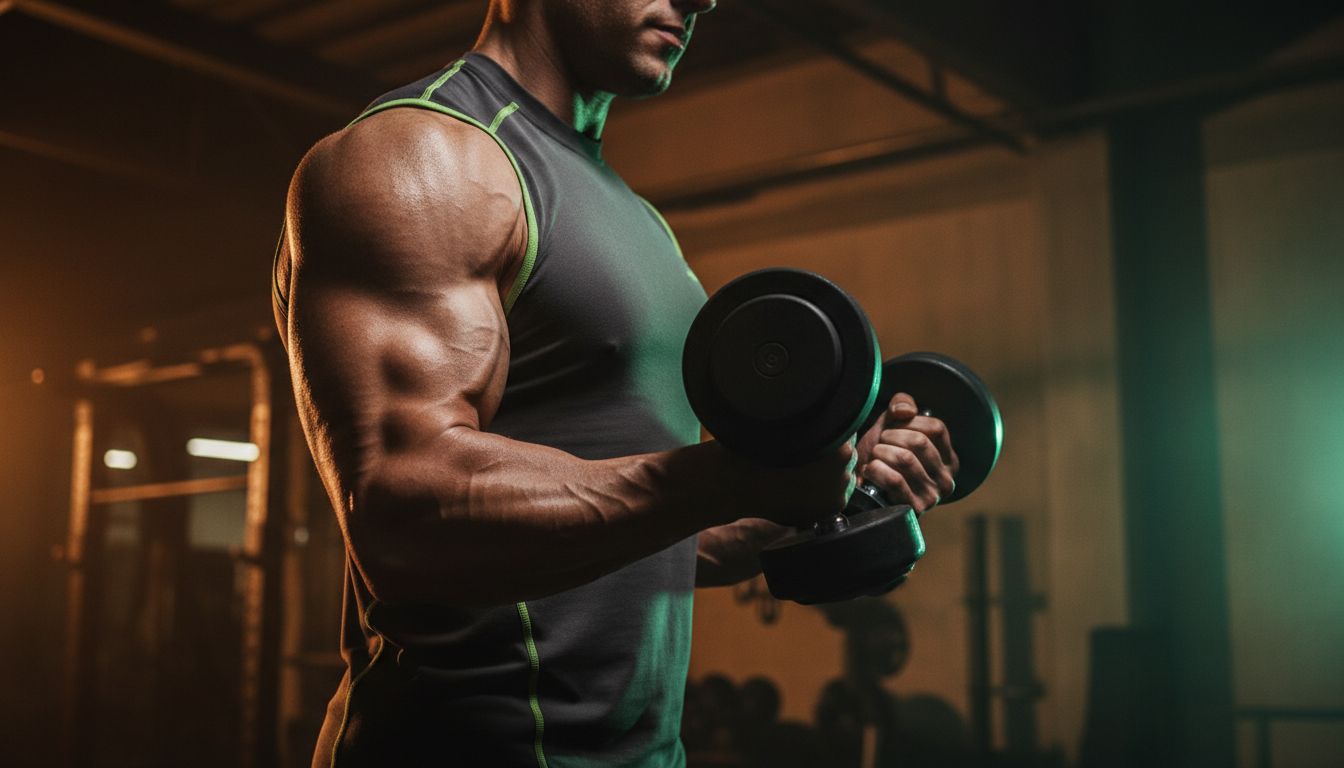
“Outer biceps” usually refers to the long head of the biceps brachii. You can build the elbow flexors with curls, but no exercise isolates the long head or guarantees a particular arm peak. This guide explains the anatomy, compares nine curl options, and shows how to choose a small, repeatable routine.
Why the outer biceps matters
The biceps brachii has a long head on the lateral side and a short head on the medial side. Both contribute to elbow flexion and forearm supination. Arm shape also reflects the brachialis, triceps, body fat, and individual anatomy; growing one head is not a precise way to redesign your peak.
Both biceps heads cross the shoulder, with origins on the scapula. Shoulder and elbow position change muscle length and leverage, but a longer position does not automatically mean more activation or growth. A 2025 cable-curl trial matched resistance profiles and found similar regional growth with the shoulder flexed or extended; it did not establish an outer-head isolation technique.
Key biomechanical principles
Leverage: Elbow torque depends on the load and its perpendicular distance from the joint. A narrower bar grip does not by itself prove greater long-head tension.
Shoulder extension: An elbow-behind-the-body curl lengthens the biceps at the shoulder, but the whole resistance profile and comfortable range also matter.
Grip: Supinated, neutral, and pronated curls change the task for the elbow flexors. Hammer and reverse curls can complement supinated curls; neither selectively builds the outer biceps.
How to choose curls for the outer-biceps goal
Choose positions that let you train the elbow flexors comfortably and progress over time. Use these cues to keep your setup repeatable.
Elbow position: Keep the upper arm reasonably steady for an ordinary curl. An elbow-behind-the-body position is an option, not a requirement.
Grip width: Use a width that keeps wrists comfortable. A narrow grip has not been established as a reliable way to isolate the long head.
Shoulder angle: Incline curls place the shoulder in extension. Start with a modest bench angle and reduce the stretch if your shoulder is uncomfortable.
Forearm rotation: Supinated curls train the biceps directly. Neutral and overhand curls also train the elbow flexors, with a different contribution from the brachialis and brachioradialis.
Best outer biceps exercises
These are exercise options, not a ranked or mandatory list. Pick one or two per session. The suggested sets and reps are examples, and should be reduced if your program already includes substantial pulling.
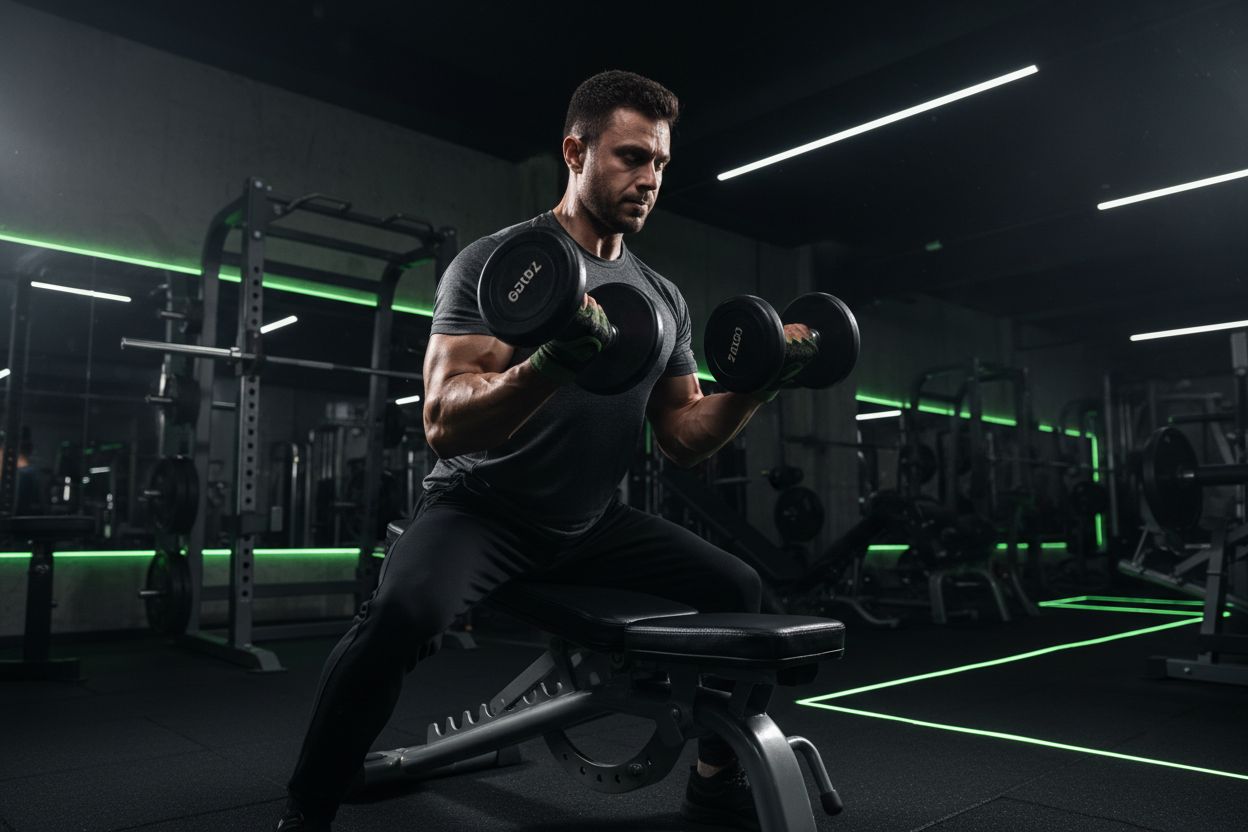
1. Incline Dumbbell Curls
How it works: An incline curl places the upper arm behind the torso and trains elbow flexion in that position. It is a useful variation, but not a proven long-head isolator.
Technique:
Set an incline bench around 45–60 degrees or another comfortable angle. Sit back and let your arms hang without forcing the shoulders backward.
Hold dumbbells with a supinated grip. Keep your elbows back relative to your torso.
Curl the weights up while keeping the upper arm steady. Pause briefly at peak contraction, then lower slowly with control.
Sets and reps: 2–3 sets of 8–15 controlled reps. You do not need an artificially slow tempo; lower smoothly and keep the setup consistent.
Common mistakes: Swinging the torso, letting the elbows move too far forward, and using momentum. If you cannot control the descent, lower the weight.
Variations: Single-arm incline curl for unilateral focus or neutral-grip incline hammer curls if you need less forearm supination.
2. Hammer Curls
How it works: Hammer curls use a neutral grip and train the biceps, brachialis, and brachioradialis. They offer grip variety and can contribute to overall arm development, without selectively targeting the long head.
Technique:
Stand or sit with dumbbells at your sides, palms facing each other.
Keep your elbows tight to your sides and curl with a neutral grip.
Pause at the top, squeeze, then lower under control.
Sets and reps: 3 to 4 sets of 8 to 12 reps. For variety, try slower eccentrics or 21s where you do partial reps followed by full reps.
Common mistakes: Rotating the wrist into supination, letting the elbow move forward, or using too much body swing.
3. Concentration Curls
How it works: Bracing the upper arm against the thigh reduces whole-body movement, helping you perform a controlled single-arm curl. Feeling a strong contraction is not evidence that the long head is isolated.
Technique:
Sit on the bench, spread your legs, and brace your working arm against the inside of your thigh.
With a supinated grip, curl the dumbbell up focusing on squeezing the biceps peak.
Lower slowly and repeat.
Sets and reps: 3 sets of 10 to 15 reps per arm. Use slow tempo and finish with an isometric squeeze.
Common mistakes: Excessive swinging and using the shoulder to lift.
4. Barbell Drag Curls
How it works: Drag curls move the elbows backward as the bar rises close to the torso. A supinated grip remains supinated; the movement does not reduce forearm supination or establish a special long-head growth advantage.
Technique:
Stand with a barbell at hip height, hands shoulder width or slightly narrower.
Pull the bar up along your torso by moving your elbows back rather than letting them travel forward.
Squeeze at the top then lower while maintaining contact with the body.
Sets and reps: 3 to 4 sets of 8 to 12 reps.
Common mistakes: Letting the bar drift away from the torso or using excessive wrist flexion.
5. Narrow-Grip Barbell Curls
How it works: A narrow grip changes your arm and wrist position. Use it only if comfortable, without assuming that narrower hands necessarily create more long-head tension.
Technique:
Take a shoulder-width or narrower grip on a straight bar or EZ-bar.
Keep your elbows tucked and curl the bar with a controlled motion.
Lower with a full range of motion.
Sets and reps: 3 sets of 6 to 10 reps for strength, or 8 to 12 for hypertrophy.
Common mistakes: Elbow flare and backward leaning. Maintain a stable torso and strict form.
6. Cable Low Curls (Single-Arm)
How it works: A cable provides a different direction of resistance from gravity. Elbow torque still changes through the rep, depending on where you stand and the cable angle; tension is not constant at the muscle.
Technique:
Attach a handle to a low pulley. For an elbow-behind-the-body variation, face away from the pulley and step forward until the cable is taut, using a stable stance and a comfortable shoulder position.
Curl the handle without swinging your upper arm, then lower under control without letting the weight stack crash.
Sets and reps: 3 sets of 10 to 15 reps per arm.
Common mistakes: Using momentum or leaning away from the cable. Control the movement and establish stable posture.
7. Reverse Curls
How it works: Reverse curls use an overhand grip and train elbow flexion with more reliance on other elbow flexors relative to supinated curls. The wrist extensors stabilize the wrist; this is not an outer-biceps isolation exercise.
Technique:
Use a barbell or EZ-bar with an overhand grip at shoulder width.
Curl the bar with the elbows fixed, then lower under control.
Sets and reps: 3 sets of 8 to 12 reps.
Common mistakes: Wrist strain. Keep the wrists neutral and do not over-torque them.
8. Incline Cable Curls
How it works: An incline bench and cable combine shoulder positioning with an adjustable resistance direction. The elbow demand varies with pulley position, so choose a setup you can control rather than chasing constant tension.
Technique:
Set an incline bench facing away from the low pulleys, with the cables running behind you. Use compatible handles and a position that leaves the cables clear of the bench.
Curl while keeping elbows back and chest up. Pause at the top then lower slowly.
Sets and reps: 3 sets of 10 to 12 reps.
Common mistakes: Poor cable alignment and letting the elbow drift forward.
9. Cross-Body Hammer Curls
How it works: Cross-body hammer curls are a neutral-grip variation. Moving toward the opposite shoulder changes the path, but a superior long-head effect has not been established.
Technique:
Hold dumbbells at your sides with neutral grip.
Curl the weight across your body toward the opposite shoulder, keeping the elbow tucked.
Lower with control.
Sets and reps: 2 to 3 sets of 10 to 12 reps.
Common mistakes: Arching the back and performing too large a swing.
Programming sample: repeatable routines and progression
Use these examples as alternatives, not as extra work on top of an existing high-volume arm program. Leave about 2–3 reps in reserve while learning and rest 1–2 minutes, or longer if rep quality drops. Separate demanding sessions by a rest day when practical.

Beginner routine (2 workouts per week)
Workout A
Incline dumbbell curls: 2 × 8–12
Hammer curls: 1–2 × 10–15
Cable curls: an alternative to incline curls, not an additional required exercise
Workout B
Comfortable-grip barbell curls: 2 × 8–12
Concentration curls: 1–2 × 10–15 per arm
Reverse curls: an optional substitute for hammer curls if forearm training is a priority
Progression: Keep the same set count initially. When all sets reach the top of the range with the same technique and effort, try the smallest manageable load increase. Do not automatically add a set to every exercise every two weeks.
Experienced-lifter example (2 workouts per week)
Day 1 - Strength focus
Comfortable-grip barbell curls: 3 × 6–10
Barbell drag curls: an alternative to the barbell curl, not an automatic extra
Hammer curls: 2 × 10–15
Day 2 - Volume and finishers
Incline dumbbell curls: 3 × 8–12
Single-arm cable curls: 2 × 10–15
Concentration curls: substitute for cable curls if preferred; drop sets are optional
Recovery adjustment: If performance or elbow comfort declines over several sessions, reduce sets or load for a week and reassess. A fixed deload date or percentage is not necessary for everyone.
Weekly volume and frequency guidance
Frequency: The examples use two sessions per week. Adjust frequency to distribute a recoverable weekly workload rather than adding sessions automatically.
Weekly sets: Start from a dose you can recover from. The beginner example supplies 6–8 direct sets per week; the experienced example supplies 10. Pulling exercises also contribute, so higher direct volume is not automatically better.
Rep ranges: 6 to 12 for most sets, with some higher rep work for metabolic stress and finishing.
Advanced techniques to break plateaus
Tempo: Controlled lowering can help repeatable technique, but slower reps do not automatically produce more growth.
Drop sets: After your working sets, reduce weight and continue to near failure to increase metabolic stress.
Blood-flow restriction: This is a specialized method with screening and equipment requirements. It is not needed for this plan; seek appropriately qualified supervision before considering it.
Isometric holds: Pause at the peak of the curl for 3 to 5 seconds to improve peak contraction and motor control.
Troubleshooting and injury prevention
If curls cause elbow pain, stop or modify the painful movement and reduce the demand. Reducing load cannot rule out tendinopathy or another cause. Review grip, range, and overall workload rather than diagnosing yourself.
Elbow flaring: Keep elbows tucked and avoid letting them drift forward on the concentric.
Wrist strain: Use an EZ-bar or neutral grip if straight-bar curls hurt your wrists.
Excessive load: If form breaks, lower the weight. Progressive overload is about consistent improvement not ego lifting.
Seek a qualified clinician for persistent, worsening, or recurrent pain, especially if there is swelling, weakness, numbness, or a sudden injury. Do not wait for a fixed two-week deadline or start a rehabilitation protocol based on this article.
Recovery, nutrition, and measuring progress
Protein: For healthy adults, around 1.6 g/kg/day is a useful reference for supporting resistance-training gains; needs vary. The protein-supplementation review does not show that everyone needs the high end of common bodybuilding ranges.
Calories: Adequate energy supports training. A calorie surplus is not mandatory for everyone to gain muscle, particularly beginners; consider your goals and body-composition trend rather than forcing weight gain.
Sleep and stress: Recovery is when adaptations occur so prioritize 7 to 9 hours of sleep per night.
Tracking progress: Log exercises, weights, reps, and how you feel. Tracking helps identify plateaus and plan progression. Consider using a training tracker to record sets and progression for consistent improvement. For example you can explore Setgraph workout tracker to keep logs and monitor progress.
Setgraph’s selected user stories can illustrate how some customers use the app; they are not an independent aggregated review of training outcomes.
Equipment alternatives and at-home options
If you do not have a gym, several exercises can be adapted.
Resistance bands: Use a secure anchor and account for resistance increasing as the band stretches; band tension is not constant.
Dumbbells or filled water jugs: Use for incline and hammer curl variations.
Towels or TRX: Use suspension trainers for bodyweight curls focusing on tempo and lean angle to shift loading.
If you are planning structured at-home progression, consult general training guides like Setgraph Training Guide for frameworks on planning progressive workouts.
Extra tips for making every curl count
Warm up with light sets and mobility before heavy work.
Use a tempo you can repeat while keeping the target muscles working and the movement controlled.
Keep exercises stable long enough to judge progress. Change them for comfort, equipment, or a specific goal rather than to avoid adaptation, which is the goal of training.
You may use different rep ranges for variety, but a heavy-plus-finisher combination is not required. Keep the total workload manageable.
For more optimization strategies and expert tips, check out Optimize Your Training | Expert Tips and Workout Guides.
Realistic timelines and expectations
Judge training over weeks and months using consistent loads, reps, and arm measurements. Visible change varies with training history, nutrition, body fat, and anatomy; no eight-week plan guarantees a new arm shape.
Conclusion
For the outer-biceps goal, build the elbow flexors with a few comfortable curls and track progress. Incline, hammer, barbell, and cable options can all have a place. No grip or shoulder angle guarantees a particular peak or selectively transforms the long head.
If you use Setgraph, record the exercise variation, load, and reps so you can compare like sessions. Choose exercises you can repeat and adjust the workload when progress or comfort calls for it.
Start with one or two curl options and a manageable set count. Consistent practice, appropriate effort, and recovery matter more than chasing an isolated “outer” muscle.
