Exercise Record Guide: How to Track Workouts, Progress, and Personal Bests

An exercise record is one of the simplest tools you can use to make training more effective. It gives you a clear history of what you did, how it felt, and what to change next time. Whether you lift weights, run, do bodyweight training, or follow a full program, a good exercise record turns each session into useful data instead of a vague memory.
Some people use a notebook. Others prefer a spreadsheet, a training diary, a fitness log, or a workout app. The format is flexible, but the habit is not. If you record your exercise consistently, you can spot progress, notice plateaus, and make decisions based on evidence instead of guesswork.
What an exercise record actually is
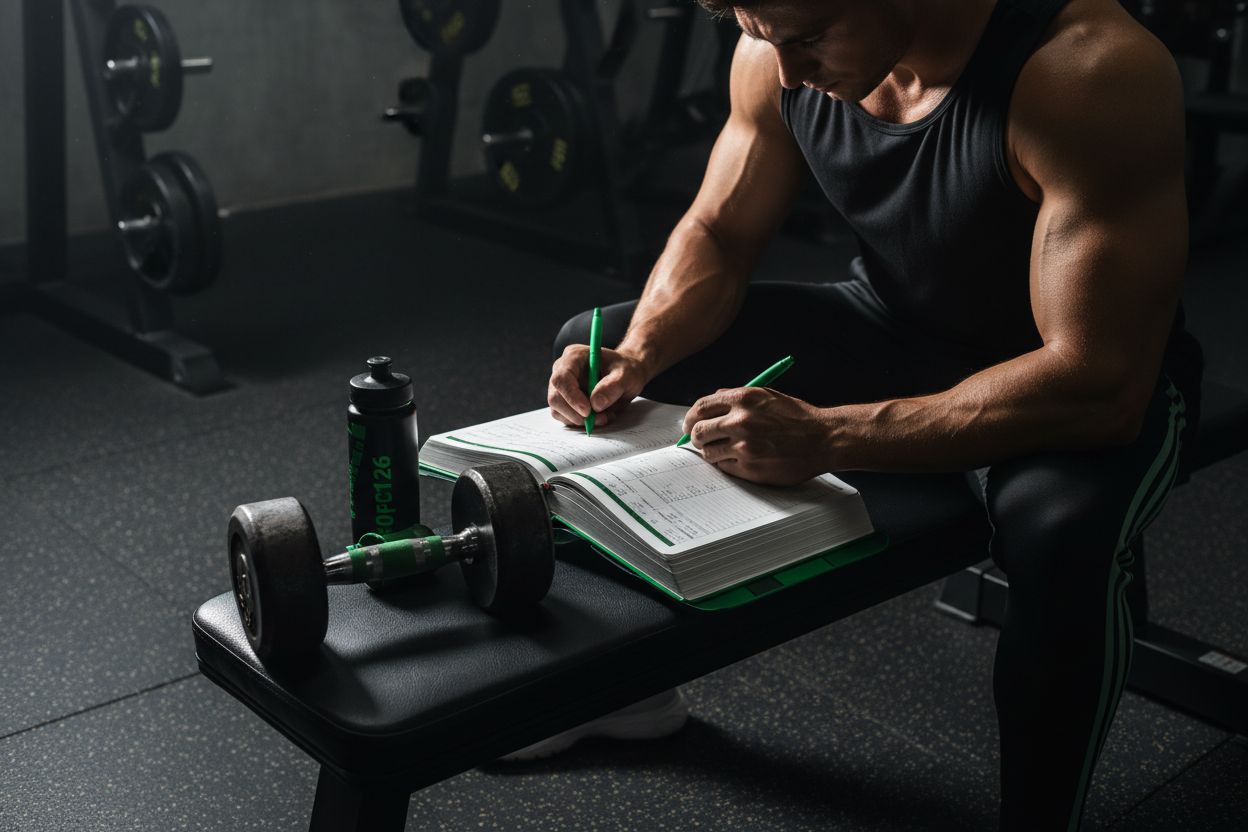
An exercise record is a written or digital note of a workout, an individual lift, or an entire training session. At a minimum, it captures what exercise you did, how much resistance you used, how many sets and reps you completed, and any notes that will help you train better next time.
People often use several terms for the same idea. An exercise record can overlap with a workout log, lifting log, training journal, exercise journal, or progress tracker. The difference is usually in scope:
Exercise record often refers to a single entry or a specific movement.
Workout log usually refers to the full session.
Training diary may include sleep, stress, recovery, and energy.
Fitness log can include cardio, measurements, and general health data.
If you want to improve technique as well as numbers, it helps to understand the basics of movement quality too. A resource like Core Principles & Techniques for Every Lifter can be useful when you are building a more structured record around form and progression.
The main point is simple. A good exercise record should make it easier to answer three questions later: What did I do? How did it go? What should I do next?
Why keeping an exercise record matters
Training without a record often feels productive in the moment, but it can be hard to tell whether you are actually improving. An exercise record gives you a running history, which is especially valuable if your goals include strength, muscle growth, endurance, or skill development.
Here is what a solid record helps you do:
Track progress over time. You can compare loads, reps, pace, and effort across weeks or months.
Find personal records. When you write things down, new bests stand out clearly instead of getting lost in memory.
Spot plateaus early. If your numbers stop moving, your record makes the pattern obvious.
Improve consistency. A record helps you see whether you are following your plan or drifting from it.
Adjust training smarter. You can tell when to add weight, reduce volume, change exercise selection, or take a lighter week.
Support recovery decisions. Notes about soreness, fatigue, or pain can help you avoid pushing the wrong movement at the wrong time.
This matters for beginners and experienced lifters alike. Beginners often need the record to learn what a productive session looks like. More advanced trainees need it to manage detail, volume, and progression with less guesswork.
If your workouts are part of a broader plan, it also helps to review training structure regularly. Optimize Your Training | Expert Tips and Workout Guides is a good companion read for people who want to turn workout notes into a clearer system.
A useful way to think about it is this: the exercise itself creates the stimulus, but the record creates the feedback loop.
What to include in every exercise record
You do not need to write everything down, but you do need to record the information that matters for the next session. The best exercise record is detailed enough to be useful and simple enough that you will actually keep using it.
A strong entry usually includes:
Date and time of the session
Workout goal or training focus
Exercise name
Sets and reps completed
Load or resistance used
Rest time between sets if it matters for the program
Effort level, such as RPE or a simple easy, moderate, hard note
Warm-up details if they affect performance
Tempo, range of motion, or cues if technique is a focus
Bodyweight or measurements if those are relevant to the goal
Short notes about energy, pain, equipment changes, or technique issues
Not every field has to be filled in every time. A strength athlete may care deeply about top sets, rep quality, and rest periods. Someone doing general fitness may care more about duration, total work, or how the session felt.
A simple exercise record template
Use this as a starting point and adjust it to fit your training style:
Date:
Goal:
Warm-up:
Exercise 1: sets, reps, load, notes
Exercise 2: sets, reps, load, notes
Exercise 3: sets, reps, load, notes
Condition today: sleep, soreness, stress, energy
Next step: what to repeat, improve, or increase next time
Example of a completed record
Date: Monday, March 24
Goal: Upper-body strength
Warm-up: 5 minutes rowing, shoulder mobility, light ramp-up sets
Bench press: 4 sets of 5 at 185 lb, final set felt heavy but clean
Barbell row: 4 sets of 8 at 135 lb, last two reps slowed down
Push-ups: 3 sets of 15, stopped 2 reps before failure
Condition today: slept well, elbows felt normal, energy good
Next step: keep bench at 185 lb until all sets stay crisp, then add 5 lb
That kind of note is far more useful than just writing down numbers. It tells you what happened and what to do next.
Paper, spreadsheet, or app: which format works best?
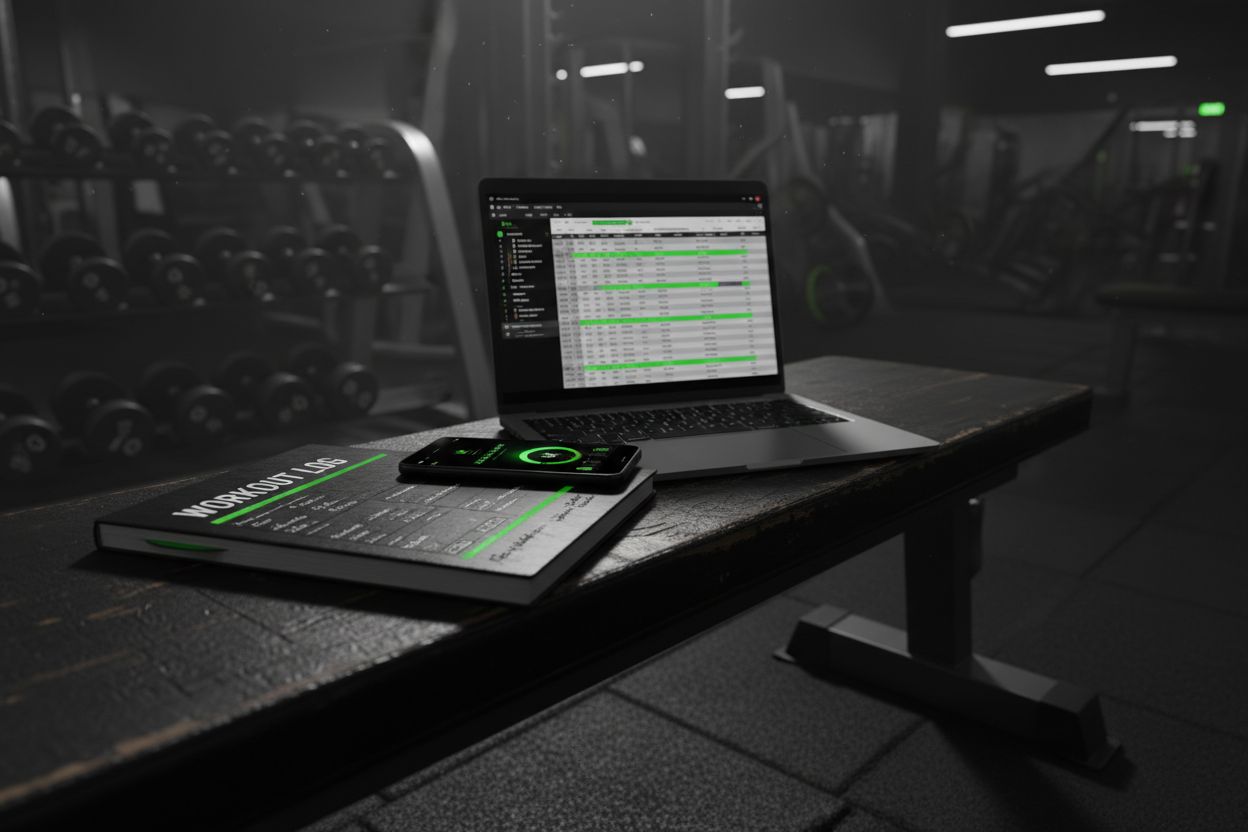
The best format is the one you will use consistently. Some people love paper because it is fast and distraction-free. Others want digital search, charts, and automatic history. There is no single right answer.
Paper notebook
A notebook is the simplest option. It is low cost, easy to carry, and quick to open between sets. If you want the least possible friction, paper can be excellent.
Best for: lifters who want speed and simplicity
Pros:
No battery, no notifications, no setup
Easy to scribble notes during a session
Feels natural in the gym
Cons:
Harder to search later
No automatic charts or backups
Easy to forget at home
Spreadsheet
A spreadsheet is ideal if you like structure and patterns. It is good for sorting exercises, tracking volume, and reviewing progress over time.
Best for: people who like data and long-term planning
Pros:
Easy to organize by date, exercise, or program phase
Can calculate trends and totals
Simple to copy templates across weeks
Cons:
Slower to update during a busy session
Less convenient on the gym floor
App
An app is often the most practical option for people who want speed plus history. If you prefer a dedicated workout tracker, Setgraph is positioned as a workout tracker and gym log app, and its review page, Setgraph App Reviews (2025): User Ratings for Tracking Sets, Reps & Workouts, can help you judge whether it matches the way you like to train.
Best for: people who want fast logging and easy access to past workouts
Pros:
Quick entry during training
Easy to review old sessions
Useful when you want your workout history in one place
Cons:
Depends on your phone and battery
Different apps suit different training styles
If you are still choosing a system, focus on one question: which option makes it easiest to log the workout before you leave the gym?
How to build an exercise record habit that lasts
A good system is not the one with the most fields. It is the one you keep using after the novelty wears off. The goal is to make logging feel like part of training, not an extra chore.
Here are a few habits that help:
Record right away. Do not wait until later in the day. Log the workout while it is still fresh.
Keep the format stable. Use the same fields every session so you do not waste time deciding what to write.
Use short notes. One sentence can be enough if it captures the useful detail.
Review weekly. Set aside a few minutes to look for patterns in load, reps, fatigue, and missed sessions.
Tie the record to your plan. If your training program calls for progression, your record should show whether you hit it.
Use shorthand. Abbreviations can save time once you know what they mean.
If you want more structure around the bigger picture of your sessions, Setgraph Training Guide | Maximize Your Workout is a helpful next stop, especially if you are trying to organize workouts around a clear routine.
A useful rule is to record what will matter next time. That usually means the exercise, the load, the reps, the effort, and one note about how the set went.
Common mistakes to avoid

Many exercise records fail because they are either too thin or too complicated. A record that is hard to maintain usually gets abandoned.
Watch out for these mistakes:
Logging too little. If you only write the exercise name, you may not have enough information to progress.
Logging too much. A full essay after every set is not realistic for most people.
Changing formats constantly. If the layout changes every week, it becomes hard to compare sessions.
Ignoring failed or rough workouts. Those sessions often teach you the most.
Forgetting context. Sleep, soreness, and stress can explain a lot of performance changes.
Never reviewing the log. Writing it down helps, but the real value comes from using it to make decisions.
Another common problem is copying someone else’s system without adapting it to your goals. A bodybuilder, a powerlifter, a runner, and a beginner doing general fitness do not need the exact same exercise record.
Exercise record examples for different training styles
The best way to understand an exercise record is to see how it changes with the goal.
Example for a beginner
Goal: Learn the basics and stay consistent
Workout: Goblet squat, push-up, dumbbell row, plank
Notes: Squats felt unstable, push-ups needed incline, row felt fine
Next step: Repeat the same workout next time and improve control
This kind of record is simple, but it is still useful. A beginner often benefits more from consistency and technique notes than from complex calculations.
Example for strength training
Goal: Increase lower-body strength
Workout: Back squat 5x3, Romanian deadlift 3x6, split squat 3x8
Notes: Top sets felt strong, brace broke down on last squat rep, rest needed 3 minutes
Next step: Keep the same load until all reps stay crisp
Example for bodybuilding or hypertrophy
Goal: Add muscle to back and arms
Workout: Lat pulldown 4x10, cable row 4x12, curls 3x12
Notes: Last set of rows reached near failure, curls felt easier than expected
Next step: Add a little weight or one extra rep on the next session
Example for bodyweight training
Goal: Build pressing endurance
Workout: Push-ups 4xAMRAP, dips 3x8, hollow hold 3x30 seconds
Notes: Push-up depth was better than last week, dips irritated shoulder slightly
Next step: Keep shoulder-friendly range and monitor discomfort
Bodyweight training still needs an exercise record because progress is not just about weight on a bar. It can also involve reps, range of motion, control, pacing, and recovery.
FAQ about exercise records
What should be included in an exercise record?
Include the date, exercise name, sets, reps, load, rest, effort level, and any notes that will help you improve the next session. If you track bodyweight, tempo, or pain, add those too.
Is a workout log the same as an exercise record?
They are closely related. An exercise record often refers to one entry or one movement, while a workout log usually covers the full session. In practice, many people use the terms interchangeably.
How often should I update my record?
Ideally, after every workout or even during the workout. The closer you log it to the session, the more accurate it will be.
Can I record bodyweight workouts?
Yes. You can track reps, sets, hold times, total rounds, rest periods, and how difficult the session felt. That is often enough to show clear progress.
What is the best app for an exercise record?
The best app is the one that fits your training style and makes logging easy. Look for quick entry, clear history, and a layout you will actually enjoy using. If you want a place to start, the Setgraph App Reviews (2025): User Ratings for Tracking Sets, Reps & Workouts page is a practical comparison point.
Final thoughts
An exercise record is not just a place to store numbers. It is a tool that helps you train with more intention. When you write down what happened in each session, you make it easier to progress, easier to spot problems, and easier to repeat what works.
Keep it simple at first. Record the essentials, review the pattern over time, and let the log shape your next workout. Once that habit is in place, your exercise record becomes one of the most valuable parts of your training routine.
Article created using Lovarank