6 Day Gym Workout Schedule: 4 Proven Splits + 12-Week Progression
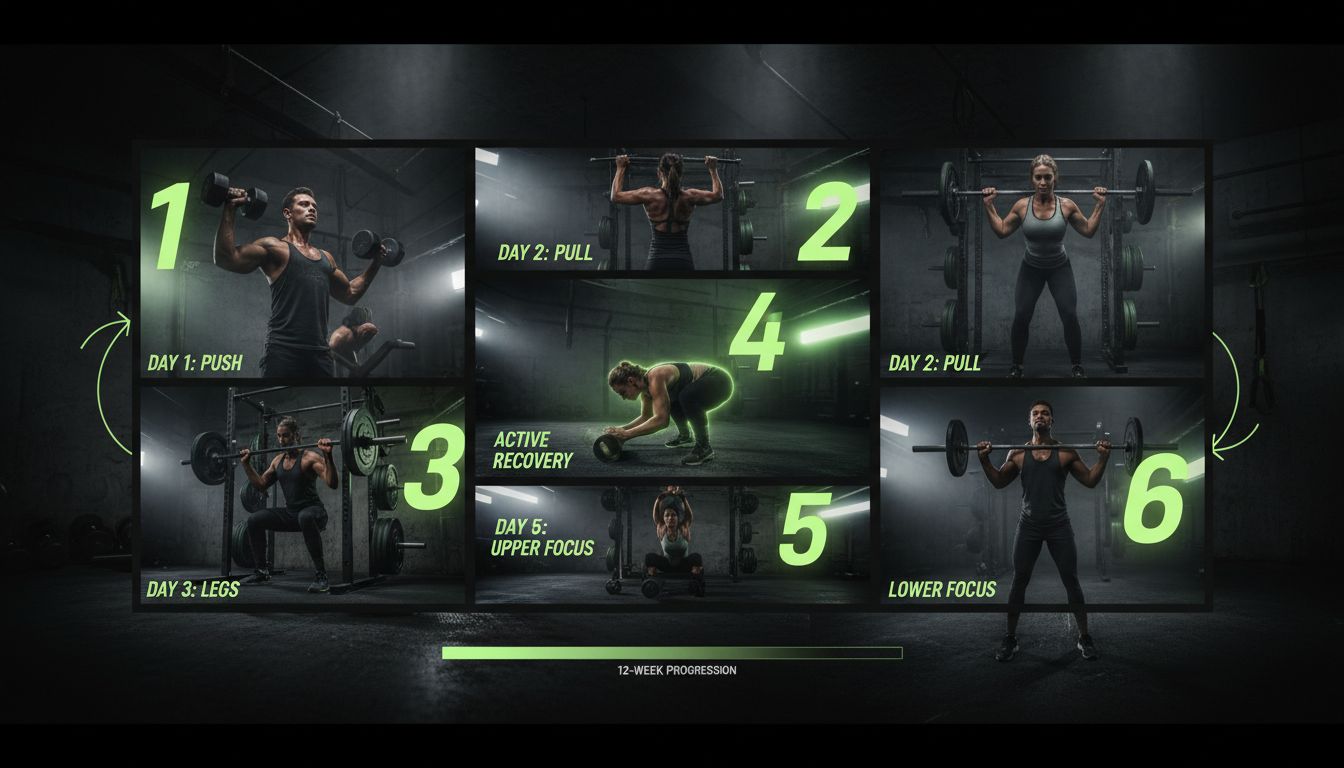
If you want consistent progress without spending every waking hour in the gym, a well-structured 6 day gym workout schedule gives you the frequency and focus needed to build muscle, increase strength, and refine conditioning. Below you will find four tested 6-day splits, a 12-week progression plan with deloads, nutrition and recovery guidance, troubleshooting advice, and quick session templates for busy days.
What is a 6-Day Workout Split?

A 6-day gym workout schedule divides training across six sessions each week so you can train each muscle group more frequently or with greater focus. Commonly used by intermediate and advanced lifters, the approach balances training volume and recovery by rotating muscle groups or movement patterns across days. The result is more practice per lift, higher weekly training volume, and better stimulus for muscle hypertrophy when programmed intelligently.
Who it is for
Lifters with at least 6 to 12 months of consistent training experience
People who can commit to most days of the week and prioritize recovery
Those who want faster progress in size or strength without overly long sessions
Who should avoid it
Beginners who should prioritize mastering movement patterns in 2 to 4 sessions per week
Individuals with limited recovery, chronic pain, or high life stress that reduces sleep and nutrition capacity
Benefits of a 6-Day Split
Higher training frequency to exploit repeated muscle protein synthesis windows
Better distribution of volume so sessions stay 45 to 90 minutes long
More targeted work for lagging body parts without overloading other muscles
Flexibility to include conditioning, mobility, and accessory work
Easier progressive overload through more frequent practice of heavy lifts
The Complete 6-Day Workout Schedule: Four Options for Different Goals

Below are four practical six-day splits you can choose from based on goals, time, and equipment. Each split includes sample exercises, sets and reps, substitutions, and session length options.
1) Push/Pull/Legs (PPL) x2 — Balanced hypertrophy and strength
Best for: General muscle growth and strength with simple recovery.
Day 1 — Push A (Chest, Shoulders, Triceps)
Barbell bench press: 4 x 5 to 6 (strength) or 4 x 8 to 12 (hypertrophy)
Incline dumbbell press: 3 x 8 to 12
Overhead press: 3 x 5 to 8
Lateral raises: 3 x 12 to 15
Triceps rope pushdowns: 3 x 10 to 15
Day 2 — Pull A (Back, Biceps)
Deadlift (conventional): 3 x 3 to 5 (rotate every other week) or Romanian deadlift 3 x 6 to 8
Bent-over row: 4 x 6 to 10
Pull-ups or lat pulldown: 4 x 6 to 12
Face pulls: 3 x 12 to 15
Hammer curls: 3 x 10 to 12
Day 3 — Legs A
Back squat: 4 x 5 to 8
Romanian deadlift: 3 x 8 to 12
Leg press: 3 x 10 to 15
Walking lunges: 3 x 10 each leg
Calf raises: 4 x 12 to 20
Day 4 — Push B (variation)
Close-grip bench press: 4 x 6 to 8
Dumbbell shoulder press: 3 x 8 to 12
Chest flyes: 3 x 10 to 15
Triceps overhead extension: 3 x 10 to 12
Day 5 — Pull B
Barbell row or single-arm dumbbell row: 4 x 6 to 10
Seated cable row: 3 x 8 to 12
Lat pull-down: 3 x 8 to 12
EZ-bar curls: 3 x 8 to 12
Rear delt flyes: 3 x 12 to 15
Day 6 — Legs B (hypertrophy focus)
Front squat or goblet squat: 3 x 6 to 10
Romanian deadlift variation: 3 x 8 to 12
Bulgarian split squats: 3 x 8 to 12 each leg
Leg curls: 3 x 10 to 15
Standing calf raises: 4 x 12 to 20
Notes and substitutions
Home gym: Replace barbell lifts with dumbbell variations and banded movement. Use single-leg work if you lack heavy loading.
Time options: 45 minutes, drop an isolation move; 60 to 75 minutes, include full accessory sets.
2) Bodypart Split (Bro Split) — Maximum focus per session
Best for: Lifters who prefer deep focus on each body part and high volume per session.
Day 1 — Chest & Abs
Flat dumbbell press: 4 x 8 to 12
Incline barbell press: 4 x 6 to 10
Cable crossovers: 3 x 12 to 15
Hanging leg raises: 3 x 12 to 15
Day 2 — Back
Deadlift: 3 x 3 to 5
Pull-ups: 4 x 6 to 12
One-arm dumbbell row: 4 x 8 to 12
Straight-arm pulldown: 3 x 12 to 15
Day 3 — Shoulders & Traps
Overhead press: 4 x 6 to 10
Lateral raises: 4 x 10 to 15
Rear delt fly: 3 x 12 to 15
Shrugs: 4 x 8 to 12
Day 4 — Legs (Quad focus)
Back squat: 5 x 5 or 4 x 8 to 12
Leg press: 4 x 10 to 15
Walking lunges: 3 x 12 each leg
Quad extensions: 3 x 12 to 15
Day 5 — Arms (Biceps & Triceps)
Barbell curls: 4 x 8 to 12
Incline dumbbell curls: 3 x 10 to 12
Skull crushers: 4 x 8 to 12
Triceps dips: 3 x 8 to 12
Day 6 — Legs (Hamstring & Glute focus)
Romanian deadlift: 4 x 6 to 12
Hip thrusts: 4 x 6 to 12
Hamstring curl: 3 x 10 to 15
Calf raises: 4 x 12 to 20
Notes
This split offers a lot of isolation work and is time intensive. Use it when you can commit to longer sessions.
3) Upper/Lower + Specialization Days
Best for: Strength focus with room for accessory specialization.
Day 1 — Upper Heavy
Bench press: 5 x 5
Weighted pull-ups: 4 x 4 to 6
Overhead press: 3 x 5 to 8
Row variation: 4 x 6 to 8
Day 2 — Lower Heavy
Squat: 5 x 5
Deadlift variation: 3 x 3 to 5
Bulgarian split squat: 3 x 8 each leg
Core work: 3 sets
Day 3 — Upper Hypertrophy (arms and chest focus)
Incline dumbbell press: 4 x 8 to 12
Seated row: 4 x 8 to 12
Lateral raises: 3 x 12 to 15
Biceps and triceps accessories: 3 x 10 to 15
Day 4 — Lower Hypertrophy
Front squat or goblet squat: 4 x 8 to 12
Romanian deadlift: 4 x 8 to 12
Leg press: 3 x 12 to 15
Hamstring isolation: 3 x 10 to 15
Day 5 — Weak-Point Specialization Upper
Choose 2 lagging muscle groups, 6 to 8 sets each
Example: rear delts and traps or chest and triceps
Day 6 — Conditioning and Mobility + Light Full Body
Circuit with kettlebell swings, sled pushes, and bodyweight movements
20 to 30 minutes steady conditioning
Mobility flow and foam rolling
Notes
This split mixes strength and hypertrophy and gives room for targeted improvements.
4) PPL with Added Conditioning — For fat loss and conditioning
Best for: Those who want to combine hypertrophy with daily conditioning.
Days 1 to 6 follow a PPL structure but each day includes a 15 to 25 minute conditioning finisher, for example:
HIIT bike sprints 10 x 15 seconds work 45 seconds rest
Rowing intervals 8 x 30 seconds on 60 seconds off
Circuit of battle ropes, sled, and box jumps
Notes
Ensure calories and sleep support higher energy expenditure.
If recovery suffers, reduce conditioning volume before reducing resistance work.
12-Week Progressive Plan and Deload Strategy
A 12-week block gives time for measurable progress. Here is a simple progression framework that works with any of the four splits above.
Weeks 1 to 3: Base building
Week 1: Moderate volume, choose weights that feel challenging for last reps. Record all sets and loads.
Week 2: Increase volume by 5 to 10 percent or add one set to compound lifts.
Week 3: Push intensity, small weight increases of 2.5 to 5 percent on main lifts if form is solid.
Week 4: Deload
Reduce volume and intensity 40 to 60 percent. Keep movement patterns but reduce load and sets.
Weeks 5 to 7: Build phase
Repeat the week 1 to 3 pattern, aiming for small load increases or added reps each week.
Week 8: Deload
Another planned recovery week with lighter loads and mobility work.
Weeks 9 to 11: Peak phase
Focus on heavier sets with slightly lower volume. For hypertrophy, increase intensity by including advanced techniques once per week: drop sets, rest-pause, tempo variations.
Week 12: Active recovery and testing
Light week with one day testing a 1 or 3 rep max for main lifts if appropriate. Otherwise perform a maintenance week.
Progressive overload signals
Increase weight when you complete upper range of reps for two consecutive sessions
Add sets or reduce rest only if form remains solid
Prioritize recovery when performance drops for multiple sessions
Nutrition and Recovery for a 6-Day Schedule
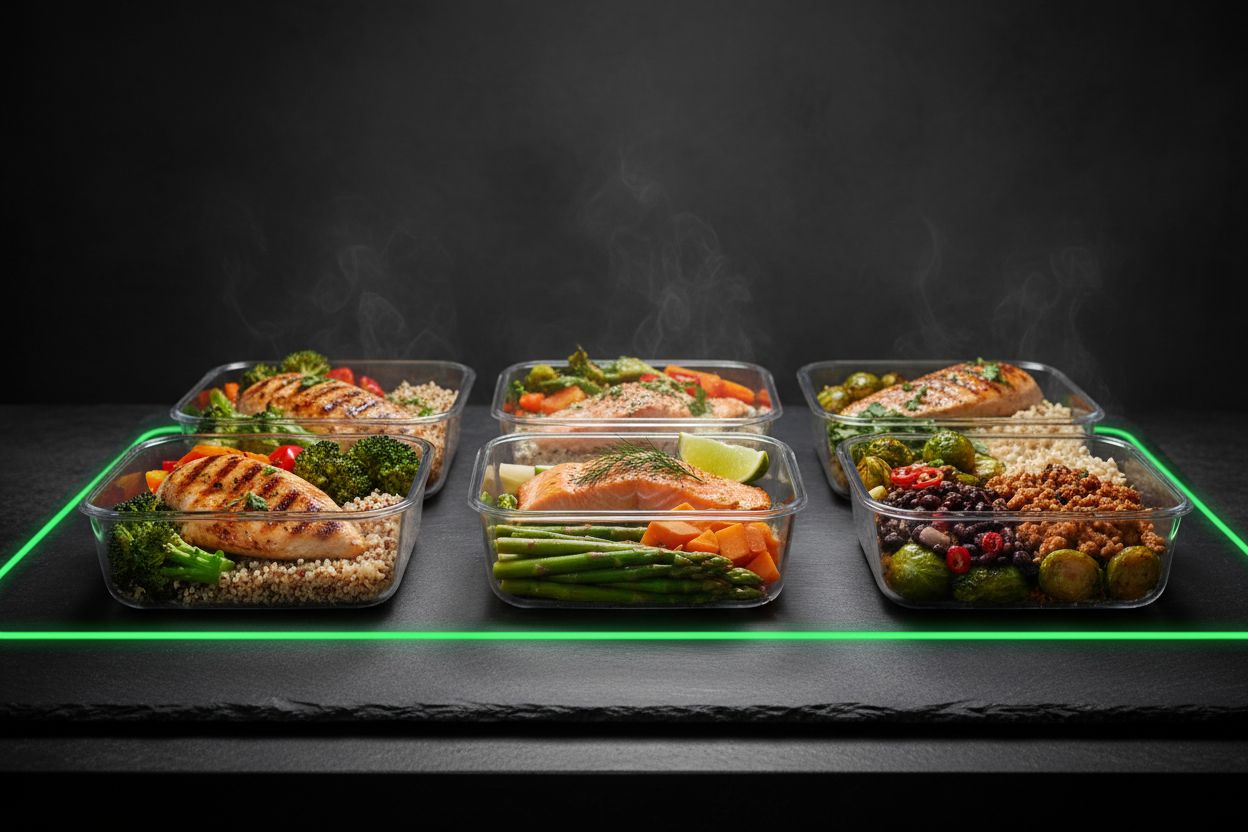
Nutrition basics
For muscle gain: aim for a 250 to 500 calorie surplus, protein 1.6 to 2.2 g per kg body weight, carbs timed around training for performance
For fat loss while preserving muscle: small calorie deficit 200 to 350 calories, keep protein high at 2.0 to 2.4 g per kg
For maintenance or recomposition: close to maintenance calories, prioritize protein and training intensity
Pre and post-workout
Pre-workout (60 to 90 minutes): 20 to 40 grams of carbs with 15 to 25 grams of protein for fuel
Post-workout (within 60 to 90 minutes): 20 to 40 grams of protein, moderate carbs to replenish glycogen when sessions are heavy
Sleep and recovery
Aim for 7 to 9 hours of quality sleep; growth and recovery hormones are optimized during deep sleep
Include 10 to 20 minutes of mobility and foam rolling on training days and more on deloads
Use active recovery on the rest day: light walk, yoga, or mobility work
Supplements worth considering
Protein powder to hit daily targets
Creatine monohydrate 3 to 5 g per day for strength and size
Caffeine strategically for performance
Troubleshooting: Common Problems and Fixes
Problem: Constant fatigue or stalled progress
Fix: Check sleep, reduce total weekly volume by 10 to 20 percent for two weeks, then reassess. Use planned deload weeks.
Problem: Persistent joint pain
Fix: Reduce heavy frequency on the offending lift, swap to single-leg or unilateral alternatives, prioritize mobility and soft tissue work, consult a professional if pain persists.
Problem: Plateau in strength
Fix: Cycle intensity and volume, use a 3 to 5 week accumulation phase followed by a 1 week intensification then a deload. Add heavier singles or doubles with more recovery.
Problem: Missed workouts
Fix: If you miss one session, either merge key compound lifts into the next session without extreme volume or take a rest and continue the plan. Do not double up heavy sessions often.
Tracking, Measurement, and Implementation
Consistent tracking turns effort into progress. Record exercise, load, reps, RPE and notes on recovery. If you prefer an app to log sets and track progress, consider using a dedicated tracker to visualize trends and auto-calculate progression.
Helpful resources
For daily logging and workout visualization, see Setgraph - Workout Tracker Gym Log App
For practical training principles and technique, read Core Principles & Techniques for Every Lifter - Setgraph
To optimize sessions and recovery, consult Optimize Your Training | Expert Tips and Workout Guides
For additional program templates and step-by-step guides, check Setgraph Training Guide | Maximize Your Workout
To see user experiences with tracking apps, read Setgraph App Reviews (2025): User Ratings for Tracking Sets, Reps & Workouts
What to measure
Weekly training volume per muscle group (sets x reps x load)
Body composition every 4 weeks using consistent methods
Strength benchmarks every 4 to 8 weeks for main lifts
Recovery markers such as resting heart rate, sleep quality, and session RPE
Quick Session Templates: 30 / 45 / 60 Minutes
30-minute session (time-crunched):
Warm-up 5 minutes
Compound movement 4 sets (5 to 8 reps)
One accessory compound 3 sets (8 to 12 reps)
Short finisher 8 minutes AMRAP or 3 rounds accessory
45-minute session (balanced):
Warm-up 8 minutes
Compound 5 sets or 4 sets and heavy accessory 3 sets
Two isolation movements 3 x 10 to 15
Mobility 5 minutes
60-minute session (full):
Warm-up 10 minutes including activation
Two main lifts 4 to 5 sets each
Two heavy accessory lifts 3 to 4 sets
Two isolation or core movements 3 sets each
Cooldown and mobility 5 to 10 minutes
Final Notes and Practical Tips
Start conservative and add volume slowly. The fastest way to derail progress is too much volume without recovery.
Adjust split selection to life and energy. If work or travel interferes, temporarily switch to a 4 or 5 day plan and return when possible.
Use variety but keep at least one heavy compound per muscle group for neural strength gains.
Reassess every 8 to 12 weeks and change the plan if progress stalls or motivation drops.
A 6 day gym workout schedule can be a powerful tool when it is programmed with progressive overload, intentional recovery, and consistent tracking. Choose the split that fits your goals and schedule, follow a 12-week progression with planned deloads, prioritize sleep and nutrition, and log your sessions to make real, measurable progress.
If you want a simple way to log workouts and monitor progression, explore the tracking and program guides linked above and pick a template that you can stick with for at least three months. Consistency is the most important variable in long-term results.
Article created using Lovarank