What's New in Setgraph 9.40

A useful training history lets you compare completed work without relying only on memory. This release note covers the graph-navigation, filtering and template features introduced in Setgraph 9.40 for iOS.
The screenshots show the 9.40 interface. Current layouts may differ, so use them as version-specific examples of the features described below.
Graph Navigation

Version 9.40 improved scrolling through an exercise’s graph and added dashed boundaries between training days. Selecting a recorded set shows its reps and weight so you can compare it with other entries. The chart displays your records; it does not explain every reason performance changed.

The historical graph uses circles for individual sets. Selecting a circle displays that set’s recorded reps and weight; a filled circle identifies the selected entry.
Why it matters: you can compare the same movement across dates. Note changes in technique, range of motion, rest or equipment before treating a chart difference as a change in strength.
Rep and Weight Range Filtering

Use the rep or weight filters to inspect a defined portion of your recorded sets. For example, select 5–8 reps to review sets in that range rather than mixing them with lighter high-rep work.
Why it matters: a consistent filter can make comparisons easier to interpret. A 6–12-rep filter is one possible view; it is not the only range relevant to hypertrophy, and recorded load does not measure muscle gained.
Last Two Sessions Comparison
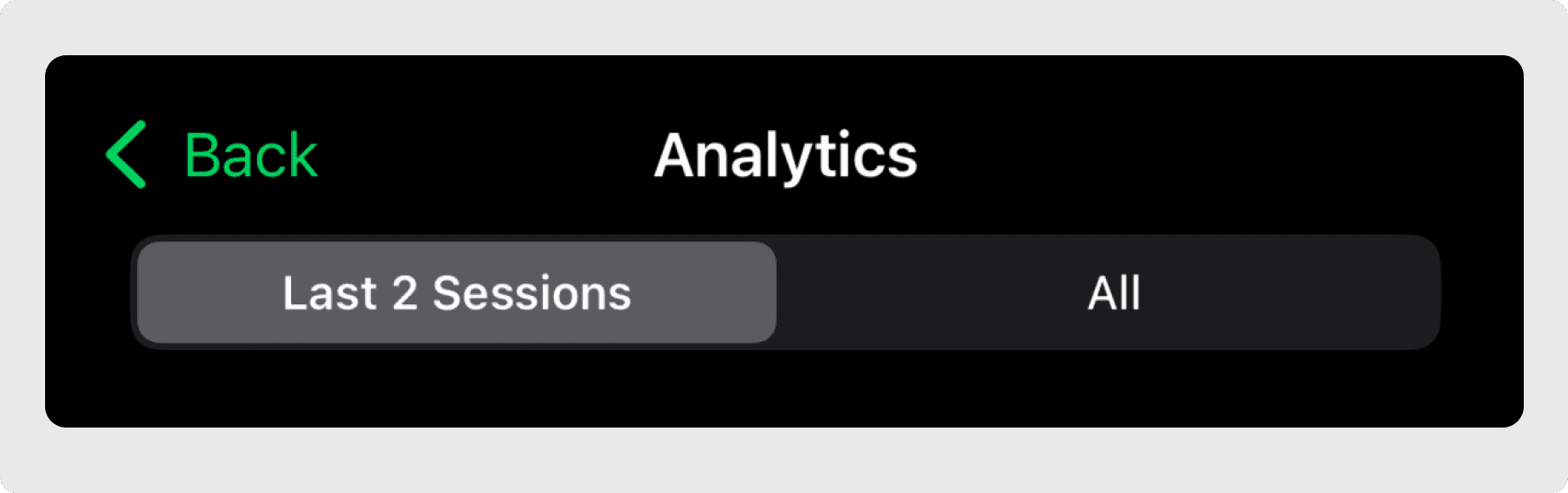
The historical Last 2 Sessions view limits the exercise graph to the two most recent sessions for comparison. It helps you inspect recorded reps and load without implying that every workout must exceed the last.
Why it matters: compare equivalent sets and use the result as one input to your next decision. Repeating a performance, doing a planned lighter session or resting can all fit a training program; a lower number is not automatically a problem.
Pre-Made Workout Templates

The 9.40 release added list templates that can be added to your library and customized. Review the exercises, notes and workload before following a template. A pre-made routine is a starting structure rather than proof it suits your experience or circumstances.
These features help you organize and review recorded training. Explore the current Setgraph app for the features and access available on your device.
