Smart Plates: How to Calculate and Log Plate Loads

Smart Plates lets you enter a load by selecting the plates in a configured setup. It can reduce repeated arithmetic, but the result depends on the units, starting weight, distribution mode, and plates you enter.
Match the app to the physical equipment before logging. Smart Plates does not weigh the bar or detect which plates are actually loaded, so check the displayed total against the setup you are using.
What Are Smart Plates?
In the iOS workflow, a plate configuration supplies the plate sizes and quantities available for entry. Starting weight and plate distribution are separate settings. The screenshots below show an older interface; labels and placement can vary by version.
This is useful when a lift uses several plates and you want to record the resulting total. It does not choose an appropriate training load or guarantee that a progression is safe.
How to Use Smart Plates in Setgraph
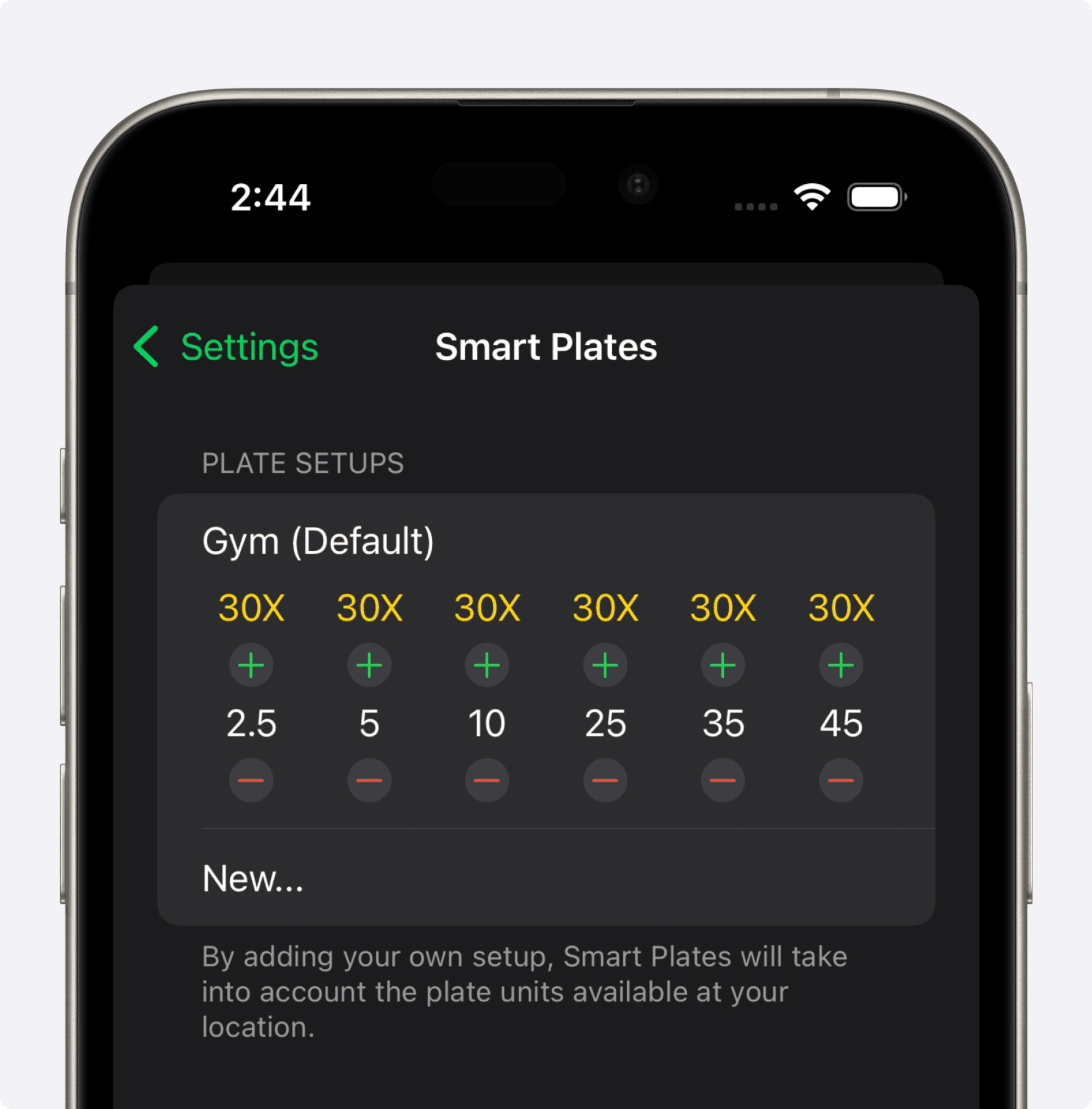
The screenshot shows a pounds-based preset with 2.5, 5, 10, 25, 35, and 45 lb entries. Use plate sizes and units that match your own equipment rather than assuming that preset fits every gym.
Open Smart Plates in the iOS settings and choose an existing plate setup or create a named one for your equipment. Check its unit and plate sizes. A custom setup is useful when the preset does not match what is available.
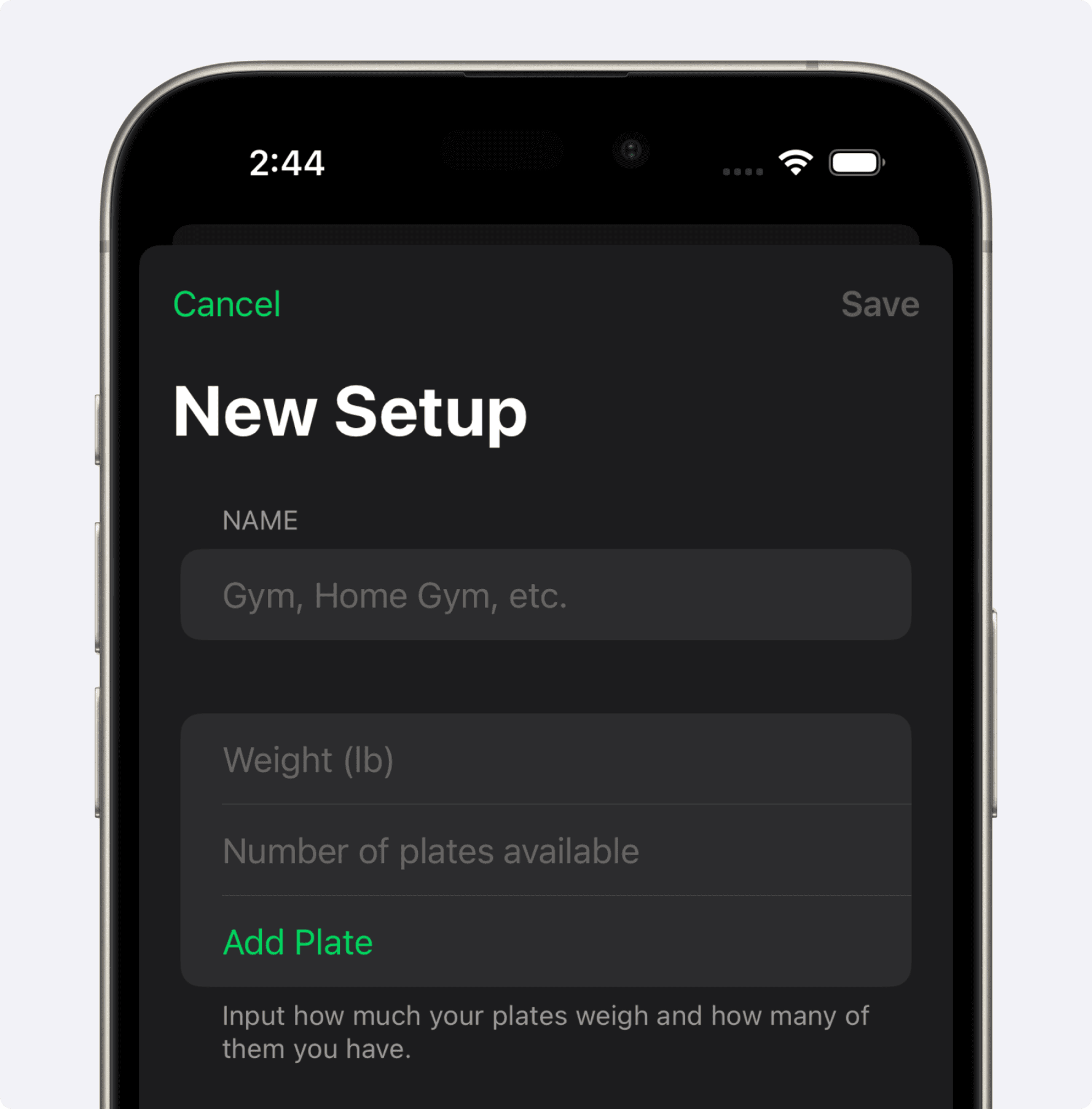
For a new setup, enter a name, each plate’s weight, and its available quantity, then save. Also check the distribution selected for the exercise. “Evenly” (shown as “Each side” in the older screenshot) treats the selected plates as one side of a matched pair and doubles their load. “One Side” counts the selected plates once. Enter the total quantity of physical plates available in the setup, and verify the final load before logging.
Using Smart Plates to Log a Set
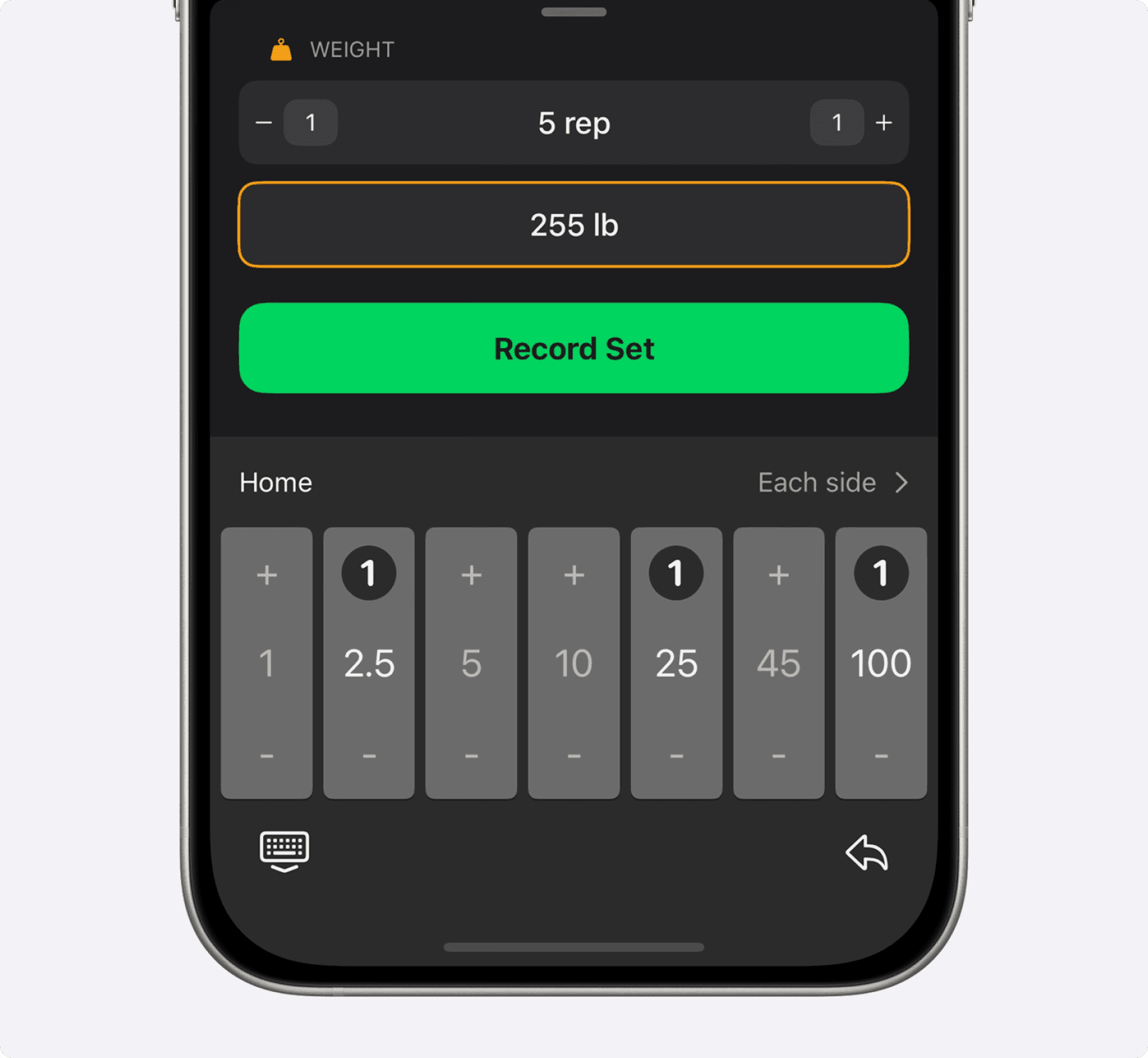
Set the starting weight to match the actual bar or machine, or choose no starting weight when appropriate. Do not assume every bar weighs 45 lb.
On the set-entry screen, select the correct configuration and use the plate controls to match the loaded equipment. Review the total before saving the completed set. In the equal/each-side mode, the plate selection represents one side and is doubled before the starting weight is added. For example, a 45 lb bar plus one 45 lb plate on each side totals 135 lb: 45 + 2 × 45. A 5 lb plate added to each side increases that total by 10 lb, not 5 lb.
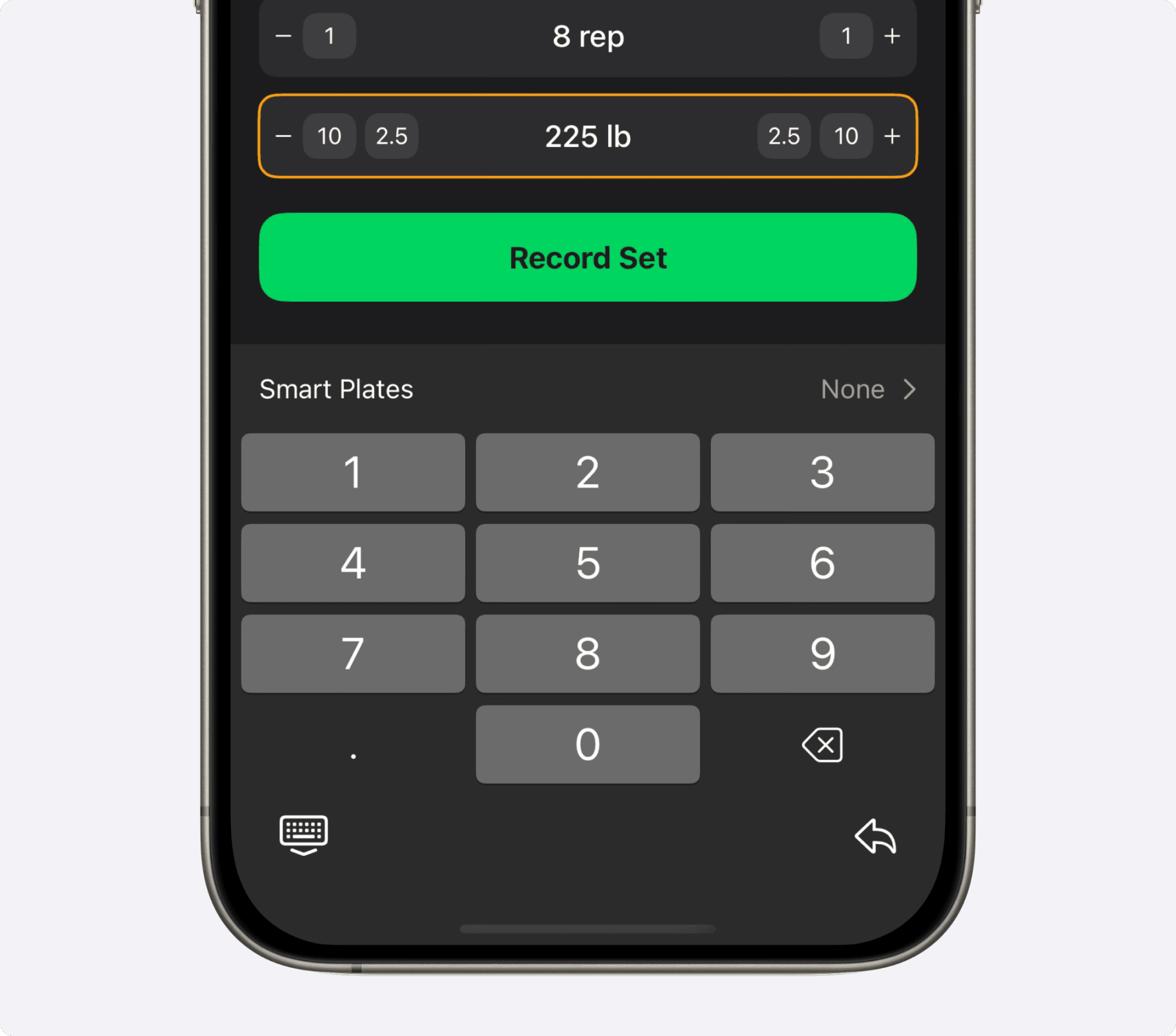
You can switch between the plate configuration and manual numeric input. Check the displayed load after changing input methods.
The configuration menu also allows choosing another setup or “None” for manual weight entry. The screenshots show an older “None” interface; current labels may differ. Whichever input you choose, verify the final load and unit.
Adjusting Weight Between Sets
Use the plus and minus controls to match plates added or removed for the next set. Check both the physical load and the displayed total. Reusing the previous entry is appropriate only if the newly completed set used the same setup.
Benefits of Smart Plates for Strength Training
Less repeated arithmetic: the app totals the plate values you enter, including the configured starting weight and distribution.
Consistent records: a named setup can help you use the same load convention each session. Accuracy still depends on entering the actual equipment correctly.
Adjustments between sets: update the selected plate quantities instead of recalculating the total manually each time.
Clear increments: seeing the total makes it easier to recognize the size of a proposed change. Follow your training plan rather than increasing simply because a plate is available.
Equipment-specific setups: create configurations for the plate sizes you use. Check unusual machines or loading conventions separately instead of assuming one setup describes every exercise.
Conclusion
Smart Plates is an entry aid, not a scale or coach. Before saving a set, confirm the units, starting weight, distribution, physical plates, and completed reps. The guide describes the iOS implementation; it does not promise Android feature parity or universal feature access.
