Rest Time Between Different Exercises: How to Choose

Rest needs depend on the next exercise, load, effort and goal. This guide gives starting ranges and a way to adjust them, rather than an exact optimal time for every lift.
Why Rest Time Between Exercises Is Important for Muscle Growth
Inter-set rest means the break between sets. Moving to a different exercise also involves setup and sometimes warm-up sets. The same idea applies: give yourself enough time to perform the next task well. Read more about rest and muscle-growth evidence.
Recommended Rest Times by Exercise Type
Free Weight Compound Exercises Rest Time

3-5 minutes
For heavy strength-focused compound sets, 3–5 minutes can be a useful starting range. The 2009 ACSM position stand used this range for heavy strength work; it is not a rule that every free-weight set requires five minutes.
Examples:
Bench Press
Back Squat
Deadlift
Extend the break if you cannot perform the next set with the planned control and effort. A shorter interval can work for easier sets; more time can be appropriate for demanding ones. The exercise name alone does not determine recovery.
Stable Compound Exercises
1-3 minutes
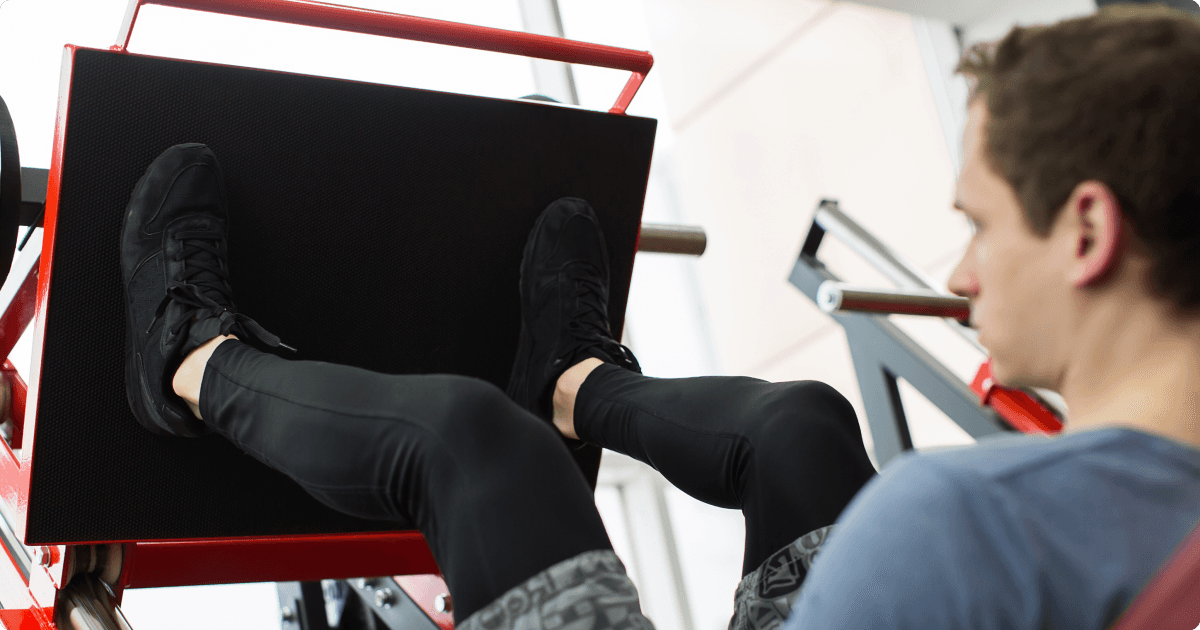
Stable compound exercises (machine-based exercises) are done while seated or standing on equipment that utilizes weights and other resistance mechanisms.
Examples:
Seated Chest Press
Leg Press
Seated Cable Row
A supported or guided movement can reduce some balance demands, but a hard leg-press set can still be very demanding. Treat 1–3 minutes as an adjustable starting range rather than assuming machines always recover faster.
Rest Time for Isolation Exercises

Start around 1–2 minutes; extend when needed
Isolation work may be less demanding overall, but repeated hard sets can still fatigue the target muscle substantially. Use the next set’s quality to judge the interval.
Examples:
Tricep Extension
Bicep Curl
Leg Extension
A 2024 rest-interval meta-analysis suggested a small hypertrophy benefit above 60 seconds, without establishing a universal cutoff. Fifteen-second breaks belong to specialized methods such as rest-pause training, not a default rule for all isolation sets.
Tracking Your Rest Time Between Different Exercises
Try a simple log entry: “leg press, 3 × 10, two minutes’ rest.” If later sets fall far below the target, try a longer break next time while keeping the setup comparable. Setgraph’s rest-timer guide shows one way to track elapsed time.
A timer helps you see elapsed time; it does not decide when you have recovered. Adjust the planned interval when needed and record the exception.