PPL Routine Beginner: The Complete Beginner’s Guide to Push/Pull/Legs
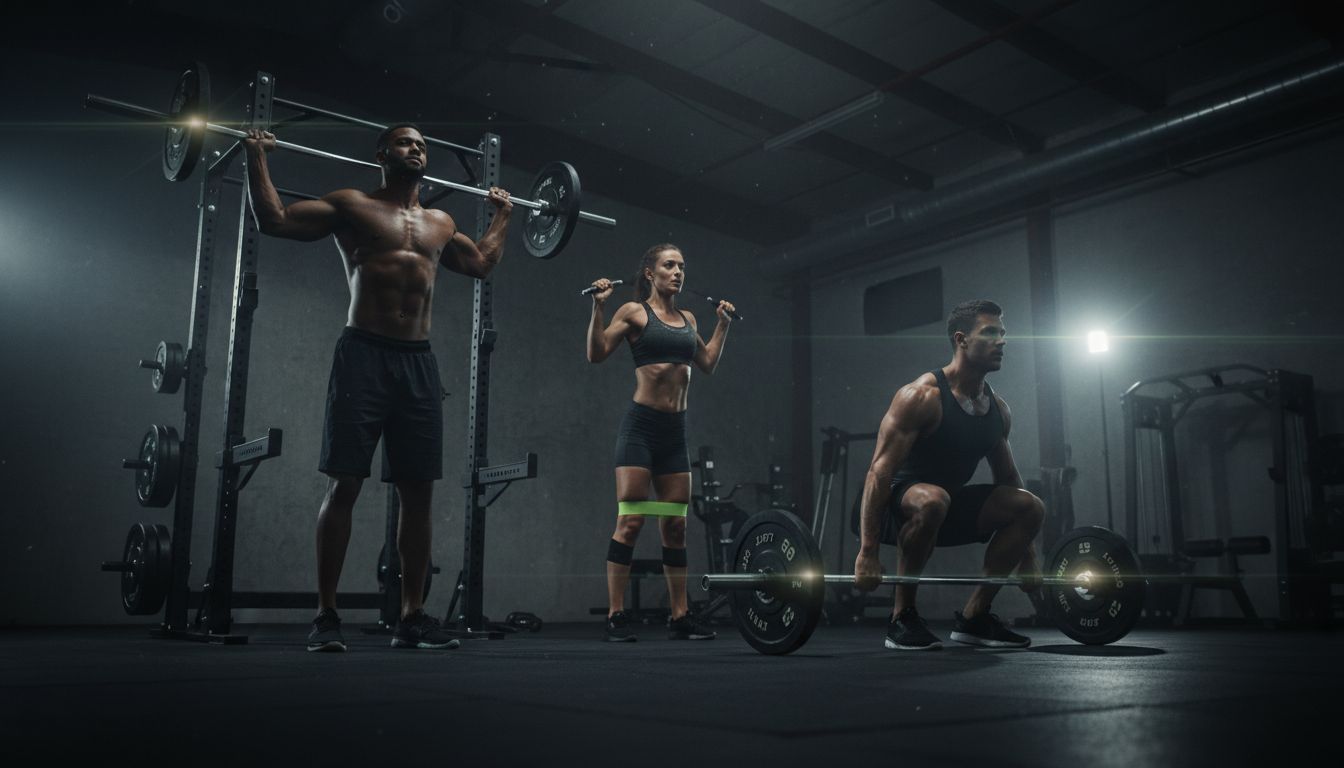
Push/pull/legs divides training into pressing, pulling and lower-body sessions. This guide helps beginners compare schedules, choose manageable exercises and follow a first-month learning plan, with practical logging and progression examples.
What is Push/Pull/Legs?
Push/Pull/Legs (PPL) is a workout split that groups exercises by movement pattern and primary muscle groups:
Push: movements that push weight away from the body (chest, shoulders, triceps)
Pull: movements that pull weight toward the body (back, biceps)
Legs: all major lower-body muscles (quads, hamstrings, glutes, calves)
Grouping muscles this way makes programming straightforward: each day trains similar muscles and movement patterns, so recovery and exercise selection become easier to manage.
Push Day Muscles
Chest: pressing movements (bench press, push-ups)
Shoulders: overhead pressing and raises
Triceps: pressing assistance and isolation work
Pull Day Muscles
Back: rows and pulldowns
Rear delts and traps: horizontal/vertical pulls, face pulls
Biceps: curling and pulling assistance
Legs Day Muscles
Quads: squats, lunges, leg press
Hamstrings & glutes: Romanian deadlifts, hip thrusts
Calves: standing and seated calf raises
Benefits of a PPL Split
Efficient muscle grouping for recovery and progress
Clear structure—easy to scale intensity and volume
Flexible frequency: works as a 3-, 4-, 5-, or 6-day plan
Good balance of compound and isolation work for beginners
Is PPL Good for Beginners?
PPL can work for beginners when the workload is conservative. A three-day PPL week gives each region one dedicated session; a full-body plan offers more frequent practice of the same lifts on the same three-day commitment. Choose the structure you can learn and repeat.
Start with loads and exercises you can control.
Use a manageable schedule rather than increasing days automatically.
Track completed work and recovery to guide adjustments.
Who might avoid PPL initially? Absolute novices who need dedicated coaching to learn barbell mechanics or people with limited recovery (very poor sleep, substantial stress). A simple full-body routine is another valid beginner option for those cases.
PPL Training Frequency Options
Choose frequency based on time, recovery, and experience.
3-Day Split (Beginner-Friendly)
Mon: Push
Wed: Pull
Fri: Legs
This gives one dedicated push, pull and leg session per week and four non-lifting days. It is a simple calendar, but not twice-weekly direct work for every region.
4-Day Split
Week 1: Monday Push, Tuesday Pull, Thursday Legs, Saturday Push
Week 2: Monday Pull, Tuesday Legs, Thursday Push, Saturday Pull
Week 3: Monday Legs, Tuesday Push, Thursday Pull, Saturday Legs
Then repeat, keeping the remaining days off
This rotation averages four sessions per week and four exposures to each session type over three weeks. It is not a fixed twice-weekly schedule for every region.
5-Day Split
Train Monday, Tuesday, Thursday, Friday and Saturday; rest Wednesday and Sunday.
Week 1: Push, Pull, Legs, Push, Pull
Week 2: Legs, Push, Pull, Legs, Push
Week 3: Pull, Legs, Push, Pull, Legs
Continue the rotation rather than restarting at Push every Monday
Across this three-week rotation, each session appears five times: an average of about 1.67 weekly exposures. More days do not automatically mean faster progress.
6-Day Split (Higher-Commitment Option)
Monday Push, Tuesday Pull, Wednesday Legs
Thursday Push, Friday Pull, Saturday Legs
Sunday Rest
Six sessions give two exposures to each session type, but require managing the total weekly work. They are optional, not a required graduation from the beginner plan.
Complete PPL Workout Routine (Beginner Samples)
Example log entry: bench press, set 1, 8 reps at your chosen total load; set 2, 7 reps at the same load. Add a brief effort note. These are illustrative entries, not starting-weight targets.
These are illustrative beginner sessions. Start with two work sets per listed exercise, excluding warm-ups, and reduce the list if needed while learning. A routine should fit your experience and restrictions rather than the other way around.
Notes for all workouts:
Warm up with comfortable easy movement and specific lighter sets for the first demanding exercises.
Choose loads that initially leave about 2–3 controlled reps in reserve.
Rest around 2–3 minutes for demanding compounds and 1–2 minutes for isolation work, or longer when needed.
Push Day Workout (A)
Barbell bench press — 2 sets × 6–8 reps (focus on a controlled descent and strong drive)
Overhead press (barbell or dumbbell) — 2 × 8–10
Incline dumbbell press — 2 × 8–12
Lateral raises — 2 × 12–15
Triceps rope pushdown — 2 × 12–15
For bench press, use rack safeties or a competent spotter, keep your feet planted and shoulder blades supported, and lower the bar with control. Choose grip and touch point to suit your build rather than forcing one exact chest location.
Pull Day Workout (A)
Barbell or dumbbell row — 2 × 6–8 (hinge at hips, neutral spine)
Lat pulldown or assisted pull-up — 2 × 8–10
Seated cable row or single-arm dumbbell row — 2 × 8–12
Face pulls — 2 × 12–15
Dumbbell hammer curls — 2 × 10–12
Form cue for rows: lead with the elbow, avoid excessive torso rotation, and squeeze the shoulder blades together at the top.
Legs Day Workout (A)
Back squat or goblet squat — 2 × 6–8
Romanian deadlift — 2 × 8–10
Walking lunges — 2 × 10 per leg
Leg press or Bulgarian split squat — 2 × 10–12
Standing calf raise — 2 × 12–15
For squats, bend at the hips and knees, keep your feet planted and let the knees track comfortably with the toes. Use a range you can control; the torso angle and knee travel differ between back and goblet squats.
3-Day Weekly Example
Monday Push A, Wednesday Pull A, Friday Legs A; the other days are off.
Repeat while technique, performance and recovery are improving. There is no need to add sessions after a fixed number of weeks.
Minimal-Equipment (Home) PPL
Push: Push-ups (progressions), pike push-ups, dumbbell floor press
Pull: Inverted rows, single-arm dumbbell rows, resistance band pulldowns
Legs: Bodyweight squats, split squats, Romanian deadlifts with dumbbells
Use stable equipment and secure band anchors. Choose a variation that is challenging within a manageable rep range; lighter equipment does not automatically require more sets.
Exercise Selection Guide
Choose one or two compounds as the focus for each session, then add 2–4 accessory movements.
Best Push Exercises
Bench press, overhead press, incline press, dips, push-ups
Best Pull Exercises
Pull-ups/pulldowns, bent-over rows, single-arm rows, face pulls
Best Leg Exercises
Squats, Romanian deadlifts, lunges, hip thrusts
For detailed technique tips and progress tracking advice, see this practical guide to core lifting principles: Core Principles & Techniques for Every Lifter.
Progression & Tracking
Progression is the most important ingredient for long-term results.
Choose a manageable starting load with about 2–3 controlled reps left.
Add reps within the range first; increase load slightly when all sets reach the top with similar control and effort.
Example: 2 × 6–8 at 8 and 7 reps means repeat the load; 8 and 8 can justify a small increase.
If progress stalls, check technique, rest and recovery before adding a set.
Record actual sets, reps, load and exercise variation in a notebook or app.
If you want a straightforward digital tracker for sets, reps and workouts, consider checking a dedicated workout tracker like Setgraph - Workout Tracker Gym Log App. For user reviews on tracking apps, see: Setgraph App Reviews (2025).
Recovery, Nutrition & Deloads

Recovery is where progress is consolidated.
Three lifting days leave four non-lifting days; four lifting days leave three. Keep other activity manageable.
A lighter week is an option if needed; it is not compulsory every four to eight weeks.
Eat enough to support your goal and include adequate protein.
Allow enough sleep and adjust the workload when recovery is poor.
Warm-up & Pre-Workout Checklist
Wear appropriate footwear and have a water bottle and towel
Short dynamic warm-up (5 minutes), then specific warm-up sets for your first compound lift
Bring a simple mental plan: today’s top lift target and a fallback weight if you miss it
Practical pre-workout packing and checklists make the gym less stressful and help you be consistent.
Beginner Mistakes & How to Avoid Them
Too much load too soon: choose manageable work and small increases.
Inconsistent technique: seek useful feedback and compare repeatable sets.
No record: write down the work you completed.
Ignoring persistent fatigue: reduce work and investigate the cause rather than waiting for a scheduled deload.
Copying an advanced workload: keep the example conservative.
Gym Anxiety & Practical Tips
Go during off-peak hours at first, or bring a friend for confidence.
Know basic gym etiquette: wipe equipment, let others work in when possible, and return weights.
Prepare a short list of exercises and alternatives for busy machines.
If you’re new to tracking workouts digitally, you can learn how apps simplify logging and planning through the Setgraph training guides: Setgraph Training Guide | Maximize Your Workout.
When to Reassess Your PPL Plan
Check the following before changing your plan:
You have several comparable sessions showing how you perform and recover
Your compound lifts feel technically solid and pain-free
You recover quickly between workouts
Those signs can support reassessing your plan, but you do not have to add days or techniques while your current routine works. Change one factor at a time if you need a different stimulus or schedule.
First 30 Days Roadmap (Beginner-Friendly)
Week 1: Complete the three-session schedule with conservative loads and practise the movements.
Week 2: Repeat the same days and record actual work; add a rep only when control allows.
Week 3: Continue the same schedule and check whether recovery is adequate.
Week 4: Review the log. Keep the plan if it works, or adjust one factor. An extra training day is optional, not the goal of the month.
Early progress may include better skill and more controlled repetitions. Visible changes vary and cannot be promised within a particular number of weeks.
FAQs
How long should I follow a beginner PPL routine?
Review the routine after several weeks of consistent training. Keep it while it remains productive and manageable; there is no universal number of months before you need an intermediate program.
Can I do cardio with PPL?
Yes. Add aerobic work at an intensity and volume you can recover from. Easy walking or cycling can fit on non-lifting days, but it is not a guaranteed recovery treatment.
What if I miss a workout?
Resume the Push/Pull/Legs rotation where you left off, keeping adequate recovery. Do not repeatedly skip the same session or cram missed work into one day.
Should I train abs every day?
Daily core work is unnecessary. One option is to add a small amount after two weekly sessions and adjust according to your other training and recovery.
How should a complete beginner choose starting weights?
Choose a light load you can control through the planned range while leaving about 2–3 repetitions in reserve. Be conservative while learning, since judging effort accurately takes practice.
Final Notes and Next Steps
Start with a manageable schedule, practise the exercises and keep a record. A notebook or Setgraph workout log can help you compare sessions. For more planning examples, browse the training guides.
Use the roadmap to learn and compare sessions, then keep or adjust the routine according to your performance, available time and recovery. More days and harder techniques are optional.
