Overtraining vs Overreaching: Signs, Symptoms, and How to Recover

A stalled lift and persistent tiredness are reasons to review your training and recovery, but they do not identify the cause. Too much workload, poor sleep, inadequate food, illness and other health problems can look similar. Adding more sets is not always the right response.
“Overtraining” is often used casually for any bad stretch of workouts. In sports medicine, overtraining syndrome describes a prolonged problem that requires clinical assessment and exclusion of other causes. A short slump is not enough to diagnose it.
This guide explains the terminology, what to record, how to reduce unnecessary training stress, and when to seek help.
The Fatigue Spectrum: It Is Not All-or-Nothing
The ECSS/ACSM consensus statement distinguishes functional overreaching, non-functional overreaching and overtraining syndrome. These labels describe the course of recovery; they cannot be reliably assigned from a calendar or app score alone:
Functional overreaching: A temporary performance reduction followed by recovery and improved performance. Deliberately producing it is not required for every successful training program.
Non-functional overreaching: A longer period of impaired performance without the hoped-for performance benefit. Its distinction from overtraining syndrome is difficult and often becomes clearer only afterward.
Overtraining syndrome: Prolonged maladaptation and underperformance assessed in a clinical context. There is no single accepted diagnostic blood test, symptom score or app metric.
Recovery can range from days or weeks in overreaching to much longer in overtraining syndrome. These are broad descriptions, not a self-diagnostic timetable. Similar symptoms can have unrelated medical causes.
Why "Just Add More Volume" Backfires
Training volume, roughly your weekly hard sets per muscle, does drive muscle growth. The well-known dose-response meta-analysis from Schoenfeld, Ogborn, and Krieger found that higher weekly set counts were associated with greater hypertrophy across the studied range (PMID: 27433992). That finding gets quoted constantly as "more is better," which is where lifters go wrong.
More workload can also make it harder to repeat useful training. If performance falls after a large increase in sets, review that change rather than automatically adding more. No chart can locate a precise personal “recovery ceiling.”
The informal term junk volume describes work that adds little useful benefit relative to its cost. It is not a diagnosis or a universal set-count cutoff. Our weekly-set guide can help you organize a workload review.
Keep the comparison fair: fewer repetitions after shorter rests, a changed exercise or a heavier load do not necessarily mean your underlying performance has declined.
Signs Worth Recording
A clinical practical guide describes fatigue, underperformance and mood changes in affected athletes, while emphasizing the uncertainty of diagnosis. For a recreational lifter, a simple record can help describe a pattern to a coach or clinician:
Repeated performance change: Record load, repetitions and effort under similar conditions, alongside any recent changes in training.
Sleep and resting heart rate: Note meaningful changes from your own usual pattern. Heart rate can rise, fall or remain unchanged and is not a stand-alone diagnostic marker.
Symptoms: Record persistent soreness, pain or unusual heaviness. Distinguish muscle soreness from pain that changes how you move.
Mood and motivation: Note sustained changes, including low mood or irritability, without assuming training is the only cause.
Food and body weight: Note reduced appetite or unintended weight change if relevant; do not assume a stable scale rules out inadequate intake.
Illness and other stressors: Record recent illness, medication changes and major disruptions to your normal routine.
Several persistent changes deserve attention, but none of these observations establishes overtraining syndrome. Rest days help manage workload; adaptation also occurs between sessions and is not confined to calendar rest days.

A Workload Review, Not a Diagnostic Test
Use these questions to decide the next sensible step:
What changed? Compare the onset of symptoms with increases in sets, intensity, cardio, work demands or sleep disruption. Do not label two weeks as non-functional overreaching or one month as overtraining syndrome by duration alone.
Does reducing training help? If you are otherwise well, make the next sessions easier or take rest days. Improvement is useful feedback, but neither a rebound nor failure to rebound proves a particular diagnosis.
Could something else explain it? Illness, low energy availability, iron deficiency and other conditions can cause fatigue and underperformance. A clinician can assess the possibilities rather than assuming every problem comes from the training plan.
You do not need to diagnose yourself before reducing an unsustainable workload. You also do not need to wait for a fixed number of bad weeks before seeking medical advice.
How to Recover: The Deload and the Reset
For ordinary accumulated training fatigue without concerning symptoms, reduce the demand and review what you can recover from:
Use an easier week if appropriate: For example, reduce working sets by a third to a half, choose manageable loads and leave more repetitions in reserve. This is a programming example, not treatment for diagnosed overtraining syndrome. A short training break can also fit a longer-term plan.
Support basic recovery: Make room for regular sleep and adequate food, including carbohydrate and protein. Persistent symptoms should not simply be attributed to a lack of discipline around these habits.
Return gradually: Start below the workload that felt unmanageable, keep conditions consistent, and increase only when sessions are tolerable and performance is stable. Do not make up every missed set.
Get assessed when needed: Seek medical advice for persistent, worsening or unexplained fatigue, significant pain, or symptoms that disrupt everyday life. Chest pain, fainting or unusual breathlessness need prompt medical attention. Do not wait through a multiweek deload to evaluate concerning symptoms.
How to Apply This in Setgraph
A training log is useful for describing what happened. It cannot diagnose overreaching or tell you whether illness or another medical issue is responsible.
Compare like sessions: Use Setgraph’s workout history to review loads and repetitions with notes on effort, rest and exercise changes. Three lower-volume weeks could reflect a deliberate program change; the line on a chart is not itself a deload prescription.
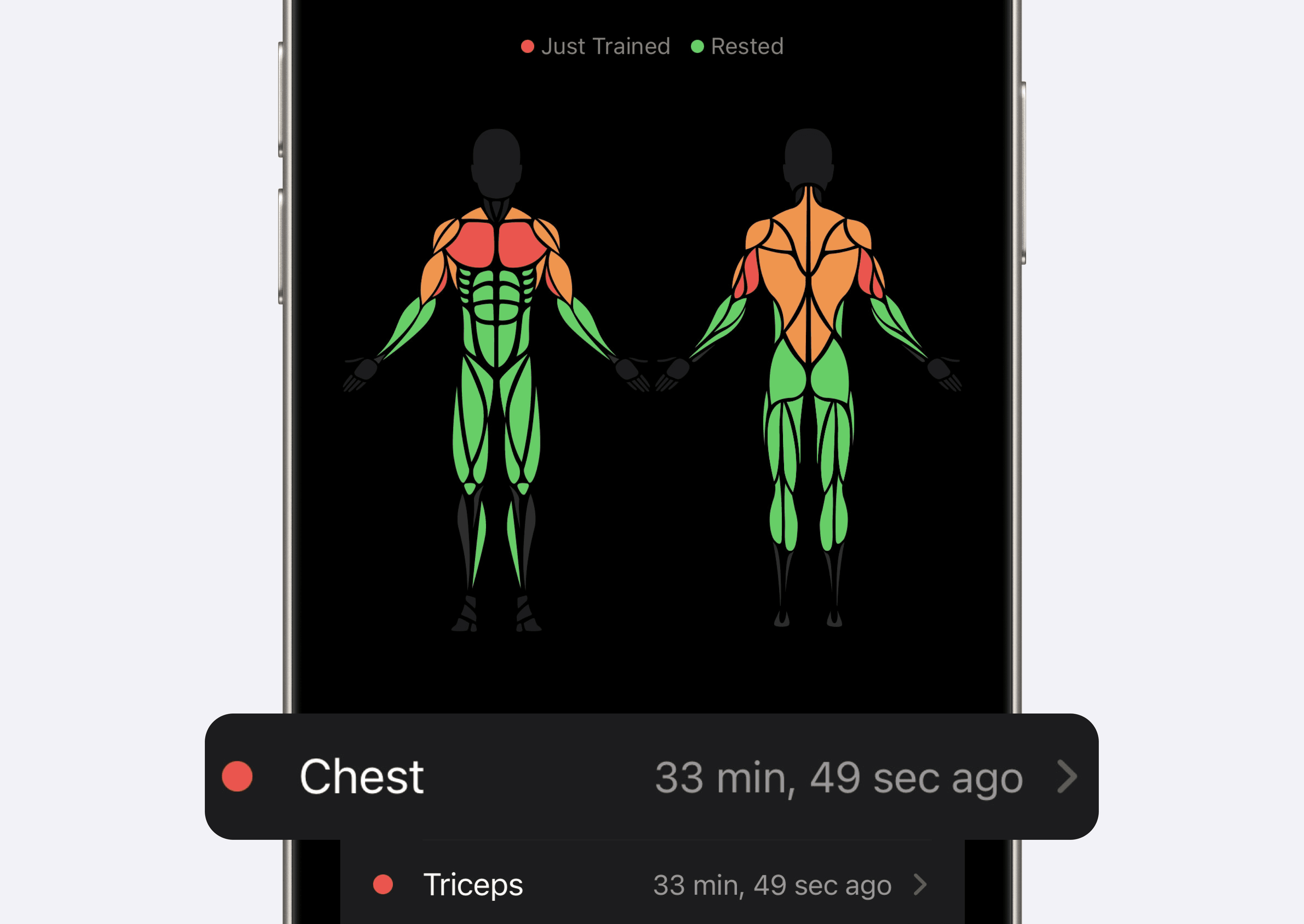
Treat recovery displays as estimates: On iOS, the Muscle Recovery display uses time since the last set and a chosen recovery-day setting. Treat it as a scheduling aid, not a measurement of tissue recovery or a medical warning system. Your symptoms and observed performance matter more than its color.
Keep rest in the plan: Record planned rest or lighter sessions as part of your routine. Do not train through persistent symptoms just to preserve a streak.
Frequently Asked Questions
Q: What is the difference between overreaching and overtraining?
Overreaching describes a performance reduction after accumulated training stress, with recovery and its outcome helping distinguish functional from non-functional cases. Overtraining syndrome is more prolonged and requires assessment that excludes other explanations. Duration or a training log alone cannot establish the diagnosis.
Q: How long does it take to recover from overtraining?
There is no reliable personal countdown. Overreaching may resolve over days or weeks, while overtraining syndrome can last much longer. Persistent or unexplained symptoms warrant assessment; do not assume a standard deload will resolve a medical problem.
Q: Can I be overtrained from lifting weights alone?
Resistance training can contribute to excessive training stress, but symptoms cannot establish overtraining syndrome or its cause. Review the total workload and recovery context with an appropriate professional when symptoms persist.
Q: Does more training volume always build more muscle?
No. The volume literature supports benefits from additional sets across studied ranges, not unlimited gains from adding work. Review both progress and the cost of the workload; there is no app-derived threshold that proves extra sets are counterproductive for you.
Q: How do I know when to take a deload?
A planned easier period can fit a demanding block or a busy week. Repeated difficulty completing normal sessions is another reason to review the plan. If you are otherwise well, try fewer sets and greater repetitions in reserve, then reassess; persistent or concerning symptoms need medical attention rather than just another deload.
Treat fatigue as information, not a diagnosis. Adjust an unmanageable workload, record comparable sessions, and get help when symptoms are persistent or concerning.
Use Setgraph to keep a clear training history you can review alongside how you feel.