Bench Press Dumbbell: The Complete Guide to Building a Stronger Chest
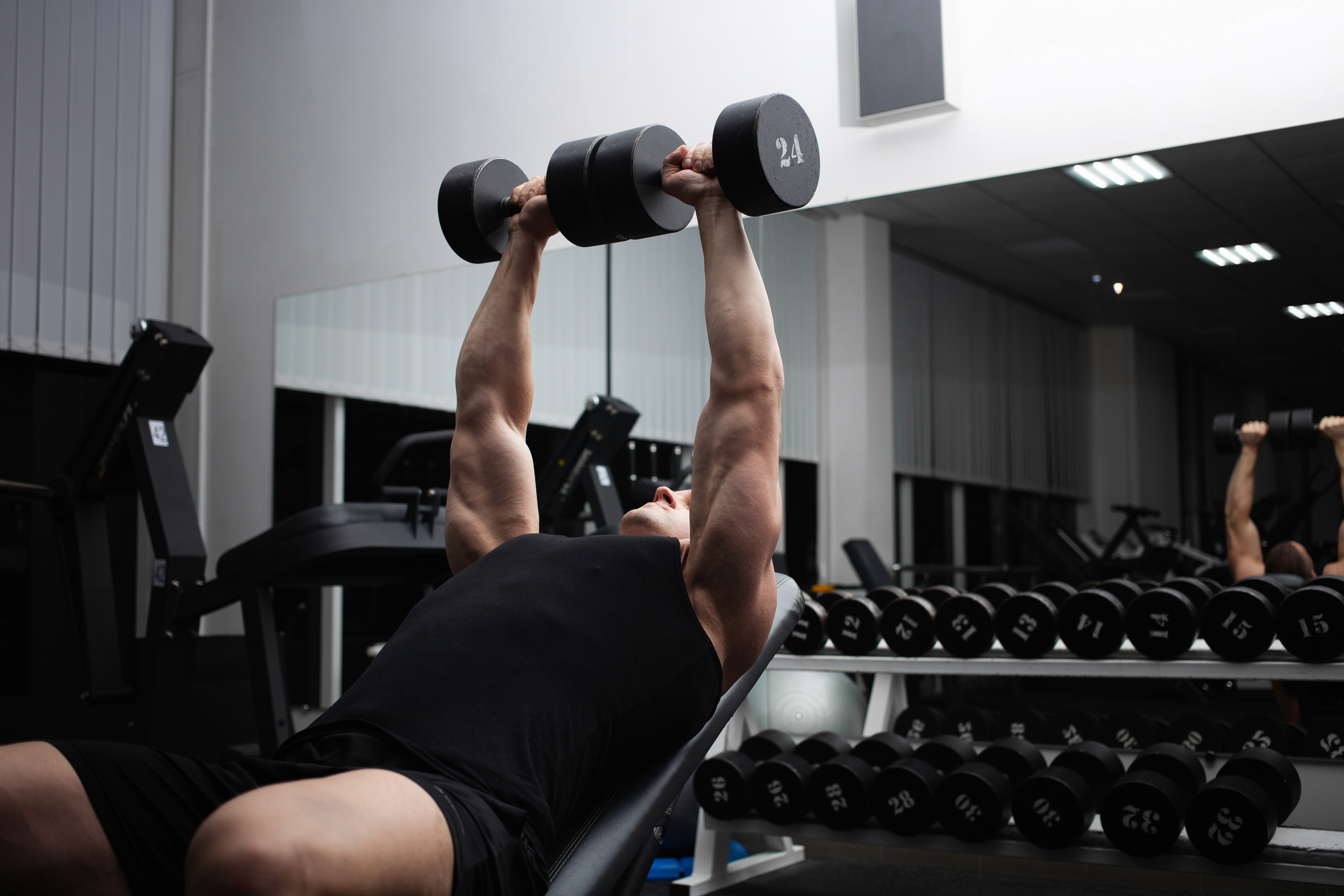
The dumbbell bench press is a useful chest-training option when you want independent hand positions, train without a barbell or prefer dumbbells. It trains the pectoralis major, anterior deltoids and triceps. This guide covers setup, variations and an adjustable progression example.
This guide covers everything you need to know, from proper setup and technique to programming tips and common mistakes, so you can get the most out of every rep.
Why Choose the Dumbbell Bench Chest Press?
Dumbbells allow each arm to move independently and make side-to-side differences in control easier to notice. They do not automatically correct an imbalance; use a manageable load and keep the repetitions comparable between sides.
Dumbbells allow each arm to follow its own path and can permit a different range of motion from a barbell. More depth is not automatically better: use a range you can control comfortably without forcing a stretch. Research on range of motion cannot be reduced to a rule that the deepest possible dumbbell press always produces more growth.
Some lifters find a neutral or partly rotated dumbbell grip more comfortable. That is an individual preference, not evidence that dumbbells universally reduce shoulder or wrist injury risk.
How to Bench Press with Dumbbell: Step-by-Step Technique
Nailing your bench press with dumbbell technique from the start can help you learn a controlled, repeatable movement. Here's how to do it right:
Setup: Sit on the edge of a flat bench holding a dumbbell on each knee. Hinge back as you kick the dumbbells up with your knees, landing them on either side of your chest. Your feet should be flat on the floor, your back should have a natural arch, and your shoulder blades should be retracted and pressed firmly into the bench.
Grip: Hold the dumbbells with a neutral or slightly pronated grip. Your wrists should be stacked directly above your elbows at the bottom of the movement, think of your forearms as vertical pillars.
Descent: Lower the dumbbells under control toward the sides of your chest. Choose a comfortable elbow angle and keep the wrists stacked over the forearms rather than forcing a fixed degree range.
The stretch: Lower only through a range you can control without forcing the shoulders into a deep stretch. Don't bounce out of this position, pause briefly to eliminate momentum.
Press: Drive the dumbbells back up and slightly inward so they finish close together (without clinking) directly above your chest. Squeeze your pecs hard at the top.
Breathing: Inhale on the way down, exhale forcefully as you press through the sticking point.
Bench Press Using Dumbbells: Flat, Incline, and Decline Variations
One of the biggest advantages of bench press using dumbbells is the ability to easily hit your chest from multiple angles without changing equipment.
Flat dumbbell bench press: Trains the pectoralis major with assistance from the anterior deltoids and triceps. It is one possible primary press.
Incline dumbbell bench press: Changes the pressing angle and can emphasize the clavicular portion of the chest. A moderate incline such as 30 degrees is an option; there is no universal 45-degree boundary where chest work stops.
Decline dumbbell bench press: Changes the pressing angle again. Use a bench designed for decline work, a manageable load and a controlled setup and exit; this variation is optional.
Flat, incline and decline presses are options, not a required rotation. Choose the variations that fit your goals and comfort, and keep them consistent long enough to judge progress.
Common Mistakes When Using Bench Press Dumbbells
Even experienced lifters fall into these traps with bench press dumbbells. Being aware of them will keep your progress on track.
Choose an elbow path that lets you control the dumbbells comfortably. If a very flared position is uncomfortable, reduce the load and adjust the path rather than treating a single elbow angle as safe for everyone.
Avoid bouncing or dropping rapidly into the bottom position. A controlled reversal makes it easier to maintain the intended range and load; it does not guarantee injury prevention.
Pressing straight up instead of in an arc treats the dumbbell press like a straight-bar movement. The natural path of the press is an inward arc, the dumbbells should travel slightly toward each other as you press.
Going too heavy too soon is the classic beginner mistake. Because each arm must stabilize its own load, dumbbells are inherently more challenging for coordination. Start lighter than you think you need to and build your neuromotor pattern first.
Control the lowering phase instead of letting the dumbbells drop. A 2–3-second descent is one optional tempo cue. Muscle damage is not the goal, and a slower eccentric does not automatically produce more growth.
Programming the Dumbbell Bench Press: Sets, Reps, and Progression
For an illustrative muscle-building session, try 2–3 sets of 8–12 controlled repetitions, allowing enough rest to repeat the work. Experienced lifters pursuing dumbbell pressing strength may use heavier, lower-repetition sets when they can manage the setup and exit. Select the dose around the rest of the week.
For example, keep a load until you can complete the top of your chosen repetition range across your sets with the intended effort and control on repeat sessions. Then try the smallest practical dumbbell increase and reassess. You do not need to increase reps, sets and load together, or progress every workout.
One example pairs a flat press with an incline press on separate days, with optional flyes if more direct chest work fits your recovery. The right number of exercises and sets depends on your existing training; doing every variation is unnecessary.
Track Your Dumbbell Bench Press in Setgraph
One of the most underrated aspects of training is tracking, and one of the most overlooked reasons people plateau is that they have no record of what they did last session. That's where Setgraph comes in.
Setgraph’s workout-tracker feature page describes logging and per-exercise trends. Keep flat and incline presses distinct, record sets and reps, and use a consistent load convention such as “weight per dumbbell.” Compare the same variation and range of motion between sessions.
For example, “flat dumbbell press, 20 kg per hand, 3 × 10” is a clearer record than an unlabeled 40 kg entry. Compare the same variation, load convention and range of motion; a log helps you observe changes but cannot ensure progress.
Frequently Asked Questions
Is dumbbell bench pressing as effective as barbell pressing?
Both are useful options for chest training. Dumbbells offer independent hand positions; barbells usually allow a larger combined load. Neither is established as universally superior for hypertrophy, and barbell strength is best assessed with barbell practice.
How much should I dumbbell bench press?
Start with a pair you can set up, press and put down under control for the planned repetitions. There is no supported universal beginner or advanced bodyweight-per-dumbbell standard in this guide. Record whether the weight is per hand or the combined pair.
How often should I train it?
One or two weekly exposures can fit a program, depending on other chest work and recovery. More sessions are not automatically better when weekly work is comparable.
Do I need a spotter?
An experienced spotter can help with heavy setups and endings. Do not plan to drop dumbbells beside the bench as a universally safe escape: falling weights can injure you or someone nearby. Use a manageable load and learn a controlled exit before heavy training.
The Bottom Line
The dumbbell bench press is a useful chest-training option with independent hand positions and several bench-angle variations. Learn a repeatable setup, choose a controllable range and progress gradually. Track the same variation and load convention so your session comparisons are meaningful.
