Workout Tracking Chart: Free Template, Checklist, and How to Use It
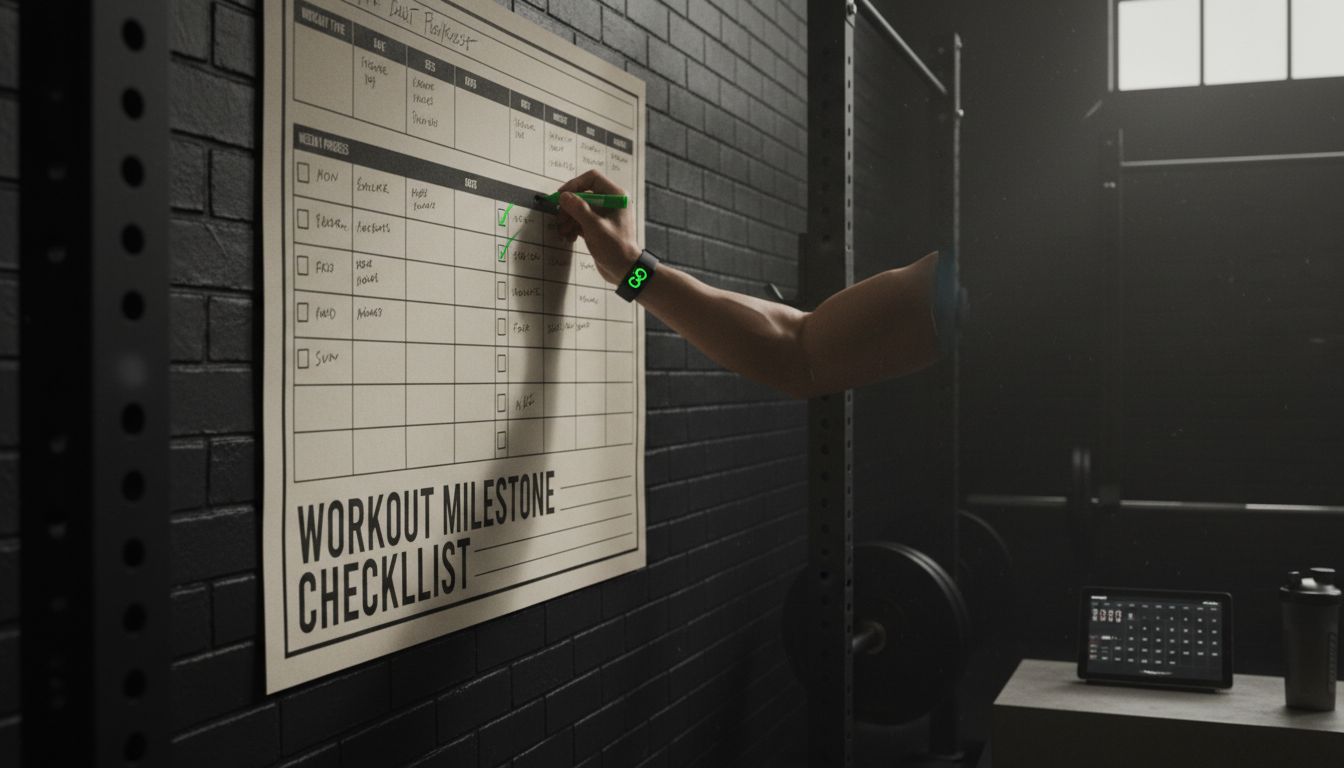
A workout tracking chart is one of the simplest tools in fitness, but it solves a real problem: most people forget the exact details of last week’s session. Once you write down what you did, you can compare sessions, adjust training volume, and make the next workout a little better than the last. That is useful whether you lift at a commercial gym, train at home, or mix cardio and strength work in the same week.
What a workout tracking chart should do
At its core, a workout tracking chart should help you answer three questions fast:
What did I do?
How hard was it?
What should change next time?
If your chart can answer those three questions without a lot of extra work, it is doing its job.
A good chart is especially helpful when you want to:
keep track of sets, reps, and weight over time
notice whether strength is improving
avoid guessing what you did in the previous workout
stay consistent when motivation dips
make small, clear changes instead of random ones
If you prefer a digital log, a tool like Setgraph workout tracker app is built around logging sets, reps, weight, and notes, along with workout history and progress comparisons. That kind of setup works well if you want your workout tracking chart to live on your phone instead of on paper.
Why a workout tracking chart works

A workout tracking chart works because it turns memory into a record. That sounds simple, but it changes how you train. Instead of asking, “What did I do last time?” after the fact, you can see it immediately and make a better decision before your next set.
It also helps with the part of training that is easy to miss, progress often happens in small steps. Maybe the weight goes up. Maybe the reps go up at the same load. Maybe the rest time comes down while the workout still feels manageable. A chart makes those small wins visible.
Here is why people keep using them:
They improve consistency. It is easier to stick with a routine when you can see where you left off.
They support progressive overload. You can increase weight, reps, sets, or reduce rest time in a planned way.
They expose plateaus sooner. If the numbers stop moving, you will notice it faster.
They reduce decision fatigue. You do not have to invent the workout from scratch every time.
They work for different goals. Strength, weight loss, cardio, and general fitness can all be tracked in different ways.
If you want a deeper refresher on the training variables that matter most, our guide to core principles and techniques for every lifter is a helpful companion.
What to include in your workout tracking chart
A workout tracking chart does not need dozens of fields. In fact, too many fields usually make people stop using it. The best version is short enough to fill out during the session and detailed enough to help the next session.
Checklist for the essentials
Date so you can compare one session to the next
Workout focus such as push day, upper body, legs, or cardio
Exercise name so you know exactly what movement you did
Sets completed for that exercise
Reps completed in each set
Weight or resistance used
Effort level such as RPE, reps in reserve, or a simple easy to hard note
Rest time if you are trying to keep sessions consistent
Notes about form, soreness, energy, or equipment changes
Optional body stats if your goal includes weight loss or body recomposition
Useful extras if you want a little more detail
Warm-up work
Tempo or pause notes
Cardio duration, pace, or distance
Heart rate, if you already track it
Weekly workout frequency
A quick win or reminder for the next session
For strength-focused logging, a chart that captures volume and effort is usually the most useful. If you want ideas for how to organize that kind of data, the expert tips and workout guides section is a good place to look next.
Checklist: build your chart in 10 minutes
You do not need a perfect template. You need one you will actually use.
Choose your format.
Decide whether you want paper, a spreadsheet, or an app.Pick one main goal.
Strength, fat loss, endurance, general fitness, or consistency. Your goal should shape what gets tracked.Set your must-have fields.
Keep the chart focused on what helps you improve, not what looks impressive.Leave space for notes.
One short note is often enough. Example: slept poorly, elbows felt off, or added one rep.Make the layout easy to scan.
One line per exercise is usually cleaner than a crowded page.Decide when you will review it.
Before the workout is ideal, because then you can use the previous session to guide the next one.Test it for one week.
If you skip logging because the chart is annoying, simplify it.
The best workout tracking chart is the one you can keep using after a hard session, not the one that looks most complete.
That last point matters. A chart that is a little less detailed but used every time is usually far better than a perfect chart that gets abandoned after two weeks.
Sample workout tracking chart you can copy
Here is a simple example of what a filled workout tracking chart might look like for a strength session.
Date | Workout focus | Exercise | Sets x Reps | Weight | Effort | Notes |
|---|---|---|---|---|---|---|
May 3 | Upper body | Bench press | 3 x 8 | 135 lb | 8/10 | Last two reps were slow, rest 90 seconds next time |
May 3 | Upper body | Seated row | 3 x 10 | 100 lb | 7/10 | Better control than last week |
May 3 | Upper body | Plank | 3 x 30 sec | Bodyweight | 8/10 | Brace harder on set 2 |
A blank version can be even simpler:
Date:
Workout focus:
Exercise:
Sets:
Reps:
Weight:
Effort:
Notes:
That is enough for most people to start. You can add more detail later if your training needs it.
Best workout tracking chart for different goals
The best workout tracking chart depends on the kind of progress you care about most. A strength program needs different numbers than a cardio habit or a home workout routine.
Strength training chart
For lifting, track the variables that show performance over time:
sets
reps
load or weight
rest time
effort or RPE
total volume, if you like seeing the bigger picture
This type of chart is useful when you want to see progressive overload clearly. A session can improve even if the weight stays the same, as long as the reps rise or the work feels cleaner.
Weight loss or general fitness chart
If your goal is not purely lifting, your chart can be broader:
activity type
duration
intensity or effort
workout frequency
steps, if that matters to your routine
weekly bodyweight or measurements
A fitness chart like this is especially helpful when you want to see patterns instead of obsessing over one workout. If body measurements are part of your plan, Mayo Clinic suggests repeating the same measurements about six weeks after starting an exercise program and then checking them occasionally after that.
Home workout chart
A home workout chart works best when it reflects the equipment you actually have:
bodyweight only
dumbbells
resistance bands
kettlebells
a bench or step
In a home setting, it helps to track tempo, exercise variation, and how hard the movement felt. That way, you can still make progress even when the equipment is limited.
Cardio chart
For running, cycling, rowing, or walking, track:
time
distance
pace or speed
route or incline, if relevant
heart rate, if available
effort level
Cardio tracking does not have to be complicated. Even simple notes about pace and effort can help you see improvement over time.
Habit and consistency chart
If the real goal is sticking with exercise, your chart may be mostly about showing up:
workout days completed
session length
whether you followed the plan
whether you skipped, shortened, or modified the session
This is a useful format for beginners, busy people, or anyone rebuilding consistency after a break.
Printable vs digital: which one fits better?
A printable workout tracking chart and a digital one both work. The right choice depends on how you train and what makes logging easiest for you.
Printable charts are best if you want:
a low-tech option
something you can keep in a gym bag
quick handwriting during a workout
no screen distractions
a one-page routine you can glance at fast
Digital charts are best if you want:
searchable workout history
easier progress comparisons
automatic reminders or saved routines
less paper clutter
the ability to review older sessions quickly
Setgraph’s official site describes it as a workout tracker and gym log app for logging sets, reps, weight, and notes, with workout history, progress comparisons, a rest timer, and custom routines. If that kind of setup fits your style, the Setgraph app reviews page is useful for seeing how users describe the logging experience.
Hybrid charts work well too
Some people write their workout on paper in the gym, then enter the key numbers digitally later. That can be a good middle ground if you like the speed of paper and the searchability of an app.
How to use it consistently
A workout tracking chart only helps if you keep using it. The good news is that consistency usually comes from simplicity, not discipline alone.
Log the workout while you are still doing it, or right after the set if needed.
Keep the format the same from session to session.
Review the previous workout before you warm up.
Use one progression target at a time, such as more reps, more weight, or shorter rest.
Add one short note about energy, sleep, soreness, or form.
Review trends weekly instead of reacting to every small fluctuation.
Update body measurements on a schedule, not every day.
If you want a little more structure around training and progression, the Setgraph Training Guide can help you think through workouts in a more organized way.
A few habits make logging much easier
Keep your chart where you can reach it quickly.
Make the first line easy to fill out.
If one field is never useful, remove it.
If you skip the chart when you are busy, simplify it until that stops happening.
A chart does not need to be beautiful. It needs to be practical.
Common mistakes to avoid
A lot of workout logs fail for the same few reasons. The fix is usually simple.
Tracking too much. A chart with too many fields becomes a chore.
Changing the format every week. Consistency matters more than design.
Logging only personal records. Normal working sets matter too.
Skipping notes. A short note can explain why a session felt off.
Ignoring rest and effort. Weight alone does not tell the whole story.
Comparing every workout to your best day. Look for trends, not perfection.
Waiting until later to log. Memory fades fast, especially after a hard workout.
A better approach is to keep the system small, review it often, and make only one or two changes at a time.
FAQ
What should I track in a workout tracking chart?
Start with date, exercise, sets, reps, weight, and one short note. If your goal is cardio or general fitness, add duration, distance, or effort instead of lifting volume.
Is a printable workout tracking chart better than an app?
Neither is automatically better. Printable charts are simple and fast, while apps are better if you want search, history, and easy progress comparisons. Use the one you are more likely to open every session.
How do I track progress without a gym?
Use the same chart idea at home. Track bodyweight exercises, resistance bands, dumbbells, tempo, reps, sets, and effort. Progress can still happen even with limited equipment.
What is the best workout tracking chart for beginners?
The best beginner chart is the simplest one. A one-page log with date, exercise, sets, reps, weight or resistance, and notes is usually enough.
How often should I update measurements?
If body measurements are part of your goal, update them on a schedule. Measuring too often can be misleading because day-to-day changes are normal.
A workout tracking chart does not have to be complicated to be effective. If it helps you remember what you did, see what is improving, and make the next workout slightly better, it is doing exactly what it should.
Article created using Lovarank