Workout Logging: How to Track Progress, Build Better Habits, and Keep Improving
Workout logging is one of the simplest ways to make training feel less random. When you write down what you did, you can see whether you are adding load, earning extra reps, recovering well, or repeating the same week on autopilot. A log also makes it easier to course-correct when motivation dips or when a lift stalls, which is why many people find the habit motivating in itself. (columbiaassociation.org)
What workout logging actually means
At its core, workout logging means recording the details of a session so you can use them later. The most useful logs include the date, exercise, reps, sets, weight, RPE, and comments. More complete journals also track tempo, break times, body weight, mile times, general performance, pain, and body metrics. The point is not to collect data for its own sake, but to create a clear history you can use to improve the next workout. (ottawaheart.ca)

That history can live in a notebook, spreadsheet, or app. If you prefer software, a dedicated tracker like Setgraph workout tracker app describes itself as a workout planner and AI workout generator, and it says users can record sets with notes while comparing progress over time. (setgraph.app)
Why workout logging matters
The biggest benefit of workout logging is that it turns progress into something you can actually see. Columbia Association notes that looking back over a few weeks can boost motivation, and it also describes logging as one of the best ways to apply progressive overload. That matters because if you cannot measure what changed, it becomes much harder to improve it on purpose. (columbiaassociation.org)
Workout logging also helps you spot patterns that are easy to miss in the moment. Maybe your squat jumps when you sleep better, or maybe your bench stalls whenever you shorten rest too much. A log gives you a paper trail for those patterns, which is especially useful when training variables change from week to week. (columbiaassociation.org)
There is also a performance reason to keep records. A 2024 randomized trial found that, in previously untrained young adults, progressing by adding load or by adding repetitions both improved strength and muscle cross-sectional area over 10 weeks. In other words, the number in the log does not have to move in only one direction for training to work, but it does need to move in a deliberate way. (pubmed.ncbi.nlm.nih.gov)
What to record in a workout log
A good log does not need to be complicated. Start with the essentials, then add extra fields only if they help you make better decisions.
Exercise, sets, reps, and weight. These are the foundation of most training logs. The Ottawa Heart strength-training log, for example, includes date, exercise, reps, sets, weight, RPE, and comments. (ottawaheart.ca)
RPE or reps in reserve. Columbia’s fitness journal example includes rating of perceived exertion, which helps you judge how hard a session actually felt instead of guessing later. (columbiaassociation.org)
Rest time and tempo. These help explain why one session felt better than another. Harvard also notes that strength training is usually best performed two to three times per week, with about 48 hours between sessions for the same major muscle group. (health.harvard.edu)
Weekly volume and PRs. Setgraph’s own guidance says useful trackers often include weekly volume totals and one-rep max estimates, and the app says it can show how weight and reps evolve over time. (setgraph.app)
Body weight, pain, and notes. Columbia’s journal examples include body weight, pain or issues, session-to-session highlights, and general performance, all of which make the log more useful than raw numbers alone. (columbiaassociation.org)
If you are just getting started, do not try to track everything at once. The best workout logging system is the one you can maintain consistently, not the one with the most columns. (columbiaassociation.org)
How to log a workout step by step
The easiest way to build the habit is to log the same way every time.
Before the session, write the plan. Choose the exercise, the target sets and reps, and the working weight or rep range.
During the session, record each working set. Keep the entry short so you do not lose focus between sets.
After the session, add one note about what changed. For example, note that the last set felt easier, that your rest was too short, or that you should repeat the same weight next time.
Review the log before the next workout. That one habit keeps you from repeating guesswork and helps you make a clear next-step decision.
If your entries still feel messy, a refresher on exercise basics can help you standardize what you are doing before you optimize what you are tracking. A useful companion read is Core Principles & Techniques for Every Lifter - Setgraph. (setgraph.app)
Choosing the best workout logging format
There is no single best format for everyone. The right setup depends on how much friction you can tolerate and how much detail you want to review later.
Notebook: Best if you want something fast, private, and always available in the gym.
Spreadsheet: Best if you want calculations, graphs, and custom analysis.
App: Best if you want quick entry, stored history, and easy trend review.
For many lifters, a good app is the sweet spot because it reduces friction. Setgraph’s home page describes a workout planner, set-level logging with notes, and progress comparisons over time, which is the kind of setup that makes daily logging easier to stick with. If you want to compare how people feel about the experience, Setgraph App Reviews (2025): User Ratings for Tracking Sets, Reps & Workouts is a useful place to start. For broader programming help, Setgraph Training Guide | Maximize Your Workout can give you more structure. (setgraph.app)
How workout logging supports different training goals
Workout logging is useful across training styles, but what you emphasize in the log should match your goal.
Strength training
For strength work, track working weight, reps, and rest so you can tell when a lift is ready to move up. ACSM’s progression model says that when you can exceed the target reps by one to two reps on two consecutive sessions, a load increase of about 2 to 10 percent is recommended. Harvard also notes that strength training is commonly done two to three times per week, with recovery time built in. That makes the log your best tool for deciding whether you are progressing or just having a good day. (acsm.org)
Muscle growth
For hypertrophy, the log should help you see total sets, rep quality, and how close you are training to failure. A 2024 trial found that progressing by load or by repetitions both produced gains in strength and muscle size in untrained adults, which is a good reminder that small rep wins matter too. If your weight stays the same but your reps rise, that is still progress. (pubmed.ncbi.nlm.nih.gov)
Fat loss or recomposition
If your main goal is fat loss or body recomposition, logging helps you protect performance while body weight changes. Harvard notes that strength training helps maintain or build muscle mass and strength, and it can improve the ratio of lean muscle to fat. A log makes it easier to spot when your output is slipping, which can be a sign that recovery, nutrition, or total workload needs attention. (health.harvard.edu)
Home workouts, calisthenics, and rehab
If you train at home, do bodyweight work, or are returning from an injury, the most important notes may be less about load and more about exercise variation, pain, and movement quality. Columbia’s journal example includes pain or issues and session-to-session highlights, which is especially helpful when you need to advance gradually or hold back on a movement that feels off. (columbiaassociation.org)
For more ideas on how to structure training around your goal, Optimize Your Training | Expert Tips and Workout Guides is a good companion resource. (setgraph.app)
Common workout logging mistakes to avoid
The biggest mistake is under-logging. If you only write the exercise name and nothing else, you lose the details that explain progress. The second mistake is changing too many variables at once, which makes it hard to know what actually caused the result.
Another common issue is ignoring recovery notes. If you slept poorly, cut rest short, or felt unusually sore, that context matters. Columbia points out that a journal can help you troubleshoot what is and is not working, and Harvard notes that a workout should leave you recovered enough to train again, not constantly worn down. (columbiaassociation.org)
It is also easy to focus only on weight. ACSM’s progression model and Setgraph’s training guidance both show that progression can come from load, repetitions, volume, rest, exercise order, frequency, and exercise difficulty. If you only look at the barbell number, you may miss other forms of progress or the first signs of a plateau. (acsm.org)
A simple beginner workout logging template
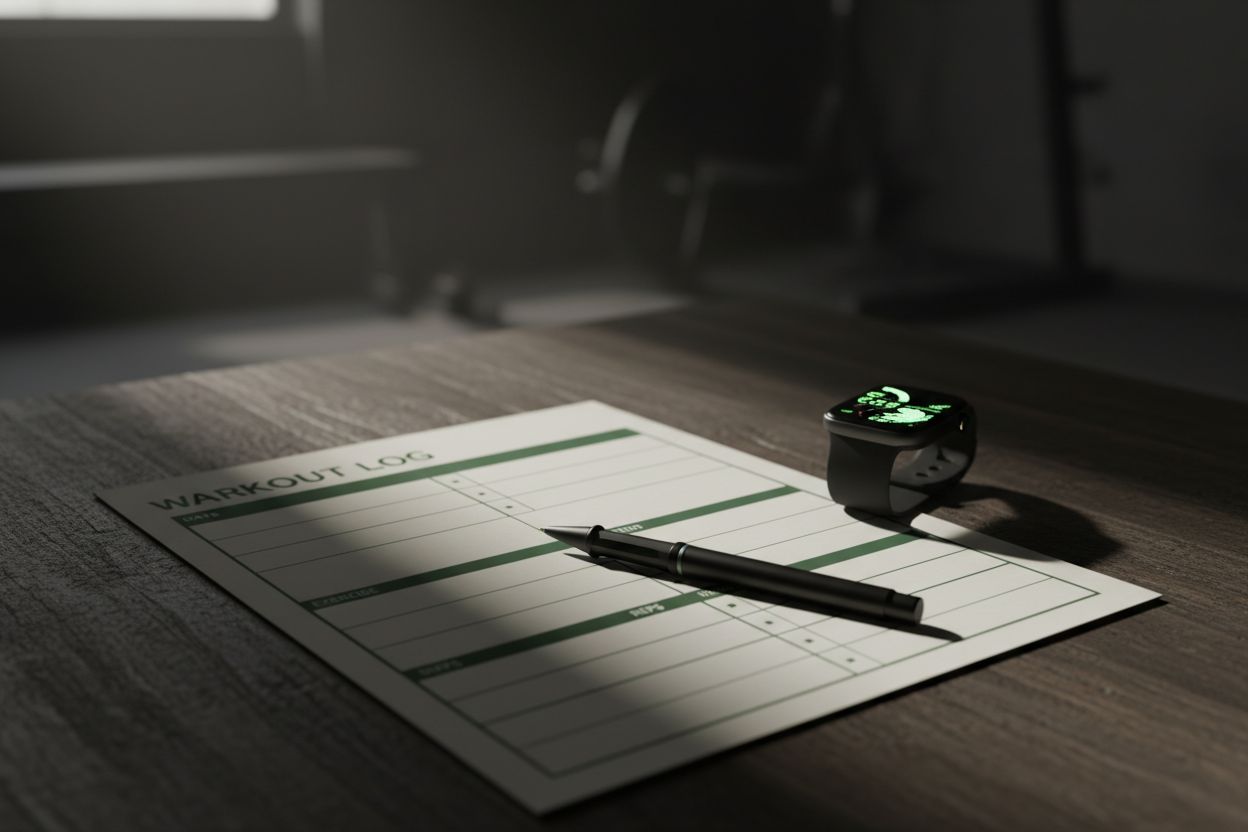
If you want a very simple system, use this format:
Example:
That is enough for most beginners. It tells you what you did, how hard it felt, and what to do next. If you later want more structure, you can add weekly volume, body weight, rest time, or one-rep max estimates. Setgraph’s guidance says those extra fields can be useful in a practical tracker, especially if you want to see trends over time. (setgraph.app)
A good weekly rhythm is simple too. Log every session, skim the last entry before training again, and make one small decision based on the previous workout. That is usually enough to turn workout logging into a habit you actually keep. (health.harvard.edu)
Frequently asked questions
What should I track in a workout log?
Start with date, exercise, sets, reps, weight, RPE, and a short note. Add body weight, tempo, pain, or rest time only if those details help you train better. (ottawaheart.ca)
Is workout logging worth it?
Yes. It makes progress visible, supports motivation, and gives you a record you can use to adjust training instead of guessing. (columbiaassociation.org)
Do I need an app for workout logging?
No, but an app can reduce friction if you train often. A notebook works fine if it is easier to use consistently, while an app can help with history, notes, and trend tracking. (setgraph.app)
Should I log cardio too?
If cardio is part of your plan, log the details that matter for progress, such as duration, distance, pace, or intervals. Columbia’s fitness journal example includes mile times and general performance, not just lifting data. (columbiaassociation.org)
How often should I review my log?
A quick review before each workout and a larger weekly review works well for most lifters. That fits the fact that strength training is commonly performed multiple times per week and needs recovery between sessions. (health.harvard.edu)
Workout logging does not have to be complicated to be effective. Keep the system simple, record the details that matter, and review what the numbers are telling you. Over time, that habit gives you a clearer picture of progress, a better handle on recovery, and a much easier path to the next personal best. (columbiaassociation.org)
Article created using Lovarank