Progressive Overload Meaning in Fitness: How to Build Strength, Muscle, and Consistent Progress

Hitting the same weights week after week feels safe, but it also guarantees little change. Progressive overload meaning in fitness is simple: to improve strength, size, or endurance you must gradually increase the demands you place on your body. When applied sensibly, progressive overload is the engine behind almost every lasting training improvement.
What progressive overload means in fitness

Progressive overload means systematically increasing the stress on your muscles, nervous system, or energy systems so they adapt and become stronger, larger, or more efficient. The concept relies on the biological principle of adaptation. When you challenge your body beyond its current capacity, it repairs and adapts to handle that challenge in the future — that is how gains happen.
Key points in plain terms:
It is gradual, not sudden. Small, consistent increases avoid injury and overtraining.
It applies to weight, volume, intensity, frequency, and exercise difficulty.
It is measurable. If you cannot track it, you cannot reliably progress.
How progressive overload works physiologically
Progressive overload stimulates three overlapping mechanisms that drive improvement:
Mechanical tension, produced by lifting heavier loads under control, signals muscle fibers to grow.
Metabolic stress, the burn and pump from higher reps or shorter rest, triggers cellular pathways that support hypertrophy.
Muscle damage, microtears from challenging work, leads to repair and stronger tissue when recovery is adequate.
All three routes lead to adaptation if stress increases over time and recovery is sufficient.
Why progressive overload matters
Progressive overload is the key to escaping plateaus and producing measurable results. Benefits include:
Increased strength, letting you lift heavier and perform daily tasks easier.
Muscle hypertrophy, improving body composition and metabolism.
Improved muscular endurance when overload targets volume or duration.
Steady performance gains in sports and functional movement.
Without progressive overload, training becomes maintenance. You may feel active, but the stimulus will no longer be novel enough to force change.
Methods to apply progressive overload
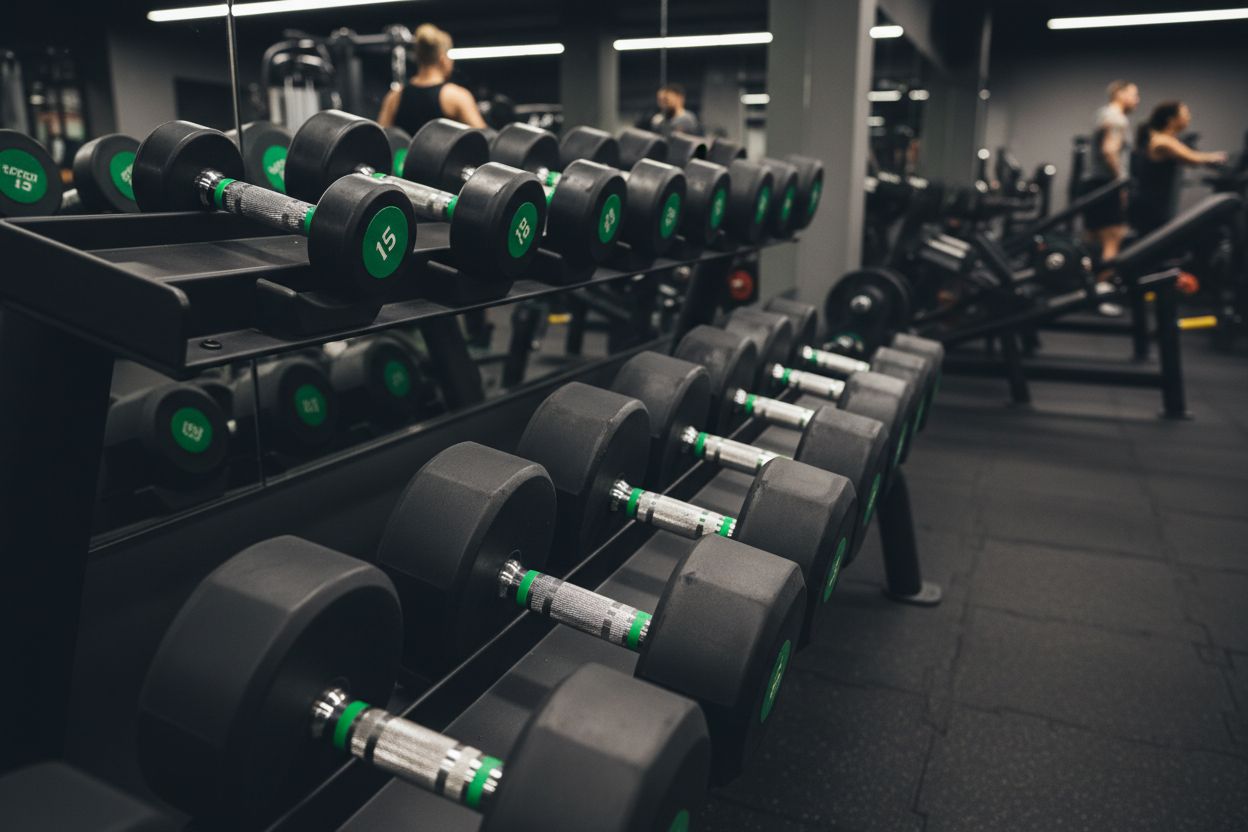
There are several practical ways to increase training stress. Use one or multiple methods together, but change only what you can manage while keeping technique solid.
Increase weight
The most direct method is adding small increments of weight. For many lifters the 2.5 to 10 percent rule is a useful guide. For example, add 5 pounds to lower-body lifts or 2.5 pounds to upper-body lifts when you can complete all reps with good form.
Increase repetitions
If adding weight is not possible, increase reps at the same weight. For example, move from 8 to 10 reps and once you reach the top of your target range, add weight and drop reps back down.
Increase sets or total volume
Adding an extra set increases the total work done. If you normally do 3 sets of an exercise, try 4 sets across several weeks to increase volume.
Decrease rest periods
Reducing rest between sets increases intensity and metabolic stress. This is useful for conditioning and hypertrophy, but avoid sacrificing technique for speed.
Increase training frequency
Training a movement more often increases the opportunities to apply overload. For example, converting a once-per-week leg session into two moderate sessions per week can drive faster progress.
Improve exercise difficulty or complexity
Progress from machine assistance to free weights, or from two-leg movements to single-leg or single-arm variations. For bodyweight training, move from knee push-ups to full push-ups and then to one-arm progressions.
Advanced techniques
When basic progression stalls, techniques such as pyramid sets, drop sets, tempo manipulation (slower eccentrics), and cluster sets can provide new stimulus. Use these sparingly and after mastering baseline progressions.
How to progress safely and sensibly
Progressive overload can produce injury if rushed. Follow these practical safety measures:
Prioritize form over load. If technique breaks down, stop increasing weight.
Aim for small, consistent increases. The 10 percent rule is a useful maximum guideline for weekly load increases, but many lifters progress slower.
Use RPE or rate of perceived exertion to judge when to progress. If a set feels like RPE 7 and you planned RPE 8, keep the weight the same.
Schedule deload weeks every 4 to 8 weeks depending on intensity and recovery. A deload reduces volume and intensity for a week to aid recovery.
Watch for overtraining signs such as persistent soreness, declining performance, poor sleep, or mood changes. If these appear, reduce intensity or rest more.
How to track progress: metrics and tools
You cannot apply progressive overload reliably without tracking. Useful metrics include:
Weight lifted per set and exercise.
Repetitions and sets completed.
Rest intervals.
RPE for key sets.
Tempo when intentionally manipulating time under tension.
Bodyweight and body composition for context.
Keep a workout log. A written or digital log helps you spot trends and know when to push. Smartphone apps and dedicated trackers make logging faster and let you visualize progress over weeks and months. For a simple tracker and workout log options, consider a workout tracker app and read user reviews to find a fit for your needs such as Setgraph - Workout Tracker Gym Log App and Setgraph App Reviews (2025): User Ratings for Tracking Sets, Reps & Workouts.
For broader training concepts and optimization tips, check resources like Optimize Your Training | Expert Tips and Workout Guides and the Setgraph Training Guide | Maximize Your Workout.
When to increase load: clear indicators
Use these signals to decide it is time to progress:
You completed all sets and reps with good form for two consecutive workouts.
RPE was lower than your target by 1 to 2 points.
You can do more reps than planned on your final work set.
If any of these occur, increase weight, reps, or another variable on the next session.
12-week sample progressive overload plan for beginners (Full-Body, 3×/week)

This simple plan focuses on consistent, measurable increases. Use it as a template and adjust for your schedule, recovery, and equipment.
Structure:
Frequency: 3 full-body workouts per week (e.g., Monday, Wednesday, Friday)
Core lifts: squat variation, hinge (deadlift), horizontal push, horizontal pull, overhead press, accessory work
Progression strategy: add reps first, then weight. Aim to add 2.5 to 5 percent when you hit the top of the rep range two sessions in a row.
Weeks 1 to 4 — Build technique and baseline volume
Session A: Squat 3x8, Bench press 3x8, Bent-over row 3x8, Plank 3x30s
Session B: Romanian deadlift 3x8, Overhead press 3x8, Pull-ups or lat pulldown 3x8, Farmer carry 3x30s
Session C: Front squat or goblet squat 3x8, Incline dumbbell press 3x8, Single-arm row 3x8, Side plank 3x20s each side
Progression: aim to add 1 rep per set each week until you hit 10 reps, then add weight and drop back to 8 reps.
Weeks 5 to 8 — Increase weight and volume
Shift main lifts to 4x6 to emphasize strength while keeping accessory hypertrophy work.
Add an extra accessory set for weak points, for example 3x10 hamstring curls.
Progression: when you can complete your target sets and reps at good form for two sessions, add the next weight increment.
Weeks 9 to 12 — Consolidate strength and add intensity
Main lifts 5x5 for compound movements, accessory work 3x8-12.
Introduce small tempo changes such as a 2-second lowering phase on key lifts to increase time under tension.
Progression: push for weight increases when 5x5 is achieved across two sessions.
Month-by-month expectations
Month 1: Learn movement patterns, reduce injury risk, build consistency.
Month 2: Noticeable increases in load or reps, strength improvements.
Month 3: Solid strength gains and better exercise economy; consider a planned deload at week 12 if you feel fatigued.
This plan is deliberately simple. Beginner gains are rapid when you train consistently. Track each set, and update weight only when you meet the progression rules above.
Progressive overload for different training goals and splits
Strength-focused lifters should prioritize lower rep ranges (1 to 6 reps) with longer rests and systematic load increases.
Hypertrophy-focused lifters benefit from moderate reps (6 to 12), higher total volume, and slightly shorter rests.
Endurance-focused training uses higher reps and longer durations with progressive increases in time or reps.
Splits:
Full-body 3×/week is excellent for beginners because it offers frequent practice on core lifts.
Upper/lower or push/pull/legs can work well for intermediate lifters who need more volume per muscle group.
Advanced athletes often benefit from more targeted splits and periodized cycles.
For guidance on core movement technique and training principles, see Core Principles & Techniques for Every Lifter - Setgraph.
Recovery, deloading, and nutrition
Progressive overload only works when recovery supports adaptation.
Recovery essentials:
Sleep: aim for 7 to 9 hours per night.
Nutrition: consume enough protein and calories to support repair. A common recommendation for muscle gain is 1.6 to 2.2 grams of protein per kilogram of bodyweight per day, adjusted to individual needs.
Hydration and micronutrients: support general recovery and performance.
Deload weeks
Every 4 to 8 weeks, reduce training volume or intensity for one week. This can mean cutting volume by 40 to 60 percent or using lighter weights at the same movement patterns.
Signs you need a deload or rest
Persistent performance drops across multiple sessions
Elevated resting heart rate and poor sleep
Chronic soreness and lack of enthusiasm for training
Advanced tools and techniques
When your progress stalls and you have a solid foundation, consider:
Periodization models such as linear progression, undulating periodization, or block periodization for planned peaks.
Advanced set structures like rest-pause, cluster sets, and tempo manipulation to stress muscles differently.
Use these tools selectively and keep meticulous tracking so you know which techniques actually move the needle for you.
Common mistakes and how to avoid them
Increasing weight before mastering technique. Avoid this by perfecting form at a lighter weight.
Changing too many variables at once. Progress one or two variables at a time so you can attribute results.
Skipping deloads. Planned reductions in intensity maintain long-term progress.
Not tracking workouts. Without data you will stall and misjudge progress.
Frequently asked questions
Q: How fast will I see results with progressive overload?
A: Beginners often see measurable strength and size changes within 6 to 12 weeks. Rate of progress depends on training frequency, nutrition, recovery, and genetics.
Q: Can I use progressive overload for bodyweight training?
A: Yes. Increase difficulty by changing leverage, adding reps or sets, reducing rest, or moving to harder variations such as elevating feet, unilateral work, or adding weighted vests.
Q: What if I cannot add weight every week?
A: Use smaller increments, increase reps, add sets, or reduce rest. Also consider repeating the same weight until you can add reps across two sessions.
Q: Is the 10 percent rule mandatory?
A: It is a guideline. Some lifts tolerate larger jumps, others need smaller increments. Use it as a conservative ceiling rather than a strict rule.
Q: Should I consult a trainer?
A: Working with a qualified coach is helpful if you are unsure about technique, programming, or injury history.
Actionable next steps
Start a simple logging habit today. Record weight, sets, reps, and RPE for each main lift. Consider a digital tracker like Setgraph - Workout Tracker Gym Log App to streamline logging.
Pick one progression variable to focus on for 4 weeks, such as increasing reps or small weight increments.
Plan a deload every 4 to 8 weeks and schedule recovery practices like sleep and protein targets.
If you want structured programs or templates, see the Setgraph Training Guide | Maximize Your Workout and browse training resources at Fitness & Workout Tips | Setgraph for additional articles and plans.
Progressive overload meaning in fitness is not about endless heavy lifting. It is a disciplined, measurable approach to getting better. Apply it consistently and sensibly, track your work, and you will keep moving forward instead of treading water.
Article created using Lovarank