How Many Reps for Progressive Overload: A Practical Guide to Choosing Rep Ranges

Progressive overload is the engine of strength and muscle growth, but the question beginners and experienced lifters keep asking is simple and crucial: how many reps for progressive overload actually work? The short answer is there is no single magic number. The right rep range depends on your goal, exercise selection, frequency, and how you measure progress. This article breaks down rep ranges, offers practical templates, and gives step-by-step methods to apply progressive overload reliably.
How reps relate to progressive overload
Understanding how many reps to perform starts with what progressive overload means in practice: gradually increasing the demands on your muscles so they adapt over time. That increase can come from heavier weights, more reps, more sets, less rest, improved tempo, or increased training frequency. Reps are simply one lever you can pull.
Key principles to keep in mind:
Intensity versus volume: Reps determine load intensity and, combined with sets, create training volume. Lower reps generally mean heavier loads and higher intensity; higher reps mean lower intensity and usually higher metabolic stress.
The proximity to failure matters: Performing sets close to failure (for example within 1–3 reps of failure) typically stimulates more adaptation than sets stopped many reps short, assuming technique is maintained.
Specificity: Choose rep ranges that align with your primary goal. Strength improvements respond best to lower reps with heavier loads, while hypertrophy often benefits from moderate reps and sufficient volume.
If you are asking "how many reps for progressive overload" you should first define whether you’re prioritizing strength, hypertrophy, endurance, or a blend of these.
Common rep ranges and what they do
1 to 5 reps per set: Best for maximal strength. Reps are heavy, nervous system-driven, and require longer rest. Use progressive overload by adding small weight increments or adding an extra rep across weeks.
6 to 12 reps per set: The classic hypertrophy range. These reps strike a balance between tension and metabolic stress. Gradually increase reps, then weight, or add sets to raise volume for progressive overload.
12 to 20+ reps per set: Useful for muscular endurance and metabolic conditioning. Progressive overload here is often increased reps, shorter rest, or load if form allows.
These ranges are guidelines not rules. You can build muscle with heavy sets of 4 or lighter sets of 20 as long as volume and effort are sufficient.
Practical rep schemes and templates for progressive overload

Below are actionable templates depending on your goal. Each includes a clear progression method so you always know how to make the workout harder.
Beginner linear progression (best for lifters in their first 3–12 months):
Frequency: 3 total-body sessions per week
Exercises: Squat, bench press, deadlift (or variations)
Sets x reps: 3 sets x 5 reps
Progression: Add 2.5–5 lbs (1–2 kg) to each lift every workout or increase to 3 x 6 once you stall
Hypertrophy-focused block (8–12 weeks):
Frequency: 4 sessions per week (upper/lower split)
Exercises: 2–3 compound lifts + 2–3 accessory movements per session
Compound sets: 3–4 sets x 6–10 reps
Accessory sets: 3 sets x 10–15 reps
Progression: Week-to-week, aim to add 1–2 reps per set until you hit the top of the rep range, then add weight and drop back to the lower rep of the range
Strength-hypertrophy blend (intermediate lifters):
Frequency: 4 sessions per week (2 strength days, 2 hypertrophy days)
Strength day: 4–6 sets x 2–5 reps (heavy)
Hypertrophy day: 3–4 sets x 8–12 reps
Progression: On strength days add small weight increments; on hypertrophy days increase reps, then weight, or add an extra set
High-volume muscle endurance (specialty block):
Frequency: 3–5 sessions per week
Sets x reps: 3–5 sets x 15–20 reps for specific accessory lifts
Progression: Increase reps first, then add load when the full rep target becomes easy
Across all templates, the logic for "how many reps for progressive overload" is to choose a rep range that fits the goal and then use a planned sequence where reps are gradually increased and weight is added in steps.
How to progress reps safely (step-by-step)
Pick a working rep range for each lift. Example: 3–5 reps for squat (strength), 8–12 for dumbbell rows (hypertrophy).
Establish a baseline: record weights, reps, sets, and perceived exertion.
Use a daily or weekly progression rule. Examples:
Add 1 rep per set each workout until you reach the top of the range then increase weight and reset reps to the lower end.
Add 5–10% more volume per week through sets or reps, but no more than one variable at a time.
Train close enough to failure. For hypertrophy aim for sets within 1–3 reps of failure. For strength staying 1–3 reps shy of failure on heavy singles/doubles is common for safety.
Deload regularly. After 3–8 weeks of progressive increases, reduce volume or intensity for a week to recover.
Example micro-progression for 8–12 rep range:
Week 1: 3 x 8 at 100 lbs
Week 2: 3 x 9 at 100 lbs
Week 3: 3 x 10 at 100 lbs
Week 4: 3 x 11 at 100 lbs
Week 5: 3 x 12 at 100 lbs
Week 6: 3 x 8 at 105 lbs (increase weight), repeat progression
This method ensures steady overload while keeping the training structure simple.
Volume, intensity, and frequency: balancing the three
Progressive overload is not only about reps. Volume (sets x reps x load), intensity (percentage of your one-rep max or RPE), and frequency (how often you train a muscle group) interact.
For hypertrophy, aim for 10–20+ weekly sets per muscle group spread across 2–3 sessions
For strength, focus on more frequent practice of the main lifts at higher intensities, often 3–6 sets of low reps per session and 2–3 sessions weekly per lift
If you raise reps, watch total weekly volume—excessive volume without recovery leads to stagnation
If you ask "how many reps for progressive overload" remember to translate reps into weekly volume and not just single-session performance.
Tracking progression and tools
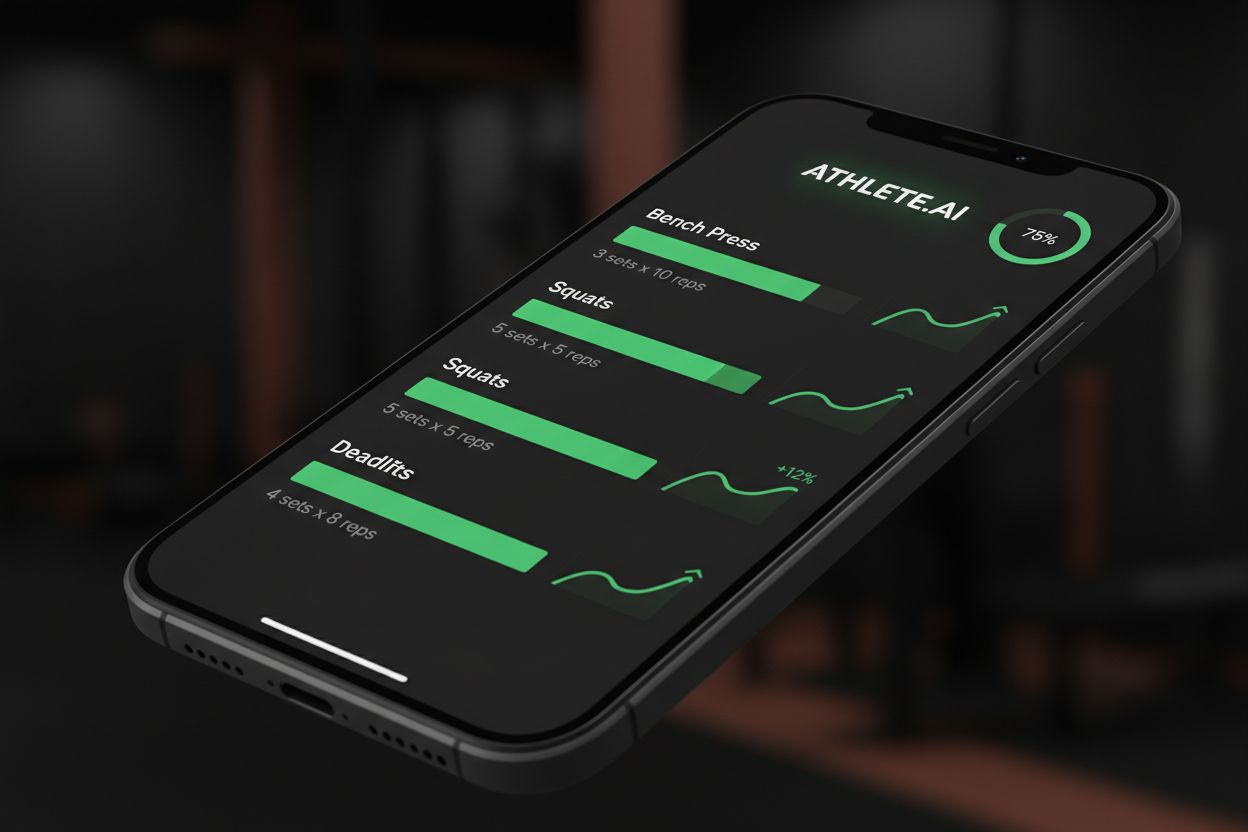
Tracking is the practical bedrock of progressive overload. Without consistent logs you cannot reliably increase load or reps.
What to track:
Exercise name, weight, sets, reps
RPE or how close to failure you were
Rest times
Notes on technique or aches
Apps and tools can make this easier. A simple workout tracker helps you see small, consistent gains and follow rules like "add 2.5 pounds when you can complete all sets at the top of the rep range." For tracking options and guides, see a comprehensive training resource like Setgraph Training Guide | Maximize Your Workout and general tracking tips at Fitness & Workout Tips | Setgraph.
If you’re curious about user experiences with trackers, reviews of popular options are helpful; check Setgraph App Reviews (2025): User Ratings for Tracking Sets, Reps & Workouts.
Consistency in logging lets you answer, with data, what rep ranges are really working for your body and goals.
Common mistakes and how to fix them
Mistake: Chasing a single rep number every session. Fix: Use a planned progression rule and allow for auto-regulation with RPE.
Mistake: Increasing reps but dropping intensity too far. Fix: Ensure sets maintain sufficient effort; if reps rise, eventually increase weight.
Mistake: Ignoring weekly volume. Fix: Monitor sets per muscle group per week and adjust if growth stalls.
Mistake: Not deloading. Fix: Schedule a lighter week every 3–8 weeks depending on volume and intensity.
These fixes help the progressive overload process be sustainable and reduce injury risk.
Troubleshooting plateaus
If your reps and weights stop improving:
Check recovery: sleep, nutrition, stress
Re-evaluate volume: you may be overreaching or undertraining
Change a variable: alter rep ranges for 4–8 weeks to stimulate new adaptation (for example, swap 8–12 for 4–6)
Use a different progression model: move from linear to weekly undulating periodization where rep ranges vary across the week
A plateau often signals that the body needs a different stimulus, better recovery, or both.
Sample 8-week progression for a lifter focused on hypertrophy
Weeks 1–4 (accumulation):
Day A (Upper): Bench press 4 x 8, Bent-over row 4 x 8, Overhead press 3 x 10
Day B (Lower): Squat 4 x 8, Romanian deadlift 3 x 10, Lunges 3 x 12
Progression: Add 1 rep to each set weekly until you reach 4 x 12, then increase weight 5% and reset to 4 x 8
Weeks 5–8 (intensification):
Day A: Bench press 5 x 5 (heavier), Incline dumbbell press 4 x 8
Day B: Squat 5 x 5, Deadlift 3 x 5
Progression: Increase weight by small increments on the heavy sets when you complete all reps with good form
This model alternates periods of higher reps and higher intensity to stimulate both size and strength while using reps as a progression tool.
Quick answers to common questions
Can you build muscle with 1–5 reps? Yes, especially if volume is sufficient, but it is more strength-oriented.
Is 8–12 reps the only hypertrophy range? No, hypertrophy can occur across a wide range, but 6–12 is efficient for many lifters.
How often should you increase reps? Increase reps as long as form and effort are maintained. When you hit the top of the rep range, increase weight.
Final checklist to implement progressive overload with reps
Choose rep ranges aligned with your goals (strength, hypertrophy, endurance)
Track every set and rep to measure progress
Use a simple progression rule (add reps first, then weight) or small weight increments for low-rep work
Keep sets within reasonable proximity to failure for the goal
Monitor weekly volume and recovery, and deload when necessary
For a reliable way to log and visualize your rep and weight progress, consider using a workout tracker designed for set and rep logging. A good tracker helps you follow a progression rule consistently and review past workouts; see general tracking resources at Setgraph - Workout Tracker Gym Log App and optimization tips at Optimize Your Training | Expert Tips and Workout Guides.
Progressive overload is less about a single rep target and more about a consistent method of increasing demand on your muscles. By selecting the right rep ranges, tracking your work, and applying gradual progression rules, you'll know exactly how many reps to do to keep improving week after week.
If you want templates, tracking strategies, or help choosing rep ranges for a specific lift or goal, check out the broader training guides and articles linked above or explore user reviews and experiences to pick the best tools for your tracking style at Setgraph App: Insights, Tips & Training Guides.
Article created using Lovarank