Beginner Upper Body Workout Routine: Simple Plan for Strength

A beginner upper body workout routine should make you stronger without leaving you sore for three days or wondering what to do next. The best version is simple: a few pressing and pulling movements, a little arm work, enough rest, and a plan for adding reps or load over time. That approach covers the main upper body muscles, including the chest, back, shoulders, biceps, triceps, and the core muscles that keep every rep controlled. If you want a quick primer on the basics, start with strength training essentials and workout guides.
In this guide, you will get the exact routine, home and gym options, form cues, and a four week progression plan you can actually follow.
What a beginner upper body workout routine should cover
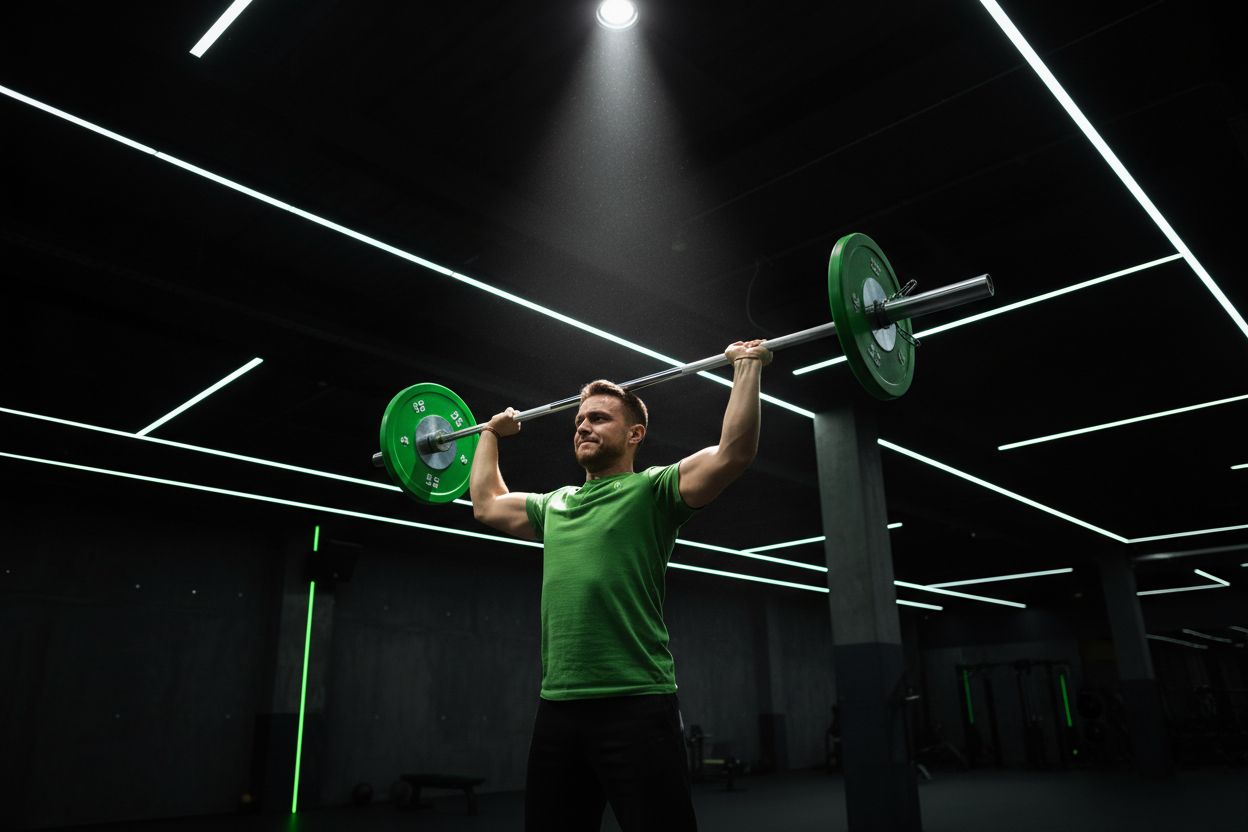
A strong beginner routine does not need a lot of exercises. It needs the right ones. Upper body training works best when you cover two movement patterns, push and pull, then add a small amount of direct arm work. Pushing exercises train the chest, front shoulders, and triceps. Pulling exercises train the back, rear shoulders, and biceps. Core work matters too, because a stable torso makes every press and row more efficient.
A balanced beginner upper body workout routine usually includes:
Chest: pressing strength for push-ups, chest presses, and daily lifting tasks.
Back: rowing and pulldown strength for posture, shoulder balance, and upper back development.
Shoulders: overhead pressing and stability work that helps with lifting and reaching overhead.
Biceps: elbow flexion work that supports pulling strength and arm development.
Triceps: extension work that supports pressing strength.
Core: bracing work that keeps your ribs and pelvis stacked during compound lifts.
Beginners sometimes think upper body day means chest and arms only. That usually leaves out the back, which is one of the biggest reasons people end up feeling tight through the shoulders. The main idea is to learn the big movement patterns first, then add isolation exercises once your technique is steady. For more broad training ideas after you finish this plan, browse more fitness and workout tips.
The beginner upper body workout routine
Do this workout twice per week on nonconsecutive days. Most beginners can finish it in about 35 to 45 minutes. Start each session with 5 minutes of easy cardio, then do one lighter warm-up set for the first two exercises.
Exercise | Sets | Reps | Rest | Notes |
|---|---|---|---|---|
Incline push-up or machine chest press | 3 | 8 to 12 | 60 to 90 sec | Pick a version you can finish with clean form. |
One-arm dumbbell row or seated cable row | 3 | 8 to 12 each side | 60 to 90 sec | Keep your torso steady. |
Dumbbell overhead press | 3 | 8 to 10 | 60 to 90 sec | Stop if your lower back starts to arch. |
Lat pulldown or resistance band pulldown | 2 to 3 | 10 to 12 | 60 to 90 sec | Pull the elbows down toward your sides. |
Dumbbell curl | 2 | 10 to 15 | 45 to 60 sec | Lower slowly. |
Triceps pressdown or overhead extension | 2 | 10 to 15 | 45 to 60 sec | Keep the elbows from drifting outward. |
Plank or dead bug | 2 | 20 to 30 sec | 30 to 45 sec | Optional, but useful for bracing. |
If you are training at home, use dumbbells or bands and keep the same set and rep targets. If you are in a gym, the machine chest press, cable row, lat pulldown, rope pressdown, and dumbbell shoulder press are all easy beginner choices.
If you can hit the top of the rep range for every set with clean form, increase the load next session.
That is the simplest way to keep progressing without guessing. If you want a deeper breakdown of load, reps, and gradual increases, the progressive overload ideas page is a helpful companion.
Choose the version that matches your setup
The same beginner upper body workout routine can work in a gym, at home, or with limited equipment. The key is to keep the movement patterns the same, even if the tools change.
Gym version: machine chest press or dumbbell bench press, one-arm dumbbell row or cable row, dumbbell overhead press, lat pulldown, rope pressdown, and dumbbell curls.
Home with dumbbells: incline push-up or dumbbell floor press, one-arm dumbbell row, seated or standing dumbbell press, dumbbell curl, overhead triceps extension, and plank.
Bands only: band chest press, band row, band pulldown, band shoulder press, band curl, and band pressdown.
Very limited equipment: keep the first four moves, then finish with core work. A small, repeatable routine beats a perfect plan you never follow.
How to do each exercise with good form
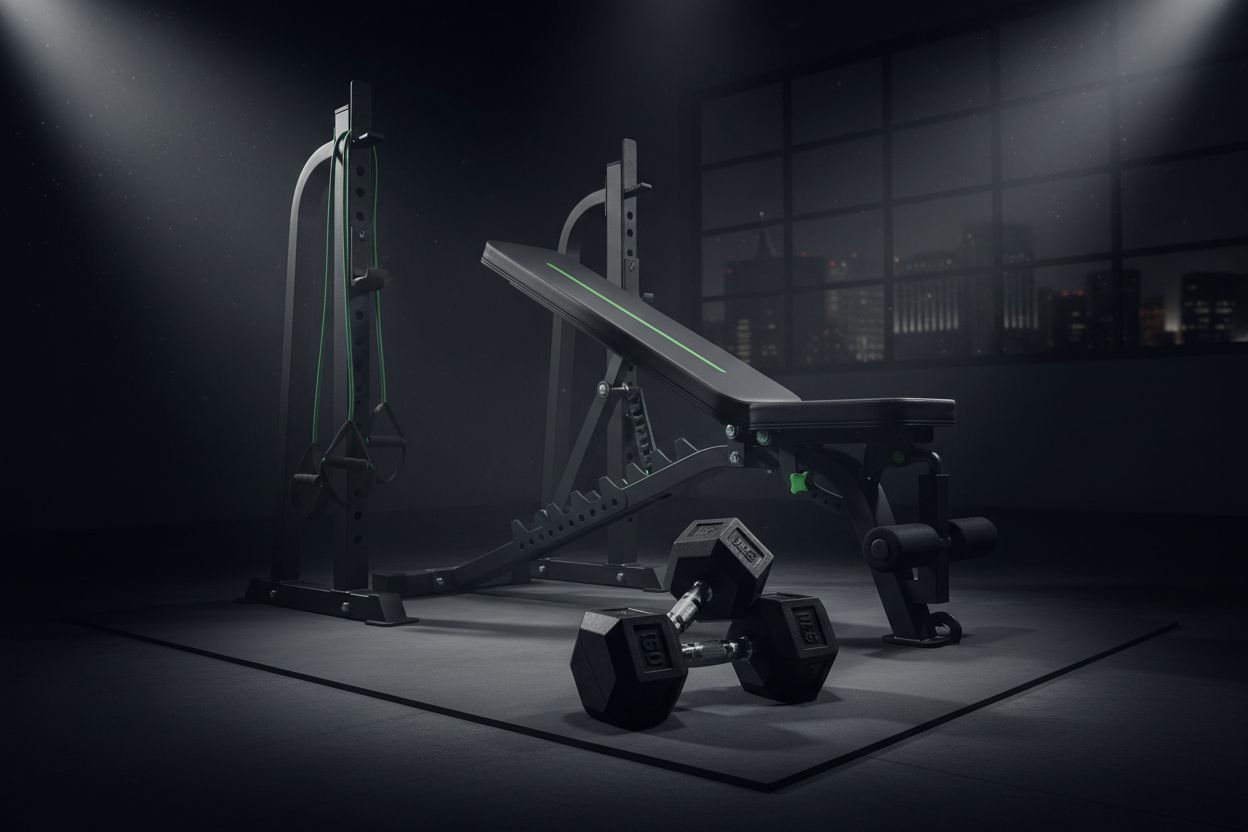
The goal is not to make every rep look fancy. The goal is to make each rep repeatable, smooth, and safe enough that you can do it again next week.
Incline push-up or chest press
Set your hands slightly wider than shoulder width and keep your body in one line from head to heels. Lower under control until your chest is close to the bench, bar, or floor, then press back up without letting your hips sag. For a chest press machine or dumbbell press, keep your shoulders down and avoid bouncing at the bottom. If a floor push-up is too hard, start at a wall, then move to a bench or other higher surface.
One-arm dumbbell row or cable row
Support one hand on a bench if you are doing a dumbbell row, hinge at the hips, and keep your back flat. Pull the weight toward your hip, not your shoulder, then lower it slowly. Try not to twist your torso to finish the rep. If your lower back gets tired before your back muscles do, switch to a chest-supported row or a seated cable row.
Dumbbell overhead press
Stand or sit tall, brace your midsection, and keep your ribs from flaring. Press the weight straight up and slightly back so it finishes over the middle of your body. Do not lean backward to cheat the weight overhead. A seated dumbbell press or a neutral grip press is often easier for beginners, especially if shoulder mobility is still developing.
Lat pulldown or band pulldown
Sit tall, keep the chest up, and pull the bar or band handles down toward the upper chest. Think about driving the elbows toward your ribs instead of yanking with your hands. Avoid swinging your body or turning the movement into a shrug. If you cannot control the bottom of the rep, the weight is too heavy.
Dumbbell curl
Keep your upper arms close to your sides and curl through the full range without rocking your torso. Lower the weight more slowly than you lifted it. Swinging the weight may feel easier, but it shifts work away from the biceps. Hammer curls are a good swap if straight curls bother your wrists.
Triceps pressdown or overhead extension
For a pressdown, keep your elbows tucked and move only the forearms. For an overhead extension, keep the ribs down and do not let the elbows flare too wide. If dip style moves irritate the front of your shoulder, skip them for now and use cables, dumbbells, or bands instead.
A simple video check can help here. If your second set looks very different from your first set, the load is probably too heavy or you are rushing the tempo. A log also helps. The user ratings for tracking sets and reps page is a useful reminder that many lifters rely on simple workout logging to stay consistent.
How to progress over four weeks
The easiest mistake for beginners is changing too many things at once. Pick a plan, repeat it, then make small changes only when the current version feels controlled.
Week 1
Learn the exercises. Use a weight that leaves 2 to 3 reps in reserve on most sets. That means you should finish each set feeling like you could have done a little more.
Week 2
Keep the same weights and try to add one rep to one or two sets for each exercise. If your form breaks down, keep the reps the same and make the movement cleaner instead.
Week 3
Add a small amount of weight, usually the smallest jump available, or use a slightly harder version of the same exercise. For push-ups, that might mean lowering the incline. For rows and pulldowns, it may simply mean adding a little load while keeping the same rep range.
Week 4
Keep the new load and try to match or beat your best reps from Week 3. If you feel beat up, hold the weights steady for another week instead of forcing progress.
A good rule is simple: when you can complete the top of the rep range for every set with solid form in two workouts in a row, increase the load next time.
Common mistakes that slow beginners down

A beginner routine works best when you avoid the little habits that waste effort.
Too much pressing, not enough pulling. Pressing feels familiar, but rows and pulldowns are just as important for balance.
Starting too heavy. If you need to swing, shrug, or shorten the range of motion, the load is too much.
Rushing the reps. Fast reps make it harder to learn control and often turn the set into momentum instead of muscle work.
Skipping warm-ups. One lighter set before your working sets can save a lot of frustration.
Training every set to failure. Beginners usually progress better when they stop with a rep or two left in the tank.
Ignoring pain signals. Muscle fatigue is normal. Sharp joint pain is not. If a movement hurts in the shoulder, elbow, or wrist, stop and modify it.
If your shoulders feel cranky during push-ups or presses, reduce the range of motion, switch to a machine, or use a more upright variation. If rows bother your lower back, support your chest and slow the rep down.
Sample weekly schedule
If you want a routine that feels realistic, keep the week simple.
Monday: Beginner upper body workout routine
Tuesday: Walk, mobility, or light cardio
Wednesday: Lower body or rest
Thursday: Beginner upper body workout routine
Friday: Light cardio or rest
Saturday: Optional technique session or full rest
Sunday: Rest
Two upper body sessions per week is enough for most beginners to build consistency and learn the lifts. If you want a third day, keep it lighter and focus on form, not max effort. The goal is to leave the gym feeling like you could repeat the week again.
FAQ
How many upper body exercises should a beginner do?
Four to seven exercises is usually enough if you cover pushing, pulling, shoulders, arms, and core. More exercises are not automatically better. Better technique and consistency matter more.
Can I do this routine at home?
Yes. Swap the machine and cable moves for dumbbells or resistance bands. A home version can still cover chest, back, shoulders, biceps, triceps, and core without much equipment.
When should I make the workout harder?
Make it harder when you can complete the top of the rep range for every set with solid form and no grinding. Increase the load, add a rep, or move to a more challenging variation, but change only one thing at a time.
Do I need to train to failure?
Not for a beginner upper body workout routine. Most people do better when they stop a little short of failure and save that extra effort for later, once form is more automatic.
How long before I see results?
Many beginners notice better control, more reps, and a stronger mind-muscle connection within a few weeks if they stay consistent. Visible changes take longer and depend on sleep, food, and how steadily you train.
A routine becomes effective when it is repeatable. If you can train twice a week, keep the movement list small, and record what you did, you will have a much easier time spotting progress. Stick with the plan long enough to learn the lifts, then build from there.
Article created using Lovarank