Post‑Workout Muscle Recovery Plan: Active Rest, Protein & Hydration Tips
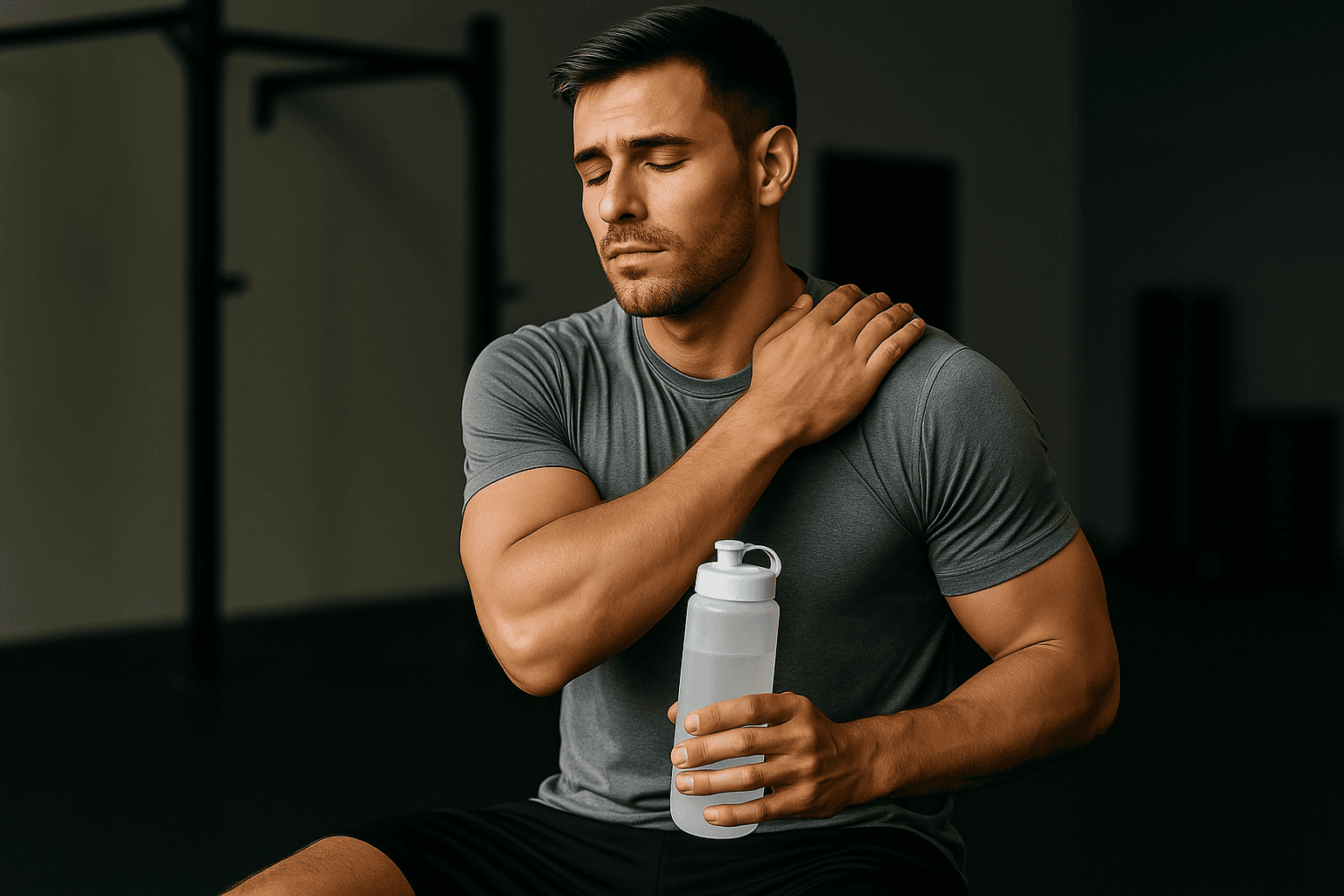
A hard workout can leave you tired or sore, but soreness is not a requirement for progress. The habits between sessions help you sustain training: enough sleep, food and fluids, plus a workload you can recover from.
Recovery is not a race to make every ache disappear. Simple habits can support your next session, while unusual or severe symptoms need a different response.
In this post, we’ll break down what happens to your muscles after a workout and share easy recovery tips you can start using in your daily routine today.
What Happens to Your Muscles During a Workout
Resistance exercise stimulates muscle remodeling and can produce muscle damage, particularly when it is unfamiliar. Growth is not simply the repair of tears, and you do not need to seek soreness to make a workout effective.
Training stimulus: Repeated muscular contractions can stimulate adaptation, including muscle growth.
Unfamiliar work: A new or unusually demanding session can cause soreness and a temporary reduction in performance. More soreness is not proof of more growth.
Repeated training: As you adapt, the same session often causes less soreness while still providing useful work.
The Recovery Process
Recovery includes replenishing energy stores and repairing and remodeling tissue. These processes overlap and their timing varies with the session and the person.
Protein turnover: Training and food influence synthesis and breakdown of muscle proteins. Changes after one session do not directly predict how much muscle you will gain.
Fuel and fluids: Meals and drinks help restore what you used during the session. Needs depend on its duration, sweat losses and the next planned workout.
Return to training: Review function and performance as well as soreness. A muscle feeling comfortable is not a guarantee that every workload is appropriate.
Simple, but Effective Recovery Tips
Use these habits as a repeatable routine rather than a promise of a fixed recovery time:
Prioritize sleep: Keep a regular schedule and allow enough time to sleep. The AASM and Sleep Research Society recommend at least seven hours regularly for healthy adults; individual needs vary.
Stay hydrated: The National Academies’ adequate intakes of 2.7 L/day for adult women and 3.7 L/day for adult men refer to total water from food and all drinks. They are not instructions to drink that much plain water or precise requirements for every athlete. Adjust to sweat and conditions without forcing excess fluid; follow prescribed limits if you have them.
Eat protein as part of sufficient food: For most healthy exercising adults, the ISSN position stand gives a daily range of 1.4–2.0 g/kg (about 0.6–0.9 g/lb). Spread protein-containing foods across meals in a way that fits your routine. Individualize intake for medical conditions or prescribed diets.
Try comfortable light activity: An easy walk or gentle movement may make stiffness feel better. A randomized study in 20 healthy women found temporary soreness relief after shoulder exercises with elastic resistance or massage; it did not test walking or establish faster tissue repair. Keep the activity easy and stop if symptoms worsen.
A simple evening check is enough: eat a normal meal with protein and carbohydrate, replace fluids according to your needs, and leave time for sleep. The next session can be lighter if your usual movements or performance have not recovered.
Recovery: The Key to Consistency
A sustainable program balances useful training with enough recovery to repeat it. Sleep, food, fluids and optional light activity support that balance, but cannot guarantee that you remain injury-free. Get prompt advice for persistent pain or unexplained weakness; seek urgent care for severe pain or swelling, marked weakness or dark urine after exertion.
FAQ
Q: How long does muscle soreness usually last?
Delayed-onset soreness often appears the day after unfamiliar exercise and can peak over the next one to three days. It usually settles over several days, but timing varies. Worsening, severe or persistent symptoms should not be assumed to be ordinary soreness.
Q: Should I work out if I’m still sore?
Comfortable light activity may be reasonable for mild soreness. Reduce or avoid loading a movement that is painful or substantially impaired. Get advice for sharp or persistent pain, and seek urgent care for severe swelling, marked weakness or dark urine after exertion rather than simply waiting another day.
Q: What helps muscle soreness go away faster?
Light movement, massage or foam rolling may ease soreness temporarily for some people. Relief does not prove faster tissue repair. Maintain adequate sleep, food and fluids, and adjust the next workout to your function and symptoms.
