How to Create a Workout Plan: The Complete Guide

A useful workout plan fits your goal, experience, available days and equipment. Start with a repeatable schedule, a few suitable exercises and a clear progression rule. This guide walks through those decisions and gives adjustable examples.
Understanding Workout Plan Fundamentals
A well-structured workout plan isn't just a random collection of exercises. Whether you're creating a workout plan for beginners or designing an advanced program, it's a strategic approach to physical training that considers multiple factors:
Progressive overload: Adjusting training as your capacity develops, rather than forcing an increase every session
Periodization: Organizing your training into specific phases
Recovery: Allowing adequate rest between training sessions
Specificity: Tailoring exercises to your specific goals (strength, muscle gain, weight loss)
Individual factors: Accounting for your experience level, available time, equipment, and preferences
Location adaptability: Creating versions for home workouts or gym settings
Schedule integration: Weekly planning that fits your lifestyle
Start with a simple structure you can repeat. Get qualified guidance for unfamiliar movements or health concerns rather than adding complexity before you need it.
Assessing Your Current Fitness Level
Before designing your workout plan, you need to honestly evaluate where you currently stand:
For Beginners:
Can you perform basic movements with proper form?
Which bodyweight or light-load movements can you perform comfortably and with control? Maximal repetition tests are optional.
What's your current cardiovascular endurance?
For Intermediate/Advanced:
What are your current lifting numbers for major movements?
Which movements or tasks would you like to improve?
What's your recovery capacity?
This self-assessment provides the baseline from which you'll build your program.
Defining Clear Fitness Goals
Effective workout plans are goal-driven. Common fitness goals include:
Muscle growth (hypertrophy): Building muscle size and definition
Strength development: Increasing maximal force production
Fat loss: Reducing body fat percentage while maintaining muscle
Athletic performance: Improving specific sport-related capabilities
General fitness: Enhancing overall health and wellness
Your goals will determine exercise selection, volume, intensity, and training frequency. Be specific about what you want to achieve—vague goals lead to unfocused training.
Creating Your Workout Structure
Training Split Options
How you organize your training days depends on your schedule, recovery ability, and goals:
Full-body: Cover major body regions in each session; two or three weekly visits are a practical option.
Upper/lower: Alternate upper and lower sessions. Four days gives two of each per week; three days requires a rotation across weeks.
Push/pull/legs: Use three weekly sessions, repeat the cycle for six sessions, or continue it across a rolling schedule.
Body-part split: Dedicate sessions to selected body regions, with the number of days and workload chosen separately.
Choose the split you can sustain. Volume-matched research found similar average outcomes for split and full-body routines; extra training days are not inherently more advanced.
Training Variables to Consider
Creating an effective plan requires balancing several training variables:
Frequency: How often you train each muscle group weekly
Volume: track working sets per exercise or muscle, and optionally volume load (sets × reps × weight) for comparable exercises.
Load and effort: Distinguish how heavy the weight is from how close a set is to your limit
Exercise selection: Which specific movements you include
Rest periods: Time between sets and between workouts
Progression scheme: How you'll increase difficulty over time
Each variable must be appropriate for your experience level and recovery capacity.
Selecting the Right Exercises
Exercise selection can make or break your workout plan. Consider these categories:
Compound Exercises
These multi-joint movements engage multiple muscle groups simultaneously:
Squats
Deadlifts
Bench press
Overhead press
Pull-ups/chin-ups
Rows
Compound exercises can cover several muscles efficiently. Machines, free weights and simpler variations are all options; select movements you can perform and progress.
Isolation Exercises
These single-joint movements target specific muscles:
Bicep curls
Tricep extensions
Leg extensions
Lateral raises
Calf raises
Use isolation exercises when they serve a specific goal or complement the main movements.
Exercise Order
One possible order is:
Technical or explosive practice, only when it is part of your goal and you have learned the movement
Heavy compound exercises
Lighter compound exercises
Isolation exercises
Core/stability work
Put your priority exercise early enough to perform it well. This is a flexible ordering principle, not a requirement to include every category.
Planning Sets, Reps, and Rest Periods
These are broad examples, not strict physiological zones. Muscle growth can occur across different rep ranges, while heavier loading is more specific to maximal strength. Match the load to the reps you can control; the ACSM guidance does not require beginners to train at their one-rep maximum.
Goal | Sets | Reps | Rest | Load and effort |
|---|---|---|---|---|
Strength | 2–3 | 3–6 | 3-5 min | A controlled load for the range; leave reps available while learning |
Hypertrophy | 2–3 | 8-12 | 1–3 min; longer if needed | A challenging load for the range, with controlled technique |
Endurance | 2-3 | 15-20+ | Enough to repeat the task with control | Lighter load suited to the intended repetition task |
For beginners, start with:
1–2 working sets per exercise while learning; add work gradually if useful
8-12 reps for most exercises
About 1–3 minutes between sets, extending rest for demanding exercises
2-3 sessions per week
As you advance, you can manipulate these variables more precisely based on your response.
Implementing Progressive Overload
Use a progression rule that responds to performance. Compare the same exercise, technique and effort over several sessions:
Weight progression: Gradually increasing the load
Rep progression: Add reps within a chosen range before increasing load. More sets are a separate workload decision.
Density: Shortening rest changes the task and may reduce later-set performance. Use it for a specific conditioning goal, not as an automatic substitute for strength progression.
Technique: Improve control and consistency before choosing a harder variation. A new exercise needs its own baseline.
Document your workouts to track progress and identify when to implement these changes.
Incorporating Recovery and Deload Periods
Include recovery in the weekly plan:
Place non-training days around the sessions you can sustain; a two- or three-session beginner week has more than one or two rest days.
Allow recovery between demanding sessions for the same region, especially while learning how much work you tolerate
Consider a lighter week when workload, recovery or the program calls for it; a fixed four-to-eight-week deload is not mandatory.
Pay attention to sleep, nutrition, and stress management
Persistent fatigue, pain or declining performance can have several causes. Review the workload and seek qualified assessment for persistent or worsening symptoms.
Accounting for Your Available Equipment
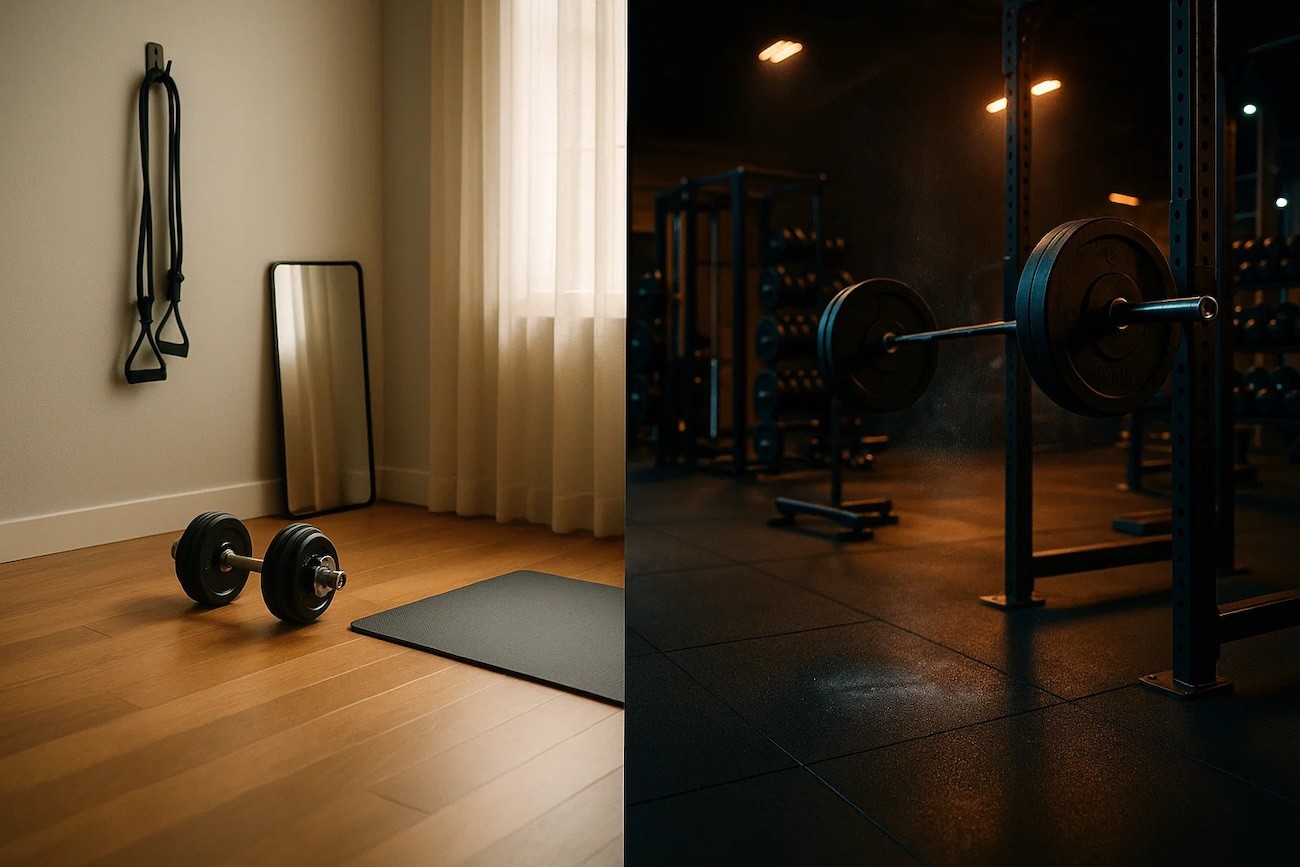
Your equipment access will influence exercise selection
Home/Limited Equipment
Focus on:
Bodyweight exercises
Resistance band movements
Dumbbell/kettlebell exercises
Suspension trainer exercises
Full Gym Access
Incorporate a wider variety:
Barbell exercises
Machine-based movements
Cable exercises
Specialty equipment
Design your plan around what you have reliable access to—consistency trumps theoretical perfection.
Common Workout Planning Mistakes to Avoid
Many self-designed workout plans fall short because they:
Lack balance: Overemphasizing certain movements (like chest) while neglecting others (like back)
Ignore recovery: Too much volume or frequency without adequate rest
Lack progression: No systematic way to increase difficulty over time
Prioritize quantity over quality: Too many exercises without mastering fundamental movements
Copy advanced programs: Following routines designed for experienced lifters or enhanced athletes
Review these points when a plan becomes hard to sustain or performance stalls. A workout log alone cannot diagnose overtraining or predict injury.
Sample Workout Plans for Different Goals
Beginner Full-Body Workout Plan (Home or Gym)
This editorial example uses four exercises per session and eight working-set entries. Begin with light, controlled work and leave several reps available while learning. Warm up first and use assistance, a raised push-up surface or simpler variations as needed.
Workout A:
Goblet squat or controlled chair squat: 2 sets × 8–10 reps
Dumbbell bench press or elevated push-up: 2 sets × 8–10 reps
Supported dumbbell row or resistance-band row: 2 sets × 8–10 reps
Plank: 2 holds of 15–30 seconds, stopping before your position changes
Workout B:
Hip bridge: 2 sets × 8–10 reps. A learned light Romanian deadlift is an alternative, not an extra exercise.
Seated dumbbell press: 2 sets × 8–10 reps if comfortable; a landmine press is an alternative
Lat pulldown or resistance-band pulldown: 2 sets × 8–10 reps
Side plank: 2 holds of 15–30 seconds per side; use bent knees if needed
For two days, use Monday A and Thursday B: 16 working-set entries per week. For three days, alternate on Monday/Wednesday/Friday: week 1 A/B/A, week 2 B/A/B, giving 24 entries each week. Unilateral work counts once while both sides are performed. Choose one schedule initially, with rest from lifting between sessions.
Muscle Building Workout Plan
This editorial four-session example is for lifters already familiar with the movements. Use Monday upper push, Tuesday lower quad emphasis, Thursday upper pull and Friday lower hinge emphasis, with other days off lifting. It lists 12 working-set entries per session and 48 per week. Chest and back each have one dedicated session; this is not twice-weekly direct chest/back training. Leave roughly two controlled reps available and start below these sets if needed.
Day 1 (Upper - Pushing Focus):
Bench press: 3 sets × 6–8 reps
Overhead press: 2 sets × 8–10 reps
Incline dumbbell press: 3 sets × 8–12 reps
Lateral raise: 2 sets × 12–15 reps
Triceps extension: 2 sets × 10–12 reps
Day 2 (Lower - Quad Focus):
Squat: 3 sets × 6–8 reps
Leg press: 2 sets × 8–12 reps
Walking lunge: 2 sets × 10–12 reps per leg
Leg extension: 2 sets × 12–15 reps
Calf raise: 3 sets × 12–20 reps
Day 3 (Upper - Pulling Focus):
Assisted pull-up or lat pulldown: 3 sets × 6–10 reps
Chest-supported row: 3 sets × 8–10 reps
Seated cable row: 2 sets × 10–12 reps
Face pull: 2 sets × 12–15 reps
Biceps curl: 2 sets × 10–12 reps
Day 4 (Lower - Hamstring/Glute Focus):
Romanian deadlift: 3 sets × 6–10 reps
Hinge alternative: use conventional or trap-bar deadlift instead for 3 sets × 4–6 reps if you know the lift. Do not add it to the Romanian deadlift allocation.
Hip thrust: 3 sets × 8–12 reps
Leg curl: 3 sets × 10–15 reps
Standing calf raise: 3 sets × 12–20 reps
Weight Loss Workout Plan
Resistance exercise and aerobic activity can support a weight-management plan. Here is an adjustable four-day example; food intake and individual circumstances also affect weight change. Use Monday and Thursday for the two strength circuits and Tuesday and Saturday for aerobic activity.
Day 1 (Strength Circuit A): Start with 1–2 rounds. Rest between exercises and rounds until you can perform the next movement with control; this is not a race.
Goblet squat or chair squat: 8–12 reps
Elevated push-up: 6–10 controlled reps
Hip bridge: 8–12 reps
Supported dumbbell row: 8–12 reps per side
Standing march: 30 seconds at a comfortable pace
Day 2 (Aerobic Activity): Start with 10–20 comfortable minutes, or shorter bouts if needed. Choose one option below and use a pace at which you can talk:
Brisk walking
Stationary cycling
Easy rowing if you know the movement
Swimming or water walking where appropriate
A low-impact aerobic activity you enjoy
Day 3 (Strength Circuit B): Start with 1–2 rounds and allow enough rest for controlled movement.
Light dumbbell Romanian deadlift or hip bridge: 8–12 reps
Dumbbell shoulder press, if comfortable: 8–12 reps
Supported reverse lunge: 6–10 reps per side
Plank: 15–30 seconds, stopping before your position changes
Easy stationary bike or walking: 1–2 minutes
Day 4 (Aerobic Activity): Repeat a manageable session, gradually extending duration as your tolerance develops. A moderate pace generally lets you talk but not sing.
Walking/jogging, cycling, rowing, or swimming
Remember to adjust these templates based on your specific circumstances and available equipment.
Using AI to Draft a Workout Plan
A drafting tool can help organize your choices, but it still needs the same checks for workload, schedule and exercise suitability.

AI tools can help draft a plan, but review their output for missing information, incompatible exercises and unrealistic workloads before using it.
When reviewing any draft, check that it accounts for your:
Current fitness level
Available equipment (home or gym)
Time constraints and weekly schedule
Exercise preferences and limitations
Specific goals (weight loss, muscle gain, athletic performance)
Personal metrics and progression data
A quickly generated plan still needs to be checked. Do not assume it has been reviewed by a fitness professional or will automatically adapt to logged performance.
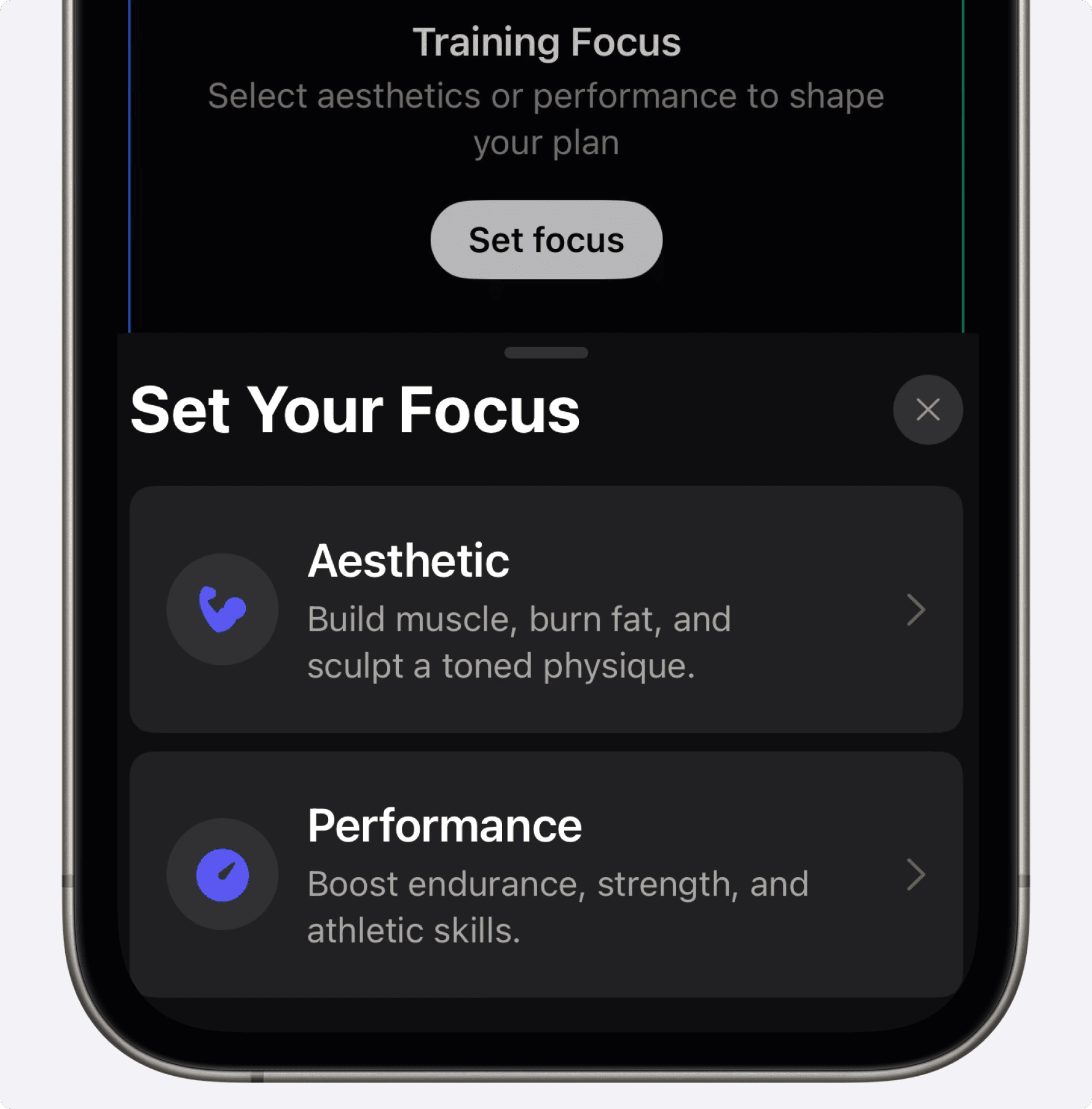
For unfamiliar exercises, complex goals, pain or relevant health concerns, seek appropriate qualified guidance rather than treating generated text as a replacement for a trainer or clinician.
Creating Weekly Workout Plans
To make a weekly plan usable, assign each session and rest day to a day you can actually keep.
Assess available days: Be realistic about which days you can commit to training
Distribute work: Account for overlapping muscles and demanding sessions when placing rest days
Balance demands: Choose manageable effort rather than requiring heavy and moderate days to alternate
Schedule recovery: Place active recovery or complete rest days strategically
Plan for consistency: Create a sustainable weekly template you can follow long-term
Review the schedule after trying it and adjust workload when needed.
Home vs. Gym Workout Plans
Another common question is how to create workout plans for different settings. Here's a comparison:
Home Workout Plans
Equipment considerations: Bodyweight exercises, resistance bands, adjustable dumbbells
Space requirements: Create a plan suitable for your available space
Exercise substitutions: Adapt traditional gym exercises for home equipment
Progression: Add controlled reps within a range or use a more challenging variation when ready. Record a new baseline when the movement changes.
Gym Workout Plans
Equipment advantage: Access to a wider variety of machines and heavier weights
Split options: More flexibility for specialized training splits
Exercise variety: More options for equipment preferences and specific goals, without a need to rotate exercises constantly
Specialized equipment: Access to targeted machines for specific goals
Both settings can support useful training when the exercises and progression fit the person.
Conclusion
Creating an effective workout plan requires balancing multiple variables and honestly assessing your capabilities, constraints, and goals. Whether you're creating a workout plan for beginners at home, designing a gym-based muscle building program, or developing a weight loss routine, the principles remain the same.
Remember that the best workout plan is one you'll actually follow. Start with a manageable approach, track your progress, make adjustments as needed, and stay committed to the process.
For an overview of the app’s planning workflow, read how workout planning works in Setgraph. Check the current in-app options and access terms before choosing a tool.