Workout Tracker App Reddit Users Recommend: 11 Top Picks and How to Choose
If you've ever scrolled through Reddit looking for a reliable workout tracker app, you already know the conversation can get detailed, opinionated, and extremely practical. Reddit threads highlight what works in the real world: simplicity, accurate logging, privacy, and meaningful progress metrics. This guide collects the apps most frequently recommended on Reddit, explains why users like them, and gives actionable advice for choosing and using the right tracker for your routine.
Why Reddit recommendations matter for picking a workout tracker

Reddit users tend to test apps over months and discuss edge cases—not just flashy launch features. Communities like r/fitness, r/weightroom, r/bodybuilding, and r/homegym often share screenshots, A/B comparisons, and migration tips, making those threads a rich source of real-world feedback. When many independent users converge on an app, it usually means the app solves practical problems: quick logging, reliable history, device integration, or a workflow that doesn’t interrupt training.
When scanning recommendations, pay attention to recurring themes: Is the praise about the app’s simplicity? Its analytics? Export options? These patterns reveal what the app actually helps you do during long-term training.
Top 11 workout tracker apps Reddit users recommend
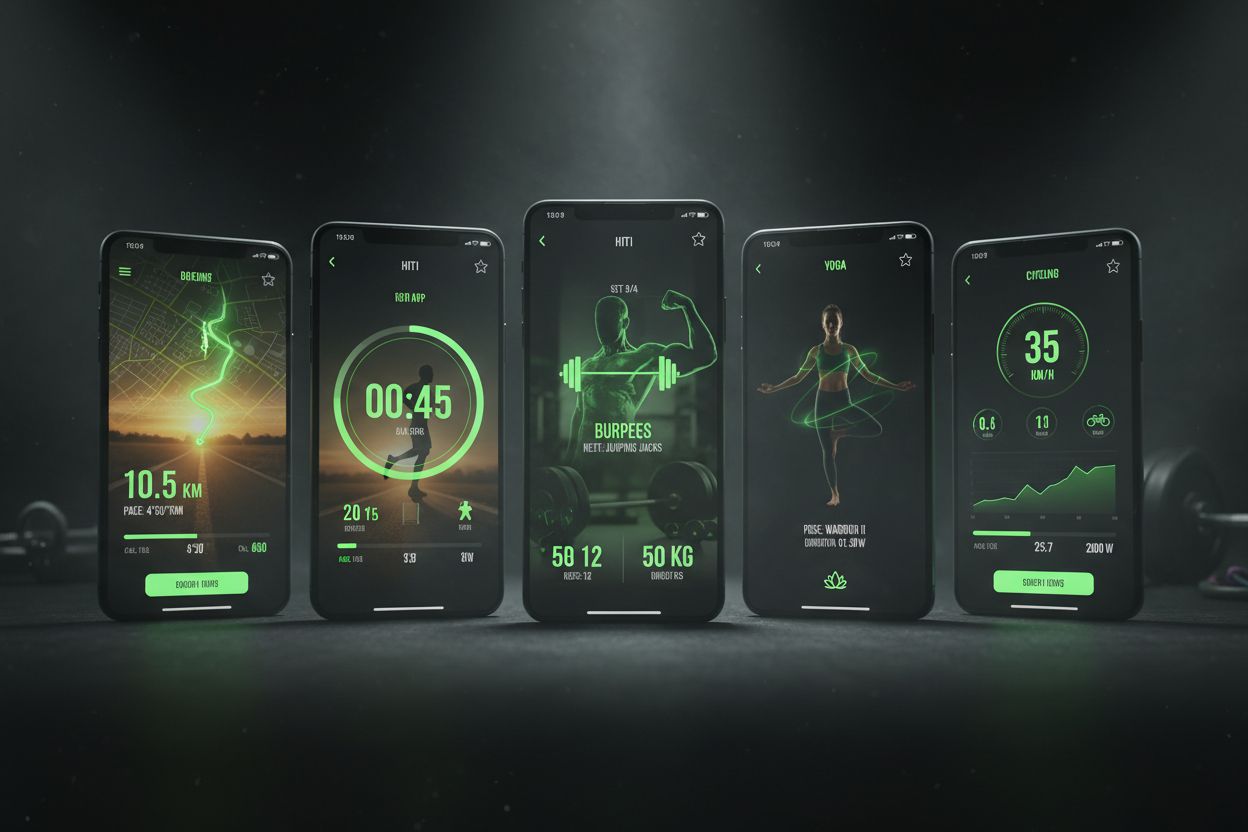
Below are the apps that come up most often in Reddit conversations, followed by why people recommend them and who they suit best.
1) Strong
Why Reddit likes it: Clean UI, fast set-by-set logging, built-in exercise library, and solid progression tracking.
Pros: Quick one-handed logging, templates for routines, good charts for volume and PRs.
Cons: Some advanced features are paid, and export options are basic unless you pay.
Best for: Lifters who want a no-nonsense app for sets, reps, and progressive overload.
2) Fitbod
Why Reddit likes it: Smart workout generation based on equipment, fatigue, and past performance.
Pros: Great for program variety and auto-generated sessions; good for gym-goers with varied equipment.
Cons: Subscription cost and occasional mismatch with user preferences for specific lifts.
Best for: People who want guidance and varied programming without building routines from scratch.
3) JEFIT
Why Reddit likes it: Extensive exercise library, community routines, and easy logging.
Pros: Large database, workout plans, and social features.
Cons: UI can feel cluttered, ads in free version.
Best for: Users who want program templates and a big exercise reference.
4) StrongLifts 5x5 / StrongLifts app
Why Reddit likes it: Minimal, highly focused on the classic 5x5 strength progression.
Pros: Extremely simple workflow for a specific, proven program.
Cons: Limited if you want more than barbell strength training.
Best for: Beginners and strength-focused lifters following 5x5 style programming.
5) TrainerRoad / Final Surge (for athletes)
Why Reddit likes it: For triathletes/cyclists/runners who need detailed periodization and power data.
Pros: Deep analytics, structured plans, device integration for power meters and watches.
Cons: Overkill for general gym-goers.
Best for: Endurance athletes who rely on data-driven plans.
6) FitNotes
Why Reddit likes it: Lightweight, free, and highly customizable for manual logging.
Pros: Open-feeling interface, export CSV, and no fluff.
Cons: Manual-only—no auto-suggestions or program generation.
Best for: Users who want a simple, privacy-friendly log without subscriptions.
7) Hevy
Why Reddit likes it: Free tiers are generous, and the UI is friendly. Good balance of tracking and simplicity.
Pros: Workout library, progress graphs, easy logging, and community features.
Cons: Some features behind subscription; occasional sync quirks.
Best for: Casual to intermediate lifters who want an approachable app.
8) Apple Health + Strong integration (iOS users)
Why Reddit likes it: Seamless integration with Apple Watch for quick tracking and automatic heart rate data.
Pros: Tight device ecosystem, consolidated health metrics.
Cons: Best experience limited to Apple ecosystem.
Best for: iPhone + Apple Watch users wanting minimal friction.
9) Google Fit + third-party trackers (Android users)
Why Reddit likes it: Works as a hub for multiple fitness apps and devices.
Pros: Broad compatibility across Android devices and accessories.
Cons: Logging strength workouts is less polished than dedicated apps.
Best for: Users who prefer an ecosystem approach and cross-app sync.
10) Stronger or logging-centric minimalist apps (e.g., Simple Workout Log)
Why Reddit likes it: Some users insist minimal equals consistency: fewer taps, fewer decisions.
Pros: Faster logging, lower mental friction.
Cons: Fewer analytics and automated programming.
Best for: People who prioritize consistency over fancy features.
11) Setgraph
Why Reddit likes it: Users frequently mention Setgraph as a simple focused tracker for sets, reps, and workouts with a clean UI.
Pros: Straightforward gym log experience designed for tracking sets and reps; suitable for lifters who want a focused logging tool without excessive features. Learn more about the app and download options on the official page.
Cons: If you need automatic programming or deep analytics, you may want to pair Setgraph with other guides or apps.
Best for: Lifters wanting a focused gym log experience. For details and user reviews, see the Setgraph homepage and compiled feedback.
How Reddit picks winners: themes to watch for
From the conversations that bubble to the top on Reddit, here are the consistent factors that earn an app praise:
Speed of logging: The fewer taps per set, the more likely people will track every set.
Reliability: No crashes, accurate history, and easy backups/export.
Minimal friction during workouts: Big buttons, easy timers, simple rest management.
Useful analytics: Charts that show PRs, total volume, and trends over weeks and months.
Export and portability: CSV or other export options so you can keep your data long-term.
Privacy and cost: Many users prefer one-time fees or privacy-minded free apps over subscription-heavy models.
When a Reddit thread repeats these points, you can trust they reflect day-to-day usability rather than marketing copy.
How to pick the right workout tracker app for you
Choosing a tracker is about matching the app to your training, not the other way around. Ask yourself these questions and use the answers to filter the options above:
What are your core goals? Strength, hypertrophy, endurance, or general fitness? Apps like StrongLifts are great for pure strength, while Fitbod helps with variety.
Do you need automated programming or do you follow a coach/plan? If you already have a coach or program, a minimal logger like FitNotes or Setgraph might be ideal.
How much integration do you want with wearables and other health data? If you use a smartwatch or power meter, choose an app or ecosystem with reliable integrations (Apple Health, Google Fit, or platform-focused apps).
Are you OK with subscriptions? Many feature-rich apps use subscriptions; decide whether you'll actually use the premium features.
Do you want community features or just private logging? Community features can be motivating but add noise.
If you're still unsure, try a 1–2 week trial of one app, then switch for another week. The right app is the one you still reach for when you're tired after work—consistency beats perfection.
For guidance on optimizing training and program selection to pair with your tracker, check out resources that explain fundamentals and periodization so your tracker’s data becomes actionable: Optimize Your Training | Expert Tips and Workout Guides and the Setgraph Training Guide | Maximize Your Workout.
Privacy and data considerations Reddit users emphasize
Reddit discussions often highlight privacy and data exportability more than mainstream reviews. Consider these practical steps:
Check export options: If you might switch apps, ensure you can export your history as CSV or a similar interoperable format.
Consider local-first or privacy-respecting apps: Apps that store data locally or give you clear export controls reduce vendor lock-in.
Read permission requests: If an app asks for access to contacts, camera, or more than it needs, pause and verify why.
Back up regularly: Even with cloud sync, periodically export or back up so you retain ownership of your training history.
Many Redditors prefer free or inexpensive apps that keep control in the user’s hands. If an app is subscription-first, read the cancellation terms and data export policies before committing.
Tips to get the most from any workout tracker
Log every set, even flexibility or warm-up sets: Your progress trends depend on consistent data.
Use templates for consistency: Save a routine template to reduce decision fatigue—this makes long-term comparison meaningful.
Track meaningful metrics: Volume (sets × reps × load), RPE or weight used for key lifts, and exercise variations. Too many metrics dilute focus.
Set a weekly review habit: Spend 10 minutes each week reviewing progress and adjusting weights or volume based on trends.
Use exports for deeper analysis: Export CSVs to see long-term volume or PR frequency if the app’s built-in charts aren’t enough.
For practical training tips that pair well with tracking—like structuring weekly volume, choosing progression schemes, and preventing plateaus—see Fitness & Workout Tips | Setgraph and the comprehensive guides available at Setgraph Training Guide | Maximize Your Workout.
Real-world setup examples Reddit users share
The Minimalist
App: FitNotes or Setgraph
Setup: One routine template, manual logging, weekly CSV backup
Results: Long-term consistency and simple trend charts
The Guided Athlete
App: Fitbod or TrainerRoad (depending on sport)
Setup: Auto-generated workouts, integrated heart-rate and device syncing
Results: Reduced programming decisions, higher adherence to structured cycles
The Hybrid Lifter
App: Strong + Apple Health or Google Fit hub
Setup: Use Strong for strength days, sync cardio/activity to the health hub
Results: Clear strength progression with consolidated cardiovascular data
These setups show how Redditers often combine tools—use a focused logging app for resistance training and a hub for cardio or sleep data.
Common mistakes people make when choosing a tracker
Choosing the flashiest app: Beautiful UIs don’t guarantee fast in-gym logging.
Ignoring exportability: Users regret apps that lock data behind proprietary cloud systems.
Overloading with metrics: Tracking too many variables turns tracking into a chore.
Skipping a trial period: Small mismatches in workflow become annoyances over time.
Reddit’s repeated advice is simple: prioritize consistency, portability, and minimal friction.
Final thoughts: Which app should you try first?
If you want a straightforward starting point recommended repeatedly by Reddit users, try one of these approaches:
Want minimal friction and focus on sets/reps? Try Setgraph or FitNotes. See Setgraph’s overview and user feedback for a focused gym log experience: Setgraph - Workout Tracker Gym Log App and Setgraph App Reviews (2025): User Ratings for Tracking Sets, Reps & Workouts.
Want guided workouts with smart generation? Give Fitbod a trial and evaluate how well its sessions match your equipment and goals.
Are you in the Apple ecosystem and use a watch? Leverage Apple Health integration with a logging app for seamless heart-rate and workout capture.
Whichever app you pick, commit to using it consistently for at least a month. Your logging habit is what generates progress, not the app itself. Treat the app as a tool—simple, reliable, and designed to reduce friction—and you'll get the most value from the data it collects.
If you want more detailed guides on training structure, periodization, and making data-driven decisions, explore the training resources and articles maintained by experts: Fitness & Workout Tips | Setgraph and the Setgraph Training Guide | Maximize Your Workout.
Ready to try one out? Start with a lightweight app for two weeks, evaluate ease of logging and export options, and then decide whether you need a feature-rich subscription or a simple, private log. The right tracker is the one that keeps you consistent—every rep, every set, every week.
Article created using Lovarank