Workout Splits 5 Day: The Complete Guide to Programming, Progress, and Recovery

Finding the right training split is one of the fastest ways to get consistent progress without wasting time in the gym. A 5-day split gives you frequent, focused sessions that balance volume and recovery. In this guide you will learn why many lifters call a 5-day schedule the sweet spot, how to build multiple 5-day variations, precise set and rep guidelines, month-by-month progression, and practical fixes for when life interrupts your routine.
What is a 5-day split and why choose it?
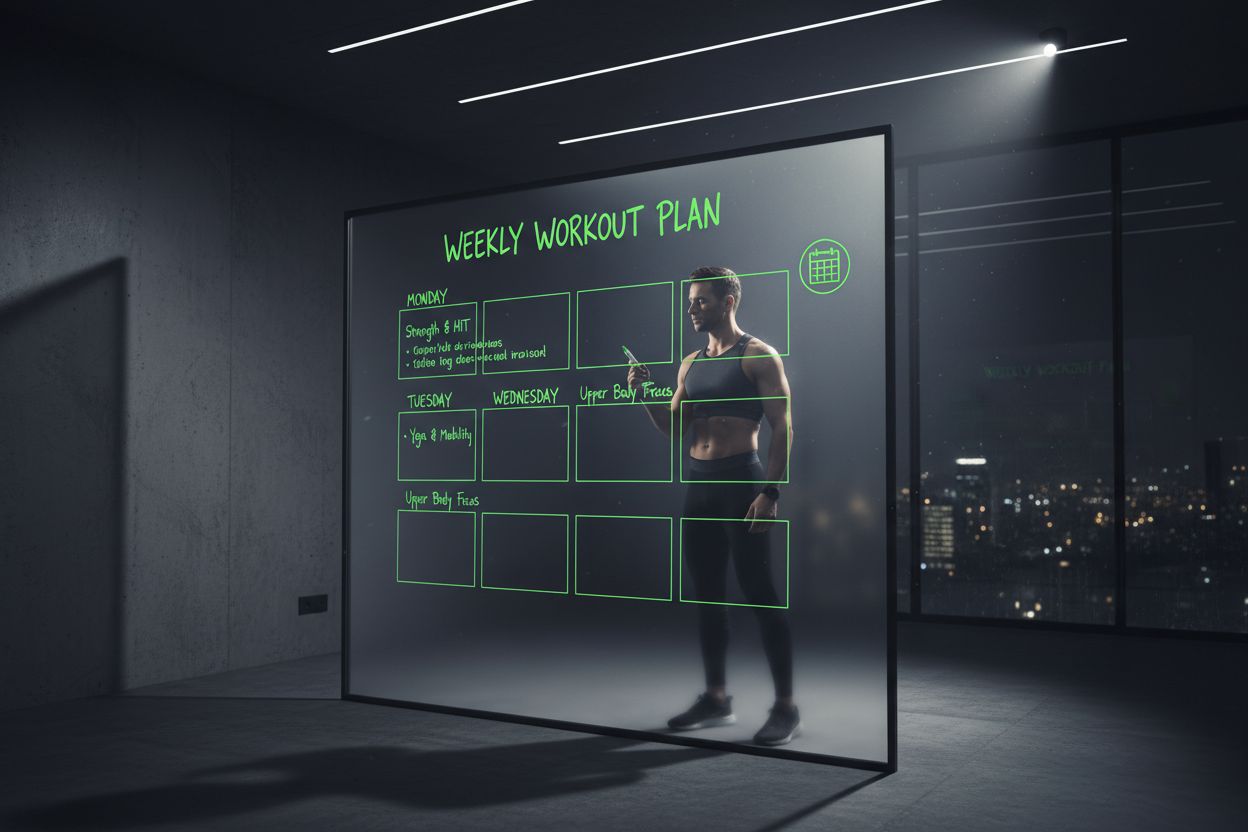
A 5-day split spaces training across five sessions per week so you can target muscles with enough frequency and volume for hypertrophy while still allowing recovery. Compared with full-body or 3-day programs, a 5-day split increases training density per muscle group without pushing you into near-daily gym sessions. Compared with 6-day plans, it frees one extra day for recovery, errands, or active rest.
Key reasons to pick a 5-day split:
Efficient targeting: You can prioritize lagging body parts and fit high-quality work for each muscle.
Manageable recovery: Typical programming keeps per-session fatigue lower than daily heavy training.
Flexibility: Works for hypertrophy, strength, and mixed goals with minor adjustments.
Who benefits most:
Intermediate lifters who can train 5 times consistently and need more volume than a 3 or 4-day split provides.
People balancing work and training who still want focused sessions.
Lifters aiming for body recomposition where frequent stimulation helps maintain muscle while losing fat.
The 5-day advantage: why it often hits the sweet spot
A 5-day split is not inherently superior for everyone, but it offers practical advantages:
Volume control: You can hit optimal weekly sets per muscle without making individual sessions too long.
Frequency and intensity balance: Most muscles get stimulated 1.5 to 2 times per week depending on your layout.
Psychological adherence: Shorter, focused workouts are easier to commit to five times a week than six.
Practical volume targets for hypertrophy on a 5-day split:
Major muscle groups (chest, back, quads, hamstrings): 12 to 20 sets per week.
Smaller muscle groups (biceps, triceps, calves, shoulders): 8 to 15 sets per week.
Aim to spread those sets across sessions so that no workout becomes a 90-minute slog. For example, 15 weekly chest sets could be split into a heavy compound day and a lighter hypertrophy day.
5-Day split variations: 7 ways to structure your week

Upper/Lower + Push + Pull + Legs (Hybrid)
Who: Intermediate lifters wanting both strength and volume
Example: Mon Upper, Tue Lower, Wed Push, Thu Pull, Fri Legs
Benefit: Mix of compound strength and focused hypertrophy
Push / Pull / Legs + Upper / Lower
Who: Prioritizes upper-body symmetry without too much overlap
Example: Mon Push, Tue Pull, Wed Legs, Thu Upper, Fri Lower
Classic Body Part Split (Bro Split, reorganized)
Who: Advanced lifters focusing on one major muscle per session
Example: Mon Chest, Tue Back, Wed Shoulders, Thu Legs, Fri Arms
Benefit: High per-session volume for a target muscle
Drawback: Lower frequency per muscle
Specialization Block (Priority day + Maintenance days)
Who: Lifters prioritizing one weak muscle each week
Example: Mon Priority, Tue Accessory, Wed Legs, Thu Priority 2, Fri Full Upper
Strength-Focused 5-Day
Who: Strength trainees who want extra technique work
Example: Mon Squat, Tue Bench, Wed Deadlift assistance, Thu Overhead, Fri Accessory
Push/Pull/Legs Split with an Extra Hypertrophy Day
Who: Those who want 3 main sessions plus two focused accessory days
Example: Mon Push, Tue Pull, Wed Legs, Thu Upper Hypertrophy, Fri Lower Hypertrophy
Athletic/Performance 5-Day
Who: Athletes needing skill, speed, and strength
Example: Mon Speed + Lower, Tue Strength Upper, Wed Conditioning, Thu Strength Lower, Fri Mobility + Power
Each variation can be adapted for experience level by changing intensity, sets, and exercise complexity.
Sample 5-day programs with sets, reps, and progression

Below are three complete weekly templates: hypertrophy-focused, strength-focused, and balanced. Use these as starting points and adjust load by 5 to 10 percent every 1 to 2 weeks while tracking reps.
Hypertrophy-Focused 5-Day
Day 1: Chest & Abs
Barbell bench press 4x6-8
Incline dumbbell press 4x8-12
Cable fly 3x12-15
Weighted dip 3x8-10
Plank 3x60s
Day 2: Back & Rear Delts
Pull-ups 4x6-10
Barbell row 4x6-8
Single-arm dumbbell row 3x10-12
Face pulls 3x15
Day 3: Legs
Squat 4x6-8
Romanian deadlift 3x8-10
Leg press 3x10-12
Calf raises 4x12-15
Day 4: Shoulders & Arms
Overhead press 4x6-8
Lateral raises 4x12-15
Barbell curl 3x8-10
Skull crushers 3x8-10
Day 5: Full Upper Hypertrophy
Incline bench 3x8-10
Lat pulldown 3x10-12
Seated row 3x10-12
Hammer curl 3x12
Triceps rope pushdown 3x12
Strength-Focused 5-Day
Day 1: Heavy Squat + Accessories
Back squat 5x3
Paused squat 3x3
Walking lunges 3x8
Day 2: Heavy Bench + Upper Accessory
Bench press 5x3
Close grip bench 3x5
Weighted chin-up 3x5
Day 3: Deadlift Variation
Deadlift 5x3
Deficit deadlift 3x3
Glute-ham raises 3x6-8
Day 4: Overhead Strength
Strict press 5x3
Push press 3x3
Dumbbell incline 3x6-8
Day 5: Speed & Conditioning
Speed squats 6x2 at 60 percent
Plyometrics and sled pushes
Balanced 5-Day (Strength + Hypertrophy)
Mix compound heavy sets 3-5 sets in lower rep ranges and accessory hypertrophy work 3-4 sets in higher rep ranges each day.
Progression and tracking tips
Track sets, reps, and RPE. Aim to increase total reps or weight weekly. If you stall for two sessions in a row, reduce volume or add a deload week.
Weekly structure should aim for a linear progression block of 6 to 12 weeks followed by a 1-week deload.
Periodization and month-by-month progression
Use mesocycles of 4 to 6 weeks. Example 12-week plan:
Weeks 1 to 4: Accumulation
Moderate intensity, higher volume. Target the upper end of rep ranges.
Weeks 5 to 8: Intensification
Increase load, drop volume slightly, focus on strength and heavier compounds.
Weeks 9 to 11: Peak
Push heavy sets, maintain some hypertrophy work for muscle mass.
Week 12: Deload
Reduce volume to 40 to 60 percent and intensity to 50 to 70 percent. Recover fully and reassess.
If you miss workouts, prioritize compound movements when you return and avoid trying to cram missed volume into a single session. Rebalance across the week or accept a reduced weekly volume and resume progression the following week.
Recovery, nutrition, and supplements for a 5-day split
Recovery essentials
Sleep: Aim for 7 to 9 hours. Performance drops quickly under 7 hours.
Nutrition: Match calories to your goal. For muscle gain, aim for 250 to 500 kcal surplus. For fat loss, a 300 to 500 kcal deficit with high protein.
Protein: 1.6 to 2.2 g/kg bodyweight per day supports hypertrophy.
Pre- and post-workout nutrition
Pre-workout: 20 to 40 g of carbs and 15 to 25 g protein 60 to 90 minutes before training if possible.
Post-workout: 20 to 40 g protein and carbs within 2 hours to promote recovery.
Supplements worth considering
Creatine monohydrate for strength and volume. Typical dose 3 to 5 g daily.
Caffeine for performance if tolerated. Time intake 30 to 60 minutes before training.
Protein powder for convenience to meet daily protein goals.
If you want tools for tracking progress, session logging, and personal bests, consider using a dedicated workout tracker. For example, the Setgraph workout tracker helps record sets, reps, and weights so you can monitor progression: Setgraph - Workout Tracker Gym Log App.
Practical implementation: schedule, travel, and life
Switching from a 3 or 4-day split to a 5-day split
Increase frequency gradually. Start by adding one short session of accessories and conditioning.
Keep total weekly volume similar at first to avoid overreaching.
When life intervenes
If you miss one day, do not double up. Re-distribute missed volume across remaining sessions or accept a slightly lighter week.
For two missed days, prioritize one compound session and one accessory session the next week.
Home gym vs commercial gym
Home gym: Emphasize single-leg work, dumbbell variations, and bodyweight progressions. Use tempo and shorter rest periods to increase intensity.
Commercial gym: Use heavier barbell variations and machine accessories to manage fatigue.
Time-efficient 5-day option for 9-to-5 workers
Keep workouts to 45 to 55 minutes by using supersetting for accessory work and focusing on two to three main movements per session.
Troubleshooting: common mistakes and fixes
Mistake 1: Too much volume per session
Fix: Spread sets across the week and limit sessions to 5 to 6 exercises.
Mistake 2: Poor exercise selection causing overlap
Fix: Avoid heavy back squats and heavy deadlifts in the same week without recovery. Use variants to distribute load.
Mistake 3: Ignoring recovery signals
Fix: Track sleep, mood, and performance. If PRs stall and soreness persists, reduce volume by 10 to 20 percent or add a deload.
Mistake 4: Not tracking progress
Fix: Log every session, track rep progress, and check weekly totals. Tools like the Setgraph training guide and articles offer tips for optimizing your routines: Optimize Your Training | Expert Tips and Workout Guides and Setgraph Training Guide | Maximize Your Workout.
5-day vs 4-day and 6-day: how to choose
5-day vs 4-day
4-day: Better for full recovery and time-constrained lifters. Weekly volume can be similar but each session is longer.
5-day: Better for targeting multiple muscle groups more frequently and for prioritizing weak points.
5-day vs 6-day
6-day: Higher frequency and faster progress potential in short terms but higher risk of burnout.
5-day: Easier to sustain long term and allows a full rest day for recovery or active recovery.
Choose 5-day if you can commit to consistent training and want a balance between frequency and recovery.
Progress tracking: what to measure and when to change
Metrics to track each week
Total weekly sets per muscle
Load and reps for compounds
Rate of perceived exertion RPE or bar speed if possible
Body weight and body composition trends monthly
When to change the plan
If strength and reps plateau for 3 to 4 weeks, modify volume or exercise selection.
If soreness never subsides or sleep and mood decline, lower volume or schedule an earlier deload.
For additional tracking tips and user reviews on logging workouts, visit: Setgraph App Reviews (2025): User Ratings for Tracking Sets, Reps & Workouts.
FAQs
Is a 5-day split good for beginners?
Beginners often do best with full-body or 3-day upper/lower splits for technical practice. If a beginner chooses 5 days, keep intensity moderate and focus on movement quality with lower weekly volume.
How many sets per muscle per week is ideal on a 5-day split?
Aim for 12 to 20 sets for major muscles and 8 to 15 for smaller muscles. Adjust based on recovery and training history.
Should I do cardio on a 5-day split?
Yes. Two to three cardio sessions of 20 to 40 minutes can be added if needed for conditioning or fat loss. Prefer low-impact sessions on heavy lift days or separate them from intense lifting by several hours.
How do I deload on a 5-day program?
Reduce volume to 40 to 60 percent and intensity to 50 to 70 percent for one week every 6 to 12 weeks depending on fatigue.
Can women follow the same 5-day splits?
Yes. Adjust loads, volume, and recovery for individual responses. Some women may benefit from periodizing volume around the menstrual cycle for optimal performance.
Conclusion
A 5-day split gives a balanced approach to frequency and volume. It is flexible enough for hypertrophy, strength, and performance goals while remaining sustainable. Start with a clear plan, track your progress, and use month-by-month periodization with planned deloads. If you want tools and articles to help log sessions and optimize training details, explore further resources like the Setgraph articles hub and guides: Fitness & Workout Tips | Setgraph and Setgraph - Workout Tracker Gym Log App.
Pick a variation that fits your schedule, commit for at least 8 to 12 weeks, and iterate. With consistent tracking and sensible recovery, a 5-day split can be the most productive approach for many lifters seeking measurable gains.
Article created using Lovarank