How to Workout Legs at Home: Complete Bodyweight Plan and Progression
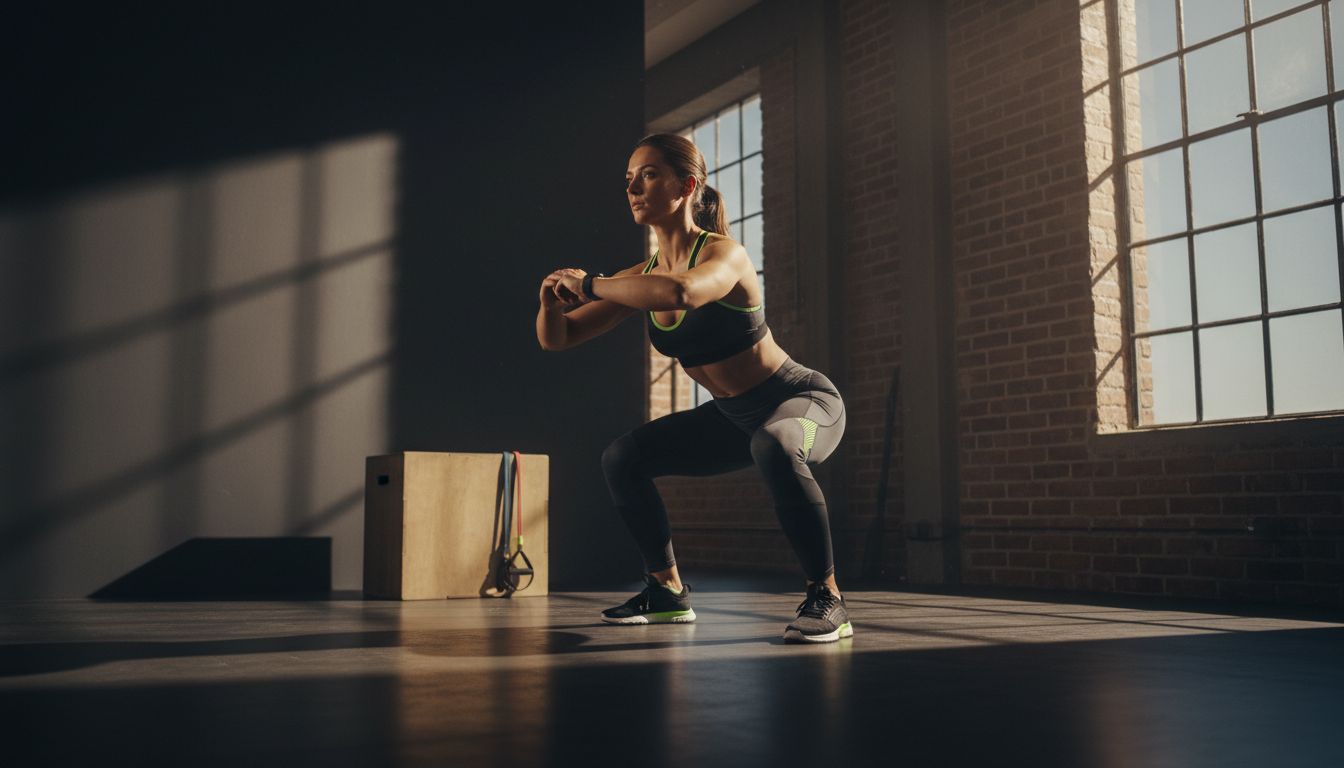
No gym, no problem. You can build strong, muscular, and functional legs from your living room with a smart mix of bodyweight moves, progressive variations, and consistent tracking. This guide shows exactly what to do, how often, and how to progress across 8 weeks so you get measurable results without equipment.
Can you build legs without weights?
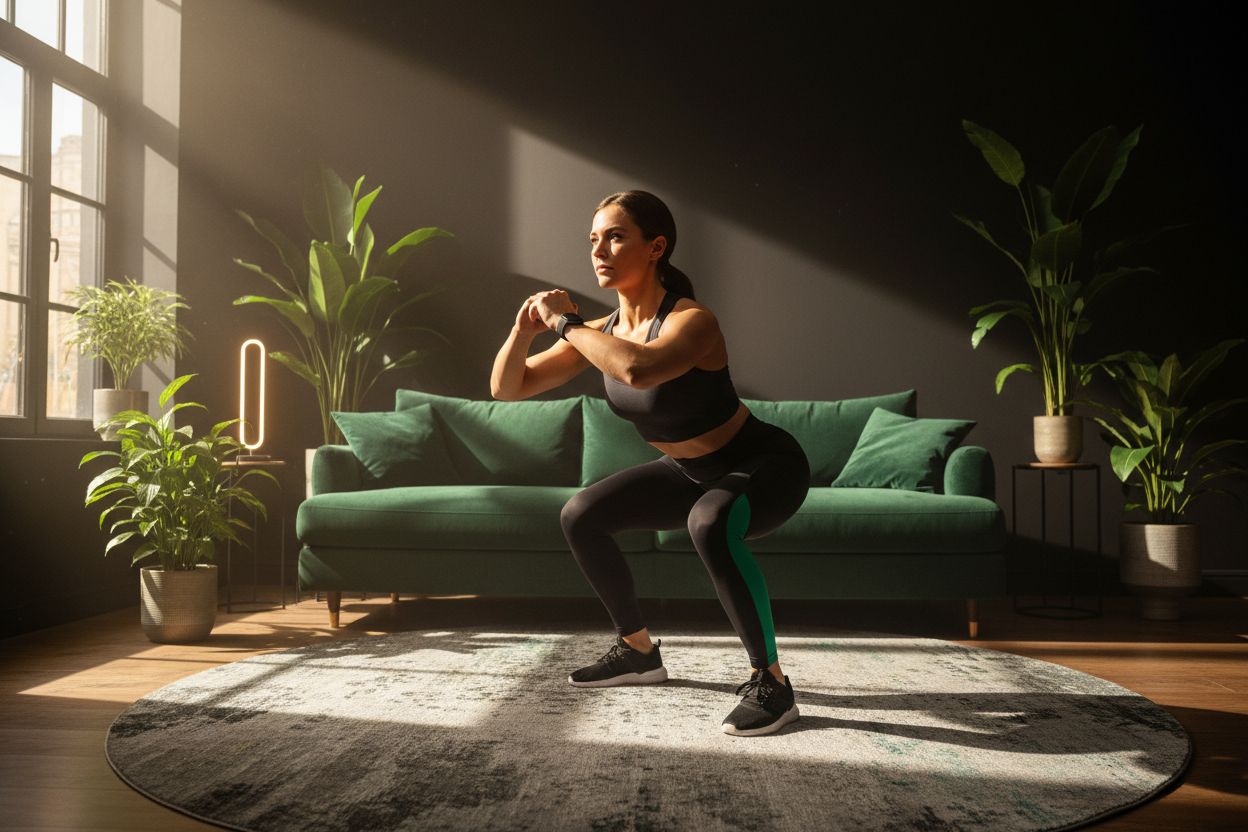
Yes. Muscle grows when you provide enough mechanical tension, metabolic stress, and progressive overload. Bodyweight training can deliver all three if you choose the right exercises and progressions. Higher rep ranges, tempo control, unilateral work, and added time under tension recruit muscle fibers and stimulate adaptation. Expect slower absolute strength gains compared with heavy barbell training, but you can still increase muscle size and endurance effectively.
What matters most is consistency, progressive challenge, and recovery. This guide explains practical ways to do that, with form tips and troubleshooting to avoid plateaus.
Quick anatomy refresher: what to target
Quadriceps - front of the thigh, primary knee extenders
Hamstrings - back of the thigh, knee flexors and hip extensors
Glutes - hip extensors, major force producers for posture and power
Calves - ankle plantarflexors, essential for walking and jumping
Inner and outer thigh - adductors and abductors for stability
Training all these groups ensures balanced development and reduces injury risk.
Warm-up and mobility (5-8 minutes)
Start every session with a dynamic warm-up to increase blood flow and unlock movement. A short mobility routine reduces injury risk and improves exercise quality.
30 seconds light marching or step-touch
10 leg swings front-to-back per leg
10 lateral leg swings per leg
10 bodyweight squats, slow descent, active rise
6 walking lunges, controlled
30 seconds glute bridges with a squeeze at the top
For mobility sequences and movement prep routines you can reuse, see this practical training guide: Setgraph Training Guide | Maximize Your Workout.
The essential exercises and how to perform them
Below are core bodyweight moves with progressions and form cues. Use the listed reps, then pick appropriate progressions when the prescribed work becomes easy.
Squat (foundation)
Muscles targeted: quads, glutes, hamstrings
How to do it:
Stand feet hip-width, toes slightly out
Hinge hips back, bend knees, keep chest up
Aim to get thighs parallel or lower, drive through heels to stand
Reps/sets: 3 sets of 12-20 reps, rest 30-60 seconds
Common mistakes: knees caving in, rounding the lower back, rising onto toes
Progression: pause squats, tempo squats (3-second descent), jump squats for power
Reverse Lunge
Muscles targeted: quads, glutes, hamstrings
How to do it:
Step back with one foot, land softly on the ball
Lower until both knees are about 90 degrees
Push through front foot to return to start
Reps/sets: 3 sets of 10-12 reps per leg
Progression: walking lunges, Bulgarian split squats
Bulgarian Split Squat
Muscles targeted: quads, glutes, balance muscles
How to do it:
Place rear foot on a chair or low bench
Drop into a slow single-leg squat with front shin vertical
Keep torso upright and knee tracking over toes
Reps/sets: 3 sets of 8-12 reps per leg
Tip: If you feel knee pain, reduce range of motion and focus on hip drive
Glute Bridge and Single-Leg Bridge
Muscles targeted: glutes, hamstrings, lower back
How to do it:
Lie on your back, knees bent, feet flat
Drive hips up, squeeze glutes at the top
Lower under control
Reps/sets: 3 sets of 15-20 reps; single-leg 8-12 reps
Progression: elevated glute bridge, slow eccentric
Nordic Hamstring Curl (assisted if needed)
Muscles targeted: hamstrings
How to do it:
Kneel with ankles anchored (under couch or partner holds them)
Lower your torso slowly toward the floor using hamstrings
Catch yourself with hands then push back up, or use assistance
Reps/sets: 3 sets of 5-8 reps or assisted 8-12
Note: This is advanced - work up with hamstring curls and partial ROM
Step-ups
Muscles targeted: quads, glutes
How to do it:
Use a sturdy chair or step, place whole foot on surface
Drive up through the heel to stand, control descent
Reps/sets: 3 sets of 10-12 per leg
Progression: higher step or weighted backpack
Calf Raises (seated and standing)
Muscles targeted: gastrocnemius and soleus
How to do it:
Stand on edge of a step or flat floor
Raise heels as high as possible, pause, lower slowly
Reps/sets: 4 sets of 15-25 reps
Progression: single-leg calf raises, slow negatives
Pistol Squat Progression
Muscles targeted: full-leg unilateral strength and balance
How to do it:
Start with assisted pistol to a box
Work on controlled eccentric and partial range
Reps/sets: 3 sets of 4-8 per leg once strong enough
Sample workouts - beginner to advanced
Each workout starts with the warm-up above. Rest 30-90 seconds between sets unless power work is involved.
Beginner - full lower body (2x per week)
Bodyweight squats 3 x 12-15
Reverse lunges 3 x 10 per leg
Glute bridges 3 x 15
Standing calf raises 4 x 15
Core plank 3 x 30 seconds
Intermediate - strength and unilateral focus (2-3x per week)
Bulgarian split squats 3 x 8-12 per leg
Single-leg Romanian deadlift 3 x 8-12 per leg
Step-ups 3 x 10 per leg
Nordic curl progressions 3 x 6-8
Calf raises single-leg 4 x 12
Advanced - high intensity (2-3x per week)
Pistol squat practice 4 x 4-6 per leg
Tempo split squats (4s down) 4 x 8 per leg
Jump squats 4 x 8-10
Nordic curls 4 x 6-8
Explosive step-ups 3 x 8 per leg
Progressive overload - a clear 8-week plan
Week 1-2: Build form and volume. Focus on mastering movement patterns, 2 sessions a week. Track reps and perceived difficulty.
Week 3-4: Increase volume or reps by 10-20 percent. Add unilateral variations to address imbalances.
Week 5-6: Introduce tempo work - slow eccentrics or paused reps to increase time under tension. Add a third session if recovery permits.
Week 7-8: Add advanced progressions - pistols, Nordic curls, loaded step-ups with a backpack. Test a strength benchmark at the end of week 8 - max single-leg reps or controlled pistol.
Milestones: improved rep counts, controlled tempo at deeper ranges, reduced perceived effort for same sets.
Troubleshooting - what you might be doing wrong
Knee pain: check knee tracking, reduce depth, strengthen glutes and hips
Low back discomfort: avoid lumbar rounding, brace core, reduce range
No progress: increase challenge via unilateral exercises, tempo, or added load
Imbalanced legs: start sets with the weaker side, do equal or slightly more work on it
Equipment alternatives and household hacks
Backpack or duffel bag - add books or water bottles for extra load
Heavy water jugs - use for suitcase carries or goblet squat variations
Towels - use for sliders on smooth floors to perform hamstring curls or lateral slides
Sturdy chair - elevated rear foot for split squats or step-ups
If noise is a concern for apartment living, focus on slow tempo work, isometrics, and low-impact unilateral exercises to minimize stomping.
Modifications for special populations
Seniors or limited mobility: reduce range of motion, use a chair for assistance, prioritize tempo and balance work
Beginners who cannot squat: try box squats to a supported seat, or sit-to-stand from a chair for reps
Knee or hip injuries: get medical clearance, limit deep flexion, emphasize glute bridges and isometrics
Frequency, volume, and recovery
Train legs 2-3 times per week. Beginners should start at 2 sessions, intermediates at 2-3 with varied intensity, and advanced trainees at 3 sessions with one higher-intensity day.
Volume guideline - weekly sets per muscle group:
Quads/glutes: 8-15 sets per week
Hamstrings: 6-12 sets per week
Calves: 8-12 sets per week
Keep rest days and prioritize sleep, nutrition, and mobility. For more advice on optimizing training frequency and recovery, this article is a useful resource: Optimize Your Training | Expert Tips and Workout Guides.
Recovery and nutrition
Protein: aim for 0.7 to 1.0 grams per pound of bodyweight distributed across meals to support muscle repair
Sleep: 7 to 9 hours per night improves recovery and hormone balance
Active recovery: light walking, mobility, and foam rolling reduce stiffness
DOMS management: start progressive sessions, use contrast showers, and gentle mobility
Post-workout: a balanced meal with protein and carbs within 1 to 2 hours helps replenish glycogen and support muscle protein synthesis.
How to measure progress and stay motivated
Track these objective markers, not just the scale:
Strength benchmarks: number of single-leg reps, unassisted pistol reps, single-leg hop distance
Circumference measurements: thigh and calf measurements every 2 to 4 weeks
Photos: consistent lighting and pose once every 2 to 4 weeks
Workout logs: record exercises, sets, reps, and perceived difficulty
A simple tracker reduces guesswork. If you want a dedicated place to log workouts and monitor trends over time, consider using a workout tracking app that supports sets, reps, and notes like this app: Setgraph - Workout Tracker Gym Log App. For user feedback on trackers, see reviews here: Setgraph App Reviews (2025): User Ratings for Tracking Sets, Reps & Workouts.
Building the habit - consistency beats intensity
Schedule workouts like appointments and keep them short when needed
Use micro-goals - commit to a 15-minute session if pressed for time
Track streaks and small wins to maintain momentum
Pair workouts with cues - after your morning coffee, or before dinner
For ongoing tips and articles on fitness habits, check this resource hub: Fitness & Workout Tips | Setgraph.
Sample weekly templates
Beginner split: Monday legs, Thursday full-body or mobility
Intermediate split: Monday strength, Thursday unilateral + conditioning, Saturday mobility and light legs
Advanced split: Monday heavy single-leg focus, Wednesday conditioning, Friday explosive power
Adjust around recovery and overall life stress.
FAQ
Q: How long until I see results?
A: Visible changes take 6 to 12 weeks with consistent training and adequate protein, but strength and endurance improvements can be felt in 2 to 4 weeks.
Q: Can I build muscle without adding weight?
A: Yes, with progressive overload through reps, tempo, unilateral training, and reduced rest. Eventually adding external load speeds hypertrophy, but bodyweight methods remain effective.
Q: How do I avoid plateaus?
A: Vary stimuli - increase reps, change tempo, reduce rest, or add unilateral work. Track performance and intentionally progress every 1 to 2 weeks.
Final checklist before your next leg session
Warm-up and mobility completed
Clear exercise plan and rep targets
Tracking method ready to log sets and notes
Recovery plan - protein, sleep, and light mobility
If you want a structured place to log every set and track progress across weeks, learn how to get a custom plan and keep consistent with this guide: Setgraph Training Guide | Maximize Your Workout.
Consistency and progressive challenge are what make legs grow. Use the exercises, templates, and troubleshooting here, progress deliberately across the 8-week plan, and measure improvements with objective benchmarks. You do not need a gym to build strong legs, only a plan and the patience to follow it.
For more practical guides and step-by-step tips, explore additional resources: Fitness & Workout Tips | Setgraph.
Article created using Lovarank