How to Track Your Fitness Progress: A Simple, Goal-Based System

If you want real results, the easiest way to avoid guesswork is to start with a baseline, choose a few metrics that match your goal, and review them on a schedule. Mayo Clinic recommends measuring your fitness level before you begin so you can use those scores as benchmarks, and CDC notes that tracking can help you spot trends and stay on course. (sportsmedicine.mayoclinic.org)
What to track when you want real answers

For most people, the best way to think about how to track your fitness progress is not to chase one perfect number. Mayo Clinic groups fitness into aerobic fitness, muscle strength and endurance, flexibility, and body composition, so the right metrics depend on what you are trying to improve. (mayoclinic.org)
If your goal is fat loss
The most useful fat-loss metrics are body weight trends, waist circumference, and progress photos. CDC suggests recording your weight once a week to help spot trends, while Mayo Clinic recommends measuring waist circumference with a cloth tape and repeating the same measurements about six weeks after you start. A Royal Papworth patient guide also points to waist and hip measurements, progress photos, and changes in energy and mood as useful ways to monitor progress. (cdc.gov)
If your goal is muscle gain or strength
For strength and muscle gain, focus on the numbers inside your workouts. That means reps, sets, load, total volume, and how hard the same workout feels over time. Setgraph’s official site says its workout log app compares your current set with your previous session and shows changes in reps, weight per rep, volume, and sets, which is exactly the kind of data strength-focused lifters want to see. Mayo Clinic also includes muscle strength and endurance in its fitness checks, which makes workout performance a core signal, not just a side note. (setgraph.app)
If your goal is endurance
Endurance progress usually shows up in pace, distance, time, and heart rate. Mayo Clinic says activity trackers can record distance, calories burned, and heart rate, which makes them useful if you are training for runs, rides, hikes, or any cardio-based goal. (sportsmedicine.mayoclinic.org)
If your goal is general health
General health progress is often visible in the non-scale stuff people forget to log. That includes sleep quality, energy, mood, recovery, and consistency. CDC says physical activity can help you feel better, function better, and sleep better, while the Royal Papworth guide specifically calls out improvements in energy and mood as meaningful signs of progress. (cdc.gov)
How to track fitness progress step by step

The simplest system is the one you can keep using. Start small, make the process repeatable, and let the data build up over time.
Pick one primary goal.
Decide whether you care most about fat loss, strength, muscle gain, endurance, or overall health. That choice tells you which numbers deserve your attention first. Mayo Clinic’s baseline approach works best when the measurements match the goal you actually want to reach. (sportsmedicine.mayoclinic.org)Set a baseline.
Write down your starting point before you change anything. A practical baseline can include date, body weight, waist circumference, your current workout numbers, and a simple performance check such as a mile walk or run time, pushups, or flexibility. Mayo Clinic lists all of those as useful starting measures for fitness tracking. (sportsmedicine.mayoclinic.org)Log every workout.
Record the exercise, sets, reps, weight, and one short note about effort or form. Setgraph’s official pages describe its app as a workout log for strength training, cardio, and complete workout sessions, and they highlight quick logging plus comparisons with previous sessions. If you like simple digital logging, that is the kind of setup that keeps friction low. You can also read Setgraph App Reviews (2025): User Ratings for Tracking Sets, Reps & Workouts if you want to see how users describe the experience. (setgraph.app)Track on the right schedule.
CDC suggests recording your weight once a week and, if it helps you stay consistent, logging daily steps and physical activity. Mayo Clinic recommends repeating the same fitness measurements about six weeks after you begin, then checking them again from time to time. That gives you enough time to see a real trend instead of reacting to every tiny fluctuation. (cdc.gov)Review the trend, not just the last entry.
The real value of tracking is in the pattern. CDC says tracking can help you spot trends, and Mayo Clinic says you can use the results to set fresh goals. In practice, that means looking at two to six weeks of data at a time and asking what moved, what stalled, and what changed in your routine. (cdc.gov)Adjust one thing at a time.
If progress stalls, change one variable first, then watch the next block of data. That might mean increasing training volume, tightening nutrition, improving sleep, or adding rest. A simple log makes it much easier to see which change actually helped. (cdc.gov)
Best tools for tracking
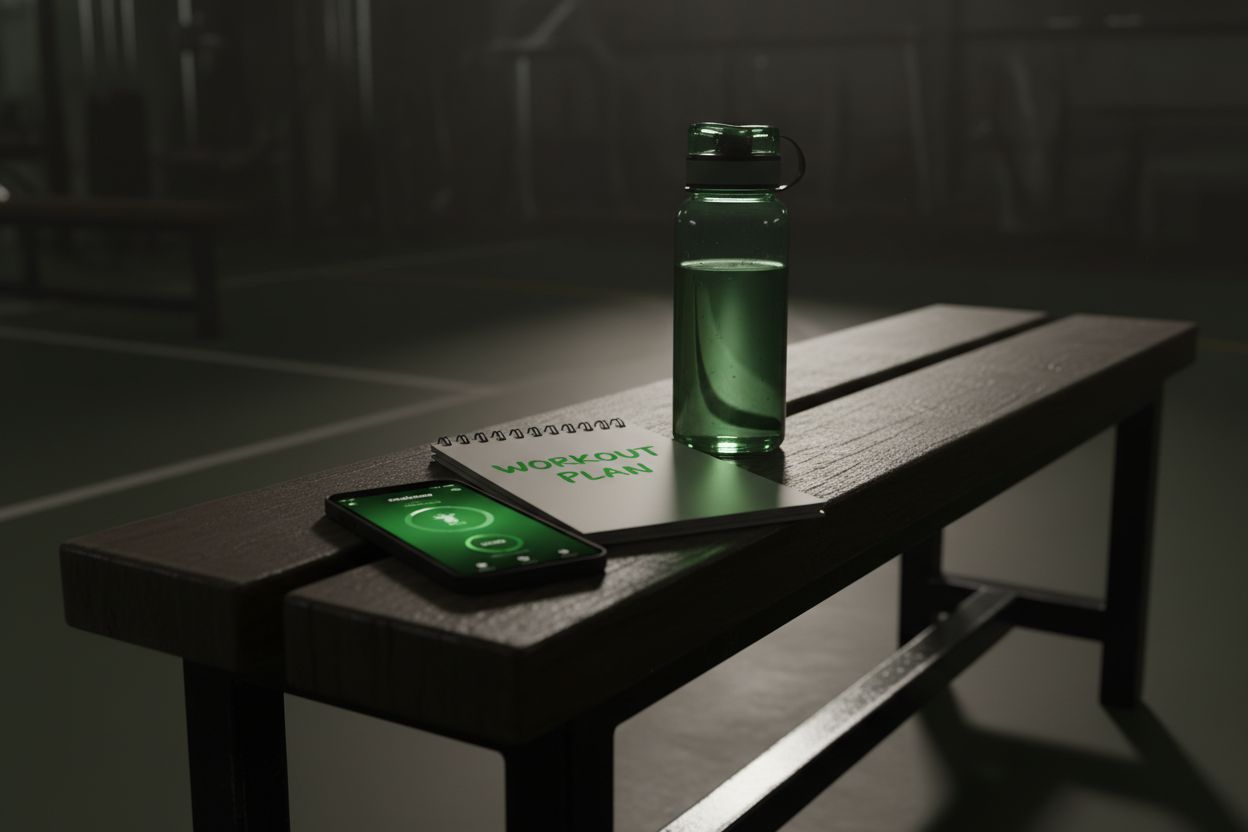
The best tracking tool is the one you will actually use. Mayo Clinic says fitness apps or activity trackers can help you monitor distance, calories, and heart rate, and Setgraph’s official site positions its app as a workout log built for quick logging and progress tracking. (sportsmedicine.mayoclinic.org)
A notebook works well if you want something fast and low-tech. A spreadsheet is useful if you like seeing trends in one place. An app is usually the easiest option if you want quick logging at the gym and fewer excuses to skip the habit. If you want to go deeper into training structure after you build your log, Core Principles & Techniques for Every Lifter is a helpful companion read. (sportsmedicine.mayoclinic.org)
If you are trying to build a more structured plan, it also helps to keep your training method consistent. That way, your log reflects real progress instead of random exercise changes. For related planning ideas, Optimize Your Training is a useful next stop. (sportsmedicine.mayoclinic.org)
How often to track each metric
Use different cadences for different metrics so the process stays useful instead of overwhelming.
Every workout: log exercises, sets, reps, weight, and a short note about effort, recovery, or form. Setgraph’s feature pages emphasize this style of fast set-by-set logging. (setgraph.app)
Once a week: track body weight if fat loss or weight maintenance is part of your goal. CDC specifically recommends weekly weight recording as part of progress monitoring. (cdc.gov)
Every four to six weeks: repeat waist measurements, progress photos, and fitness tests. Mayo Clinic recommends taking the same measurements about six weeks after starting and then checking them again occasionally. (mayoclinic.org)
Most days: log steps or general activity if consistency is the thing you are trying to build. CDC says daily recording of steps and physical activity can help you track progress and spot trends. (cdc.gov)
The exact schedule matters less than the consistency. If you always measure under similar conditions, your data will be easier to interpret and compare over time. (mayoclinic.org)
How to know if you are actually improving
Progress does not always look dramatic in the moment, so the best approach is to judge the trend across several check-ins.
Fat loss progress
Fat loss usually shows up as a downward weight trend, a smaller waist, and clothes fitting differently. If your energy and sleep are holding steady or improving too, that is a strong sign the change is real and not just a temporary water fluctuation. Mayo Clinic and CDC both support waist, weight, and repeated measurement as sensible ways to monitor progress, and CDC notes that physical activity can also improve sleep and reduce anxiety. (mayoclinic.org)
Strength or muscle progress
Strength progress usually means more reps at the same weight, more weight for the same reps, or more total volume across the session. Mayo Clinic treats muscle strength and endurance as key fitness categories, and Setgraph’s official site explicitly tracks rep, weight per rep, volume, and set changes across sessions. (mayoclinic.org)
Endurance progress
Endurance progress can show up as faster pace, longer distance, lower effort at the same speed, or better recovery after cardio sessions. Mayo Clinic notes that trackers can record distance and heart rate, which makes it easier to watch those changes over time. (sportsmedicine.mayoclinic.org)
General health progress
For general health, look for better sleep, less anxiety, more energy, and more consistent training. CDC says physical activity can help you feel better, function better, and sleep better, so those are worth treating as legitimate progress signals, not bonus data. (cdc.gov)
Common mistakes that make progress harder to see
A good tracking system should make your training clearer, not more confusing.
Tracking too many things at once. If you try to measure everything, it becomes harder to see what matters.
Judging progress from a single weigh-in. One data point is noise; a trend is information.
Changing several variables at the same time. If you alter training, nutrition, and sleep all at once, you will not know what caused the change.
Only logging good workouts. The messy sessions matter because they show real patterns.
Never reviewing your log. Data only helps if you use it to decide what to do next.
A smaller system is easier to stick with and usually gives you cleaner information. That lines up with the way CDC and Mayo Clinic both frame progress monitoring, and it is also why quick logging tools can be helpful. For more training context, Setgraph Training Guide offers related reading. (cdc.gov)
A simple fitness progress tracker you can copy
Here is a basic template you can use in a notebook, spreadsheet, or app:
Date | Goal | Body Weight | Waist | Workout Result | Sleep | Energy | Notes |
|---|---|---|---|---|---|---|---|
Mon, Week 1 | Fat loss | 182.4 lb | 38 in | 3 x 10 squats at 135 lb | 7 hrs | 6/10 | Felt strong, belt tighter after lunch |
Mon, Week 2 | Fat loss | 181.2 lb | 37.5 in | 3 x 10 squats at 135 lb | 7.5 hrs | 7/10 | Better recovery, same workout felt easier |
This kind of simple template works because it keeps the main signals together in one place. Mayo Clinic recommends using baseline measures and repeating them later, while CDC recommends weekly weight tracking and other regular monitoring to help spot trends. (sportsmedicine.mayoclinic.org)
If you want a broader set of fitness ideas after you set up your log, you can browse Fitness & Workout Tips for more related articles. (setgraph.app)
The best answer to how to track your fitness progress is usually the simplest one. Pick a goal, choose a few metrics, log them consistently, and review the trend often enough to make small adjustments. If you do that, your progress stops feeling vague and starts becoming easy to see. (sportsmedicine.mayoclinic.org)
Article created using Lovarank