Best Free Workout Apps 2025: Expert Picks for Every Goal
Finding a great workout app that doesn't drain your wallet is easier than ever — but the caveat is knowing which ones are truly valuable without constant upsells. This guide cuts through the noise: I tested and compared the most popular free options and organized them by goal, equipment needs, and real-world usability so you can pick one and start moving today.
Our Top Picks at a Glance
Nike Training Club — Best truly free app for guided workouts and programs.
FitOn — Best for on-demand classes across many styles (yoga, HIIT, dance).
JEFIT — Best free strength-training tracker for gym lifters.
Hevy — Best free logging app with a simple social/community angle.
Couch to 5K (various apps) — Best for absolute beginners wanting to run.
StrongLifts / 5x5 (free versions) — Best for fast, minimal-equipment strength gains.
Strava — Best for runners and cyclists who want community features and route-tracking.
MapMyRun (By Under Armour) — Best free GPS running tracker with routes and workout logging.
7 Minute Workout / Scientific 7 Minute apps — Best for very short, equipment-free workouts.
MyFitnessPal (free tier) — Best free calorie and nutrition tracker to complement workouts.
If you want to focus on logging sets and reps rather than guided video workouts, also consider lightweight gym log apps like Setgraph workout tracker.
How We Test Workout Apps

We evaluated each app across five practical criteria: accessibility of truly free features, workout variety, clarity of guidance (video, audio, written), tracking and progress tools, and real-world usability (on-device performance, account setup, and notifications). Testing included: installing each app on iOS and Android when available, completing at least three different workouts, checking wearable and export options, and noting what remains behind paywalls.
Why this matters: many recommendations online list popular apps but don’t separate fully free functionality from freemium features. Our focus is which apps give you sustainable, useful workouts without mandatory upgrades.
Quick Comparison: What You Get for Free
App | Truly Free Core | Best For | Platforms | Equipment Needed |
|---|---|---|---|---|
Nike Training Club | Yes — full library of workouts and programs | Guided strength & conditioning | iOS, Android, Web | Bodyweight + optional gym |
FitOn | Yes — free video classes & programs | Variety of class styles | iOS, Android, Web | Mostly bodyweight |
JEFIT | Yes — workout logging and routines | Strength training logs | iOS, Android, Web | Gym equipment |
Hevy | Yes — tracking, community | Simple logging + templates | iOS, Android | Gym or home weights |
Couch to 5K apps | Yes | Beginner running plans | iOS, Android | Running shoes |
Strava | Yes — activity tracking, segments | Social tracking for cardio | iOS, Android, Web | Running/cycling gear |
MyFitnessPal | Yes — calorie/food logging | Nutrition and calorie tracking | iOS, Android, Web | N/A |
This quick table helps you decide by goal. Later sections go deeper into strengths, limits, and best use-case workflows.
The Best Free Workout Apps (Detailed Picks)
Below are the apps worth trying first. Each entry includes what you actually get for free, notable pros and cons, and who benefits most.
Nike Training Club — Truly robust free workouts
What it is: A long-standing library of workouts across strength, mobility, and cardio with structured programs and professional trainers. Since 2020 Nike made a large portion of NTC content free.
What you get for free: Full-length guided workouts with video, multi-week training programs, and clear equipment filters. Great for intermediate lifters and beginners who want progression.
Pros:
High-quality production and instruction
Programs that build over weeks
No paywall for the main workout library
Cons:
Some premium content occasionally rotates
Not as focused on detailed strength logging as a dedicated tracker
Best for: People who want guided workouts and progressive plans without paying.
FitOn — Free classes across many styles
What it is: A video-class platform with trainers covering yoga, HIIT, barre, Pilates, and more.
What you get for free: Large selection of on-demand classes and curated programs. Social features and trainer variety.
Pros:
Wide variety of class types
Good for at-home, no-equipment workouts
Short and long sessions available
Cons:
Some programs push premium features
Less emphasis on barbell programming or detailed strength metrics
Best for: People who prefer class-like sessions and variety.
JEFIT — Strength-focused logging and routines
What it is: A long-running strength-training app centered on logging, exercise libraries, and routine sharing.
What you get for free: Logs for sets/reps, a library of exercises, and community routines. Useful for tracking progress across months.
Pros:
Robust logging and printable routines
Good for serious gym-goers
Cons:
UI feels dated compared to newer apps
Advanced analytics behind premium plan
Best for: Lifters who prioritize consistent logging and routine templates.
Hevy — Simple logging with social energy
What it is: Clean workout-logging app with templates and a community feed.
What you get for free: Track workouts, create templates, follow other users’ training.
Pros:
Friendly, modern UI
Free template library and social accountability
Cons:
Less in-app guided content; mostly logging
Best for: Lifters who want a lightweight journal plus social accountability.
Couch to 5K apps — Beginner run coaching
What it is: Several apps implement the classic Couch to 5K plan — short run/walk intervals that build to 30 minutes of running.
What you get for free: The core 8–10 week program, audio cues, and basic tracking.
Pros:
Low barrier to entry for new runners
Short, doable workouts
Cons:
Some branded apps have premium add-ons
Best for: Brand-new runners seeking structured progression.
Strava & MapMyRun — Community and GPS tracking
What they are: Strava emphasizes social features, segments, and leaderboards; MapMyRun focuses on GPS tracking and route discovery.
What you get for free: Run/cycle tracking, route recording, and basic post-workout analysis.
Pros:
Excellent for outdoor cardio and route planning
Strong community features (Strava)
Cons:
Advanced training metrics require subscription
Best for: Runners and cyclists who value route logging and community.
7 Minute Workout apps — Quick, effective bodyweight routines
What they are: Short, high-intensity circuits built to be completed in under 10 minutes.
What you get for free: Full short circuits, simple timers, and minimal setup.
Pros:
Extremely time-efficient
No equipment required
Cons:
Limited progressive overload for strength gains
Best for: Busy people who need a quick daily workout.
MyFitnessPal — Free nutrition tracking to support training
What it is: A widely used food and calorie tracking app that complements workout routines.
What you get for free: Food database, calorie counting, and macro tracking basics.
Pros:
Huge food database, barcode scanning
Useful integration with many workout apps
Cons:
Some advanced nutrition insights behind paywall
Best for: Anyone who wants to match workouts with nutrition goals.
Best Free Workout Apps by Category
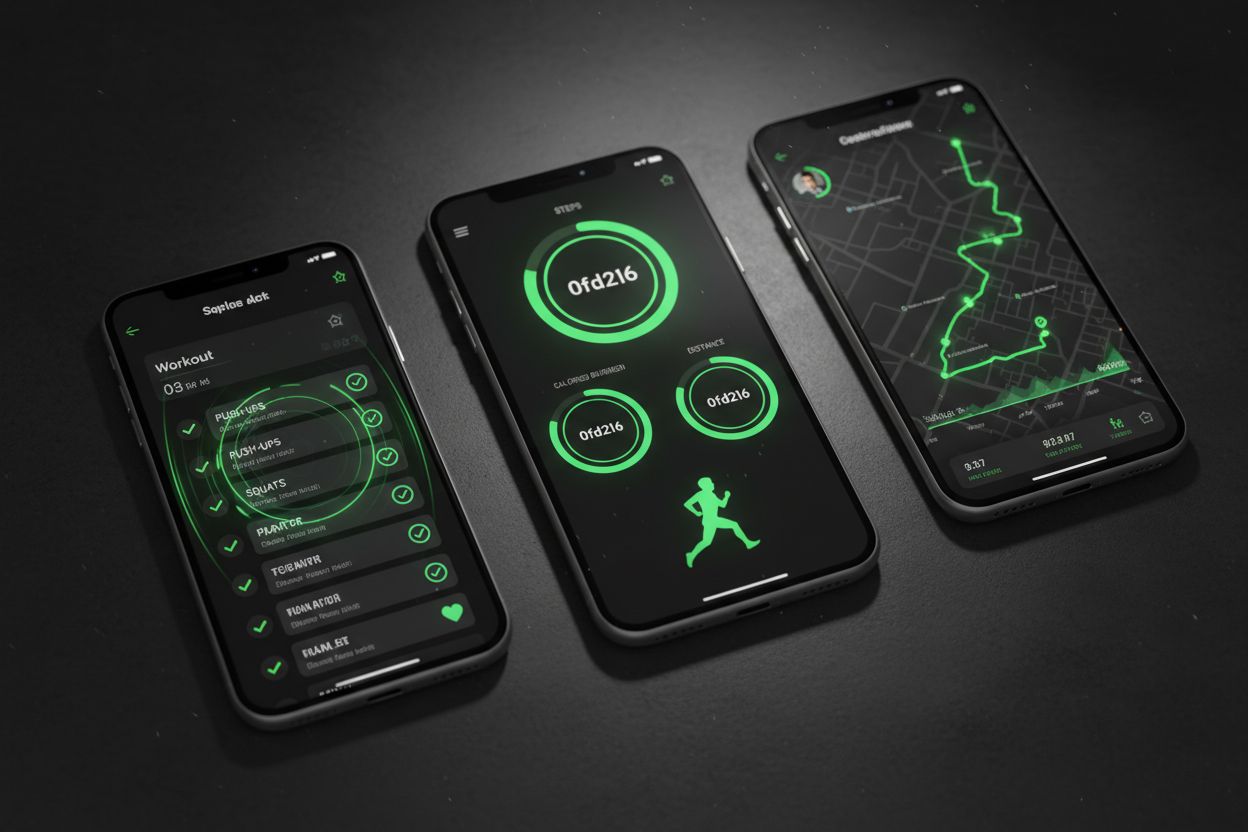
Best completely free guided workouts: Nike Training Club
Best for variety of classes: FitOn
Best for strength logging: JEFIT or Hevy
Best for beginner runners: Couch to 5K apps
Best for outdoor cardio & routes: Strava / MapMyRun
Best for time-strapped users: 7 Minute Workout apps
Best nutrition companion: MyFitnessPal
If you want a simple, focused lifting log to pair with classes or running apps, check out the Setgraph training guide for tips on maximizing a gym log with consistent programming.
How to Choose the Right Free Workout App
Choosing depends on three simple questions:
What’s your primary goal? (lose weight, gain strength, improve cardio, increase mobility)
What equipment can you access? (none, dumbbells, full gym)
How much time can you commit each session?
Actionable steps to decide:
If you want guided progress without thinking: pick Nike Training Club or FitOn.
If you track lifts and want measurable strength gains: choose JEFIT or Hevy and use a consistent template.
If you need short daily activity: try 7 Minute Workout or FitOn quick classes.
If you train outdoors for runs or rides: pair Strava with a Couch to 5K plan.
Also evaluate compatibility: check whether the app exports workouts or syncs with wearables and nutrition apps. For example, many users combine a workout app with a nutrition tracker — MyFitnessPal and logging tools help complete the picture.
Free vs. Paid: What You Actually Get
Free apps typically give core functionality: basic workouts, logging, and limited programs. Paid tiers unlock personalization (custom plans), coaching, advanced analytics, and sometimes ad-free experiences.
Think of the free tier as a test drive. Ask:
Does the free plan give me 80% of what I need? If yes, stick with it.
Is the paid feature a convenience (like ad removal) or a necessity (custom coaching for a competition)?
If you ever consider upgrading, calculate monthly cost vs. the value: a $10/month app is cheaper than a single personal training session, but only worth it if the plan keeps you consistent.
For lifters who want a no-friction logging experience, lightweight tools like Setgraph workout tracker can be paired with free video classes or running plans to cover both programming and tracking needs.
Tips to Get the Most From a Free Workout App
Set a realistic habit: schedule 3–4 sessions a week and use calendar reminders.
Pair apps: a guided workout app + a simple tracker gives both instruction and progress logging.
Use alarms/notifications sparingly — they should motivate, not annoy.
Export or screenshot important progress metrics each month so you have a backup if you change apps.
Join in-app communities or follow trainers to increase accountability.
For programming tips and ideas on tracking progressive overload, see the Optimize Your Training article.
Comparison: Which App to Start With (by Persona)
Busy parent, <20 min workouts: FitOn quick classes or 7 Minute Workout.
Apartment dweller (quiet/no jumping): Nike Training Club low-impact filters or yoga classes on FitOn.
Beginner runner: Couch to 5K apps + Strava for route tracking.
Beginner lifter: Hevy for logging, paired with free programs in Nike Training Club.
Gym lifter tracking sets/reps: JEFIT or Setgraph workout tracker for simple, consistent logging.
Frequently Asked Questions
Q: Are there any truly free workout apps without hidden costs?
A: Yes — Nike Training Club offers a substantial set of workouts and programs for free. Many other apps offer useful core features free, but watch for paywalls on advanced programs.
Q: Can I combine free apps?
A: Absolutely. A common, effective combo is a free guided app (NTC/FitOn) + a logging app (Hevy, JEFIT, or Setgraph) + a nutrition tracker (MyFitnessPal).
Q: What about wearable integration?
A: Most big apps (Strava, MyFitnessPal) offer integration with popular wearables. For workout apps, check the settings; some allow Apple Health or Google Fit sync.
Q: Which app is best for strength progress tracking?
A: JEFIT and Hevy are both strong choices for free logging. For a focused gym log experience, see the Setgraph workout tracker.
Q: Are short workouts (like 7-minute circuits) effective?
A: Yes — for maintaining activity and improving conditioning. For measurable strength gains, combine them with progressive resistance training.
Final Recommendations
Start with one app that matches your primary goal, commit to 4–6 weeks, and measure progress (weights lifted, run pace, or consistency). If you need to log details, pair a guided app with a simple logger. For practical how-to articles and programming tips that pair well with free apps, explore the Setgraph training guide and the broader fitness & workout tips library.
If you want community feedback before committing, read user perspectives on app performance at Setgraph App Reviews (2025).
Choosing the best free workout apps shouldn’t be expensive or overwhelming. Pick one, make it habitual, and reassess after a month. Real progress is less about pro subscriptions and more about consistency, honest tracking, and gradual overload.
If you want a printable checklist to pick an app based on your goals and equipment, leave a comment or bookmark this guide — and come back when you’re ready to level up your routine.
Article created using Lovarank