Best Exercises for Outer Biceps: Science-Backed Moves to Build Width and Peak
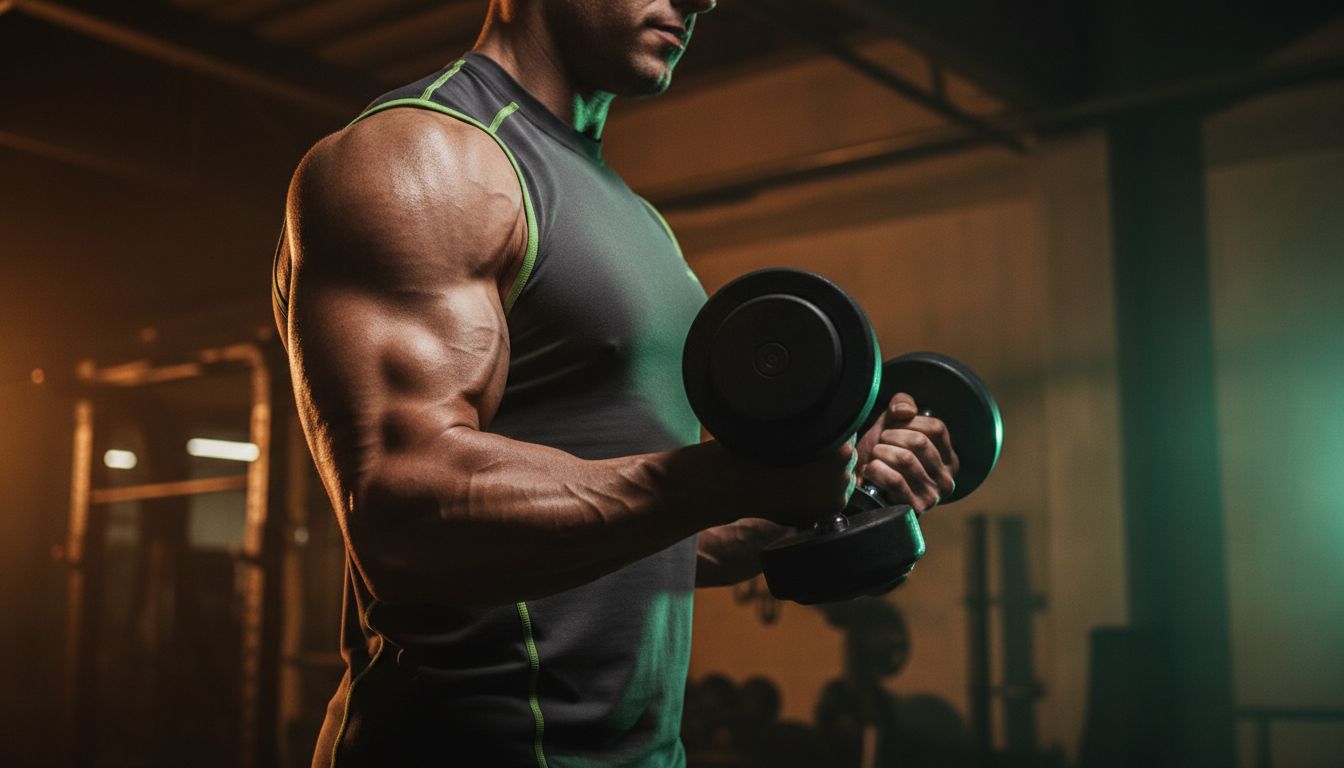
If you want wider, more peaked arms you need to prioritize the outer biceps, also called the long head. This guide breaks down why the long head matters, how to target it with mechanics that actually work, and a practical list of the best exercises for outer biceps with step-by-step technique, programming, and troubleshooting tips you can use immediately.
Why the outer biceps matters
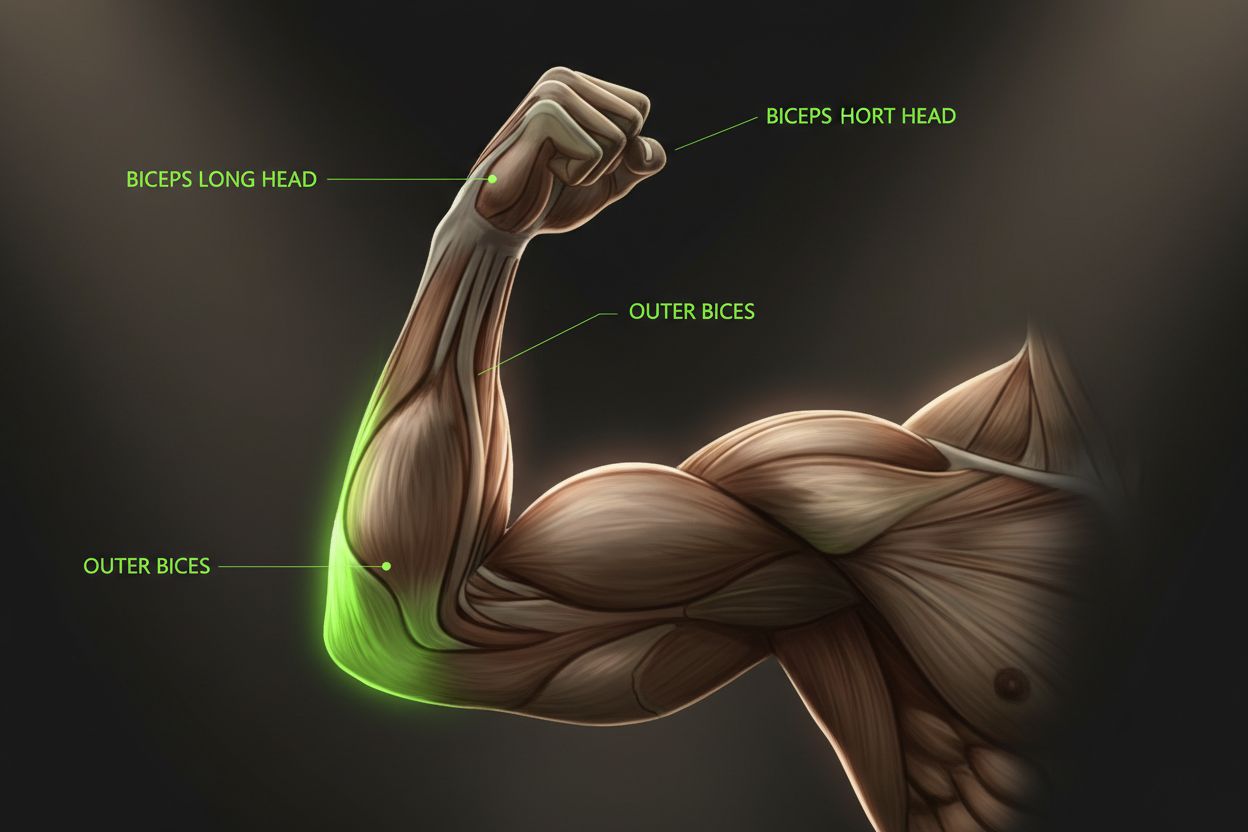
The biceps brachii has two heads: the long head and the short head. The long head sits on the outside of the arm and contributes most to apparent width and the visible outer contour when your arm hangs at your side. Strengthening and hypertrophying the long head changes how your arm looks both relaxed and flexed.
Anatomically the long head crosses the shoulder joint and attaches higher on the scapula. That extra shoulder attachment means elbow position and shoulder angle change its length-tension relationship. In practical terms this means two things. First, positions that put the long head on stretch at the shoulder increase its activation. Second, grip and forearm angle influence which head of the biceps takes more load.
Key biomechanical principles
Moment arm and elbow flexion: A narrow grip or an inward forearm angle can lengthen the muscle moment arm for the outer biceps. That increases torque and mechanical tension on the long head.
Shoulder extension at the start of a curl: If your elbow sits behind the torso, the long head starts from a more stretched position. Exercises that place the elbow behind the body favor the long head.
Supination and neutral grips: Full supination hits both heads, while neutral and hammer grips recruit brachialis and brachioradialis more. Properly used, variations can shift emphasis to the outer biceps.
How to target the outer biceps
Understanding a few simple cues will let you convert common curls into long-head builders.
Elbow position: Keep the elbow slightly behind the torso at the start of the curl or allow it to travel back slightly as you lift. This increases stretch on the long head.
Grip width: A narrower hand position on a barbell or EZ-bar tends to bias the long head.
Shoulder angle: Incline positions that put the shoulder in relative extension lengthen the long head and increase its involvement.
Forearm angle and rotation: Supinated grips are classic for biceps. However neutral and slightly pronated variations can recruit adjacent muscles while still allowing targeted overload of the long head if other cues are correct.
Best outer biceps exercises
Below are the top exercises you can add to your program to directly target the long head. For each exercise you will find how it works, step-by-step technique, recommended sets and reps, and common mistakes to avoid.
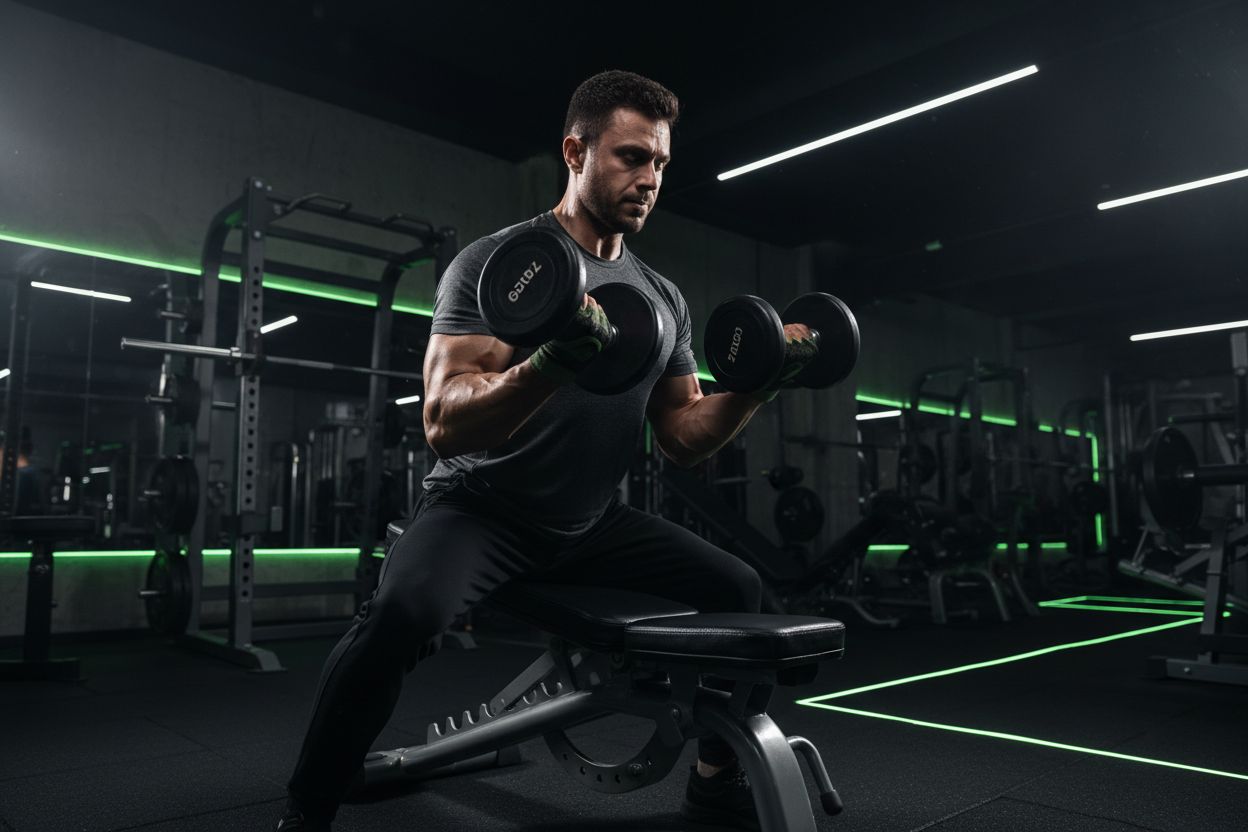
1. Incline Dumbbell Curls
How it works: Lying back on an incline bench positions the shoulder in extension at the start of the curl. That stretch on the long head increases its contribution through the concentric action.
Technique:
Set an incline bench at 30 to 45 degrees. Sit and allow your arms to hang straight down.
Hold dumbbells with a supinated grip. Keep your elbows back relative to your torso.
Curl the weights up while keeping the upper arm steady. Pause briefly at peak contraction, then lower slowly with control.
Sets and reps: 3 to 4 sets of 8 to 12 reps. Use a tempo of 2 seconds up, 3 to 4 seconds down to emphasize the eccentric.
Common mistakes: Swinging the torso, letting the elbows move too far forward, and using momentum. If you cannot control the descent, lower the weight.
Variations: Single-arm incline curl for unilateral focus or neutral-grip incline hammer curls if you need less forearm supination.
2. Hammer Curls
How it works: Hammer curls use a neutral grip which engages brachialis and brachioradialis but still loads the long head through elbow flexion. They are great for outer biceps width because they increase overall upper arm thickness while keeping the long head under consistent tension.
Technique:
Stand or sit with dumbbells at your sides, palms facing each other.
Keep your elbows tight to your sides and curl with a neutral grip.
Pause at the top, squeeze, then lower under control.
Sets and reps: 3 to 4 sets of 8 to 12 reps. For variety, try slower eccentrics or 21s where you do partial reps followed by full reps.
Common mistakes: Rotating the wrist into supination, letting the elbow move forward, or using too much body swing.
3. Concentration Curls
How it works: Because they are unilateral and isolate the elbow flexion moment, concentration curls let you focus on peak contraction and mind muscle connection with the long head.
Technique:
Sit on the bench, spread your legs, and brace your working arm against the inside of your thigh.
With a supinated grip, curl the dumbbell up focusing on squeezing the biceps peak.
Lower slowly and repeat.
Sets and reps: 3 sets of 10 to 15 reps per arm. Use slow tempo and finish with an isometric squeeze.
Common mistakes: Excessive swinging and using the shoulder to lift.
4. Barbell Drag Curls
How it works: Drag curls shift the barbell close to the torso as you lift, reducing forearm supination and emphasizing the long head by keeping the elbows behind the body.
Technique:
Stand with a barbell at hip height, hands shoulder width or slightly narrower.
Pull the bar up along your torso by moving your elbows back rather than letting them travel forward.
Squeeze at the top then lower while maintaining contact with the body.
Sets and reps: 3 to 4 sets of 8 to 12 reps.
Common mistakes: Letting the bar drift away from the torso or using excessive wrist flexion.
5. Narrow-Grip Barbell Curls
How it works: A narrow grip shortens the horizontal distance between the shoulders and the elbows, increasing mechanical tension on the long head during elbow flexion.
Technique:
Take a shoulder-width or narrower grip on a straight bar or EZ-bar.
Keep your elbows tucked and curl the bar with a controlled motion.
Lower with a full range of motion.
Sets and reps: 3 sets of 6 to 10 reps for strength, or 8 to 12 for hypertrophy.
Common mistakes: Elbow flare and backward leaning. Maintain a stable torso and strict form.
6. Cable Low Curls (Single-Arm)
How it works: Low cable curls provide constant tension through the range of motion. Performing them unilaterally increases mind muscle connection and allows you to position the elbow slightly behind the torso.
Technique:
Attach a single handle to the low pulley. Stand with the handle in your hand and your elbow behind your body slightly.
Curl the handle up while keeping constant tension. Hold the peak contraction and lower slowly.
Sets and reps: 3 sets of 10 to 15 reps per arm.
Common mistakes: Using momentum or leaning away from the cable. Control the movement and establish stable posture.
7. Reverse Curls
How it works: Reverse curls use an overhand grip which shifts stress to the brachioradialis and extensor group but also places the biceps under a different mechanical angle. They are useful accessory lifts that support outer biceps development indirectly.
Technique:
Use a barbell or EZ-bar with an overhand grip at shoulder width.
Curl the bar with the elbows fixed, then lower under control.
Sets and reps: 3 sets of 8 to 12 reps.
Common mistakes: Wrist strain. Keep the wrists neutral and do not over-torque them.
8. Incline Cable Curls
How it works: This blends the stretch of inclination with constant cable tension. The long head stays under load through the entire rep.
Technique:
Set an incline bench in front of a low cable. Attach handles and sit with your arms extended.
Curl while keeping elbows back and chest up. Pause at the top then lower slowly.
Sets and reps: 3 sets of 10 to 12 reps.
Common mistakes: Poor cable alignment and letting the elbow drift forward.
9. Cross-Body Hammer Curls
How it works: Also called diagonal hammer curls, these move the weight across the body which slightly alters the lever and can hit the long head from a different angle.
Technique:
Hold dumbbells at your sides with neutral grip.
Curl the weight across your body toward the opposite shoulder, keeping the elbow tucked.
Lower with control.
Sets and reps: 2 to 3 sets of 10 to 12 reps.
Common mistakes: Arching the back and performing too large a swing.
Programming sample: 8-week progression and routines
Progress works when volume, intensity, and recovery align. Below are practical sample routines using the best exercises for outer biceps for different experience levels.

Beginner routine (2 workouts per week)
Workout A
Incline dumbbell curls: 3 x 10
Hammer curls: 3 x 10
Cable low curls: 2 x 12
Workout B
Narrow-grip barbell curls: 3 x 8
Concentration curls: 3 x 12 (each arm)
Reverse curls: 2 x 10
Progression: Add 1 set per exercise every two weeks or increase load by 5% when you can complete the top of the rep range for two consecutive sessions.
Advanced routine (2 to 3 workouts per week)
Day 1 - Strength focus
Narrow-grip barbell curls: 4 x 6
Barbell drag curls: 3 x 8
Heavy hammer curls: 3 x 8
Day 2 - Volume and finishers
Incline dumbbell curls: 4 x 10 with slow eccentrics
Cable low curls (single-arm): 3 x 12
Drop set: Concentration curls 2 drop sets to failure
Deload: Every 6 to 8 weeks take a lighter week with 40 to 60 percent volume to recover.
Weekly volume and frequency guidance
Frequency: Train biceps 2 to 3 times per week depending on recovery.
Weekly sets: Aim for 10 to 20 direct sets per week for hypertrophy distributed across sessions.
Rep ranges: 6 to 12 for most sets, with some higher rep work for metabolic stress and finishing.
Advanced techniques to break plateaus
Tempo training: Slow eccentrics of 3 to 5 seconds increase time under tension and stimulate more hypertrophy.
Drop sets: After your working sets, reduce weight and continue to near failure to increase metabolic stress.
Blood flow restriction: BFR with light loads can enhance hypertrophy when heavy training is limited. Use under guidance if you have vascular or blood pressure issues.
Isometric holds: Pause at the peak of the curl for 3 to 5 seconds to improve peak contraction and motor control.
Troubleshooting and injury prevention
Common problem: elbow pain during curls. First, rule out tendonitis by reducing volume and load. Check technique for these common issues.
Elbow flaring: Keep elbows tucked and avoid letting them drift forward on the concentric.
Wrist strain: Use an EZ-bar or neutral grip if straight-bar curls hurt your wrists.
Excessive load: If form breaks, lower the weight. Progressive overload is about consistent improvement not ego lifting.
If pain persists for more than two weeks, consult a physical therapist. Light eccentric work, soft tissue mobilization, and temporary load reduction often help.
Recovery, nutrition, and measuring progress
Protein: Aim for 1.6 to 2.2 grams of protein per kilogram of body weight per day to support hypertrophy.
Calories: For visible growth you often need a slight calorie surplus. Track progress and adjust intake based on weekly trends.
Sleep and stress: Recovery is when adaptations occur so prioritize 7 to 9 hours of sleep per night.
Tracking progress: Log exercises, weights, reps, and how you feel. Tracking helps identify plateaus and plan progression. Consider using a training tracker to record sets and progression for consistent improvement. For example you can explore Setgraph workout tracker to keep logs and monitor progress.
Also consult aggregated user feedback when choosing an app. See community reviews at Setgraph App Reviews to learn how others track their workouts.
Equipment alternatives and at-home options
If you do not have a gym, several exercises can be adapted.
Resistance bands: Anchor a low band for incline-style curls or use single-arm band curls to maintain constant tension.
Dumbbells or filled water jugs: Use for incline and hammer curl variations.
Towels or TRX: Use suspension trainers for bodyweight curls focusing on tempo and lean angle to shift loading.
If you are planning structured at-home progression, consult general training guides like Setgraph Training Guide for frameworks on planning progressive workouts.
Extra tips for making every curl count
Warm up with light sets and mobility before heavy work.
Use deliberate tempos and focus on the mind muscle connection. Slower eccentrics are often more productive than chasing heavier loads.
Rotate exercises every 6 to 8 weeks to avoid adaptation.
Pair heavy, low-rep work with higher-rep finishing sets to capture both mechanical tension and metabolic stress.
For more optimization strategies and expert tips, check out Optimize Your Training | Expert Tips and Workout Guides.
Realistic timelines and expectations
Muscle growth is gradual. With consistent training, nutrition, and recovery expect noticeable change in 8 to 12 weeks, and more significant size increases over several months. Track strength and arm circumference every 4 weeks to measure progress rather than relying only on the mirror.
Conclusion
Targeting the outer biceps requires intentional choices about elbow and shoulder position, grip, and exercise selection. Use incline curls, hammer variants, drag curls, and cable work as the backbone of your plan. Progress with smart programming, pay attention to joint health, and track your work. With focused effort you will build width and a more prominent peak in a matter of months.
If you want a simple way to log sets, reps, and progression try a dedicated tracker and read community experiences to pick a tool that fits your workflow. See user reviews and guides at Setgraph App Reviews and browse additional training insights at Setgraph Articles for related tips.
Good training is the combination of consistent work, smart progression, and recovery. Start with one or two of the recommended exercises this week and add systematic progression over the coming months to see measurable outer biceps growth.
Article created using Lovarank