4 Day Workout Splits: The Complete Guide to Plan, Progress, and Personalize

Four focused gym sessions per week hit the sweet spot between intensity and recovery for many lifters. Whether your goal is hypertrophy, strength, or a blend of both, 4 day workout splits give you frequency to stimulate growth and enough rest to recover. This guide breaks down the main split types, gives plug-and-play templates, explains progression and nutrition, and helps you customize the plan to your body, schedule, and equipment.
What is a 4-day split and who should use one?

A 4 day workout split divides your training week into four sessions that each emphasize specific muscle groups or movement patterns. The approach balances training frequency and volume so you can train each muscle group 1.5 to 2 times per week, which research and coaching practice often find ideal for growth and strength gains.
Who benefits most from 4 day workout splits:
Intermediate trainees who need more volume than typical beginner programs
Busy professionals who can commit to four gym sessions but not daily training
Lifters focused on both size and strength who want to control weekly volume precisely
People returning from a break who need structured progression without daily strain
If you are brand new to lifting, start with full body or 3-day templates first. For advanced lifters, a 4 day split is a flexible scaffold for periodization and specialization.
Why 4 day workout splits work
Balanced frequency - You hit muscles often enough to maintain muscle protein synthesis without excessive fatigue.
Recovery-friendly - Four sessions allow two rest days or active recovery days spread through the week.
Time efficient - Each session can be 45 to 90 minutes depending on your volume and intensity.
Easy to progress - You can increase sets, load, or intensity on a single day while keeping the rest of the week consistent.
The physiology behind the split
Training a muscle 1.5 to 2 times per week typically offers better hypertrophy outcomes than once per week when weekly volume is matched. That means you can split weekly sets across two sessions to reduce single-session fatigue while keeping growth stimulus high.
Recovery considerations
Aim for 48 to 72 hours between high-demand sessions for the same muscle group. Sleep, nutrition, and stress management play large roles in whether you can sustain high weekly volume.
Types of 4 day splits
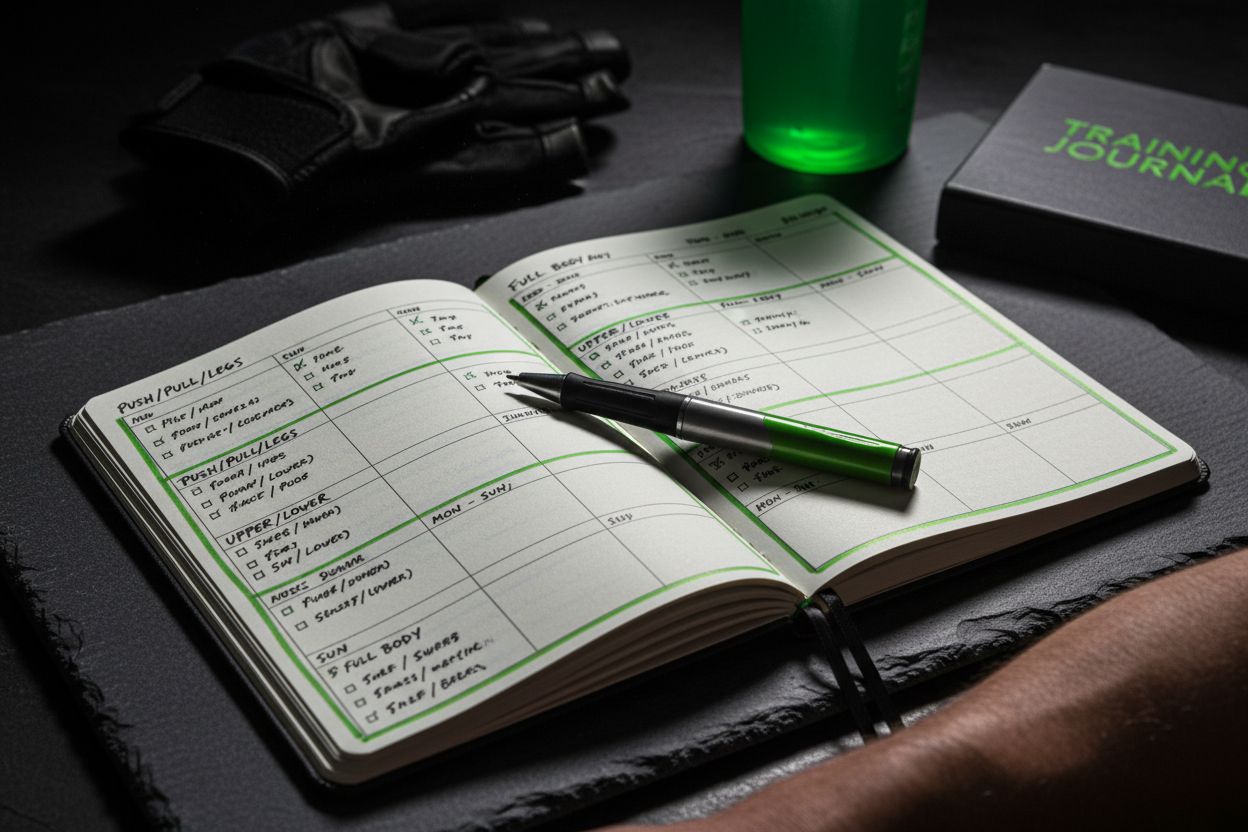
Below are the most popular 4 day workout splits, with pros and cons to help you choose.
Upper/Lower (common and versatile)
Weekly schedule: Upper - Lower - Rest - Upper - Lower - Rest - Rest
Best for: Balanced strength and hypertrophy with clear progression paths
Daily focus example:
Upper day: Bench press, row, overhead press, pull-up, accessory arm work
Lower day: Squat, deadlift variant, lunges, hamstring curls, calf work
Pros: Simple, trains major lifts frequently. Easy to manipulate volume. Cons: Can be demanding if both upper days include heavy compound lifts.
Push/Pull/Lower variations (push/pull split extended)
Weekly schedule: Push - Pull - Rest - Push - Pull - Rest - Rest (or swap one pull for legs)
Best for: People who want movement pattern focus and recovery between pushing and pulling
Daily focus example:
Push: Chest, shoulders, triceps
Pull: Back, biceps, posterior chain
Lower: Quads, hamstrings, glutes, calves
Pros: Clean separation of movement patterns. Cons: May under-emphasize legs unless a dedicated lower session is included.
Bro split 4-day hybrid (targeted volume)
Weekly schedule example: Chest - Back - Legs - Shoulders/Arms - Rest - Rest - Rest
Best for: Lifters who want high per-session volume and targeted muscle fatigue
Pros: Big per-session focus. Cons: Lower training frequency per muscle compared to other 4 day models.
Upper/lower + specialization (hybrid)
Weekly schedule: Upper-heavy - Lower - Upper (specialization) - Lower - Rest - Rest - Rest
Best for: Those who want to prioritize a lagging muscle group while maintaining frequency
Pros: Flexible and customizable. Cons: Requires careful volume control to avoid overuse.
How to choose the right 4 day workout split for you
Consider these variables in order:
Goals - Is your priority hypertrophy, strength, or body recomposition?
Time availability - Can you handle longer sessions or prefer shorter, focused workouts?
Recovery capacity - Do you sleep well and manage stress, or do you need more rest built in?
Equipment access - Are you at a full gym, limited home setup, or travel often?
Training history - Beginners should not rush into complex periodization; build technique first.
If you want straightforward strength and size, start with an upper/lower split. If you want aesthetic focus and extra volume for specific muscles, use a bro-style hybrid. If movement pattern balance is important, pick push/pull.
Sample 4 day workout templates you can start tomorrow
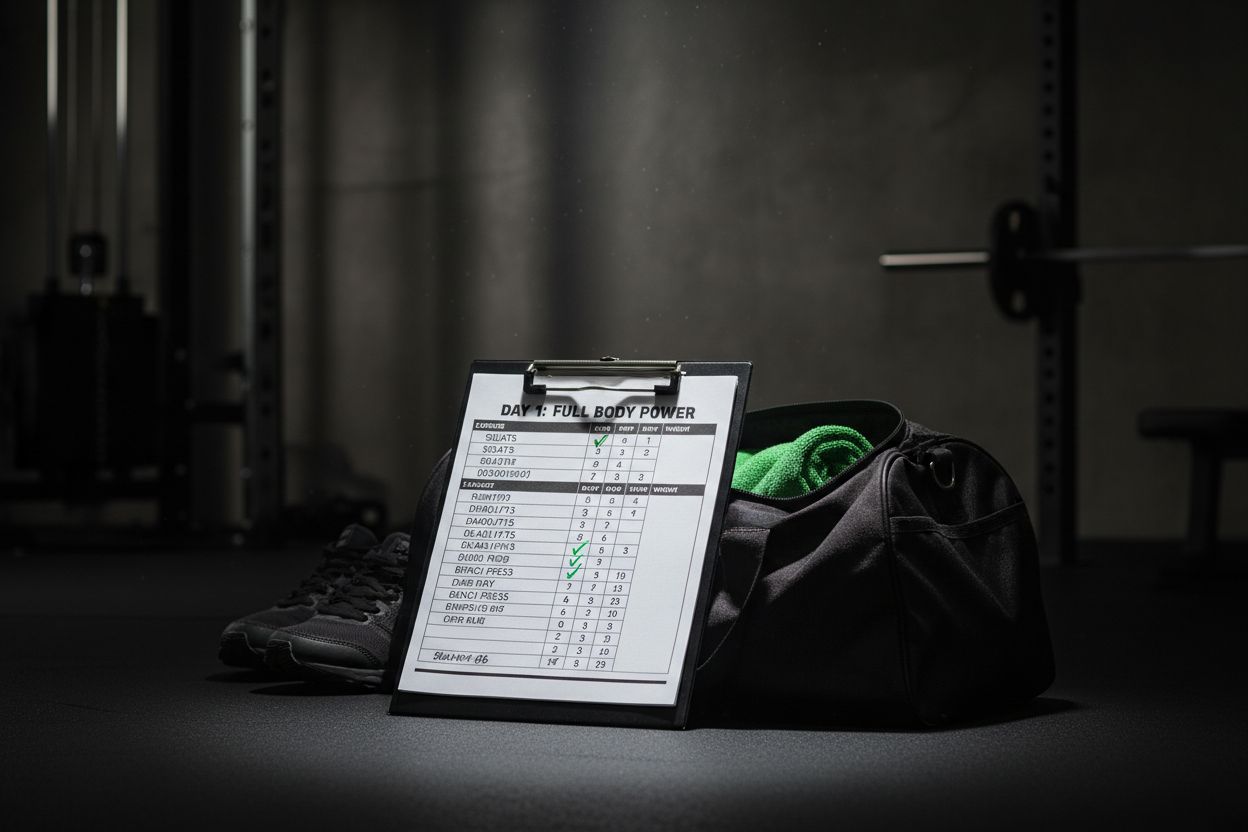
Below are three complete 4 day templates: Upper/Lower, Push/Pull, and Bro-style hybrid. Each session lists exercises with suggested sets and reps. Warm up for 5 to 10 minutes and include dynamic mobility for the primary joints before heavy work.
Template A - Upper/Lower (Balanced strength and hypertrophy)
Day 1 - Upper A
Barbell bench press 4 x 5-6
Bent-over barbell row 4 x 6-8
Overhead press 3 x 6-8
Pull-ups 3 x 6-10 (or lat pulldown)
Incline dumbbell curl 3 x 8-12
Tricep rope pushdown 3 x 10-12
Day 2 - Lower A
Back squat 4 x 5-6
Romanian deadlift 3 x 6-8
Bulgarian split squat 3 x 8-10 per leg
Leg curl 3 x 10-12
Standing calf raise 3 x 12-15
Day 3 - Rest or active recovery
Day 4 - Upper B
Incline barbell press 4 x 6-8
Seated cable row 4 x 8-10
Dumbbell shoulder press 3 x 8-10
Face pulls 3 x 12-15
Hammer curl 3 x 10-12
Overhead tricep extension 3 x 10-12
Day 5 - Lower B
Deadlift (conventional or trap bar) 3 x 4-6
Front squat or goblet squat 3 x 8-10
Glute bridge 3 x 8-10
Leg extension 3 x 12-15
Calf press 4 x 10-15
Template B - Push/Pull (Strength and movement focus)
Day 1 - Push A
Bench press 4 x 4-6
Overhead press 4 x 6-8
Dips 3 x 8-12
Lateral raises 3 x 12-15
Tricep extensions 3 x 10-12
Day 2 - Pull A
Deadlift 3 x 4-6
Barbell row 4 x 6-8
Chin-ups 3 x 6-10
Rear delt fly 3 x 12-15
Biceps curl 3 x 8-12
Day 3 - Rest
Day 4 - Push B
Incline dumbbell press 4 x 8-10
Arnold press 3 x 8-10
Cable chest fly 3 x 12-15
Skull crushers 3 x 8-12
Core work 3 x 10-15
Day 5 - Pull B
Romanian deadlift 3 x 6-8
Single-arm dumbbell row 3 x 8-10 per arm
Face pulls 3 x 12-15
Hammer curls 3 x 10-12
Farmer carry 3 x 40-60 seconds
Template C - Bro-style hybrid (Aesthetic focus)
Day 1 - Chest + Light Shoulders
Flat dumbbell press 4 x 8-12
Incline cable fly 3 x 12-15
Pec deck 3 x 12-15
Seated lateral raises 4 x 12-15
Day 2 - Back + Biceps
Weighted pull-up 4 x 6-8
T-bar row 4 x 8-10
Straight-arm pulldown 3 x 12-15
Concentration curls 3 x 10-12
Day 3 - Rest
Day 4 - Legs + Core
Squat variation 4 x 6-10
Deadlift variation 3 x 4-6
Walking lunges 3 x 12-16
Hanging leg raises 3 x 12-15
Day 5 - Shoulders + Arms
Military press 4 x 6-8
Upright rows 3 x 10-12
EZ-bar curl 3 x 8-10
Rope pushdown 3 x 10-12
Rep schemes, weekly volume, and progression
Strength emphasis: 3-6 reps, 3-6 sets for compound lifts
Hypertrophy emphasis: 6-12 reps, 3-4 sets; include 10-20 total weekly sets per large muscle group
Endurance/conditioning: 12-20 reps, 2-3 sets for accessory work
Weekly volume guideline for hypertrophy:
Large muscles (chest, back, quads, hamstrings): 10-20 sets per week
Small muscles (biceps, triceps, calves, delts): 6-12 sets per week
Progression tips:
Add 2.5 to 5 pounds to compound lifts when you hit the top of the rep range for two consecutive sessions
Increase sets or add an extra working set every 2 to 3 weeks if recovery allows
Use microloading and focus on better technique before adding weight
Personalize your 4 day workout split
Body type adaptations:
Ectomorphs: prioritize calories and a bit more recovery. Keep heavy compounds early in sessions and limit excessive cardio.
Mesomorphs: respond well to moderate volume. Rotate rep ranges across weeks.
Endomorphs: higher intensity and conditioning combined with volume for body composition management.
Age and joint health:
For trainees 40 and older, reduce heavy single-session volume, emphasize joint mobility and tempo control, and increase warm-up time.
Women and men:
Program differences are minimal. Adjust load and volume to individual recovery and strength levels rather than gender alone.
Equipment constraints:
Home gym with dumbbells: prioritize unilateral work like split squats and single-arm rows. Use tempo to increase time under tension.
Bands and bodyweight: increase reps, add eccentric emphasis, and shorten rest intervals.
Nutrition and recovery integration
Protein: 0.7 to 1.0 grams per pound of body weight per day for most lifters aiming for hypertrophy
Meal timing: a protein-rich meal 1 to 2 hours before training and a balanced recovery meal within 60 to 90 minutes after sessions helps refuel
Calorie strategy: maintain a small surplus for muscle gain and a moderate deficit for fat loss while preserving strength
Sleep: aim for 7 to 9 hours nightly; sleep debt reduces training quality and recovery
Common mistakes and troubleshooting
Mistake: piling all volume into one session and leaving other sessions light. Fix: spread weekly sets across both sessions to manage fatigue.
Mistake: never deloading. Fix: schedule a deload every 4 to 8 weeks depending on intensity and fatigue scores.
Overtraining signs: persistent soreness, declining lifts, poor sleep, elevated resting heart rate. If you see these signs, reduce volume or take extra rest.
Plateau solutions: swap exercises, adjust rep ranges, reset load with a lighter week, or increase intensity via tempo or RPE adjustments.
Tracking progress and useful tools
Track beyond the scale. Monitor lifts, sets, reps, perceived exertion, and body composition. Record recovery metrics like sleep and readiness.
If you want a simple way to log sets and progress, consider digital tracking tools that sync workouts and show progress trends. For structured guidance on training principles see Core Principles & Techniques for Every Lifter. To help optimize sessions including warm-up routines and progression, check Optimize Your Training | Expert Tips and Workout Guides. If you prefer an app for logging workouts and tracking sets and reps, Setgraph - Workout Tracker Gym Log App is a straightforward option to record workouts and track progression. For broader reading and curated fitness tips, visit Fitness & Workout Tips | Setgraph. If you want real user perspectives on tracking apps, see Setgraph App Reviews (2025): User Ratings for Tracking Sets, Reps & Workouts.
First 30 days - what to expect
Weeks 1 to 2: neural adaptation and technique improvements. Strength may rise quickly but visible size changes are modest.
Weeks 3 to 4: soreness should lessen and your ability to handle volume should improve. Start small progressive increases in load or sets.
Track consistency and small wins such as added reps, better bar speed, or improved range of motion.
Advanced strategies within a 4 day framework
Periodization: alternate 3-week blocks of hypertrophy and 3-week blocks of strength. Use a deload week between blocks.
Auto-regulation: use RPE to guide training load. If a set feels a 9 out of 10, drop intensity or volume next session.
Specialization phases: dedicate one of the upper or lower days to a lagging muscle for 4 to 8 weeks.
Quick FAQs
Q: Can I build strength with 4 day workout splits?
A: Yes. Structure one upper and one lower day around low-rep compound lifts to prioritize strength while using the other days for hypertrophy.
Q: Is four days enough to build muscle?
A: For most trainees it is enough, provided weekly volume and progressive overload are managed properly.
Q: How long should sessions be?
A: Aim for 45 to 90 minutes. Shorter sessions are possible with supersetting and strict rest management.
Final checklist before you start
Choose the split that matches your goal and schedule
Set weekly volume targets for major muscle groups
Plan progressive overload and schedule deloads
Prioritize sleep and protein intake
Track workouts and adjust based on recovery and progress
A 4 day workout split is a flexible framework that suits a wide range of goals and lifestyles. Use the templates here as starting points and personalize sets, reps, and exercise selection to match your needs. Track your workouts consistently and adjust slowly. With the right plan and recovery you can make steady gains in strength and size while keeping training sustainable.
If you want deeper guidance on programming or an app to log workouts and monitor progress, explore the linked resources above to find tools and articles that make tracking and progression simple.
Article created using Lovarank