PPL Split: How Many Days a Week & Is Once Enough?
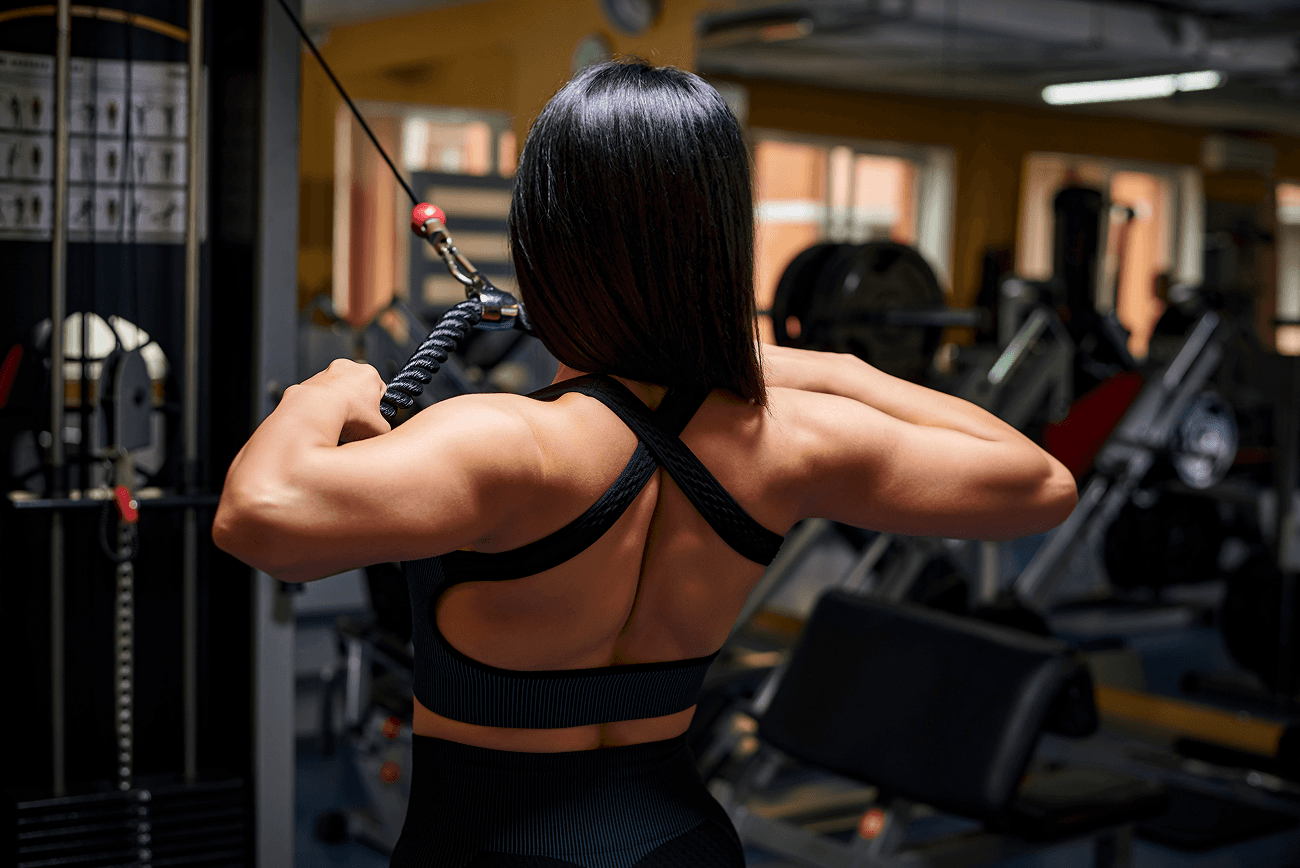
Push/pull/legs (PPL) groups upper-body pressing, upper-body pulling and lower-body training into separate sessions. It is one way to organize a program; the useful version is the one that fits your schedule, workload and recovery.
This guide breaks down exactly how the PPL split works, how many days a week you should be doing it, and how to set it up for your specific schedule and goals.
What Is the PPL Split? Understanding the Push Pull Legs Workout Routine
The PPL split divides your training into three distinct workout types based on movement patterns rather than individual muscle groups:
Push day trains your chest, shoulders, and triceps, all the muscles involved in pressing movements.
Pull day trains your back and biceps, the muscles responsible for rowing and pulling movements.
Legs day targets your quads, hamstrings, glutes, calves, and core.
Grouping pressing or pulling exercises can make planning simpler. Recovery still depends on the full schedule and workload, including shared muscles such as the lower back in rows, deadlifts and squats.
Compare the actual exercises and rest days in any split rather than assuming the name makes it smarter or safer.
Explore Setgraph for workout logging
The 3-Day PPL Split: One Rotation Per Week
A three-day PPL uses one push, one pull and one legs session each week. It may suit a lifter who wants this grouping and can manage the work in each session. Beginners may instead prefer a full-body plan for more frequent practice.
A common 3-day schedule looks like this:
Monday: Push
Wednesday: Pull
Friday: Legs
This schedule gives each movement pattern one weekly session. Volume research does not establish ten sets as a minimum below which growth cannot occur. Start with manageable work and assess progress rather than trying to hit a threshold at all costs.
The non-lifting days can accommodate other activity or rest. Account for demanding cardio and sport sessions when assessing recovery.
Want a digital workout log? Explore Setgraph.
PPL Split 4 Days: A Rotating Schedule
With four fixed training days, continue the push → pull → legs sequence across weeks. Keep the total workload manageable rather than assuming the extra visit requires more sets.
For example, train Monday, Tuesday, Thursday and Saturday. Week 1: push/pull/legs/push. Week 2: pull/legs/push/pull. Week 3: legs/push/pull/legs. Each pattern occurs four times over three weeks, averaging 1⅓ sessions per week. The workout type rotates; the training weekdays stay fixed.
A separate option is push, pull, legs and a fourth priority session. That is a different plan: count the added session’s overlap and adjust existing sets rather than treating it as equivalent to the rolling sequence.
Choose four days when that schedule fits your life and lets you perform the planned work consistently. Training experience alone does not establish a need for more volume.
PPL Split 5 Day: A Push/Pull/Legs and Upper/Lower Hybrid
The 5-day PPL split is often organized as a hybrid with an upper/lower structure, commonly known as PPLUL. A typical week might look like:
Monday: Push
Tuesday: Pull
Wednesday: Legs
Thursday: Upper
Friday: Lower
This is three upper-body sessions in total, not three direct sessions for every upper-body muscle. Chest and triceps typically receive direct work on Push and Upper; back and biceps on Pull and Upper. Legs and Lower provide two lower-body sessions.
The rest days need not be confined to the weekend. For example: Monday Push, Tuesday Pull, Wednesday Legs, Thursday rest, Friday Upper, Saturday Lower, Sunday rest. Choose a layout that fits your recovery and commitments.
PPL Split 6 Day: Two Rotations Per Week
A six-day PPL repeats Push, Pull and Legs twice in a seven-day week. It gives more opportunities to distribute work, but does not automatically produce more growth than a lower-frequency program.
A standard 6-day schedule:
Monday: Push
Tuesday: Pull
Wednesday: Legs
Thursday: Push
Friday: Pull
Saturday: Legs
Sunday: Rest
The two sessions for a pattern can repeat the same exercises or use different emphases. If you choose chest-focused and shoulder-focused push days, account for shared pressing and triceps work; variation itself is optional.
Six visits leave little room to move a missed session. Choose this version only if it fits your schedule and the total workload is sustainable. More days are not a required progression from three or four.
Record the sessions you choose: Explore Setgraph.
How to Structure Each Session in Your PPL Workout Plan
Begin with the exercise most important to your goal, then add a manageable amount of supporting work. The following are exercise menus, not instructions to perform every option.
Push example: a bench-press variation, a comfortable overhead press, lateral raises and a triceps exercise. Start with manageable sets and a rep range you can control, such as 8–12. Experienced lifters can use lower reps for heavier-lift practice.
Pull example: a row, assisted pull-up or lat pulldown, rear-delt exercise and curl. A chest-supported row can reduce the trunk demand before a leg session; shrugs are an optional substitution or addition that must be counted.
Legs example: a squat variation, Romanian deadlift or hip bridge, calf raise and trunk exercise. Leg press or leg curl can replace or supplement a movement when useful; avoid adding the entire menu automatically.
Warm up with comfortable movement and progressively loaded sets. Allow enough rest to repeat controlled work; a cool-down is optional.
Is the PPL Split Right for You? Honestly Comparing Your Options
The PPL split is not for everyone, and it's worth being honest about that.
If you are new to lifting, a simple full-body plan can provide regular practice of the main movements with fewer visits. Readiness for a split depends on technique, workload and preferences, not a compulsory six-month waiting period.
PPL is flexible, but so are other splits. Compare actual training days, exercises and working sets before choosing.
PPL groups pressing muscles together and pulling muscles together. That may simplify overlap management, but heavy pulling and lower-body sessions can still share fatigue. A bro split can also be arranged thoughtfully.
PPL fits naturally into three- or six-session weeks. Four-day rotations and five-day hybrids also work with fixed training weekdays, as the schedules above show. Check the multiweek sequence so no session type is repeatedly skipped.
Track Your PPL Workout Plan and See Real Progress
Record exercises, sets, load and actual reps so you can compare sessions. When all sets reach the top of a chosen range with controlled technique and the intended effort, consider a small load increase. Progress need not occur every week.
A notebook, spreadsheet or app can provide that record. Compare technique, effort and rest as well as the numbers before deciding what to change.
Use Setgraph as a workout logging option
Write down the exercises, set counts and rep targets you choose, then record what you actually perform. Use whichever logging format you will keep up consistently.
Final Thoughts on the PPL Split
PPL provides a clear way to group exercises. Its usefulness depends on the schedule and workload you build around it. Start with the number of visits you can sustain and review the whole week, including overlapping muscles and other activity.
Keep the version that fits your schedule and recovery. Add days only when they serve a clear purpose, such as distributing existing work.
Can You Run PPL Once a Week?
Yes, if you mean one Push, one Pull and one Legs session across seven days. That is a three-day PPL. Whether it is manageable depends on the exercises and workload, not simply the number of days.
Frequency helps organize your weekly work. The 2019 frequency meta-analysis found no meaningful hypertrophy difference when volume was matched. It did not test the exact sample routines here.
One once-weekly rotation is Monday push, Wednesday pull and Friday legs. Use the remaining days for rest or other activity that fits your recovery.
For a small illustrative session, four exercises with two working sets each give eight set entries. That is an example, not a minimum or optimum; count work for each muscle and start near what you can perform consistently.
If additional sessions help distribute the work, add days without automatically increasing weekly sets.
Helpful next reads: compare this with the bro split, build sessions around compound and isolation lifts, and manage pull-day arm volume with the biceps training frequency guide.
PPL Split at a Glance: 3, 4, 5, and 6 Day Compared (2026)
If you are deciding how many days to run, it helps to see the versions side by side. The right choice comes down to how many days you can train consistently and how well you recover, not simply picking the highest number on the list.
Version | Sessions for Each Pattern or Region | Scheduling Feature | Workload Check |
3 Day PPL | 1 push, 1 pull, 1 legs weekly | Three fixed visits | One dedicated session per pattern; manage concentrated work |
4 Day PPL | 4 sessions per pattern over 3 weeks | Four fixed weekdays; workout type rotates | Count the entire three-week cycle |
5 Day (PPLUL) | Typically 2 direct sessions per main region | Five visits including Upper and Lower | Count shared work between PPL and Upper/Lower |
6 Day PPL | 2 push, 2 pull, 2 legs weekly | Six fixed visits | Distribute weekly sets; do not automatically double them |
Read the frequency column together with actual weekly sets, effort and recovery. The 2016 review favored higher frequency, but later volume-matched evidence did not establish the same advantage. That is not proof that six-day PPL wins for every advanced lifter.
The weekly-volume meta-analysis supports considering the amount of work, but not a universal ten-set minimum or endless benefit from more sets. Adjust volume to the training context.
For other five-day layouts, see the PPLUL guide and ULPPL guide.
Frequently Asked Questions About the PPL Split
What is a PPL split?
A PPL split organizes training into push, pull and legs sessions. Push covers upper-body pressing muscles, pull covers upper-body pulling muscles, and legs covers lower-body work. The exercise list and weekly schedule determine the actual workload and recovery demands.
What is the best PPL split for building muscle?
Choose the number of days that lets you complete and recover from your planned work. A six-day PPL repeats each pattern twice; a three-day version repeats it once. Neither guarantees the most growth, and additional sessions are useful only if they fit the program and your life.
For a workout logging option: Explore Setgraph.
Is PPL a good split?
PPL can be a useful split when its schedule, exercises and workload fit the lifter. It gives pressing, pulling and lower-body work separate sessions, but some fatigue still overlaps. Beginners may prefer full-body training for more frequent practice with fewer visits.
What is the difference between a 3 day and 6 day PPL split?
A three-day PPL has one Push, one Pull and one Legs session; a six-day PPL repeats each twice. You can distribute a similar amount of weekly work over either schedule. Do not assume six days means doubling the work or guarantees better results.
PPL vs bro split: which is better?
Neither is universally better. A bro split concentrates direct work by body part; PPL groups pressing, pulling and lower-body exercises. Compare weekly sets, exercise overlap, session length and the schedule you can maintain.
PPL vs Arnold split: which should you choose?
The common six-day Arnold-style layout pairs chest/back, shoulders/arms and legs; PPL groups push, pull and legs. Arm volume and fatigue depend on the exercises and sets selected, not the split name. Choose by the actual program and your preferences.
PPL vs upper lower split: what's the difference?
Upper/lower groups upper-body work in one session and lower-body work in another, often over four weekly visits. PPL separates upper pressing and pulling and can use three, six or rotating schedules. A five-day PPLUL combines the formats. Compare actual exercises and sets rather than assuming either gives better attention to a muscle.
Can beginners do a PPL split workout routine?
Beginners can use a PPL plan if the exercises and workload are appropriate, though a simple full-body routine provides more frequent practice with fewer gym visits. No fixed six-to-twelve-month training history guarantees readiness for one format.
How do I set up a 5-day PPL split?
One option is Push, Pull, Legs, Upper and Lower, with rest days placed where they fit. For example, train Monday, Tuesday, Wednesday, Friday and Saturday. This gives three upper-body sessions overall, but typically two direct sessions for each major muscle, plus two lower-body sessions.
Do I need to print a push pull legs workout routine PDF to get started?
No. Use a printed plan, notebook, spreadsheet or app, whichever is easiest to use consistently. Record actual reps and load, then compare similar sessions before changing the plan.
Prefer an app for logging? Explore Setgraph.
