Progressive Overload vs Hypertrophy: Understanding the Method and the Goal

Understanding the Relationship: Progressive Overload vs Hypertrophy
Here’s the thing most people get wrong: progressive overload and hypertrophy aren’t competing concepts. They’re not two different training styles you choose between. Progressive overload is the method—the systematic approach you use in training. Hypertrophy is the outcome—the actual muscle growth that results from your efforts.
Think of it like this: progressive overload is the recipe, hypertrophy is the cake. You can’t compare them because they exist in different categories entirely. Yet this confusion persists in gym conversations and online forums, with people asking which one they should focus on.
Progressive overload helps keep training challenging as capacity improves. Hypertrophy is one possible adaptation, influenced by the program, nutrition, recovery and individual response. Adding weight to a log does not itself prove that muscle has grown.
A useful program does not need a heavier load every session. Repeating a suitable workload can still be productive while you consolidate technique or recover; adjust demands when your performance supports it.
What Is Progressive Overload?
Progressive overload is the adjustment of training demands as your ability changes. In practice, you may add a controlled repetition, use a small increase in load, or change the amount of work. It is a programming principle, not a requirement to break a record every workout.
For example, if three sets of eight at the same load become easier with the same technique, you can gradually add repetitions within your planned range. Once you can repeat the top of that range, consider a small load increase. If recovery is poor or technique changes, repeating the load can be the better decision.
What Is Hypertrophy?
Hypertrophy is an increase in muscle-fiber size. It should not be confused with temporary swelling, a pump, or better skill at a lift. Research on early training-related size changes shows why swelling can complicate short-term measurements.
Training can increase both strength and size, but they are not identical outcomes. Neural adaptations and practice also influence strength. See strength versus hypertrophy for that separate question.
How the Method Supports the Goal
Appropriate resistance training provides a repeated stimulus for adaptation. As a familiar workload becomes less demanding, a gradual change may help maintain that challenge. This does not mean deliberately creating muscle damage, maximizing a hormone spike, or making every repetition slower is necessary.
Plotkin and colleagues’ 2022 trial compared adding load with adding repetitions over eight weeks in trained adults. Both strategies produced useful adaptations. The result supports more than one progression method, rather than proving that load increases always grow more muscle.
Progression Methods and Their Trade-Offs
Add repetitions: build within a manageable target range while keeping the load, range of motion and effort comparable.
Add load: use a small increase once the current work is repeatable. Return toward the lower end of the target range if needed.
Add sets: this increases weekly workload and recovery demand. Add gradually if the existing program is well tolerated rather than increasing indefinitely.
Change frequency: spread planned work across more days if that improves session quality or fits your schedule. More days are not automatically more stimulus.
Change rest, tempo or range of motion: these change the task. Record them explicitly; they are not interchangeable with adding load or repetitions.
Shortening rest can reduce subsequent performance. Use adequate rest between sets before deciding that a falling rep count means you need more volume. A controlled, comfortable range of motion is more useful than changing the movement merely to post a larger number.
Can You Build Muscle Without Increasing the Weight?
Yes. Load progression is one option, and repetitions can progress while load stays the same. A new lifter may also respond to a stable starting routine. Avoid assigning a universal number of weeks after which that routine must stop working.
Use progress over several comparable sessions, technique and recovery to decide whether to change the plan. A fixed load does not prove a lack of stimulus, and a larger volume-load total does not directly measure hypertrophy.
Common Mistakes When Using Progressive Overload for Hypertrophy
Progressing Too Quickly
The most common mistake is adding weight or volume too aggressively. Jumping from 135 pounds to 155 pounds on your bench press in one week might seem productive, but it often leads to form breakdown, increased injury risk, and unsustainable progression.
A better approach is to use the smallest practical increase only after the intended work is repeatable. For small-muscle exercises, even a small absolute jump may be too large; adding a repetition can be the more manageable option.
Sacrificing Form for Progression
Compare repetitions performed with the same technique and intended range. Changing depth or using momentum changes the task, so a heavier number is not necessarily progress in the original movement. Range of motion should suit the exercise and the person.
Always prioritize quality reps. If you can’t maintain proper form with a heavier weight, you’re not ready for that weight. Drop back down and build up gradually.
Ignoring Recovery
Training and recovery work together. Muscle remodeling continues beyond the session, and repeatedly exceeding what you can recover from can impair performance. Adjust the workload rather than assuming every difficult week means you are overtrained.
Plan recovery around the amount of work and your response rather than a universal 48–72-hour clock. Prioritize sleep and adequate nutrition, and adjust the next session if pain, unusual fatigue or reduced performance persists.
Change Variables Deliberately
You do not have to rotate progression methods every four to six weeks. Keeping the main variables stable makes comparisons easier. Change the variable that addresses the actual problem, and assess the response before adding more changes.
Not Tracking Progress
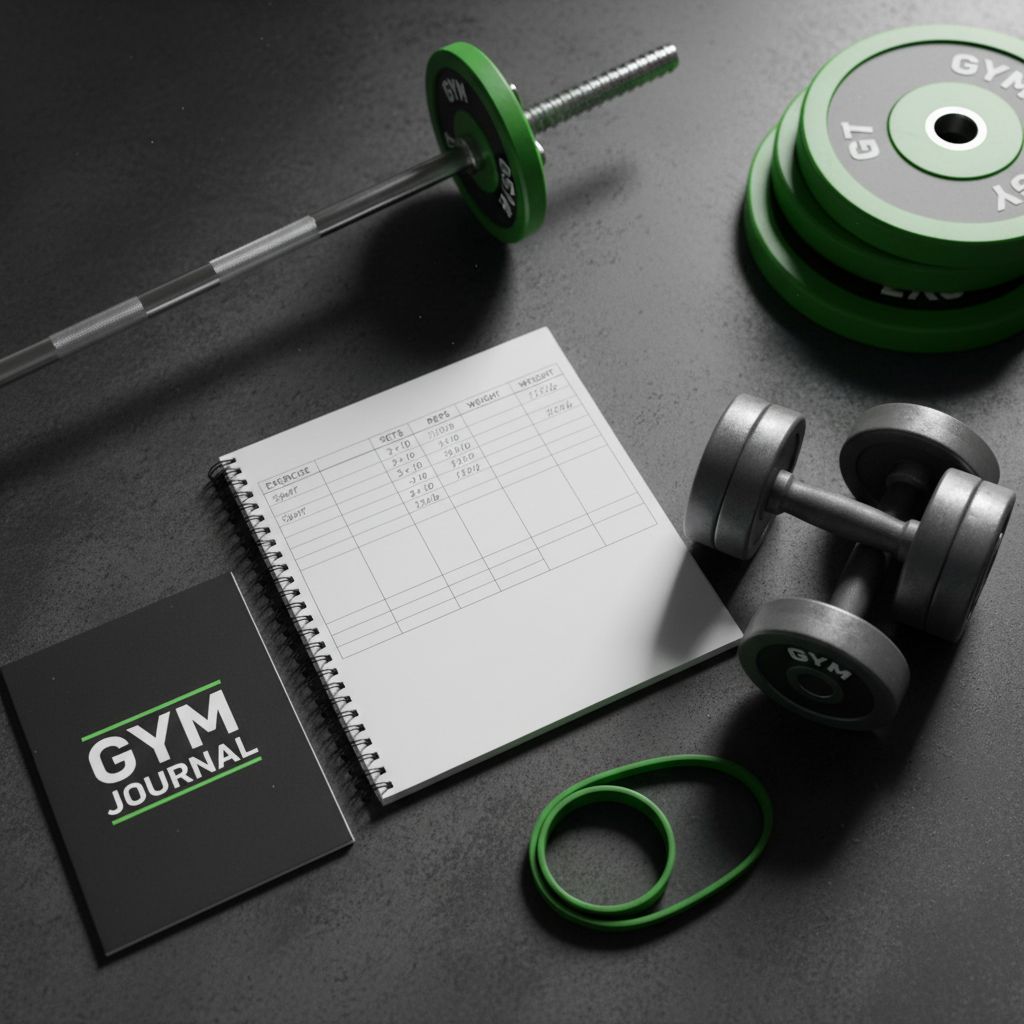
A training record makes progression decisions easier. Record the work and conditions so that an apparent change is not just a different exercise, technique or effort level.
Record exercise, load, sets, reps and effort. A notebook, spreadsheet or app can preserve the same core information. Setgraph’s iOS listing describes set logging and exercise history; it does not measure muscle growth.
Changing Exercises Too Frequently
While exercise variety has benefits, constantly switching movements makes progressive overload difficult. If you bench press one week, do dumbbell press the next, and switch to push-ups the third week, you can’t track meaningful progression.
Keeping familiar exercises long enough to compare several sessions can make progress easier to assess. Change them when your goal, comfort, equipment or program calls for it; there is no compulsory four-to-six-week interval.
How to Track Progressive Overload for Maximum Muscle Growth
Effective tracking is the foundation of successful progressive overload. Without accurate records, you’re essentially guessing at progression.
What to Track
At minimum, record these variables for every exercise:
Date: When you performed the workout
Exercise name: Be specific (“barbell back squat” not just “squat”)
Weight used: Include the bar weight if applicable
Sets and reps: How many sets and how many reps per set
Perceived difficulty: Rate each set on a scale of 1-10 or note reps in reserve (RIR)
Optional but valuable data includes:
Rest periods between sets
Tempo (if you’re manipulating it)
Form quality or any technique notes
How you felt (energy level, sleep quality, nutrition)
Tracking Methods
The traditional method is a training log or notebook. Write down every workout in detail. This works well and costs nothing, but it can be time-consuming and difficult to analyze trends.
Spreadsheets offer more flexibility. You can create templates for your workouts, calculate volume automatically, and generate charts showing progress over time. The downside is the setup time and the need to input data manually.
Workout apps are another option if their workflow suits you. Compare the logging, history and export features you need, and check access terms rather than assuming every app calculates progression or includes every feature.
Using Your Data
Tracking is pointless if you don’t use the information. Before each workout, review your previous performance for the exercises you’re about to do. Ask yourself:
Did I complete all planned sets and reps last time?
How difficult was it (based on my notes)?
Am I recovered enough to progress today?
If you completed the planned range with consistent technique and the intended reserve, consider a small change. If effort or recovery was worse, repeat or reduce the work. A single session or RIR estimate does not compel a load increase.
Look for patterns over weeks and months. If your bench press has stalled for three consecutive workouts, that’s a signal to change your approach—maybe switch to volume progression, adjust your frequency, or take a deload week.
Match Progression to Your Current Capacity
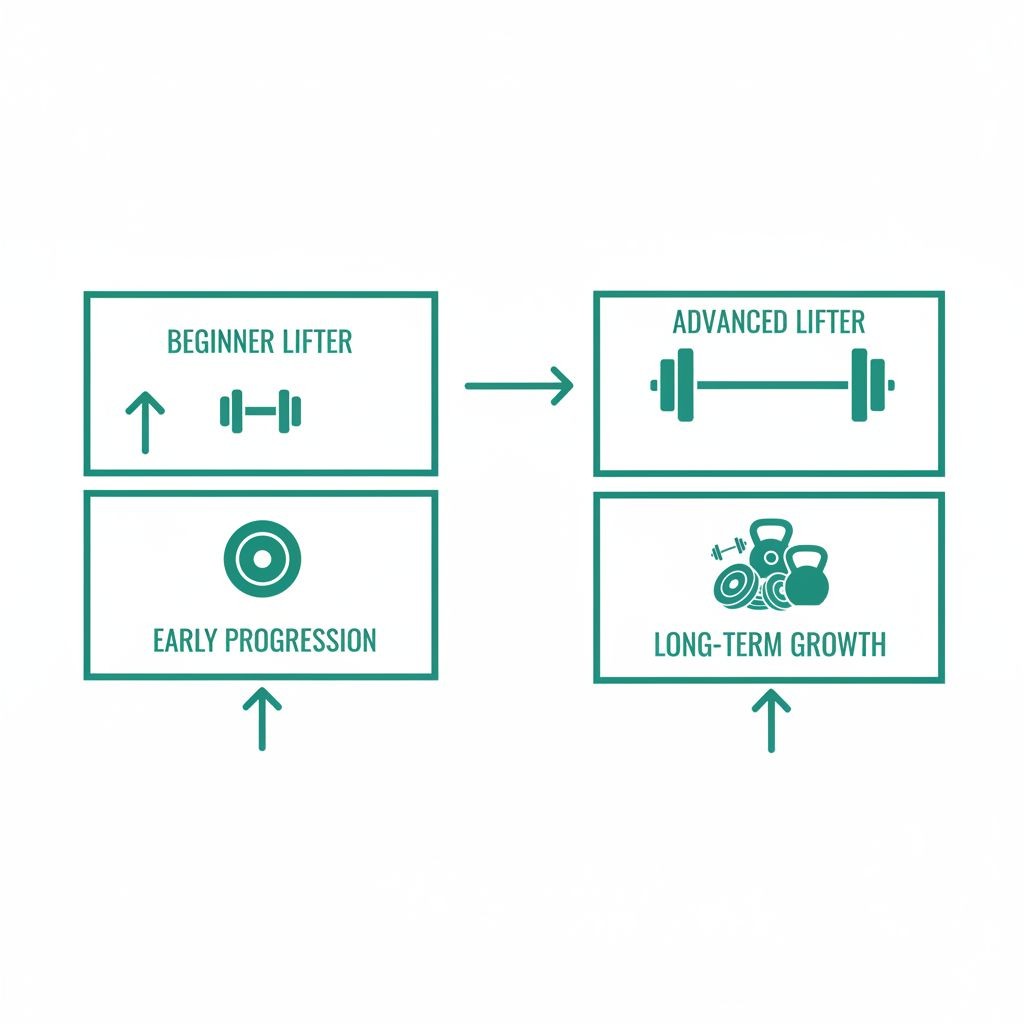
Training experience is not determined by a fixed number of years. A newer lifter may progress quickly while learning, and an experienced lifter may need smaller changes and longer observation. Neither needs an endlessly more complicated program.
An Illustrative Double-Progression Log
Start: 60 kg for 8, 8 and 8 reps with consistent technique and a little reserve.
Later: 60 kg for 9, 8 and 8 reps under comparable conditions.
Continue within the selected range. Once all sets reach its top at the intended effort, try the smallest appropriate increase.
If the new load takes you below the planned range, use a smaller jump or repeat the prior load. If performance declines repeatedly, review recovery and the whole workload.
The numbers illustrate the decision, not a required weekly rate. You can use the same process in a broader progressive-overload plan. Advanced techniques are optional, and cluster sets are not inherently more fatiguing than ordinary sets.
When Logged Progress Does Not Mean Muscle Growth
You can lift more because technique, confidence or coordination improved. Changes in body size also take time to measure and can be obscured by fluid shifts. Do not assume every increase in strength is new muscle.
Check Nutrition and Recovery
A meta-analysis of resistance training in an energy deficit found impaired lean-mass gains on average, while strength gains were less affected. Energy needs vary; a fixed calorie intake or surplus is not appropriate for everyone. If nutrition or persistent symptoms are a concern, seek individualized advice from a qualified professional.
Check the Program
Assess whether your exercises, effort and total workload fit the goal and are repeatable. More weekly sets may help some people, but neither fewer than ten nor more than twenty sets automatically establishes why someone is or is not growing.
Machines and isolation exercises can be useful. A review comparing machine and free-weight training found no clear hypertrophy difference. Free-weight training improved free-weight test performance more, while the machine-test result only tended to favor machine training. Exercise choice should fit the target muscles, comfort, equipment and goal, rather than a blanket rule that machine-only training is ineffective.
Review a Plateau Before Escalating
Compare like-for-like sessions and check for altered technique, range or rest.
Review sleep, food intake, stress and the total weekly workload.
Choose one manageable adjustment rather than adding load, sets and frequency simultaneously.
If unusual fatigue, pain or other persistent symptoms occur, discuss them with a clinician. Lack of visible muscle growth alone does not identify a hormonal disorder or specify a blood test.
There is no reliable universal annual muscle-gain allowance or guarantee of continuous progress. Keep the goal and the measurement separate, and use several weeks of context before judging the plan.
Putting It All Together
Progressive overload and hypertrophy describe different things: how training demands are managed and a possible adaptation to that training. Appropriate nutrition, recovery and programming matter, but correct tracking or progression does not guarantee a particular amount of muscle growth.
Choose the progression method that fits the exercise and current limitation. Repetitions and load are practical options; use frequency to distribute work and adjust other variables deliberately. Combining more methods is not automatically better.
Keep a useful record of the variables you intend to compare. A notebook, spreadsheet or app can help you review previous performance and make a deliberate next-session decision. Exhaustive tracking is not a prerequisite for adaptation.
Be patient with the process. Beginners can progress rapidly, but as you advance, gains come more slowly. That’s normal and expected. Focus on small, consistent improvements over months and years rather than dramatic changes week to week.
Remember that progressive overload alone isn’t enough. You need adequate nutrition (especially protein and calories), sufficient recovery (sleep and rest days), and appropriate training volume. When hypertrophy stalls despite progressive overload, examine these supporting factors before assuming your training is the problem.
If you prefer a digital record, Setgraph can be one place to log your training. Keep load, repetitions and contextual notes consistent so the history helps you decide what to repeat or change.
Progressive overload is a method for managing training demands; hypertrophy is an outcome to assess over time. Use the method thoughtfully without treating every larger number as proof of growth.
