Arnold Split Workout: The Complete 6-Day Training Guide (2025)

What Is The Arnold Split Workout?
The Arnold-style split groups chest/back, shoulders/arms and legs into three sessions. Repeating the sequence twice creates a six-day week. The split describes where exercises go; it does not require every version to use very high volume.
This guide gives an editorial example of that schedule, with exercise alternatives and a slower four-day rotation. It is not an authenticated transcription of Arnold Schwarzenegger’s own training.
Here’s the basic structure:
Day 1 & 4: Chest and Back
Day 2 & 5: Shoulders and Arms (biceps, triceps, forearms)
Day 3 & 6: Legs
Day 7: Rest
Six training days require a substantial time commitment. Suitability depends on the workload you already tolerate, technique, recovery and available time. More sessions do not by themselves make a program more effective.
Attribution and Training Principles
The name is associated with Arnold Schwarzenegger, but published descriptions of bodybuilding routines vary. A guest article by John Romaniello on Schwarzenegger’s website discusses split choices; it does not establish that the routine below was Arnold’s.
Choose a workload from your own recent training rather than copying an unverified claim about a champion’s set count. The goal is productive, repeatable work, not shocking a muscle with as many sets as possible.
Pairing chest and back can make it convenient to alternate exercises. Its practical value depends on equipment access and enough recovery before the next set; a pump is not a measure of muscle growth.
Focusing on a target muscle can be a useful cue. In a small eight-week trial in 30 untrained young men, internal focus produced greater elbow-flexor thickness gains but not greater quadriceps thickness gains. That limited result does not establish a universal cue or validate the entire split.
Use the name to describe the session grouping, then evaluate the actual exercises, workload and progression rules on their own merits.
Complete 6-Day Arnold Split Workout Plan
The base example has 12 chest/back, 14 shoulder/arm/forearm and 14 leg working-set entries per rotation, repeated twice for 80 per week. Warm-ups are separate; unilateral sets count once while both sides are performed. Exercises labeled as alternatives replace the stated movement rather than adding sets. This is a frequent-training example for experienced lifters; reduce the workload or use a slower rotation if it exceeds what you can sustain.
Training Parameters
Working sets: follow each exercise’s allocation below, generally 1–3 sets. Rep ranges:
Main compound movements: mostly 6–10 reps, with the listed range taking priority
Accessories: mostly 10–15 reps
Calves and forearms: 12–20 reps
Rest periods:
Heavy compound lifts: 2-3 minutes
Other compound lifts: about 2 minutes, or longer when needed
Isolation movements: about 1–2 minutes
Alternating exercises: keep enough time before repeating each lift to maintain its intended reps and control. Start with straight sets if fatigue or equipment access makes pairing impractical.
Use controlled lowering and lifting without forcing a universal tempo. Keep effort around two or three controlled reps in reserve initially.
Day 1 & 4: Chest and Back Workout
This session includes six direct chest sets and six listed back-pulling sets. Keep the upper-body work repeatable because shoulders and arms are trained the next day.
Chest Exercises:
Barbell Bench Press — 3 sets × 6–10 reps
Warm up with several gradually loaded sets suited to your working weight
Use a comfortable range and controlled touch where appropriate; set safety bars or use a spotter
Rest 2-3 minutes between sets
Incline Barbell Press — 2 sets × 8–10 reps
Set bench to 30-45 degree angle
An inclined pressing option
Rest 2 minutes
Dumbbell Fly — 1 set × 10–15 reps
Can be performed flat or on incline
Use a comfortable range rather than forcing the bottom stretch
Rest 90 seconds
Cable crossover alternative — replace the fly with 1 set × 10–15 reps
Choose the fly or crossover, not both in the base session
Focus on peak contraction
Rest 60 seconds
Back Exercises:
Deadlift placement: a conventional or trap-bar deadlift is an optional leg-day hinge
If chosen, replace the 2 Romanian-deadlift sets on one leg day with 2 deadlift sets × 4–6 reps; do not add it to this chest/back session
This keeps heavy hinge work with the lower-body schedule rather than adding more trunk fatigue before leg day
Allow about 3 minutes or more between demanding deadlift sets
Chest-Supported Row — 3 sets × 8–10 reps
A controlled bent-over row is an alternative if the additional trunk work fits your week
Keep core tight throughout
Rest 2 minutes
Pull-Up or Assisted Pull-Up — 2 sets × 6–10 reps
Choose assistance or added load that leaves the intended reps available
Use a comfortable, controlled range without swinging
Rest 2 minutes
T-Bar Row — 1 set × 10–12 reps
Use chest support if available and helpful
Rest 90 seconds
Cable-row alternative — replace the T-bar row with 1 set × 10–15 reps
Focus on squeezing shoulder blades together
Rest 60 seconds
You may alternate chest and back exercises, but keep the same set totals and adequate rest. This is an organizational option, not a requirement or a verified historical claim about Arnold’s sessions.
Day 2 & 5: Shoulders and Arms Workout
This session contains six shoulder sets, two curl sets, four triceps sets and two forearm sets. Pressing and pulling from the previous day also contribute arm and shoulder work, so do not add every alternative below.
Shoulder Exercises:
Barbell or Dumbbell Overhead Press — 2 sets × 6–10 reps
Can be performed seated or standing
Press through a comfortable range with a stable trunk
Rest 2-3 minutes
Dumbbell Lateral Raise — 2 sets × 10–15 reps
Raise to a height you can control comfortably
Control the negative
Rest 90 seconds
Rear-Delt Raise — 2 sets × 10–15 reps
An accessory for the rear deltoids
Rest 90 seconds
Front-raise alternative — replace the lateral-raise allocation with 2 sets × 10–15 reps if that better matches your goal
Front deltoids also work during pressing; this is not an additional exercise in the base session
Rest 60 seconds
Biceps Exercises:
Barbell Curl — 2 sets × 8–12 reps
Strict form, no swinging
Use a comfortable range with controlled lowering
Rest 90 seconds
Dumbbell-curl alternative — replace barbell curls with 2 sets × 8–12 reps
Seated or standing
Rotate the forearm only through a comfortable range
Rest 90 seconds
Concentration-curl alternative — replace barbell curls with 2 sets × 10–12 reps per arm
Choose one curl variation for the base session
Rest 60 seconds
Triceps Exercises:
Close-Grip Bench Press — 2 sets × 8–10 reps
Use a comfortable, moderately narrow grip
Keep the elbow path controlled rather than forcing the elbows against the torso
Rest 2 minutes
Lying triceps-extension alternative — replace close-grip bench press with 2 sets × 10–12 reps
Choose a comfortable lowering path and a load you can control
This replaces the pressing allocation rather than adding another two sets
Rest 90 seconds
Triceps Pushdown — 2 sets × 12–15 reps
Cable or rope attachment
Full extension at bottom
Rest 60 seconds
Forearms:
Wrist Curl — 1 set × 15–20 reps
Reverse Wrist Curl — 1 set × 15–20 reps
Direct forearm work is optional. Omit these two sets if they do not serve your goals or your wrists are uncomfortable; the session then has 12 working-set entries.
Day 3 & 6: Legs Workout
Each leg session includes squat, hinge, knee-extension, knee-flexion and calf work. Keep the alternatives as replacements so the session stays at the planned 14 working-set entries.
Quad-Dominant Exercises:
Back Squat — 3 sets × 6–10 reps
Use a familiar squat variation with appropriate safety bars
Choose a depth you can control comfortably
Rest 3 minutes
Front-squat alternative — replace back squats with 3 sets × 6–10 reps
Use a load suited to this different squat variation
Rest 2-3 minutes
Leg Press — 2 sets × 10–15 reps
Use a controlled range and keep the load manageable
Rest 2 minutes
Leg Extension — 1 set × 12–15 reps
A knee-extension accessory
Pause and squeeze at top
Rest 90 seconds
Hamstring Exercises:
Romanian Deadlift — 2 sets × 8–12 reps
Hinge at the hips and stop before you lose control of the position
Keep back neutral
Rest 2 minutes
Lying Leg Curl — 2 sets × 10–15 reps
Squeeze hamstrings at top
Rest 90 seconds
Hinge alternative for the second leg day — use a hip thrust for 2 sets × 8–12 reps instead of Romanian deadlifts if preferred
Choose one hinge allocation per leg session; do not add a second deadlift variation
Rest 2 minutes
Calves:
Standing Calf Raise — 2 sets × 12–20 reps
Use a controlled, comfortable ankle range
Rest 60 seconds
Seated Calf Raise — 2 sets × 12–20 reps
A bent-knee calf option
Rest 60 seconds
Calf exercises use the same progression rule as other accessories: compare controlled reps and load rather than chasing discomfort or a pump.
Benefits of the Arnold Split
This format offers a particular way to organize the week. Its practical advantages depend on your preferences and workload.
Twice-Weekly Muscle Frequency
Two sessions per muscle can distribute weekly work. That alone does not establish superior growth; volume-matched frequency research does not support that blanket conclusion.
Check the actual weekly volume
The base plan has 12 sets in the dedicated chest sections, plus four close-grip bench-press sets on arm days. It also has 12 back-pulling sets weekly. Shoulders/arms/forearms contribute 28 session entries and legs contribute 28, for 80 total. These are exercise-set totals; overlapping muscle work is not an additional exercise set. Omitting both forearm exercises on both days reduces the total to 76. Compare overlap and your current workload before adding more.
Antagonistic Muscle Pairing
Alternating chest and back exercises can help organize a session, but the benefit depends on exercise choice, rests and equipment access. A pump or sustained blood flow is not proof of greater hypertrophy.
Focused Sessions
Each visit covers fewer body regions than a full-body workout. Actual duration depends on sets, warm-ups and rest; a six-day schedule is not automatically time-efficient.
Psychological Benefits
Some people prefer frequent, focused visits. Others are more consistent with fewer weekly sessions, so choose by what you can sustain.
Who Should Use the Arnold Split
This program isn’t for everyone. Here’s an honest assessment of who will benefit most.
Ideal Candidates:
Experienced lifters with controlled technique and a current workload that makes the planned volume realistic
Athletes who can commit to 6 training days per week
Lifters who recover well and can handle high volume
Bodybuilders in a muscle-building phase with adequate calorie intake
People with enough time for the actual session length, including warm-ups and rest
Those who enjoy frequent training and thrive on routine
Not Recommended For:
Beginners still learning the movements and how much work they tolerate
Athletes with demanding sport schedules requiring fresh legs
People with limited recovery capacity or poor sleep
Lifters whose current food intake or other demands make the workload hard to sustain
Those with time constraints preventing 6 weekly gym visits
Anyone with persistent pain, unexplained fatigue or worsening symptoms that need assessment
If unsure, use a simpler full-body or upper/lower schedule first. There is no six-to-twelve-month countdown or requirement to graduate to a six-day split.
Nutrition and Recovery for the Arnold Split
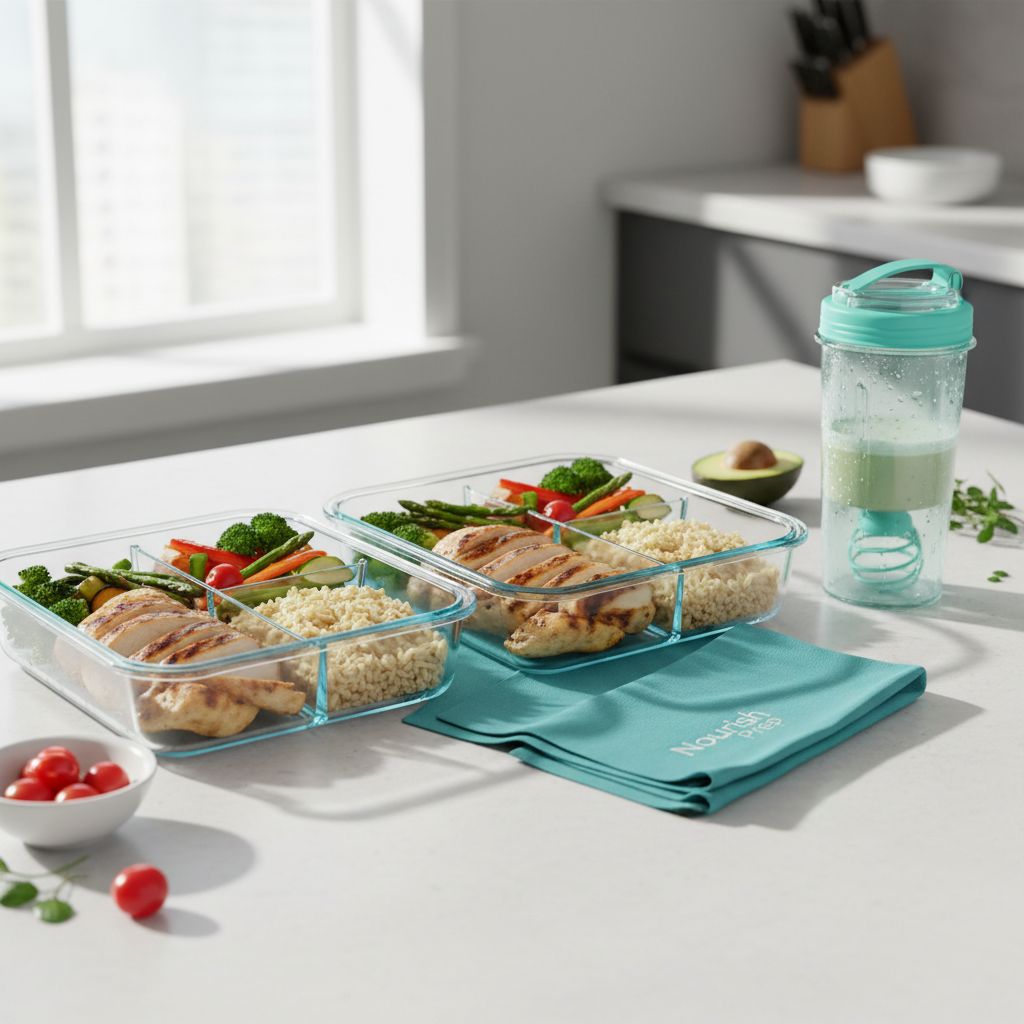
Food intake, sleep and the rest of your week affect how training feels. Match the plan to those circumstances rather than treating the split as a special nutrition protocol.
Calorie Requirements
Calorie needs depend on body size, activity and goals. A calculator can provide an estimate, but a body weight of 180 lb does not establish maintenance calories.
For a baseline, observe your usual food intake and body-weight trend over time
If gaining weight is appropriate, adjust food gradually rather than imposing a fixed 300–500-calorie surplus
Use consistent measurements and training trends to review the change. Scale gain is not a direct measure of muscle gain.
Protein Intake
For healthy exercising adults, ISSN guidance gives 1.4–2.0 g/kg daily. At 180 lb (about 81.6 kg), that is approximately 114–163 g. Include protein-containing foods across meals.
Quality protein sources:
Chicken, turkey, lean beef
Fish (salmon, tuna, tilapia)
Eggs and egg whites
Greek yogurt, cottage cheese
Protein powder (whey, casein)
Carbohydrates
Carbohydrate foods can help fuel training. Adjust portions to your overall intake, activity and preferences instead of using a mandatory grams-per-pound target for this split.
Focus on:
Rice, oats, quinoa
Sweet potatoes, regular potatoes
Whole grain bread and pasta
Fruits (bananas, berries, apples)
Fats
Include fat sources as part of a varied diet. There is no Arnold-specific fat prescription or assured testosterone benefit from a particular macro target.
Sources:
Avocados
Nuts and nut butters
Olive oil or other unsaturated plant oils
Fatty fish
Whole eggs
Hydration
Fluid needs vary with body size, conditions, activity and medical circumstances. Do not treat one gallon per day as a universal minimum.
Sleep
Make adequate, regular sleep part of your recovery plan. Persistent fatigue or poor sleep warrants reviewing training and other causes; sleeping less than seven hours does not by itself diagnose overtraining.
Supplementation
While not required, these supplements can support your training:
Creatine monohydrate: optional support for repeated high-intensity performance; check suitability if you have a medical condition or take medication
Protein powder: Convenient way to hit protein targets
Caffeine is optional; individual tolerance, other sources and medical circumstances matter. Do not treat a fixed pre-workout dose as necessary.
Omega-3 supplements are not a required recovery or joint-pain treatment; discuss a specific concern with a qualified clinician
Vitamin D: seek individualized advice when deficiency is suspected or diagnosed rather than treating supplementation as a program requirement
Active Recovery
Your rest day can include easy activity if you enjoy it:
20-30 minute walk
Yoga or stretching
Swimming or cycling at low intensity
Foam rolling and mobility work
Complete rest is also an acceptable choice. Keep optional activity easy enough that it does not interfere with your next session.
Progressive Overload Strategies
Use a progression rule that responds to performance rather than trying to beat every previous session.
Track Everything
Record the exercise, load, actual reps and a brief effort or technique note. A notebook or workout app can help you compare like sessions.
Progressive Overload Methods:
Add load when all working sets reach the top of their range with the intended technique and effort. Use the smallest practical increase, and reduce it if you cannot reach the lower end of the range.
Add reps within the stated range before increasing load. For 3 × 6–10, work toward 10, 10, 10 with control, then consider increasing load and returning toward the lower end.
Keep the set count stable initially. Add work only for a clear reason and after checking recovery, overlap and performance.
Keep rest intervals reasonably consistent when comparing performance. Shorter rests change the task and may reduce the load or reps you can complete.
Use a repeatable tempo when comparing performance. Slower lowering changes the task; it is not automatically a better progression method.
Periodization
Here is an optional eight-week review framework; it does not require maximal attempts or scheduled load increases:
Weeks 1–3: Learn the sequence, record a baseline and progress only when the rule is met
Week 4: Review the log, workload and recovery; continue or adjust as needed
Weeks 5–7: Keep suitable work stable and add reps or load where ready
Week 8: Review whether the next block should continue, reduce work or use a different schedule
Use a lighter period when useful, not because every fourth week must contain a prescribed percentage reduction.
When to Switch Exercises
Keep exercises stable long enough to learn them and compare progress. Change an exercise when equipment, comfort, goals or a specific programming decision calls for it; adaptation is the aim of training, not something to prevent by automatic rotation.
Common Mistakes to Avoid
Even experienced lifters make these errors when running the Arnold split.
Starting Too Heavy
Start with controlled loads that leave around two or three reps available. Increase only when the rep target, technique and intended effort support it.
Ignoring Recovery Signals
Persistent pain, declining performance or poor sleep can have several causes. Review training stress, and seek qualified assessment for persistent or worsening symptoms rather than diagnosing overtraining from a checklist. See the ECSS/ACSM consensus.
Skipping Warm-ups
Prepare for heavy work with a comfortable warm-up and progressively loaded practice sets. Adjust the preparation to the exercise and your needs rather than using warm-up completion as proof of safety.
Poor Form for More Weight
Use a movement range and load you can control. A heavier number is not a like-for-like improvement if the exercise or technique changes; get coaching when unsure.
Inconsistent Nutrition
Choose a regular eating pattern that fits your needs. Meal preparation can help with convenience, but it is optional.
Not Tracking Progress
A consistent log gives you a reference for decisions. It cannot remove uncertainty about fatigue, health or why progress has stalled.
Training Through Injuries
Stop or modify an exercise that causes pain and seek qualified assessment when pain persists, worsens or limits function.
Arnold Split vs Other Training Splits
How does the Arnold split compare to other popular programs? Let’s break down the pros and cons.
Arnold Split vs Push/Pull/Legs (PPL)
A six-day PPL and this six-day Arnold-style layout can both repeat their sessions twice per week. PPL can also be arranged over fewer days.
Differences: PPL separates pushing muscles (chest, shoulders, triceps) from pulling muscles (back, biceps). The Arnold split pairs antagonistic muscles together.
Features of Arnold-Style Training:
Chest and back share a session
Shoulders and arms have their own session
Focused body-region visits, with duration determined by the actual work
Features of PPL:
Pressing muscles share a session and pulling muscles share another
Progression rules still need to be defined for each exercise
Pulling and leg sessions can overlap in trunk and hip demands
Arnold Split vs Upper/Lower
Differences: Upper/Lower is typically 4 days per week, splitting body into upper and lower sessions.
Features of This Arnold-Style Example:
Comparable twice-weekly session frequency in a standard four-day upper/lower split
Six weekly visits, with total sets selected separately from frequency
A different way to distribute upper-body exercises across the week
Features of a Four-Day Upper/Lower Plan:
Three non-training days in the usual weekly layout
Fewer weekly gym visits while retaining two upper and two lower sessions
Easier to maintain with busy schedule
Can suit a range of experience levels when the workload is appropriate
Arnold Split vs Bro Split
A typical bro split gives each major region one dedicated weekly session, with some indirect overlap from compound lifts.
Features of This Arnold-Style Example:
Weekly work is divided between two sessions for each listed muscle group
Can suit lifters who prefer six visits focused on fewer body regions
Sets are spread across two dedicated sessions rather than one
Features of a Typical Bro Split:
More time between dedicated sessions for a body region, while overlap still matters
More concentrated work per session; avoid using that as a reason for excessive sets
A simple body-region schedule that still needs progression and recovery planning
Choose between these layouts by comparing actual weekly sets, session length, overlap and recovery. The name of a split does not establish the best routine or remove fatigue from consecutive training days.
Modifications for Intermediate Lifters
Not quite ready for the full 6-day commitment? Here are practical modifications.
4-Day Rolling Arnold-Style Split
Train Monday, Tuesday, Thursday and Friday. The following is week 1 of a continuing sequence:
Day 1: Chest and Back
Day 2: Shoulders and Arms
Day 3: Rest
Day 4: Legs
Day 5: Chest and Back
Day 6-7: Rest
Continue the sequence rather than restarting every Monday: week 2 shoulders/arms, legs, chest/back, shoulders/arms; week 3 legs, chest/back, shoulders/arms, legs. Across three weeks, each session type occurs four times, averaging 1⅓ per week. Choose four-day upper/lower instead if you want two sessions per region every week.
Reduced Volume Version
To reduce workload while keeping the six-day layout, remove lower-priority accessories first:
For example, omit the optional two forearm sets per shoulder/arm session: 76 total weekly entries instead of 80
If more reduction is needed, lower selected set counts and recalculate the week rather than cutting every exercise by an arbitrary percentage
Assess performance and recovery before adding the work back.
Alternating Intensity
You may use different rep ranges on the two visits, provided each exercise has a clear target and workload. This is optional and does not automatically improve recovery.
How Long Should You Run the Arnold Split?
Review progress over several weeks while checking whether the workload remains manageable. There is no established 8–16-week point at which this exact routine becomes best or must be replaced.
Signs it’s working:
Improving technique, reps or load across comparable sessions over time
Visible muscle growth
Good energy levels and recovery
Enjoying your training
Reasons to review the plan:
A sustained plateau or decline across comparable sessions
Persistent fatigue or poor sleep
Loss of motivation
Joint pain or nagging injuries
If recovery or scheduling becomes difficult, reduce workload or choose a schedule with fewer visits. A four-day upper/lower split changes gym-visit frequency while still allowing two sessions per region; it need not be lower muscle-training frequency.
Equipment Substitutions
Don’t have access to specific equipment? Here are effective alternatives.
No Barbell:
Bench Press → Dumbbell Bench Press or a suitable Push-Up variation
Barbell Rows → Dumbbell Rows or Inverted Rows
Romanian Deadlift → Dumbbell Romanian Deadlift; a different hinge variation needs its own load and rep target
Squats → Goblet Squats or Bulgarian Split Squats
No Cable Machine:
Cable Crossovers → Dumbbell Flyes
Cable Rows → Dumbbell Rows
Tricep Pushdowns → Overhead Dumbbell Extensions
Lat Pulldowns → Pull-ups or Resistance Band Pulldowns
Limited Equipment (Home Gym):
You can run a modified Arnold split with just dumbbells, a bench, and a pull-up bar. Focus on dumbbell variations of all major movements and add resistance bands for cable-style exercises.
Tracking Your Arnold Split Progress
Log the exercise, load, sets, reps and useful notes so you can compare sessions. Consistency of measurement makes the record more useful.
A notebook, spreadsheet or Setgraph can help you record the work. Use separate exercise names for substitutions so you do not compare different movements as if they were identical.
Use a clock or timer to keep rest intervals reasonably consistent. Record the interval when it helps explain a change in reps or load.
If you use an AI-generated draft, check the weekly schedule, exercise choices, sets and recovery assumptions before following it. A generated plan still needs judgment and may need qualified review.
Final Thoughts
The Arnold-style split is one way to organize six weekly training sessions. It can be demanding, and the example here needs to be matched to your current workload, goals and recovery.
Start with manageable loads, controlled technique and a schedule you can repeat. Support training with regular meals and sufficient sleep, then adjust the actual workload as your circumstances and performance change.
Build consistency with a workload you can manage. Review the log and adjust when technique, performance or recovery indicates a problem.
