How to Track Workouts: A Simple Guide to Logging Progress, Reps, Weight, and Results
Learning how to track workouts does not require a complicated spreadsheet or a perfect app. A simple log that records what you did, how much you did, and how hard it felt is usually enough to show progress and keep you consistent. Public-health guides routinely use activity logs as self-monitoring tools, and research on physical-activity self-monitoring has linked more consistent logging with better adherence to goals and weight-loss outcomes. (nhlbi.nih.gov)
What to track in a workout log
Start with the basics. For most people, the most useful workout log includes the exercise name, sets, reps, load, and a short note about how the set felt or whether form broke down. The American Heart Association's activity log uses date, type of activity, total minutes, and how you felt, while NHLBI's physical-activity habit sheet tells you to record how much activity you do and when you do strength exercises. (heart.org)
A good rule is to track the numbers that let you compare one session with the next. That usually means:
Exercise name, so you know exactly what you did.
Sets and reps, because they are the easiest way to see whether performance is improving.
Weight or resistance, which matters most for strength training.
Time, distance, or pace, which is more useful for cardio sessions.
Rest time, if you want to repeat the workout more accurately next time.
How hard it felt, which helps you judge effort and recovery.
A short note, such as sore shoulders, poor sleep, or a rep that felt unusually easy.
If your goal is fat loss or general fitness, CDC recommends tracking physical activity, sleep, and nutrition, then reviewing progress regularly. Mayo Clinic also recommends using baseline fitness scores as benchmarks, and says activity trackers can provide helpful movement and heart-rate information, although they are not perfectly accurate. (cdc.gov)
Choose the simplest tracking method you can keep using
The best system is the one you can use the moment the session ends. A notebook is fast, a spreadsheet is flexible, and an app is easier to search later. If you want a dedicated app, Setgraph's workout log app lets you log workouts your way for strength training, cardio, and complete workout sessions, and it supports reps and weight plus a built-in rest timer. Mayo Clinic notes that activity trackers can monitor movement and heart rate, and NIDDK and NHLBI both provide printable logs for people who prefer paper. (setgraph.app)
Here is a simple way to think about the main options:
Paper notebook: best if you want the fastest possible system and do not want to open an app between sets.
Workout app: best if you want searchable history, quick comparisons, and less manual sorting later.
Spreadsheet: best if you like custom formulas or want to create your own dashboard.
Fitness tracker or watch: best for cardio, daily movement, and heart-rate-based training.
None of these methods is automatically better than the others. The right one is the one you will still use after a hard session and a long week.
How to track workouts based on your goal

Different goals need different data. The more clearly you know your goal, the easier it is to ignore numbers that do not matter. Progressive overload can be achieved by increasing resistance, volume, frequency, or rest changes, and training studies often quantify it through total training volume, which is sets times reps times load. (pmc.ncbi.nlm.nih.gov)
If your goal is strength
Track the exercise, working weight, reps completed, total sets, rest, and any estimate of your top performance. If a lift is a priority, it helps to know whether your top set got heavier, whether you added reps at the same load, or whether the same load felt easier over time. If you like one-rep-max tracking, Setgraph's 1RM calculator estimates a max from your hardest set and breaks it into percentages you can use in later sessions. (pmc.ncbi.nlm.nih.gov)
If your goal is muscle growth
Track total volume, set count, rep ranges, and whether you are staying inside your target effort level. Muscle-growth programs often rely on steady progression, and total training volume is one of the common ways researchers describe that progression. (pubmed.ncbi.nlm.nih.gov)
If your goal is fat loss
Track the workout, bodyweight, steps or cardio minutes, and recovery habits such as sleep. CDC recommends tracking physical activity, nutrition, and sleep when trying to lose weight, then reviewing progress and adjusting your plan as needed. (cdc.gov)
If your goal is endurance or cardio
Track time, distance, pace, heart rate, and how hard it felt. The American Heart Association and Mayo Clinic both use time, intensity, and heart-rate feedback in their activity guidance and logging tools. (heart.org)
A step-by-step system for logging workouts
If you want a system you can start today, keep it this simple: plan the session, record the working sets, and review the result later. Public-health logging tools are intentionally minimal, because a system you repeat is more valuable than a perfect one. (heart.org)
Choose one place to log every workout. Pick a notebook, spreadsheet, or app, then stick with it. If you want a place to organize the session before you start, Setgraph's workout planner helps you build your split, set targets, and keep the routine organized. (setgraph.app)
Write the plan before you begin. Add the exercise names, target sets, target reps, and the load or pace you are aiming for. Planning first makes it much easier to tell whether the workout actually moved you forward.
Log the first working set right away. Do not wait until the end of the session. The less memory you rely on, the more accurate your log will be.
Record only the data that helps you improve. For most lifters that means exercise, load, reps, sets, rest, and one short note. If you are chasing cardio progress, time, distance, and pace may matter more than weight.
Finish with a quick review. Ask yourself what improved, what stayed the same, and what should change next time. That one-minute review is often more useful than a page full of extra notes.
If you prefer a more visual way to review training, Setgraph's workout tracker organizes workout history and shows daily progress with reps, sets, total reps, volume, and weight per exercise. (setgraph.app)
Workout log template you can copy
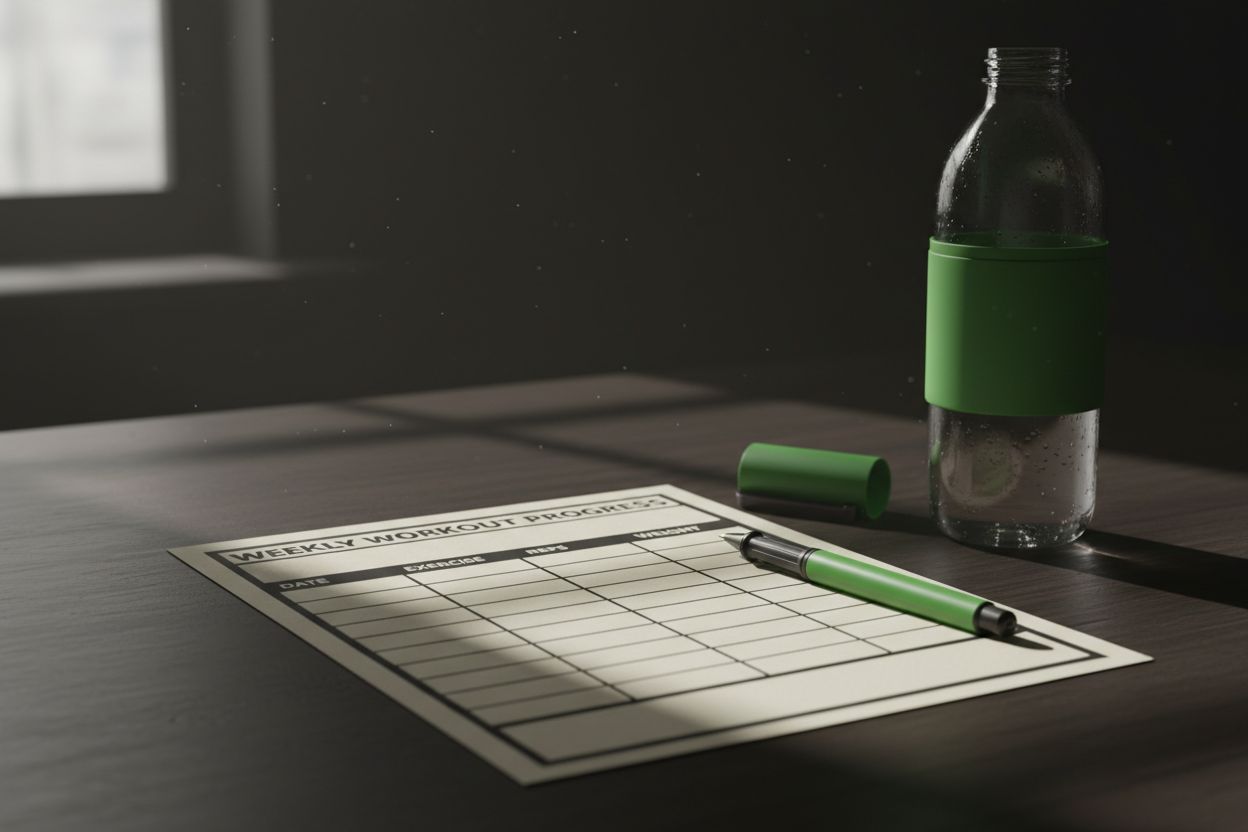
Use the same structure every time so comparing sessions stays easy. A log works best when it is fast to fill out and easy to scan a week later. The AHA and NHLBI templates both keep the format simple for that reason. (heart.org)
Field | Example |
|---|---|
Date | Monday, June 1 |
Goal | Upper-body strength |
Exercise | Bench press |
Working sets | 3 x 5 x 185 lb |
Rest | 2:30 |
Notes | Last rep slowed, keep weight the same next time |
You can also use this blank version:
Date
Goal
Exercise
Warm-up sets
Working sets
Weight or pace
Reps or minutes
Rest time
How it felt
Bodyweight, sleep, and energy if relevant
Next session target
Keep the template short enough that you do not dread filling it out. If you need the log to survive a busy gym session, simple beats polished.
Review your log and make one small change
A workout log is only useful if you look back at it. Once a week, review the last few sessions and check whether load, reps, distance, or total work is moving in the right direction. Mayo Clinic recommends using baseline scores as benchmarks, and CDC says to monitor progress and revise goals as needed. (mayoclinic.org)
Use the review to make one small adjustment:
If strength stalled, add a small amount of weight or a rep.
If fatigue is high, reduce volume or give yourself more rest.
If cardio is stable, increase time, distance, or pace gradually.
If a lift feels sloppy, keep the load and tighten the form first.
That is where tracking becomes useful. Instead of guessing, you are making a tiny, informed change based on what actually happened in training. Progressive overload is the long game, and a log helps you see whether you are applying it on purpose. (pmc.ncbi.nlm.nih.gov)
Common mistakes to avoid
Most tracking problems come from making the log too complicated or from never revisiting it. The point of tracking is to make decisions easier, not to create another chore. Research on self-monitoring shows that consistency matters, and CDC guidance on weight management emphasizes tracking progress and revisiting goals. (pmc.ncbi.nlm.nih.gov)
A few mistakes come up again and again:
Tracking too much data. If the log is overwhelming, you will stop using it.
Waiting until later to write things down. Memory fades fast, especially after a hard session.
Mixing warm-ups and working sets. That makes it harder to compare true training performance.
Changing units or exercise names every week. Consistency makes trends easier to spot.
Only checking scale weight. If body composition matters, also look at measurements, performance, and how your clothes fit.
Never reviewing old sessions. A workout log only helps if it informs the next workout.
Simple logs from AHA and NHLBI are built around the fields that matter most, which is a good reminder to keep your own version lean. (heart.org)
Frequently asked questions
How many workouts should I track?
Track every workout if you can. If you are short on time, record the working sets and the result you care about most, such as load, reps, distance, or minutes. The value comes from consistency, not from the amount of writing. (nhlbi.nih.gov)
Is paper or an app better?
Paper is fine if you want the fastest system, and an app is better if you want searchable history or progress views later. Mayo Clinic and NIDDK both support simple tracking tools, including printable logs and activity trackers. (niddk.nih.gov)
What matters most for strength progress?
Track the lift, the load, the reps, and whether the same load felt easier over time. That is what lets you see progressive overload. (pmc.ncbi.nlm.nih.gov)
Do I need to track everything forever?
No. Start with the smallest useful log, then add details only if they help you make better training decisions. (heart.org)
The easiest workout-tracking system is the one you will repeat after a long day, a hard session, and a busy week. Start with the minimum data that helps you improve, review it consistently, and add complexity only if the basics stop giving you useful information. If you want one place to log, plan, and compare progress, Setgraph's workout log app and workout tracker are built around reps, weight, sessions, and progress views. (setgraph.app)
Article created using Lovarank