What Is Progressive Overload Training? The Science-Backed Method for Continuous Muscle Growth

What Is Progressive Overload Training?
Progressive overload is the systematic increase of stress placed on your muscles during resistance training. At its core, it's a simple concept: to keep getting stronger and building muscle, you need to consistently challenge your body beyond what it's already adapted to.
Think of it this way—if you bench press 135 pounds for three sets of eight reps every single week for a year, your body has zero reason to change. It's already adapted to that exact stimulus. Progressive overload means you're constantly nudging that stimulus upward, whether by adding weight, performing more reps, or manipulating other training variables.
The principle was first formally described by Thomas Delorme in the 1940s during his work rehabilitating soldiers after World War II. He discovered that gradually increasing resistance led to better strength gains than static loading. Since then, progressive overload has become the foundation of every effective strength training program, from powerlifting to bodybuilding to general fitness.
What makes progressive overload non-negotiable is that your muscles adapt remarkably fast. Within 2-3 weeks of starting a new training stimulus, your body begins to plateau. Without progressive overload, you're essentially spinning your wheels—maintaining what you have rather than building something new.
The Science Behind Progressive Overload
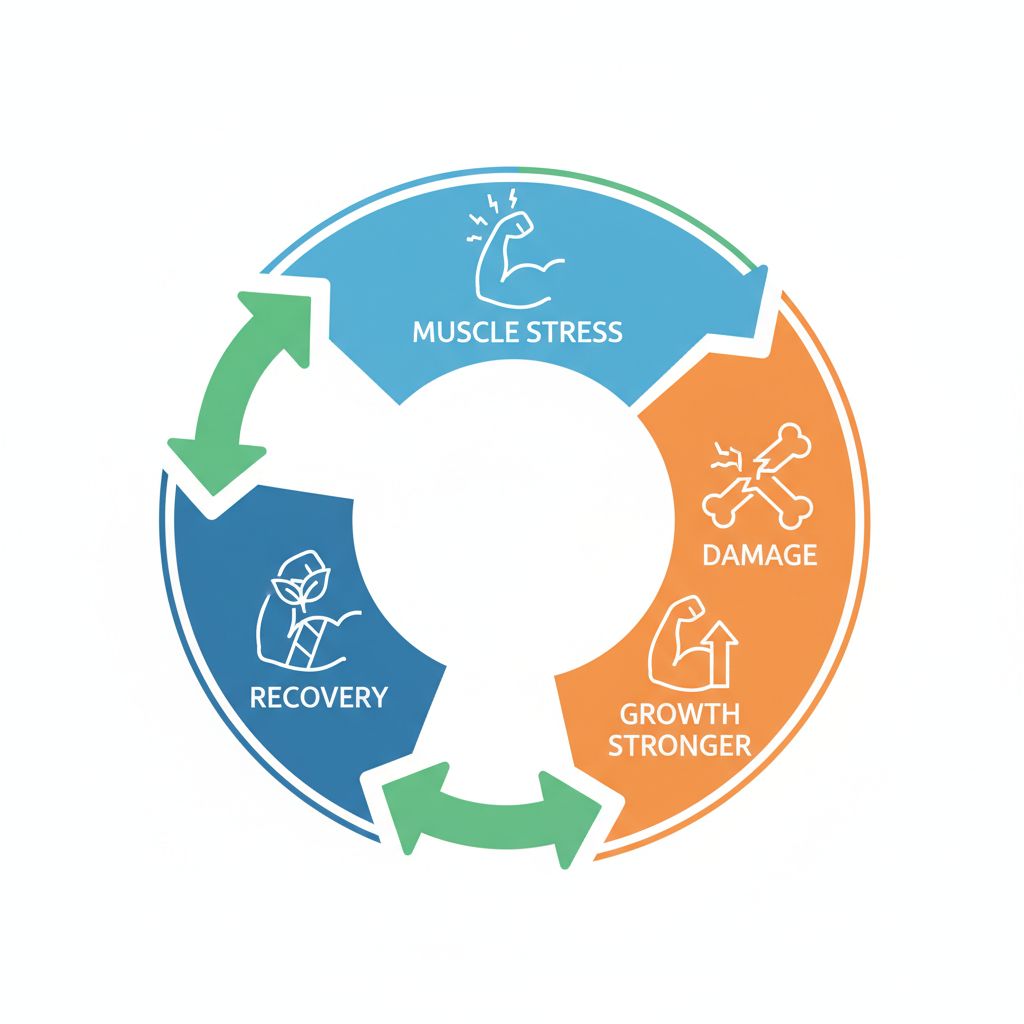
Your muscles don't grow in the gym. They grow during recovery, and only when they've been given a reason to adapt.
When you lift weights, you create microscopic tears in your muscle fibers. This damage triggers a cascade of biological responses: inflammatory markers increase, satellite cells activate, and protein synthesis ramps up. Your body essentially says, "That was hard. I need to build more muscle so it's easier next time."
This process is called muscle protein synthesis (MPS), and it remains elevated for 24-48 hours after training in beginners, though this window shortens as you become more advanced. During this period, your body repairs the damaged fibers and adds new contractile proteins, making the muscle slightly larger and stronger than before.
But here's the catch: this adaptation is specific to the stimulus you provided. If you squat 185 pounds for 5 reps, your body adapts to handle 185 pounds for 5 reps. Once adapted, that same workout no longer creates enough disruption to trigger further growth. You've reached homeostasis.
Progressive overload breaks this cycle by continuously disrupting homeostasis. Each time you increase the demand, you force another adaptation cycle. Research published in the Journal of Applied Physiology shows that trained individuals need to increase training volume by approximately 10-20% every few weeks to continue making gains.
The adaptation follows a principle called supercompensation. After training, your performance temporarily decreases during recovery. With proper rest and nutrition, your body doesn't just return to baseline—it overshoots slightly, becoming stronger than before. This is your window to apply the next progressive overload stimulus.
[INFOGRAPHIC: Diagram illustrating muscle adaptation cycle and supercompensation principle]
Why Progressive Overload Works for Muscle Growth
Muscle growth (hypertrophy) requires three primary mechanisms: mechanical tension, metabolic stress, and muscle damage. Progressive overload directly influences all three.
Mechanical tension is the primary driver. When you lift heavy weights or perform high-rep sets, you create tension across the muscle fibers. This tension activates mechanoreceptors that signal growth pathways, particularly the mTOR pathway, which regulates protein synthesis. Studies show that sets taken close to failure—where mechanical tension is highest—produce superior hypertrophy compared to easy sets.
Metabolic stress occurs when you accumulate metabolites like lactate, hydrogen ions, and inorganic phosphate during training. This creates the "burn" you feel during high-rep sets. These metabolites trigger cell swelling and hormonal responses that contribute to muscle growth. Progressive overload through increased volume or reduced rest periods amplifies metabolic stress.
Muscle damage, while the least important of the three, still plays a role. The micro-tears from training stimulate satellite cell activation and the repair process. However, excessive damage can actually impair recovery and progress, which is why progressive overload should be gradual rather than dramatic.
What separates progressive overload from random training is consistency and measurability. A 2016 meta-analysis in Sports Medicine found that trained lifters who followed structured progressive overload programs gained 2-3 times more muscle than those who trained without systematic progression.
The beauty of progressive overload is its universality. Whether you're training for maximum strength (low reps, heavy weight), muscle size (moderate reps, moderate weight), or muscular endurance (high reps, lighter weight), the principle applies. You just manipulate different variables to match your goal.
Methods of Progressive Overload
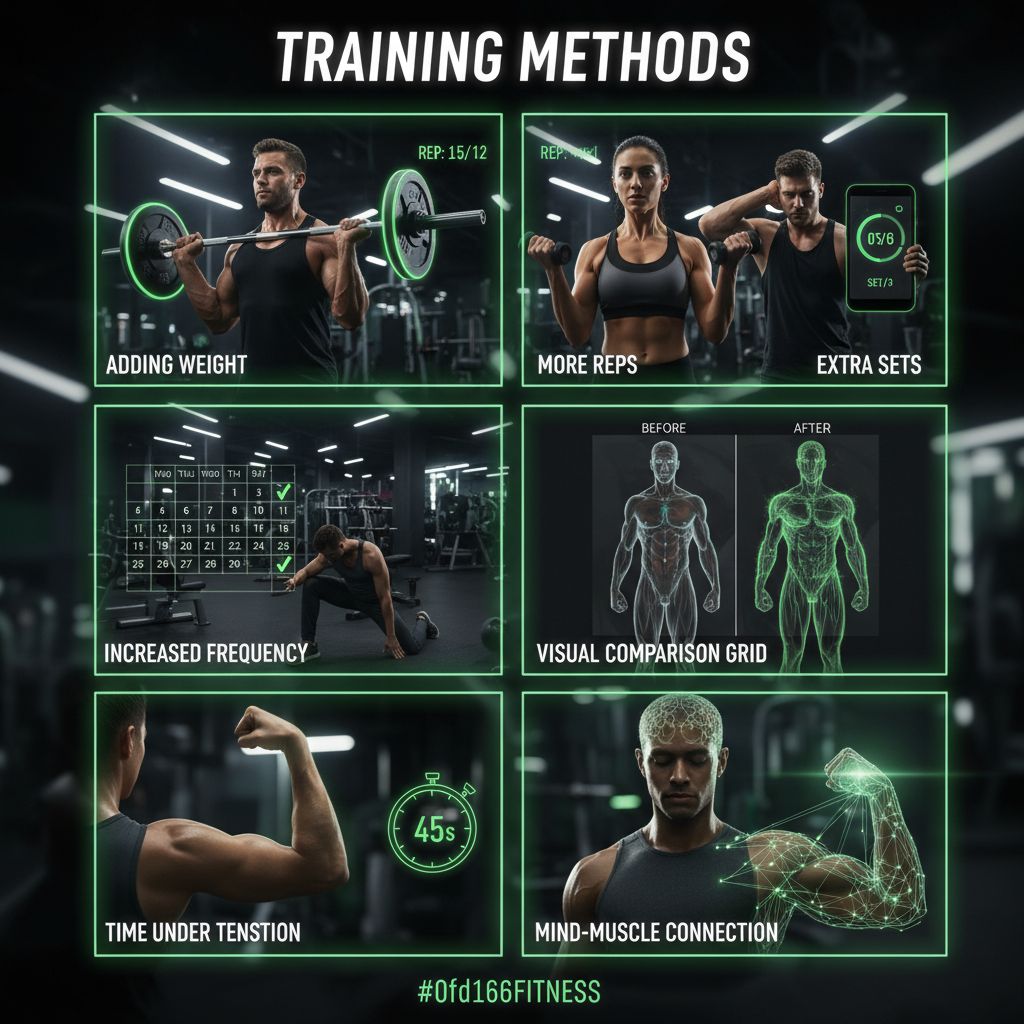
Most people think progressive overload means "add more weight to the bar," but that's just one approach. Here are seven proven methods:
1. Increase Weight (Load)
This is the most straightforward method. If you squatted 225 pounds last week, aim for 230 pounds this week. For beginners, adding 5-10 pounds per session on compound lifts is realistic. Advanced lifters might only add 5 pounds per month.
The key is making sustainable jumps. Adding 2.5 pounds is better than stalling because you tried to jump 10 pounds.
2. Increase Reps
If you performed 3 sets of 8 reps last workout, aim for 3 sets of 9 reps this time with the same weight. This method works particularly well when you're stuck at a certain weight or when small weight increments aren't available.
A common approach is the "double progression" method: increase reps until you hit the top of your target range, then increase weight and drop back to the bottom of the range.
3. Increase Sets (Volume)
Adding another set to your exercise increases total training volume. If you did 3 sets of bench press, try 4 sets next time. Research shows that up to 10 sets per muscle group per session can be productive, though most people respond well to 3-6 sets per exercise.
Be cautious with this method—adding too many sets can quickly lead to overtraining.
4. Increase Training Frequency
Training a muscle group twice per week instead of once doubles your growth stimulus. A 2016 study in the Journal of Sports Sciences found that training each muscle group 2-3 times per week produced better hypertrophy than once-weekly training, assuming volume was equated.
This works because muscle protein synthesis returns to baseline within 48-72 hours, meaning you can stimulate growth again.
5. Decrease Rest Periods
Resting 90 seconds between sets instead of 2 minutes increases metabolic stress and workout density. This method is particularly effective for hypertrophy training but less so for pure strength work, which requires longer rest periods (3-5 minutes) for full recovery.
6. Increase Time Under Tension (Tempo)
Slowing down your reps increases how long your muscles are under tension. A 3-1-3 tempo (3 seconds lowering, 1 second pause, 3 seconds lifting) makes lighter weights feel significantly harder. A set of 8 reps that normally takes 20 seconds might now take 56 seconds.
This method is excellent when you're limited by equipment or recovering from injury.
7. Increase Range of Motion
Squatting to full depth instead of partial depth, or doing deficit deadlifts instead of conventional deadlifts, increases the work your muscles must perform. Greater range of motion generally produces better muscle development, particularly in the stretched position.
[INFOGRAPHIC: Infographic showing the 7 methods of progressive overload with visual examples]
Progressive Overload Examples by Exercise Type
Let's look at how progressive overload applies across different training modalities.
Barbell Exercises
Bench Press Example:
Week 1: 185 lbs × 3 sets × 8 reps
Week 2: 185 lbs × 3 sets × 9 reps
Week 3: 185 lbs × 3 sets × 10 reps
Week 4: 190 lbs × 3 sets × 8 reps
This demonstrates double progression—increasing reps before increasing weight.
Bodyweight Exercises
Push-ups Example:
Week 1: Regular push-ups, 3 sets × 15 reps
Week 2: Regular push-ups, 3 sets × 18 reps
Week 3: Feet-elevated push-ups, 3 sets × 12 reps
Week 4: Feet-elevated push-ups, 3 sets × 15 reps
Progression happens through reps, then exercise variation difficulty.
Dumbbell Exercises
Dumbbell Row Example:
Week 1: 50 lbs × 4 sets × 10 reps, 90-second rest
Week 2: 50 lbs × 4 sets × 12 reps, 90-second rest
Week 3: 55 lbs × 4 sets × 10 reps, 90-second rest
Week 4: 55 lbs × 4 sets × 10 reps, 60-second rest
This combines weight, reps, and rest period manipulation.
Cardio and Conditioning
Progressive overload isn't just for lifting. For running:
Week 1: 3 miles at 9:00/mile pace
Week 2: 3.5 miles at 9:00/mile pace
Week 3: 3.5 miles at 8:45/mile pace
Week 4: 4 miles at 8:45/mile pace
You're increasing either distance or intensity systematically.
How to Implement Progressive Overload (Step-by-Step Guide)
Step 1: Establish Your Baseline
Before you can progress, you need to know where you're starting. Spend 1-2 weeks testing your current capabilities. Record the weight, sets, and reps you can perform with good form on your main exercises.
For example, if you can bench press 135 pounds for 3 sets of 8 reps with 2 minutes rest, that's your baseline.
Step 2: Choose Your Primary Progression Method
For most people, I recommend starting with the double progression method: increase reps within a target range, then increase weight.
Set a rep range like 8-12 reps. When you can hit 12 reps on all sets, increase the weight by 5-10 pounds and drop back to 8 reps.
Step 3: Track Everything
You cannot manage what you don't measure. Write down every workout: exercises, weights, sets, reps, and how it felt. Apps like Setgraph make this effortless by automatically logging your set history and showing your progress over time.
Without tracking, you're guessing whether you're actually progressing or just spinning your wheels.
Step 4: Progress Every 1-2 Weeks
For beginners, progression can happen every workout. Intermediate lifters might progress every 1-2 weeks. Advanced lifters may only progress monthly.
A good rule: if you successfully completed your target reps and sets with good form, and it didn't feel impossibly hard, you're ready to progress.
Step 5: Deload When Necessary
You can't push forward indefinitely. Every 4-8 weeks, take a deload week where you reduce volume or intensity by 40-50%. This allows your body to fully recover and supercompensate.
Skipping deloads leads to accumulated fatigue, increased injury risk, and eventual burnout.
Step 6: Adjust Based on Feedback
If you're consistently failing to hit your targets, you're progressing too aggressively. If workouts feel easy week after week, you're not progressing enough. Your body provides constant feedback—listen to it.
Progressive Overload for Different Fitness Levels
Beginners (0-1 Year of Training)
Beginners have the luxury of rapid progress. Your nervous system is learning to recruit muscle fibers efficiently, and your muscles are highly responsive to any stimulus.
Recommended approach:
Progress every workout or every week
Focus on adding weight to the bar (5-10 lbs on lower body, 2.5-5 lbs on upper body)
Stick to 3-4 sets of 8-12 reps for most exercises
Train each muscle group 2-3 times per week
Don't overthink it—simple linear progression works
Sample progression:
Workout 1: Squat 95 lbs × 3 sets × 10 reps
Workout 2: Squat 100 lbs × 3 sets × 10 reps
Workout 3: Squat 105 lbs × 3 sets × 10 reps
This can continue for months before you need more sophisticated programming.
Intermediate (1-3 Years of Training)
Progress slows down significantly. You can't add weight every workout anymore, and you need more volume to stimulate growth.
Recommended approach:
Progress every 1-2 weeks
Use double progression (reps, then weight)
Increase training volume (4-6 sets per exercise)
Incorporate periodization (alternating between strength and hypertrophy phases)
Pay closer attention to recovery and nutrition
Sample progression:
Week 1: Bench 185 lbs × 4 sets × 8 reps
Week 2: Bench 185 lbs × 4 sets × 9 reps
Week 3: Bench 185 lbs × 4 sets × 10 reps
Week 4: Bench 190 lbs × 4 sets × 8 reps
Advanced (3+ Years of Training)
At this level, you're fighting for every pound of muscle. Progress might only happen monthly, and you need highly structured programming.
Recommended approach:
Progress every 2-4 weeks
Use multiple progression methods simultaneously
Implement advanced periodization (daily undulating periodization, block periodization)
Maximize volume while managing fatigue
Consider specialization phases for lagging body parts
Sample progression:
Weeks 1-3: Accumulation phase (high volume, moderate intensity)
Week 4: Deload
Weeks 5-7: Intensification phase (lower volume, high intensity)
Week 8: Deload and test new maxes
[INFOGRAPHIC: Chart comparing progression timeline for beginners vs advanced lifters over 12 weeks]
Common Mistakes and How to Avoid Them
Mistake 1: Progressing Too Fast
Adding 20 pounds to your squat in one week might feel impressive, but it's unsustainable and increases injury risk. Your connective tissues (tendons, ligaments) adapt slower than muscles.
Solution: Follow the "10% rule"—don't increase volume or intensity by more than 10% per week. Slow, consistent progress beats aggressive jumps followed by injury.
Mistake 2: Not Tracking Workouts
If you can't remember what you lifted last week, you can't ensure you're progressing. This is the most common reason people plateau.
Solution: Use a workout log or app. Setgraph automatically tracks your set history and shows your progress trends, making it impossible to forget what you did last session.
Mistake 3: Sacrificing Form for Numbers
Adding weight while using terrible form doesn't count as progressive overload—it's just ego lifting. You're distributing the load across different muscles and increasing injury risk.
Solution: Only progress when you can maintain proper form throughout the entire set. If your form breaks down, the weight is too heavy.
Mistake 4: Ignoring Recovery
Progressive overload requires progressive recovery. If you're not sleeping 7-9 hours, eating enough protein (0.8-1g per pound of bodyweight), and managing stress, you won't adapt to the increased demands.
Solution: Treat recovery as seriously as training. Schedule rest days, prioritize sleep, and fuel your body appropriately.
Mistake 5: Changing Everything at Once
Adding weight AND reps AND sets AND frequency simultaneously is a recipe for burnout. You can't sustain that level of increase.
Solution: Change one variable at a time. Master that progression before adding another layer of complexity.
Mistake 6: Never Deloading
Fatigue accumulates over time. Without periodic deloads, you'll eventually hit a wall where you can't recover between sessions.
Solution: Every 4-8 weeks, reduce your training volume or intensity by 40-50% for one week. You'll come back stronger.
Mistake 7: Comparing Yourself to Others
Your training partner might add 10 pounds per week while you add 5. That doesn't mean you're doing something wrong—everyone progresses at different rates based on genetics, training age, and recovery capacity.
Solution: Compete with your past self, not others. As long as you're better than you were last month, you're winning.
Tracking Your Progressive Overload Progress
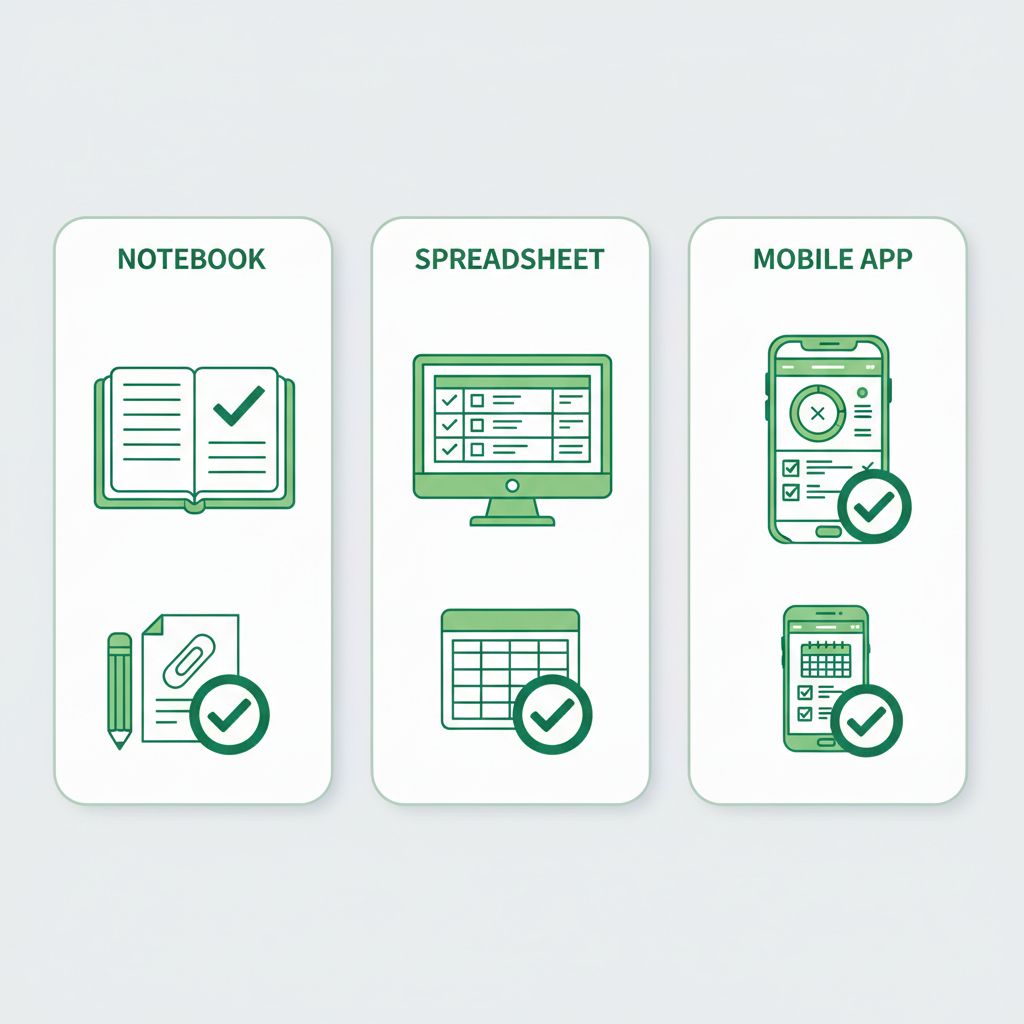
Effective tracking is non-negotiable for progressive overload. Here's what you need to monitor:
Essential Metrics
Weight lifted: The most obvious metric. Record the exact weight for every set.
Reps completed: Track actual reps, not just your target. If you aimed for 10 but only got 8, write down 8.
Sets performed: Total volume matters. Three sets of 10 is different from five sets of 10.
Rest periods: Especially important if you're using rest period manipulation as a progression method.
Rate of Perceived Exertion (RPE): On a scale of 1-10, how hard was the set? An 8 RPE means you had about 2 reps left in the tank. This helps you gauge whether you're truly progressing or just getting better at suffering.
Advanced Metrics
Total volume: Sets × Reps × Weight. If you did 3 sets of 10 reps at 100 pounds, your volume is 3,000 pounds. Tracking volume over time shows your overall workload trends.
One-rep max (1RM): Your theoretical maximum for a single rep. You can estimate this using formulas or test it directly every few months.
Time under tension: Total seconds your muscles were working during a set.
Tracking Methods
Notebook: Old school but effective. Write down date, exercise, sets, reps, weight, and notes.
Spreadsheet: More organized than a notebook. You can create graphs and calculate volume automatically.
Apps: The most convenient option. Apps like Setgraph let you log sets in seconds, view your complete exercise history, and see progress trends without manual calculations. You can access your workout plan right from your phone during gym sessions, making it easy to reference what you did last time and aim for progressive overload.
What to Look For
You're making progress if:
Your total volume is increasing over time
You're lifting heavier weights for the same reps
You're performing more reps with the same weight
Your RPE is staying consistent or decreasing for the same workload
You're plateauing if:
Numbers haven't changed in 3-4 weeks
RPE is increasing for the same workload
You're frequently failing to hit your targets
[INFOGRAPHIC: Visual example of progressive overload tracking sheet or app screenshot]
Benefits of Progressive Overload Training
Continuous Muscle Growth
The primary benefit is obvious: progressive overload is the only way to build muscle long-term. Studies show that trained individuals who follow progressive overload protocols gain 2-3 times more muscle than those who don't systematically progress.
Increased Strength
Strength gains follow a similar pattern. Research in the Journal of Strength and Conditioning Research found that progressive overload programs produced 40% greater strength increases compared to non-progressive programs over 12 weeks.
Improved Bone Density
Progressive resistance training increases bone mineral density, reducing osteoporosis risk. A 2017 study in the Journal of Bone and Mineral Research showed that progressive overload training increased bone density by 1-3% annually in postmenopausal women.
Enhanced Metabolic Rate
More muscle mass means higher resting metabolic rate. Each pound of muscle burns approximately 6 calories per day at rest, compared to 2 calories for fat. Over time, this adds up to significant differences in daily energy expenditure.
Better Athletic Performance
Whether you're a runner, cyclist, or team sport athlete, progressive overload in strength training improves power output, speed, and injury resilience. A 2016 meta-analysis found that resistance training improved running economy by 3-5% in endurance athletes.
Measurable Progress
Unlike vague fitness goals, progressive overload gives you concrete numbers to track. You know exactly whether you're improving, which provides motivation and accountability.
Injury Prevention
Gradual progression strengthens not just muscles but also tendons, ligaments, and bones. This creates a more resilient body that can handle the demands of training and daily life. Sudden jumps in training load are a primary cause of overuse injuries—progressive overload prevents this.
Long-Term Sustainability
Progressive overload creates a roadmap for continuous improvement. Instead of random workouts that lead nowhere, you have a clear path forward. This keeps training engaging and purposeful for years, not just weeks.
Making Progressive Overload Work for You
Progressive overload isn't complicated, but it does require consistency and attention to detail. The lifters who make the best long-term progress aren't necessarily the ones who train the hardest—they're the ones who track their workouts, progress systematically, and recover intelligently.
Start simple. Pick 4-6 main exercises, establish your baseline, and commit to adding just a little bit more each week. Whether that's one more rep, five more pounds, or one less minute of rest doesn't matter as much as the fact that you're moving forward.
Track everything. You can't improve what you don't measure, and you can't measure what you don't record. Whether you use a notebook, spreadsheet, or an app like Setgraph, make logging your workouts a non-negotiable habit.
Be patient. Muscle growth is measured in months and years, not days and weeks. The person who adds 5 pounds per month for a year will be lifting 60 pounds more—that's the difference between a 135-pound bench press and a 195-pound bench press. Small, consistent progress compounds into remarkable results.
Progressive overload is the closest thing we have to a guaranteed formula for building muscle and strength. Apply it consistently, track your progress, and trust the process. Your body has no choice but to adapt.
Article created using Lovarank