Workout Log: How to Track Your Training and Build Muscle Faster

What is a Workout Log and Why You Need One
A workout log is your training diary—a systematic record of every exercise, set, rep, and weight you lift during your gym sessions. Think of it as your fitness GPS, showing you exactly where you've been and helping you navigate where you're going.
The concept is straightforward: you write down what you did during each workout. Maybe it's "Bench Press: 3 sets of 8 reps at 185 lbs" or "Squats: 5x5 at 225 lbs." Some people track everything down to rest periods and how they felt. Others just jot down the basics.
Here's why this matters more than you might think. Your memory is terrible at tracking fitness progress. You might remember your best lifts, but can you recall what you did three weeks ago on Tuesday? Probably not. Without concrete data, you're essentially guessing your way through the gym, repeating the same weights and wondering why you're not getting stronger.
Research backs this up. A study published in the Journal of Obesity found that people who consistently tracked their workouts were significantly more likely to achieve their fitness goals compared to those who didn't. The act of recording creates accountability and reveals patterns you'd otherwise miss.
Whether you're trying to build muscle, lose fat, or get stronger, a workout log transforms random gym sessions into a structured training program. It's the difference between hoping you're making progress and knowing you are.
Benefits of Keeping a Workout Log
Progressive Overload Made Simple
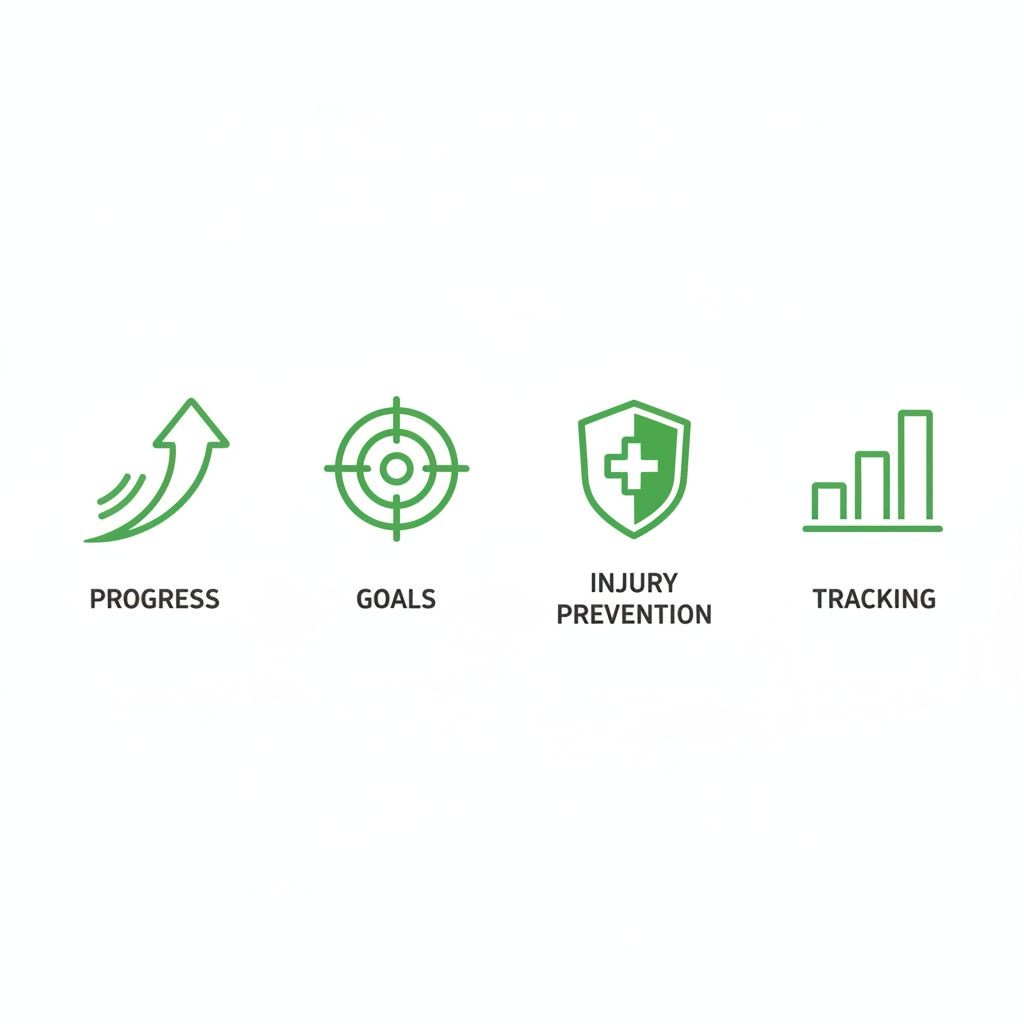
Progressive overload—gradually increasing the stress on your muscles—is the foundation of getting stronger. But you can't progressively overload if you don't know what you did last time. A workout log eliminates the guesswork. You see that you did 135 lbs for 10 reps last week, so this week you aim for 140 lbs or 11 reps. Small, measurable improvements add up to major gains over months.
Spotting Plateaus Before They Derail You
When your numbers stop moving, your log tells you immediately. Maybe you've been stuck at 225 lbs on squats for three weeks. That's valuable information. You can adjust your program, add volume, change rep ranges, or address recovery issues. Without tracking, you might not notice the plateau until you've wasted months.
Injury Prevention Through Pattern Recognition
Your workout log can reveal warning signs before minor issues become major injuries. If you notice your shoulder exercises consistently feel "off" or your lower back bothers you after deadlift sessions, that's data worth examining. You can adjust form, reduce weight, or modify exercises before something tears or strains.
Motivation Through Visible Progress
Flipping back through months of data and seeing how far you've come is incredibly motivating. You started benching 95 lbs and now you're at 185 lbs? That's concrete proof your work is paying off. On tough days when you don't feel like training, your log reminds you of your progress and keeps you consistent.
Optimizing Recovery and Volume
Tracking helps you understand your body's recovery capacity. If you notice performance drops after high-volume weeks, you can adjust. If you're crushing workouts with more frequency, you know you can handle additional training stress. This personalized data beats generic advice from the internet.
[INFOGRAPHIC: Visual showing the correlation between consistent workout logging and strength gains over 6 months, with data points for tracked vs. untracked lifters]
Types of Workout Logs: Paper vs Digital
The Classic Paper Journal
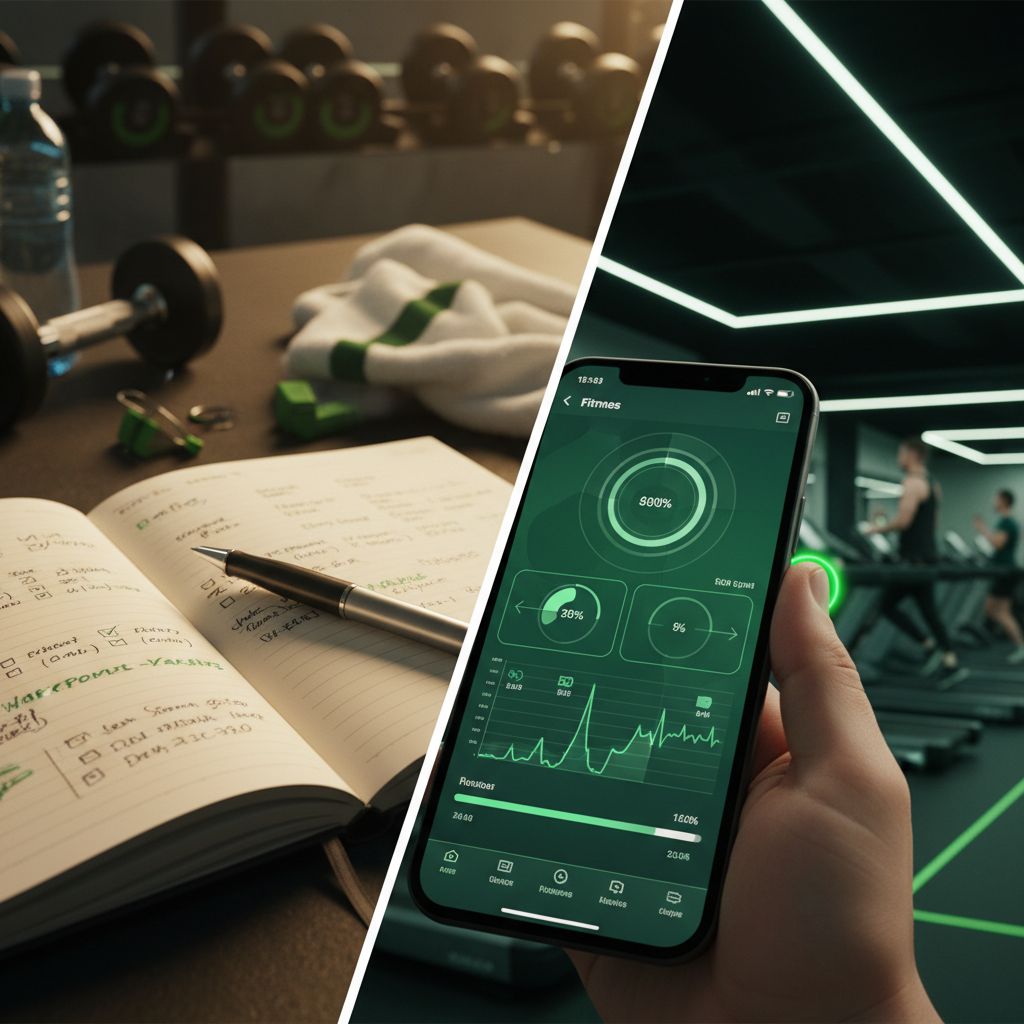
Paper workout logs have been around since bodybuilders first started training seriously. You grab a notebook, write down your exercises, and track your sets. Simple, reliable, and battery-free.
Advantages:
No learning curve—just write
Zero distractions (no notifications or app crashes)
Tactile satisfaction that some people prefer
Works anywhere, no internet required
Can sketch exercise diagrams or add custom notes easily
Disadvantages:
Easy to lose or damage
No automatic calculations (you're doing math manually)
Can't easily search past workouts
Difficult to visualize progress trends
Takes up physical space
Handwriting can become illegible
Digital Workout Trackers and Apps
Digital solutions range from simple spreadsheets to sophisticated apps with AI features. They've become the preferred choice for most serious lifters because of their analytical capabilities.
Advantages:
Automatic calculations (one-rep max, volume, tonnage)
Cloud backup—never lose your data
Easy to search and filter past workouts
Visual progress charts and graphs
Rest timers built in
Can access from multiple devices
Share workouts with trainers or training partners
Disadvantages:
Requires phone or device (potential distraction)
Learning curve with some apps
May require subscription fees
Battery dependency
Some apps have cluttered interfaces that slow you down
Spreadsheets: The Middle Ground
Google Sheets or Excel offers a DIY approach. You create your own tracking system with exactly the fields you want. It's flexible but requires more setup time and technical comfort.
Best for: People who want digital benefits but prefer customization over pre-built features.
Which Should You Choose?
Honestly? The one you'll actually use consistently. A simple paper notebook you fill out religiously beats a fancy app you abandon after two weeks. That said, most people find digital solutions more sustainable long-term because of the convenience and analytical features.
If you're serious about strength training and want to optimize your progress, a dedicated workout tracking app typically provides the best balance of ease and functionality.
Essential Information to Track in Your Workout Log
The Non-Negotiables
At minimum, your workout log needs these core elements:
Exercise Name: Be specific. "Bench Press" is better than "chest." "Barbell Bench Press" is even better if you also do dumbbell variations.
Sets and Reps: The foundation of any strength program. Record exactly what you completed, not what you planned. If you aimed for 3x10 but only got 10, 9, 8 reps, write that down.
Weight Used: Include the bar weight if you're tracking barbell exercises. A 45 lb bar plus two 45 lb plates equals 135 lbs total—track the total.
Date: Seems obvious, but you need to know when you did each workout to track frequency and recovery.
The Performance Enhancers
These additional metrics take your tracking to the next level:
Rest Time Between Sets: Matters more than most people realize. Resting 90 seconds versus 3 minutes significantly impacts performance. If you're trying to replicate or beat a previous workout, rest time should be consistent.
Rate of Perceived Exertion (RPE): On a scale of 1-10, how hard was that set? An 8 RPE means you had about 2 reps left in the tank. This helps you understand if you're truly pushing hard or leaving too much on the table.
Workout Duration: Total time from first set to last. Helps you understand training density and whether you're spending too long or rushing through sessions.
Notes on Form and Feel: "Felt strong today" or "lower back tight on deadlifts" provides context that numbers alone can't capture. These qualitative notes often explain performance variations.
The Optional Deep Dive
For those who want comprehensive data:
Body weight: Tracks whether you're gaining, losing, or maintaining
Sleep quality: Poor sleep often predicts poor performance
Pre-workout nutrition: What you ate and when
Cardio sessions: Duration, distance, heart rate
Mobility work: Stretching and warm-up details
Don't overwhelm yourself trying to track everything at once. Start with the basics and add metrics as tracking becomes habitual.
How to Choose the Right Workout Log
Match Your Training Style
Your ideal workout log depends on how you train:
Structured Program Followers: If you're running a specific program like 5/3/1, Starting Strength, or a PPL split, you need a log that lets you organize workouts by day or muscle group. Look for apps that support workout templates and routines.
Flexible Gym-Goers: Some people don't follow rigid programs—they train based on how they feel or what equipment is available. For this style, you need quick access to individual exercises without navigating through pre-planned workouts. A simple exercise list works better than complex routine builders.
Powerlifters and Strength Athletes: You're focused on the big three (squat, bench, deadlift) and need detailed tracking of working sets, warm-ups, and percentage-based programming. Look for logs with one-rep max calculators and percentage tools.
Bodybuilders: Volume and muscle group organization matter most. You want to see total sets per muscle group per week and ensure balanced development.
Speed and Simplicity Matter
Here's something most people overlook: if your workout log slows you down in the gym, you won't use it. The best system is one that takes seconds to log a set, not minutes.
Ask yourself:
Can I log a set in under 10 seconds?
Do I need to navigate through multiple screens?
Does the app require internet connection?
Can I see my previous sets while logging new ones?
The faster you can record data, the more likely you'll stay consistent with tracking.
Free vs Paid: What's Worth Paying For?
Many workout logs offer free versions with basic features. Paid versions typically add:
Cloud backup and sync across devices
Advanced analytics and progress charts
Unlimited exercises or workouts
Custom exercise creation
Export capabilities
No advertisements
For casual gym-goers, free versions often suffice. If you're serious about training and want to optimize long-term, paid features usually justify the cost. Think of it as investing $5-10 monthly in your progress—less than a single protein shake.
Test Drive Before Committing
Most apps offer free trials. Use them. Take your actual workout routine and test the logging process. Does it feel natural? Does it have the features you need? Can you easily review past workouts?
Don't just read reviews—actually use it in the gym for a week.
Best Workout Log Apps and Tools Comparison
Dedicated Strength Training Apps
Apps built specifically for weightlifting typically offer the best experience for serious lifters. They understand the workflow: select exercise, view history, log sets, start rest timer, repeat.
Look for features like:
Quick set logging (swipe gestures, pre-filled data)
Exercise history accessible while logging
Rest timer with notifications
Plate calculator for barbell loading
Progress charts for individual exercises
Workout templates for consistent routines
All-in-One Fitness Apps
Apps like MyFitnessPal or Fitbit include workout tracking alongside nutrition and cardio. They're convenient if you want everything in one place, but the workout logging features are often less sophisticated than dedicated strength apps.
Best for: People who prioritize nutrition tracking and want basic workout logging as a secondary feature.
Spreadsheet Solutions
Google Sheets or Excel gives you complete control. You can create exactly the tracking system you want with custom formulas, charts, and layouts. The downside? It requires setup time and isn't as convenient to use mid-workout on your phone.
Best for: Data enthusiasts who enjoy customization and don't mind the extra effort.
Paper Notebooks and Printable Templates
Don't underestimate the simplicity of paper. Many successful lifters still prefer notebooks because they're distraction-free and satisfying to use. You can find printable workout log templates online or create your own format.
Best for: People who want to minimize phone use in the gym or prefer tactile recording.
What Makes Setgraph Different
Setgraph takes a minimalist approach designed specifically for lifters who want speed without sacrificing features. You create exercises once, then access them instantly whenever you need to log sets. No complex navigation, no forced workout planning if you don't want it.
The app understands that your bench press history is your bench press history—whether you're doing it on chest day, upper body day, or a full-body routine. You always see your complete set history for context, regardless of which workout plan you're following.
Key features include:
Swipe-to-log for quick set entry
Smart plate calculator
Rest timer with live activity notifications
Exercise notes for form cues and targets
Workout templates for structured programs
AI workout generator for personalized plans
The philosophy is simple: don't slow down your workout. Log your sets in seconds and get back to training.
How to Use a Workout Log Effectively
Start Simple, Build Complexity
Your first workout log entry doesn't need to be perfect. Start by recording just the basics: exercise, weight, sets, and reps. As tracking becomes habitual, add more details like rest times or RPE.
Many people fail at workout logging because they try to track everything immediately and get overwhelmed. Build the habit first, optimize later.
Review Before Each Workout
Spend 2-3 minutes before training reviewing what you did last session. This isn't just nostalgia—it's strategic planning. You're setting specific targets for today's workout based on concrete data.
If you squatted 225 lbs for 3 sets of 8 last week, you know exactly what to beat today. Maybe you add 5 lbs, or you aim for 9 reps, or you reduce rest time. The point is you're making informed decisions, not random guesses.
Log in Real-Time, Not Later
Record sets immediately after completing them. Your memory is shockingly unreliable, even 10 minutes later. Did you do 8 reps or 9? Was it 185 lbs or 195 lbs? Real-time logging eliminates this uncertainty.
Plus, logging between sets gives you something productive to do during rest periods instead of scrolling social media.
Use Your Log to Plan Progressive Overload
Progression doesn't always mean adding weight. Your log helps you identify multiple progression strategies:
More weight: Same reps, heavier load
More reps: Same weight, additional reps
More sets: Additional working sets
Less rest: Same work, shorter recovery
Better form: Same numbers, cleaner execution
When you can't add weight (you will plateau), your log shows alternative progression paths.
Analyze Monthly Trends
Once a month, review your overall progress. Look for patterns:
Which exercises are progressing well?
Where are you stuck?
Are you training muscle groups with balanced volume?
Is your total training volume increasing, decreasing, or stable?
This bird's-eye view reveals insights that individual workout reviews miss. Maybe your pressing movements are progressing but your pulling movements are stagnant—that's actionable information.
Adjust Based on Data, Not Feelings
Feelings lie. You might feel like you're not making progress, but your log shows you've added 50 lbs to your squat in three months. Or you might feel strong, but the data reveals you've been stuck at the same weights for six weeks.
Trust the data. Make decisions based on objective measurements, not subjective impressions.
Common Workout Logging Mistakes to Avoid
Tracking Too Much Too Soon
The enthusiastic beginner syndrome: you download an app and try to track exercises, sets, reps, weight, rest time, RPE, heart rate, sleep quality, nutrition, and mood. By week two, you're exhausted and quit tracking entirely.
Start minimal. Add complexity gradually as tracking becomes automatic.
Inconsistent Recording
Logging some workouts but not others destroys the value of tracking. Incomplete data is almost worse than no data because it gives you false confidence while missing crucial information.
If you're going to track, commit to tracking every session. If that feels overwhelming, you're tracking too much (see mistake #1).
Rounding Numbers
"I did about 8 reps" or "around 185 lbs" defeats the purpose. Precision matters. The difference between 8 reps and 9 reps is significant when you're trying to progressively overload.
Be exact. Count every rep. Record the actual weight.
Ignoring Failed Sets
Only recording successful sets creates a distorted picture. If you aimed for 3 sets of 10 but only completed 10, 8, 7 reps, write that down. Failed sets provide valuable information about your current capacity and recovery.
Never Reviewing the Data
Some people diligently log every workout but never look back at the information. That's like taking detailed notes in class and never studying them. The value of tracking comes from analysis and adjustment, not just recording.
Schedule weekly or monthly review sessions. Make it part of your training routine.
Comparing Yourself to Others
Your workout log is about your progress, not how you stack up against someone else. Comparing your squat numbers to your training partner's numbers is pointless—you have different genetics, training history, and body structures.
Compete with your past self. That's the only comparison that matters.
Letting Perfect Be the Enemy of Good
Missed logging a workout? Don't abandon the entire system. Just start again with the next session. Your log doesn't need to be perfect to be useful.
Analyzing Your Workout Data for Better Results
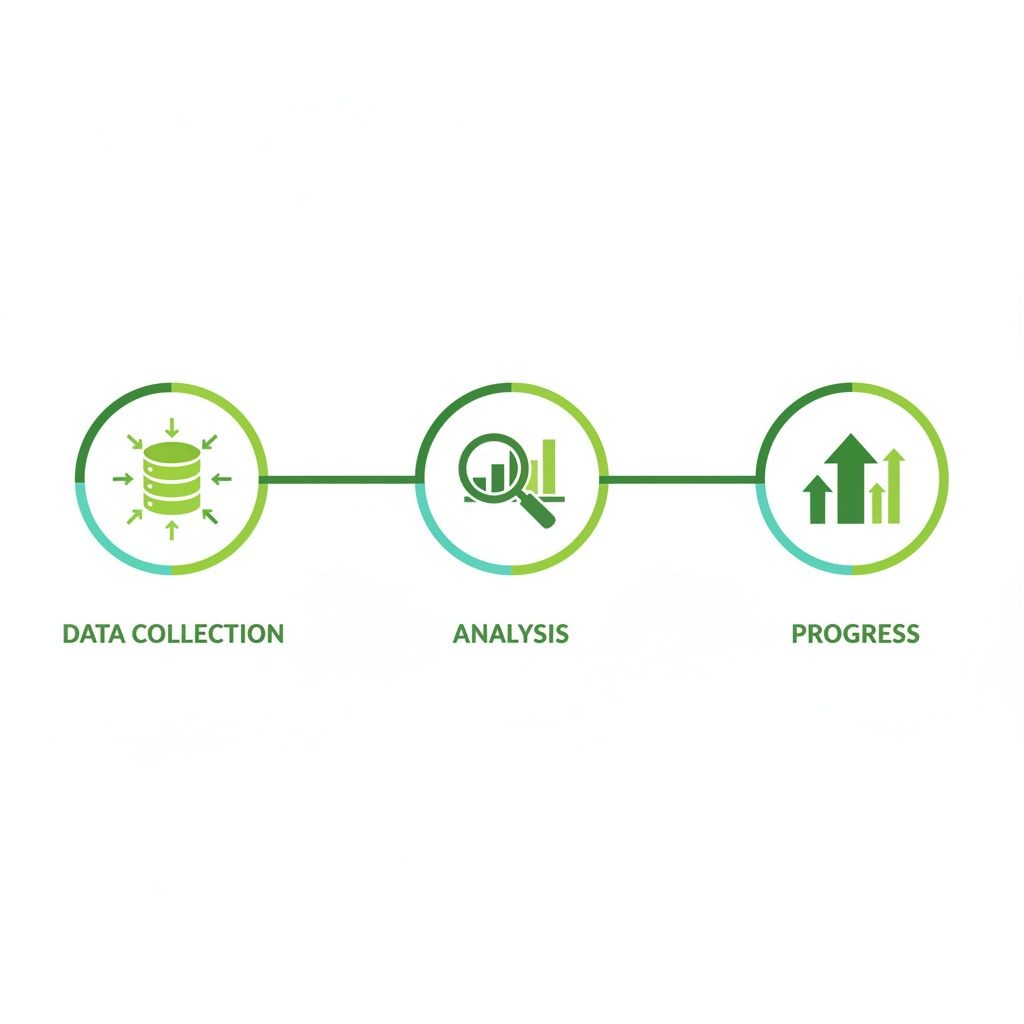
Identify Your Weak Points
Your log reveals imbalances you might not notice otherwise. If your bench press is progressing steadily but your overhead press hasn't moved in months, that's a weak point requiring attention.
Look at progression rates across exercises. The ones lagging behind need programming adjustments—more volume, different rep ranges, or technique work.
Calculate Training Volume
Total volume (sets × reps × weight) is a key metric for muscle growth. Your log lets you calculate weekly volume for each muscle group.
Research suggests most people need 10-20 sets per muscle group per week for optimal growth. Too little and you're leaving gains on the table. Too much and you're not recovering adequately.
Your log shows exactly where you fall on this spectrum.
Track Recovery Patterns
How many days do you need between training the same muscle group? Your log answers this. If you notice performance drops when you squat twice a week but improvements when you squat every 4-5 days, that's your body telling you its recovery needs.
This is highly individual. Some people recover quickly and thrive on high frequency. Others need more rest. Your data reveals your personal recovery capacity.
Spot Overtraining Before It Happens
Consistent performance decreases across multiple exercises signal potential overtraining. If your numbers are dropping despite adequate effort, your log helps you identify this early.
Other warning signs in your data:
Inability to complete usual rep ranges
Longer recovery needed between sets
Decreased motivation (if you track subjective notes)
Persistent soreness lasting longer than normal
Catch these patterns early and you can adjust training volume before overtraining becomes serious.
Optimize Exercise Selection
Some exercises work better for your body than others. Your log reveals which movements produce the best results.
Maybe you progress faster on incline bench than flat bench. Or Romanian deadlifts build your hamstrings better than leg curls. This personalized data beats generic exercise recommendations.
Double down on what works for your body.
Understand Plateau Causes
When progress stalls, your log helps diagnose why:
Volume plateau: You've been doing the same total sets for months
Intensity plateau: You're not pushing close enough to failure
Frequency plateau: You're not training the movement pattern often enough
Recovery plateau: You're not allowing adequate rest between sessions
Without data, you're guessing at solutions. With data, you're making informed adjustments.
[INFOGRAPHIC: Flowchart showing how to analyze workout log data to identify and break through plateaus]
Workout Log Templates and Examples
Basic Strength Training Template
For someone following a simple program focused on compound movements:
Date: [Date]
Workout: [e.g., Lower Body]
Exercise | Set 1 | Set 2 | Set 3 | Notes |
|---|---|---|---|---|
Squat | 225x8 | 225x8 | 225x7 | Felt strong |
Romanian Deadlift | 185x10 | 185x10 | 185x10 | Good stretch |
Leg Press | 360x12 | 360x12 | 360x11 | |
Leg Curl | 90x12 | 90x12 | 90x12 |
Total Time: 52 minutes
Overall Feel: 8/10
Bodybuilding Volume Template
For tracking higher volume with multiple exercises per muscle group:
Date: [Date]
Focus: Chest & Triceps
Chest (12 total sets):
Barbell Bench Press: 185x8, 185x8, 185x7, 185x6
Incline Dumbbell Press: 70x10, 70x9, 70x8
Cable Flyes: 40x12, 40x12, 40x12
Dips: BWx12, BWx10
Triceps (9 total sets):
Close-Grip Bench: 135x10, 135x10, 135x9
Overhead Extension: 60x12, 60x12, 60x11
Rope Pushdown: 70x15, 70x15, 70x14
Powerlifting Percentage-Based Template
For programs using percentages of one-rep max:
Week 3, Day 1 - Squat Focus
Current 1RM: 315 lbs
Set Type | Percentage | Weight | Target Reps | Actual Reps |
|---|---|---|---|---|
Warm-up | 40% | 125 | 5 | 5 |
Warm-up | 50% | 160 | 5 | 5 |
Warm-up | 60% | 190 | 3 | 3 |
Working | 75% | 235 | 5 | 5 |
Working | 85% | 270 | 3 | 3 |
Working | 95% | 300 | 1+ | 3 |
Notes: Hit 3 reps on top set—increase training max next cycle
Minimalist Template
For those who want just the essentials:
Monday 3/18
Bench: 185x8, 185x8, 185x7
Rows: 135x10, 135x10, 135x10
OHP: 95x8, 95x8, 95x7
Curls: 30x12, 30x12, 30x10
Thursday 3/21
Squat: 225x5, 225x5, 225x5, 225x5, 225x5
RDL: 185x8, 185x8, 185x8
Leg Press: 360x15, 360x15, 360x12
No template is inherently better than another. The best template is the one you'll actually fill out consistently. Start simple and add detail as needed.
Making Your Workout Log Work for You
The difference between people who achieve their fitness goals and those who spin their wheels often comes down to one thing: tracking. Not because tracking is magical, but because it creates accountability, reveals patterns, and enables intelligent progression.
Your workout log doesn't need to be complicated. It doesn't need fancy features or expensive apps. It just needs to record what you did so you can do slightly more next time. That's the entire game—progressive overload applied consistently over months and years.
Start today. Grab whatever tool feels most natural—an app, a notebook, a spreadsheet—and log your next workout. Write down the exercises, the weights, the sets, and the reps. That's it. You've started building a database of your training that will pay dividends for years.
As you get comfortable with basic tracking, you can add sophistication. Track rest times, RPE, or training volume. Analyze monthly trends. Identify weak points. But don't let the pursuit of the perfect tracking system prevent you from starting with a simple one.
The best workout log is the one you'll use tomorrow, next week, and next month. Everything else is secondary.
Ready to start tracking your workouts with a tool designed specifically for lifters? Setgraph offers a fast, simple approach to logging sets and monitoring progress without slowing down your training. Try it and see how proper tracking transforms your results.
Article created using Lovarank