Arnold Split Workout: The Complete 6-Day Training Guide (2025)

What Is The Arnold Split Workout?
The Arnold split is a high-volume, 6-day training program that divides your body into three distinct workout sessions, each performed twice per week. Unlike traditional body part splits that isolate single muscle groups, this approach pairs complementary muscles together: chest with back, shoulders with arms, and legs with lower body.
Arnold Schwarzenegger popularized this training method during his competitive bodybuilding career in the 1970s, using it to build the physique that earned him seven Mr. Olympia titles. The split's defining characteristic is its frequency—you're hitting each major muscle group twice weekly, which creates an optimal balance between training stimulus and recovery time.
Here's the basic structure:
Day 1 & 4: Chest and Back
Day 2 & 5: Shoulders and Arms (biceps, triceps, forearms)
Day 3 & 6: Legs and Lower Back
Day 7: Rest
This isn't a beginner's program. The Arnold split demands significant time commitment, recovery capacity, and training experience. You're looking at 60-90 minute sessions, six days a week, with substantial volume per muscle group. But for intermediate to advanced lifters ready to push their limits, it's one of the most effective muscle-building protocols ever designed.
Arnold's Training Philosophy and History
Arnold didn't just lift weights—he approached training with a specific mindset that separated him from his competitors. His philosophy centered on three core principles: volume, intensity, and the mind-muscle connection.
During his peak training years, Arnold believed in shocking the muscles with high volume. He'd perform 20-30 sets per muscle group in a single session, far exceeding what most modern programs recommend. But this wasn't random—he understood that muscles adapt to stress, and progressive overload was the key to continuous growth.
The pairing of antagonistic muscle groups (chest/back, biceps/triceps) wasn't arbitrary either. Arnold discovered that training opposing muscles in the same session created a powerful pump and allowed for better recovery between sets. While your chest rests, you're working back. This approach maximized gym efficiency and kept blood flowing to the upper body throughout the entire workout.
Arnold also emphasized the mental aspect of training. He famously talked about visualizing the muscle growing with each rep, feeling every contraction, and maintaining complete focus. This wasn't pseudoscience—research now confirms that conscious muscle engagement during resistance training can enhance muscle activation and growth.
His training evolved from the Austrian weightlifting gyms to Gold's Gym in Venice Beach, where he refined this split alongside other legends like Franco Columbu and Frank Zane. The competitive environment pushed everyone to train harder, and the Arnold split became the blueprint that many professional bodybuilders followed.
Complete 6-Day Arnold Split Workout Plan
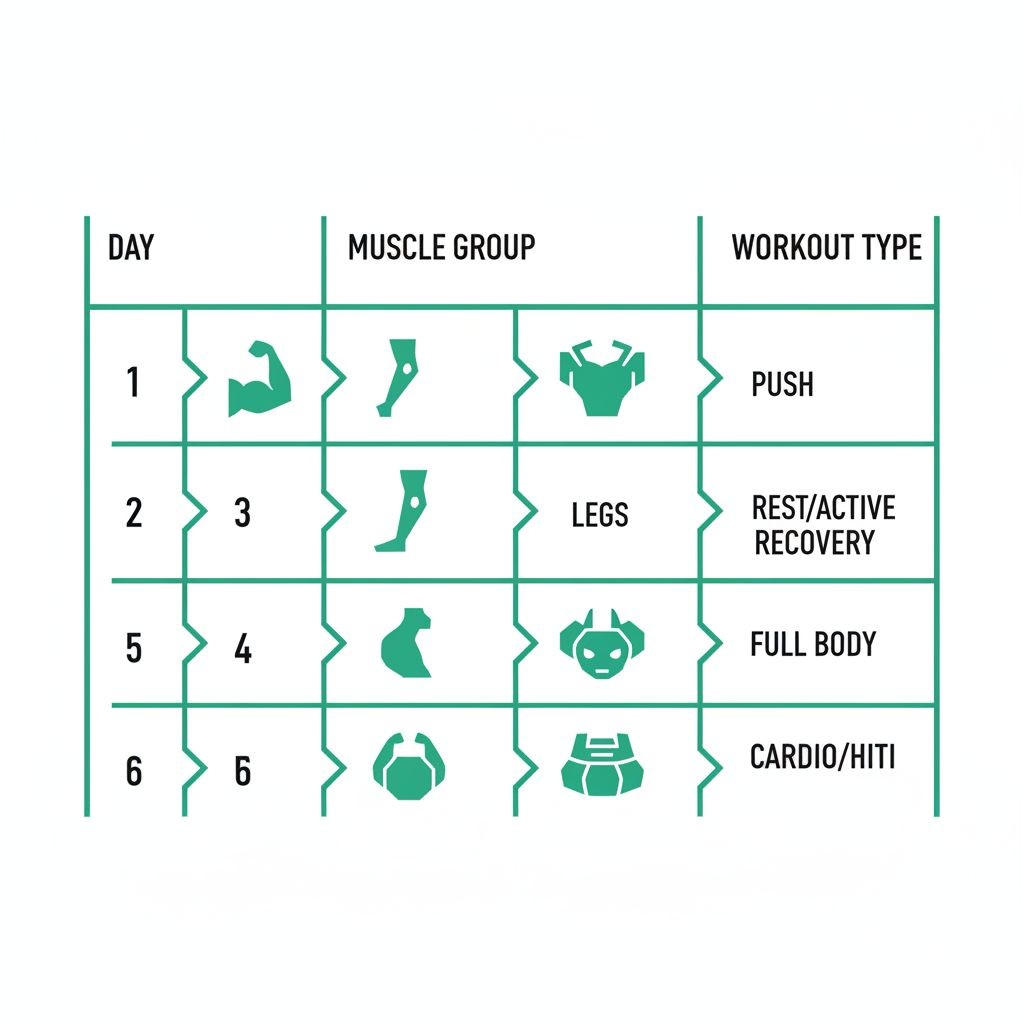
Let's break down the exact workout structure with specific exercises, sets, reps, and rest periods. These numbers reflect Arnold's actual training approach, adjusted for modern understanding of exercise science.
Training Parameters
Sets per exercise: 4-5 working sets (after warm-ups)
Rep ranges:
Compound movements: 6-10 reps
Isolation exercises: 8-12 reps
Calves and abs: 15-25 reps
Rest periods:
Heavy compound lifts: 2-3 minutes
Moderate weight exercises: 90 seconds
Isolation movements: 60 seconds
Supersets: 30-45 seconds between exercises, 90 seconds between rounds
Tempo: Controlled eccentric (2-3 seconds), brief pause, explosive concentric (1 second)
[INFOGRAPHIC: Complete 6-day Arnold split weekly schedule showing muscle groups, exercises per day, and total weekly volume per muscle group]
Day 1 & 4: Chest and Back Workout
This is arguably the most demanding session of the week. You're training two large muscle groups with substantial volume, creating massive metabolic stress and muscle damage.
Chest Exercises:
Barbell Bench Press - 5 sets of 6-10 reps
Warm up with 2 sets of 12-15 reps at 50% working weight
Focus on full range of motion, touching chest on each rep
Rest 2-3 minutes between sets
Incline Barbell Press - 4 sets of 8-10 reps
Set bench to 30-45 degree angle
Targets upper chest development
Rest 2 minutes
Dumbbell Flyes - 4 sets of 10-12 reps
Can be performed flat or on incline
Stretch at bottom, squeeze at top
Rest 90 seconds
Cable Crossovers - 3 sets of 12-15 reps
Finishing movement for chest
Focus on peak contraction
Rest 60 seconds
Back Exercises:
Deadlifts - 4 sets of 6-10 reps
Performed on Day 1 only (not Day 4) to manage fatigue
Complete lower back and posterior chain developer
Rest 3 minutes
Barbell Rows - 5 sets of 8-10 reps
Bent-over position, pull to lower chest
Keep core tight throughout
Rest 2 minutes
Wide-Grip Pull-ups - 4 sets to failure
Add weight if bodyweight becomes too easy
Full extension at bottom, chin over bar at top
Rest 2 minutes
T-Bar Rows - 4 sets of 10-12 reps
Targets mid-back thickness
Rest 90 seconds
Close-Grip Cable Rows - 3 sets of 12-15 reps
Focus on squeezing shoulder blades together
Rest 60 seconds
Arnold often superset chest and back exercises, alternating between the two. For example, bench press followed immediately by barbell rows. This advanced technique increases workout density but requires excellent conditioning.
Day 2 & 5: Shoulders and Arms Workout
This session focuses on creating the wide shoulders and peaked biceps that defined Arnold's physique. The volume here is substantial—you're hitting three separate muscle groups.
Shoulder Exercises:
Barbell Overhead Press - 5 sets of 6-10 reps
Can be performed seated or standing
Press from upper chest to full lockout
Rest 2-3 minutes
Dumbbell Lateral Raises - 4 sets of 10-12 reps
Slight forward lean, raise to shoulder height
Control the negative
Rest 90 seconds
Bent-Over Rear Delt Raises - 4 sets of 10-12 reps
Essential for balanced shoulder development
Rest 90 seconds
Dumbbell Front Raises - 3 sets of 10-12 reps
Alternate arms or both together
Rest 60 seconds
Biceps Exercises:
Barbell Curls - 5 sets of 8-12 reps
Strict form, no swinging
Full extension at bottom
Rest 90 seconds
Dumbbell Curls - 4 sets of 10-12 reps
Seated or standing
Supinate wrists at top for peak contraction
Rest 90 seconds
Concentration Curls - 3 sets of 10-12 reps per arm
Isolation movement for bicep peak
Rest 60 seconds
Triceps Exercises:
Close-Grip Bench Press - 4 sets of 8-10 reps
Hands shoulder-width apart
Elbows tucked to sides
Rest 2 minutes
Skull Crushers - 4 sets of 10-12 reps
Lower to forehead or behind head
Keep elbows stationary
Rest 90 seconds
Tricep Pushdowns - 3 sets of 12-15 reps
Cable or rope attachment
Full extension at bottom
Rest 60 seconds
Forearms:
Wrist Curls - 3 sets of 15-20 reps
Reverse Wrist Curls - 3 sets of 15-20 reps
Arnold believed forearm training was essential for grip strength and overall arm aesthetics. Don't skip these.
Day 3 & 6: Legs Workout
Leg day on the Arnold split is brutal. You're hitting quads, hamstrings, glutes, and calves with enough volume to challenge even advanced lifters.
Quad-Dominant Exercises:
Barbell Back Squats - 5 sets of 8-12 reps
The king of leg exercises
Go as deep as mobility allows
Rest 3 minutes
Front Squats - 4 sets of 10-12 reps
Emphasizes quads and core
Rest 2-3 minutes
Leg Press - 4 sets of 12-15 reps
High volume, controlled tempo
Rest 2 minutes
Leg Extensions - 4 sets of 12-15 reps
Isolation for quad sweep
Pause and squeeze at top
Rest 90 seconds
Hamstring Exercises:
Romanian Deadlifts - 4 sets of 10-12 reps
Feel the stretch in hamstrings
Keep back neutral
Rest 2 minutes
Lying Leg Curls - 4 sets of 12-15 reps
Squeeze hamstrings at top
Rest 90 seconds
Stiff-Leg Deadlifts - 3 sets of 10-12 reps
Alternative to RDLs on second leg day
Rest 2 minutes
Calves:
Standing Calf Raises - 5 sets of 15-20 reps
Full stretch at bottom, full contraction at top
Rest 60 seconds
Seated Calf Raises - 4 sets of 15-20 reps
Targets soleus muscle
Rest 60 seconds
Arnold trained calves with the same intensity as any other body part. He'd often perform 20-25 reps per set, focusing on the burn and pump.
Benefits of the Arnold Split
The Arnold split offers several distinct advantages that explain its enduring popularity among serious lifters.
Twice-Weekly Muscle Frequency
Research consistently shows that training each muscle group 2-3 times per week produces superior hypertrophy compared to once-weekly splits. Muscle protein synthesis remains elevated for approximately 48 hours after training. By hitting each muscle twice weekly, you're maximizing the number of growth-stimulating sessions.
Optimal Training Volume
With 15-25 sets per muscle group weekly (spread across two sessions), the Arnold split falls within the optimal volume range for muscle growth. Studies suggest 10-20 sets per muscle per week is ideal for most intermediate lifters, while advanced trainees may benefit from 20+ sets.
Antagonistic Muscle Pairing
Training opposing muscle groups (chest/back, biceps/triceps) in the same session offers unique benefits. When you train chest, blood flows to the upper body. Switching to back keeps that blood in the region, creating a sustained pump. Some research suggests this approach may enhance nutrient delivery and metabolic stress.
Time Efficiency
Despite being a 6-day program, each session is focused and efficient. You're not trying to train your entire body in one workout. This allows for higher quality sets and better focus on each muscle group.
Psychological Benefits
The frequent training schedule creates momentum. You're in the gym almost daily, which builds consistency and discipline. For many lifters, this regular routine is easier to maintain than sporadic, longer sessions.
Who Should Use the Arnold Split
This program isn't for everyone. Here's an honest assessment of who will benefit most.
Ideal Candidates:
Intermediate to advanced lifters with at least 1-2 years of consistent training
Athletes who can commit to 6 training days per week
Lifters who recover well and can handle high volume
Bodybuilders in a muscle-building phase with adequate calorie intake
People with flexible schedules allowing 60-90 minute gym sessions
Those who enjoy frequent training and thrive on routine
Not Recommended For:
Complete beginners who need to build work capacity first
Athletes with demanding sport schedules requiring fresh legs
People with limited recovery capacity or poor sleep
Lifters in a significant calorie deficit (cutting phase)
Those with time constraints preventing 6 weekly gym visits
Anyone dealing with overtraining symptoms or chronic fatigue
If you're unsure whether you're ready, start with a 4-day upper/lower split or push/pull/legs routine. Build your work capacity over 6-12 months, then transition to the Arnold split when you can handle the volume.
Nutrition and Recovery for the Arnold Split
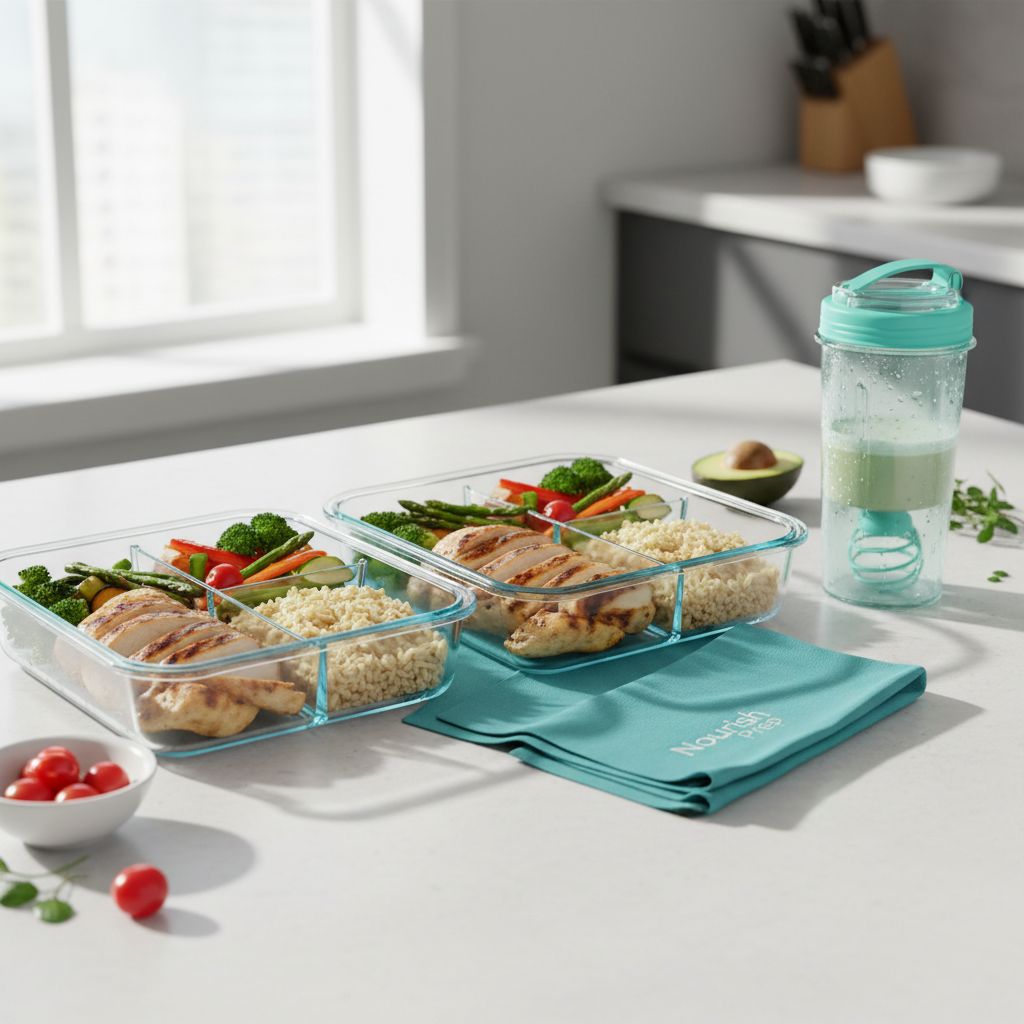
You cannot out-train a poor diet, especially on a program this demanding. The Arnold split requires strategic nutrition and recovery protocols.
Calorie Requirements
To build muscle on this program, you need a calorie surplus. Calculate your maintenance calories (use an online TDEE calculator), then add 300-500 calories daily. For a 180-pound lifter, this typically means:
Maintenance: ~2,800 calories
Bulking: 3,100-3,300 calories
Track your weight weekly. Aim for 0.5-1 pound gain per week. Faster gains likely mean excessive fat accumulation.
Protein Intake
Target 0.8-1 gram of protein per pound of bodyweight. For our 180-pound lifter, that's 145-180 grams daily. Spread this across 4-5 meals for optimal muscle protein synthesis.
Quality protein sources:
Chicken, turkey, lean beef
Fish (salmon, tuna, tilapia)
Eggs and egg whites
Greek yogurt, cottage cheese
Protein powder (whey, casein)
Carbohydrates
Carbs fuel your training. On the Arnold split, you're depleting glycogen stores almost daily. Aim for 2-3 grams per pound of bodyweight on training days.
Focus on:
Rice, oats, quinoa
Sweet potatoes, regular potatoes
Whole grain bread and pasta
Fruits (bananas, berries, apples)
Fats
Don't neglect healthy fats—they support hormone production, including testosterone. Aim for 0.3-0.5 grams per pound of bodyweight.
Sources:
Avocados
Nuts and nut butters
Olive oil, coconut oil
Fatty fish
Whole eggs
Hydration
Drink at least 1 gallon of water daily, more if you're sweating heavily. Dehydration impairs performance and recovery.
Sleep
This is non-negotiable. Aim for 7-9 hours nightly. Growth hormone release peaks during deep sleep, and inadequate rest will sabotage your progress. If you're consistently getting less than 7 hours, the Arnold split will likely lead to overtraining.
Supplementation
While not required, these supplements can support your training:
Creatine monohydrate: 5g daily for strength and recovery
Protein powder: Convenient way to hit protein targets
Caffeine: Pre-workout for energy and focus (200-400mg)
Omega-3s: Anti-inflammatory benefits for joint health
Vitamin D: If you're deficient (get blood work done)
Active Recovery
Your rest day (Day 7) should include light activity:
20-30 minute walk
Yoga or stretching
Swimming or cycling at low intensity
Foam rolling and mobility work
Complete rest is fine occasionally, but light movement promotes blood flow and recovery.
Progressive Overload Strategies
The Arnold split only works if you're consistently progressing. Here's how to implement progressive overload systematically.
Track Everything
You need data to make informed decisions. Record every workout: exercises, sets, reps, and weight used. Apps like Setgraph make this simple—you can log sets in real-time, view your history for each exercise, and identify when it's time to increase weight.
Progressive Overload Methods:
Add Weight: The most straightforward approach. When you can complete all prescribed reps with good form, increase weight by 2.5-5 pounds for upper body exercises, 5-10 pounds for lower body.
Add Reps: If you're prescribed 4 sets of 8-10 reps and you're hitting 10 reps on all sets, increase to 4 sets of 11-12 reps before adding weight.
Add Sets: Once you can handle the volume, add an extra set to key exercises. Go from 4 to 5 sets on compound movements.
Reduce Rest: Gradually decrease rest periods while maintaining the same weight and reps. This increases workout density and metabolic stress.
Improve Tempo: Slow down the eccentric (lowering) phase to 3-4 seconds. This increases time under tension.
Periodization
Don't try to set PRs every workout. Use a wave-loading approach:
Weeks 1-3: Build up intensity, adding weight each week
Week 4: Deload—reduce volume by 40-50% to allow recovery
Weeks 5-7: Push for new PRs
Week 8: Deload again
This prevents burnout and allows your body to supercompensate.
When to Switch Exercises
After 8-12 weeks, consider swapping some exercises to prevent adaptation. Replace barbell bench with dumbbell bench, or swap barbell rows for chest-supported rows. Keep the core movements (squats, deadlifts, overhead press) but rotate accessories.
Common Mistakes to Avoid
Even experienced lifters make these errors when running the Arnold split.
Starting Too Heavy
Your first week shouldn't be maximal. Start with weights you can handle for the prescribed reps with 1-2 reps in reserve. This allows you to progressively overload over the following weeks.
Ignoring Recovery Signals
Persistent joint pain, declining performance, poor sleep, and irritability are signs of overtraining. If you experience these, take an extra rest day or reduce volume by 20-30% for a week.
Skipping Warm-ups
Jumping straight into working sets is asking for injury. Perform 5-10 minutes of light cardio, then 2-3 warm-up sets with progressively heavier weights before your working sets.
Poor Form for More Weight
Ego lifting destroys progress. Half-rep bench presses and rounded-back deadlifts might let you use more weight, but they reduce muscle activation and increase injury risk. Perfect form should be your priority.
Inconsistent Nutrition
Eating well Monday through Friday, then binging on weekends, won't cut it. Your body needs consistent fuel. Meal prep on Sundays to ensure you're hitting your macros daily.
Not Tracking Progress
If you're not recording your workouts, you're guessing. You need concrete data to know when to add weight or reps. Using a workout tracking app eliminates this problem entirely.
Training Through Injuries
Pain is a signal, not a challenge to overcome. If something hurts (not just burns from exertion), stop and assess. Pushing through minor injuries creates major problems.
Arnold Split vs Other Training Splits

How does the Arnold split compare to other popular programs? Let's break down the pros and cons.
Arnold Split vs Push/Pull/Legs (PPL)
Similarities: Both are 6-day programs with twice-weekly muscle frequency.
Differences: PPL separates pushing muscles (chest, shoulders, triceps) from pulling muscles (back, biceps). The Arnold split pairs antagonistic muscles together.
Pros of Arnold Split:
Better pump from antagonistic pairing
More balanced upper body development
Shorter individual sessions
Pros of PPL:
More logical muscle grouping for some lifters
Easier to program progressive overload
Less fatigue within sessions
Arnold Split vs Upper/Lower
Differences: Upper/Lower is typically 4 days per week, splitting body into upper and lower sessions.
Pros of Arnold Split:
Higher frequency per muscle group
More total volume
Better for advanced lifters seeking maximum growth
Pros of Upper/Lower:
More recovery time
Better for strength development
Easier to maintain with busy schedule
Ideal for intermediate lifters
Arnold Split vs Bro Split
Differences: Bro split trains each muscle once weekly (chest Monday, back Tuesday, etc.).
Pros of Arnold Split:
Twice-weekly frequency produces better hypertrophy
More optimal for natural lifters
Better volume distribution
Pros of Bro Split:
Maximum recovery between sessions
Allows for extreme volume in single session
Simpler to program
[INFOGRAPHIC: Side-by-side comparison chart showing Arnold Split, PPL, Upper/Lower, and Bro Split with weekly frequency, volume per muscle, training days, and best for (experience level)]
The Arnold split sits in a sweet spot for advanced natural lifters and those using performance enhancement. It provides optimal frequency and volume without the excessive fatigue of training the same muscles on consecutive days.
Modifications for Intermediate Lifters
Not quite ready for the full 6-day commitment? Here are practical modifications.
4-Day Arnold Split
Train Monday, Tuesday, Thursday, Friday:
Day 1: Chest and Back
Day 2: Shoulders and Arms
Day 3: Rest
Day 4: Legs
Day 5: Chest and Back
Day 6-7: Rest
This gives you twice-weekly frequency for upper body, once weekly for legs. After 8-12 weeks, add a second leg day if recovery allows.
Reduced Volume Version
Keep the 6-day schedule but reduce sets by 25%:
3-4 sets per exercise instead of 4-5
3-4 exercises per muscle group instead of 4-5
This maintains frequency while reducing total volume, allowing better recovery as you adapt.
Alternating Intensity
Make your first session for each muscle group heavy (6-8 reps), and the second session lighter with higher reps (12-15 reps). This provides different stimuli and may improve recovery.
How Long Should You Run the Arnold Split?
Most lifters see best results running the Arnold split for 8-16 weeks before switching programs or taking a deload week.
Signs it's working:
Consistent strength gains week to week
Visible muscle growth
Good energy levels and recovery
Enjoying your training
Signs you need a break:
Strength plateaus or decreases for 2+ weeks
Persistent fatigue or poor sleep
Loss of motivation
Joint pain or nagging injuries
After 12-16 weeks, consider switching to a lower-frequency program (4-day upper/lower) for 4-6 weeks. This gives your body a break from the high frequency while maintaining your gains. Then you can return to the Arnold split refreshed.
Equipment Substitutions
Don't have access to specific equipment? Here are effective alternatives.
No Barbell:
Bench Press → Dumbbell Bench Press or Push-ups (weighted)
Barbell Rows → Dumbbell Rows or Inverted Rows
Deadlifts → Dumbbell Romanian Deadlifts or Trap Bar Deadlifts
Squats → Goblet Squats or Bulgarian Split Squats
No Cable Machine:
Cable Crossovers → Dumbbell Flyes
Cable Rows → Dumbbell Rows
Tricep Pushdowns → Overhead Dumbbell Extensions
Lat Pulldowns → Pull-ups or Resistance Band Pulldowns
Limited Equipment (Home Gym):
You can run a modified Arnold split with just dumbbells, a bench, and a pull-up bar. Focus on dumbbell variations of all major movements and add resistance bands for cable-style exercises.
Tracking Your Arnold Split Progress
Consistent tracking separates those who make progress from those who spin their wheels. Every workout should be logged with specific details: exercise, weight, sets, reps, and how it felt.
This is where a dedicated workout tracking app becomes invaluable. Setgraph is designed specifically for lifters running structured programs like the Arnold split. You can create separate workouts for each training day (Chest/Back, Shoulders/Arms, Legs), log your sets in real-time, and instantly see your previous performance for each exercise. The app's exercise history feature lets you track progressive overload across weeks, ensuring you're consistently adding weight or reps.
The rest timer function is particularly useful for the Arnold split, where specific rest periods matter. Set your default rest time in the app, and it'll notify you when it's time for your next set—no more guessing or checking your phone constantly.
For lifters who want structure but need help creating their initial workout plan, Setgraph's AI workout generator can build a customized Arnold split based on your available equipment and experience level. This eliminates the guesswork of exercise selection and set/rep schemes.
Final Thoughts
The Arnold split isn't just a workout program—it's a commitment to serious muscle building. Six days per week of high-volume training demands dedication, proper nutrition, and intelligent recovery. But for intermediate to advanced lifters ready to push their limits, it remains one of the most effective hypertrophy programs ever designed.
Start conservatively with your weights, focus on perfect form, and track every workout. Eat in a calorie surplus with adequate protein, sleep 7-9 hours nightly, and listen to your body's recovery signals. If you do these things consistently for 12-16 weeks, you'll understand why this split built some of the greatest physiques in bodybuilding history.
The key is consistency. Show up six days a week, execute the program as written, and trust the process. Your body will respond.
Article created using Lovarank