Gym Progress Tracker Guide: How to Log, Measure, and Actually See Results
A gym progress tracker is one of the simplest tools for getting better results from training. Instead of relying on memory, it shows what you lifted, how many reps you hit, how much total work you did, and whether your routine is actually moving forward. That matters because resistance training improves when you keep sessions consistent, track reps, and adjust load or volume gradually over time. NIDDK also notes that apps and journals can help monitor progress, while Harvard recommends tracking repetitions and marking training days on a calendar. (niddk.nih.gov)
What a gym progress tracker actually is
A gym progress tracker is any system that records your workouts in a way you can review later. It can be a handwritten notebook, a spreadsheet, or an app, but the point is the same, to turn each session into usable data instead of a blur of effort. For lifters, the most helpful logs are the ones that make progress and recovery visible, because that is what lets you apply progressive overload without guessing. (niddk.nih.gov)
At a minimum, a useful tracker should capture:
the exercise name
sets, reps, and load
rest time when it matters
whether the set felt unusually hard or easy
missed sessions, deloads, or changes in exercise selection
That is enough to show patterns without turning every workout into paperwork. Harvard recommends tracking reps across resistance sessions, and NIDDK says an activity journal can help you stay motivated and on track. (health.harvard.edu)
What to track if you want useful data
Progress is more than a bigger number on the bar. NSCA says good program design looks at volume, intensity, movement quality, endurance, and recovery, and ACE notes that consistent circumference measurements can help you track changes in body size over time. (nsca.com)
Strength metrics
Track the exercise, weight, reps, sets, and total volume. If a lift matters to you, record the best set of the day and, if useful, a one-rep max estimate. A 1RM calculator can be handy here because it turns a hard set into a training number you can use later. Setgraph’s official 1RM page says it can estimate max from a hardest set and translate that into percentage targets. (setgraph.app)
Body composition metrics
Track scale weight trends, waist, hips, arms, thighs, and progress photos if fat loss or muscle gain matters. ACE says circumference measurements should be taken consistently so baseline values can be compared later, and it notes that some people are motivated when they can see their body dimensions change. (acefitness.org)
Recovery and consistency metrics
Track how often you train, whether you missed a session, how sore you feel, and whether performance dropped for no obvious reason. NIDDK says trackers and journals can help with motivation and goal monitoring, and NSCA notes that recovery is one of the qualities to watch when overload is applied. (niddk.nih.gov)
Pick the right metrics for your goal
A good gym progress tracker should match the reason you train. If you only care about one number, you can miss the signals that matter most for your goal. (nsca.com)
If your goal is strength
Focus on load, reps, and 1RM. Harvard suggests tracking repetitions across resistance sessions, and Setgraph’s official workout tracker app and 1RM page are built around comparing sessions and estimating max strength from hard sets. That kind of setup is useful when you want the next workout to build on the last one instead of starting from scratch. (health.harvard.edu)
If your goal is muscle gain
Focus on weekly sets, exercise selection, and rep ranges. The goal is not just to work hard once, but to repeat enough quality work that volume can rise gradually. NSCA describes progressive overload as a systematic change over time, including volume and intensity, and says plateau is a normal reason to plan variation. (nsca.com)
If your goal is fat loss or recomposition
Use the scale, waist, and photo progress together, then keep an eye on gym performance so you do not diet so hard that your training falls apart. ACE notes that circumference changes can be useful and motivating, while NIDDK says trackers help you monitor progress toward goals. (acefitness.org)
If you are a beginner
Keep it small. Track the main exercises, the sets you completed, and whether you showed up. NIDDK recommends specific short- and long-term goals, and Harvard suggests aiming for regular strength sessions and reps tracking rather than trying to do everything at once. (niddk.nih.gov)
If you coach or train other people
A planner helps you standardize the session structure while still making room for individual changes. Setgraph’s workout planner page describes structured routines for full body, upper/lower, and Push/Pull/Legs splits, with plans that adapt to goals, schedule, and equipment. (setgraph.app)
App vs notebook vs spreadsheet
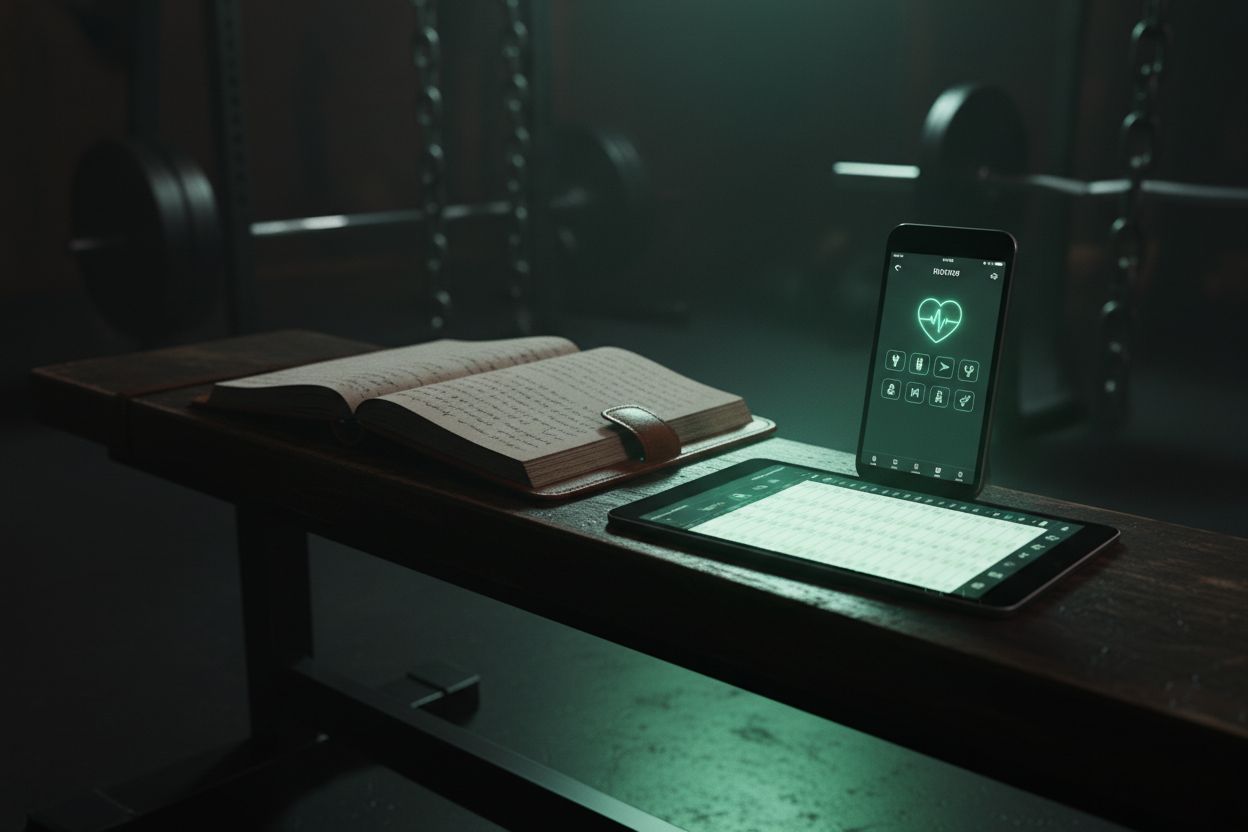
The best system is the one you will actually open during a hard session. NIDDK says fitness apps can track progress, and it also says an activity journal is a good way to stay motivated and on track. In practice, the main difference is speed versus flexibility. (niddk.nih.gov)
Notebook: quickest to start, very little setup, but harder to search later.
Spreadsheet: great for charts and custom fields, but slower to use between sets.
App: usually the fastest way to log workout history on the spot, especially if it shows session comparisons, charts, or a built-in rest timer.
If you want an example of an app that leans into that workflow, Setgraph’s official pages show workout logging with reps and weight, session comparisons across reps, weight, volume, and sets, and a review page with user feedback about progression tracking. The workout tracker app and user reviews pages are good references if you want to see how that kind of system is presented. (setgraph.app)
How to use a gym progress tracker week by week
Log immediately after the set. Harvard recommends tracking reps in each resistance session, and a gym log works best when the details are still fresh. (health.harvard.edu)
Compare only like with like. Use the same exercise, same rep range, and similar rest when possible. Setgraph’s progress pages are built around comparing the last session with the current one, which is a good model even if you use a notebook. (setgraph.app)
Change one variable at a time. Add weight, reps, sets, or frequency, but not all four at once. NSCA describes progressive overload as systematic change over time and says progression should be individualized rather than fixed to a predetermined schedule. (nsca.com)
Review weekly, then monthly. Weekly review tells you whether the plan is on track. Monthly review shows whether you are building strength, recovering well, and avoiding plateaus. NIDDK says trackers help you set goals, monitor progress, and review what is working. (niddk.nih.gov)
Adjust based on the trend. If weight is moving up while reps stay steady, that is progress. If body measurements are dropping while lifts hold steady, that can be progress too. If performance is falling and fatigue is rising, NSCA says you may need more recovery or more variation. (nsca.com)
Common mistakes that make a tracker useless
A tracker only helps if the data is good enough to make decisions. The biggest mistake is logging too little to notice a pattern, then changing programs before the body has time to adapt. NSCA warns that long-term training needs enough consistency for continued progress and enough variation to prevent boredom, staleness, and repetitive stress injury. (nsca.com)
Other common mistakes include:
recording only the heaviest set and ignoring the rest of the session
comparing a tired week to a fresh week and calling it a failure
changing exercises so often that you never know what is working
measuring body dimensions inconsistently
chasing scale weight without looking at performance or waist size
ACE says circumference measurements need consistent location and technique, and NIDDK says progress review matters because you may not feel the change until you look back at where you started. (acefitness.org)
A simple gym progress tracker template you can use today
Use this format for each workout:
For body-composition goals, add a monthly check-in for body weight, waist, and one photo from the front and side. ACE says baseline circumference measurements are most useful when they are taken consistently, and NIDDK says trackers and journals can help you stay on track with specific goals. (acefitness.org)
If you like having a structure ready before you step into the gym, a planner that keeps the same splits and exercise order long enough to measure whether they are working can help. That is why some lifters prefer a dedicated workout planner instead of improvising each week. (setgraph.app)
FAQ
How often should I update my tracker?
After every workout, ideally before you leave the gym. Harvard recommends tracking reps in each resistance session, and NIDDK says progress journals and apps are useful for staying on track. (health.harvard.edu)
What is the single best thing to track?
There is no single best metric for everyone. If your goal is strength, track load and reps; if it is body composition, add waist and body weight; if it is general consistency, track attendance. NSCA and ACE both support using more than one measure because progress shows up in different ways. (nsca.com)
Do I need to track every set?
Not necessarily. If logging every set makes you quit, track the working sets and top set first, then add more detail later. NIDDK says the most useful system is the one that helps you keep going, and Harvard’s guidance on tracking reps leaves room for simpler logs. (niddk.nih.gov)
Are progress photos and measurements worth it?
Yes, especially when body composition is the goal. ACE notes that circumference changes can be motivating for some clients, and consistent technique is important so the numbers mean something later. (acefitness.org)
Can a tracker help with plateaus?
Yes, because plateaus are easier to spot when your log is clear. NSCA says progressive overload eventually runs into accommodation and variation then becomes important, so a tracker helps you know when it is time to change something. (nsca.com)
A good gym progress tracker does not need to be fancy. It just needs to make the next session smarter than the last one, and that is usually enough to build better training habits, spot plateaus sooner, and keep your effort moving in the right direction. (niddk.nih.gov)
Article created using Lovarank